Thursday, August 27, 2026

Beyond the Barn Podcast Episode 120: 4 Mistakes Horse Owners Make with Salt and Electrolytes

StandleeForage.com Beyond the Barn Podcast - Listen

On this episode of the Feeding Fumbles & Fixes series of Beyond the Barn, host Katy Starr chats with equine nutritionist Dr. Kelly Vineyard to count down the four most common mistakes horse owners make with salt and electrolytes, including:

• A common electrolyte label-reading mistake that could have you paying for the wrong ingredient
• The overlooked reason some horses may not drink as much water as you'd expect
• A simple daily feeding habit that can help support hydration throughout the year

If you've ever wondered whether your horse is getting enough salt, how to choose an electrolyte supplement, or whether a salt block is really enough, you won't want to miss this episode.

Listen now on the Beyond the Barn podcast:
https://www.standleeforage.com/podcast/episodes/ep-120-4-mistakes-horse-owners-make-with-salt-and-electrolytes/

Monday, August 17, 2026

Unbridled joy: Lugoff woman with ALS races to ride a horse in all 50 states

WISTV.com - Full Story

By Billie Jean Shaw and John Blashke
Published: Aug. 13, 2026 at 4:39 PM MDT

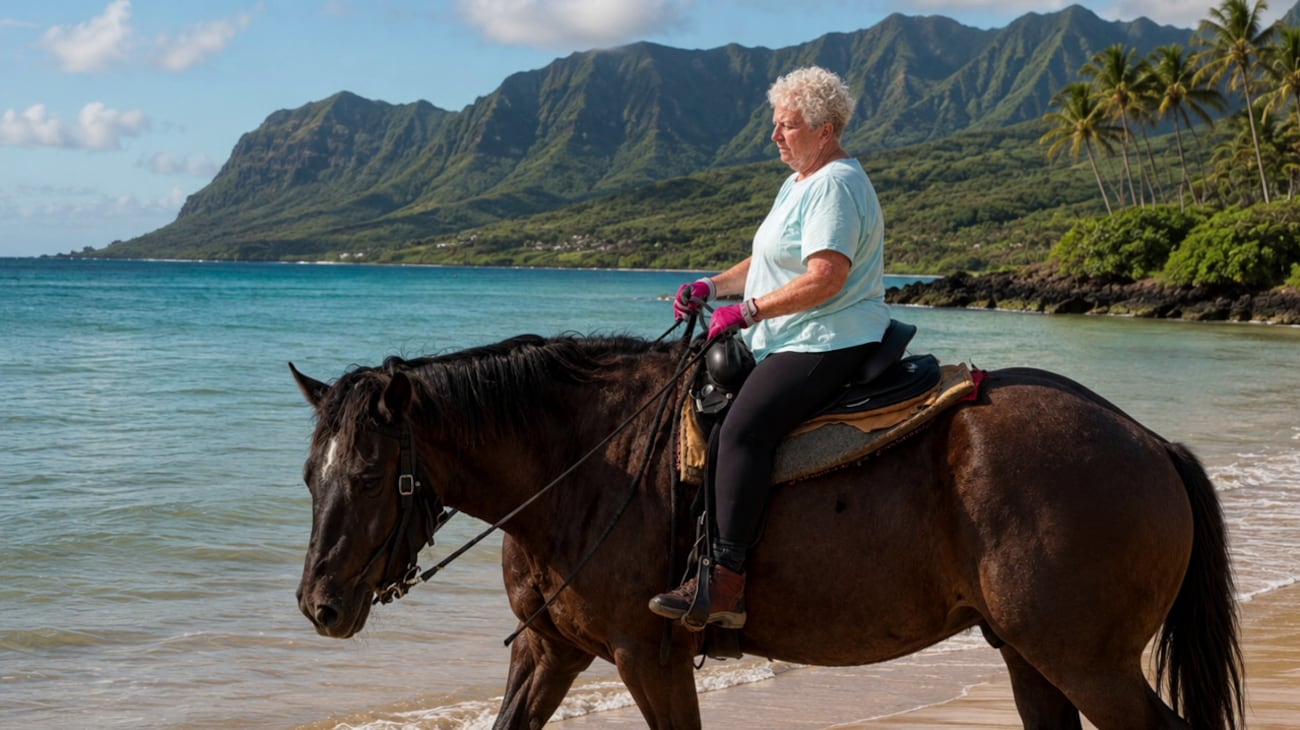
LUGOFF, S.C. (WIS) - Tricia Jackson has been riding horses since she was 3 years old. Seventy-one years later, she’s still in the saddle — and she has no plans to stop.

Jackson, an award-winning competitive equestrian, lives on a farm in Lugoff that she calls her place of peace.

Over the years, she has owned as many as 12 horses at once, riding and racing them all. These days, most of her time is spent with her favorite horse, Luke, competing in endurance rides that span anywhere from 25 to 100 miles in a single day.

“That’s a lot of miles,” Jackson said. “We’ve done 50 miles in 3 hours and 50 minutes — way too fast. We riders have to be tough...”

Read more here:
https://www.wistv.com/2026/08/13/unbridled-joy-lugoff-woman-with-als-races-ride-horse-all-50-states/

Tuesday, July 14, 2026

Crossing Canada East to West On Horseback

ExplorersWeb.com - Full Article

July 14, 2026
Martin Walsh

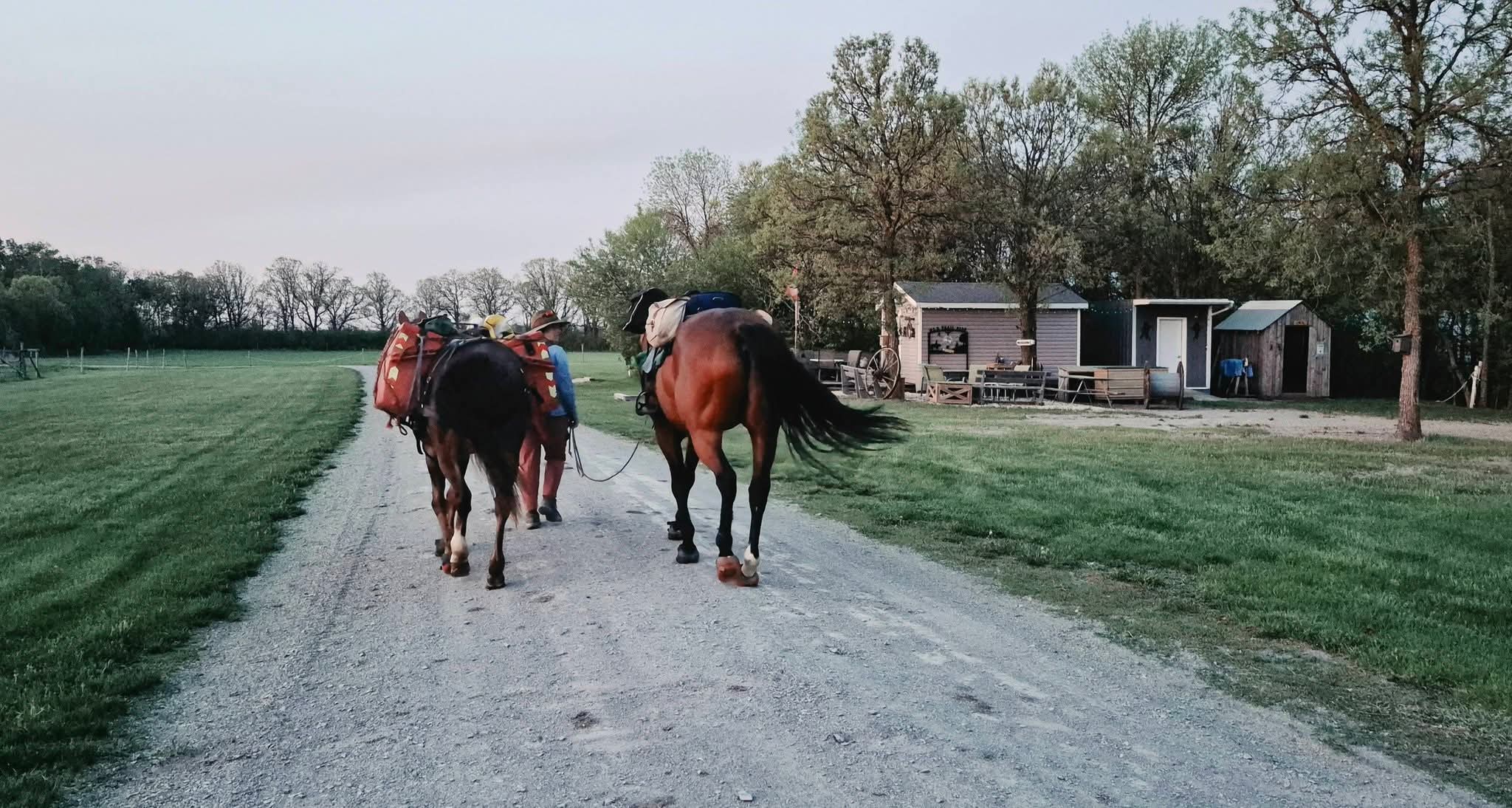
In 2025, Stef Gebbie set out across Canada on horseback, moving east to west. Starting in the Maritimes near New Brunswick, the 26-year-old Australian made it as far as Ontario’s Manitoulin Island before a family tragedy forced her to go home for a time.

Keen to continue the expedition, Gebbie headed back later that year to kayak from Manitoulin Island to the Manitoba border, passing through Lake Superior, Thunder Bay, and then the Path of the Paddle (a water trail through northwestern Ontario). This year, she has returned to the saddle to complete her unique Canadian crossing.

A team of three

Gebbie isn’t the only one returning to the cross-Canada journey. Her packhorse, Wilson, has accompanied her from New Brunswick and has already covered over 3,500km. Wilson is a rescue with “a very grumpy disposition, but he is also very chill and gets the job done,” Gebbie explains...

Read more here:
https://explorersweb.com/crossing-canada-east-to-west-on-horseback/

Monday, July 06, 2026

Pony Express reenactment gallops into Old Sacramento after 10-day journey

Martin Christian photo

Abridged.org - Full Article

People cheered for the horseback riders as they carried a bag of mail over 1,966 miles.

Published on June 26, 2026
by Shelley Ho

For 46 years, thousands of horses have galloped day and night across eight states to reenact the Pony Express, the short-lived but revolutionary express mail service that employed young riders to transport mail from Missouri to California.

After 10 days, this year’s ride came to a conclusion on Thursday in California, passing through the Sierra Nevada mountain range in the early morning, traveling through Folsom and along the American River Parkway before ending at the Pony Express Statue in Old Sacramento, where a crowd gathered to welcome the final rider.

Throughout the journey, riders passed along a mochila, Spanish for knapsack, which carried over a thousand letters sent in by the public...

Read more here:
https://www.abridged.org/news/pony-express-sacramento/

Tuesday, June 16, 2026

Horse Welfare in Endurance: A glimpse from Top riders


Journal D'Endurance - Horse Welfare Podcast

June 15 2026
A Conversation by Journal d’Endurance

Castelsagrat, France | CEIO2* 120 km | 35°C | A few hours after the finish

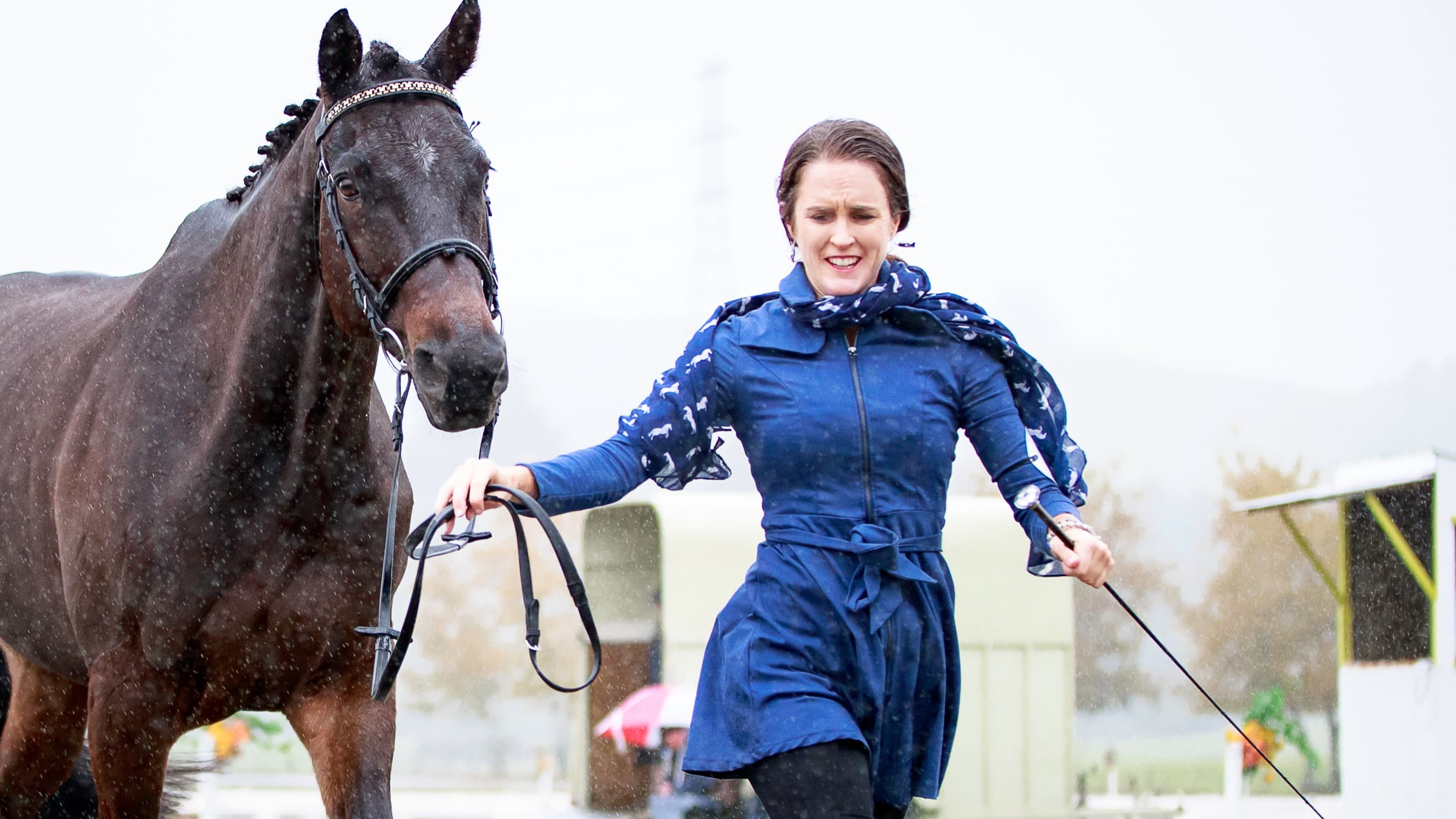
In scorching temperatures and on one of the most demanding tracks of the French calendar, Melody Théolissat and Yalla de Jalima secured second place, only seconds ahead of Virginie Atger and Raya de Jalima, after a perfectly judged race and a memorable final sprint. Paul Bard, who was set to compete the following day in the CEI3* 160 km with Hasna Valarbin, a home-bred mare, also joined the conversation.

Beyond the sport results, this discussion provided an opportunity to explore one of the most important topics in endurance riding: horse welfare. How do top riders balance performance with respect for their equine partners? What signs do they rely on to assess their horses’ physical and mental well-being? How do they manage training, travel, and race strategy to keep their horses comfortable and motivated? Drawing on their experiences, successes, and the mistakes that helped shape them as horsewomen & men, Virginie Atger, Melody Théolissat, and Paul Bard share their perspective on horse welfare in endurance riding and explain why, in their view, it is one of the key foundations of performance...

Read more here:
https://drive.google.com/file/d/1SlN6ikh-BhvC6ttAMa7fEVTMrlfXOoDT/view


Sunday, June 14, 2026

Who Will Answer the Next Emergency Call?

HorseSport.com - Full Article

Equine veterinary medicine is struggling to attract and retain practitioners. Three different perspectives suggest that preserving access to care will require changes from veterinary practices and horse owners alike.

By: Horse Sport staff | June 10, 2026

When a horse colics at 10 p.m., the owner’s first thought is panic. The second is: call the vet.

For the equine veterinarian who answers, the call may come after a full day of appointments, while eating dinner, attending a family event or finally getting to sleep. When the emergency is over, the next day’s scheduled work will still begin as usual.

After-hours emergencies have always been part of equine veterinary medicine. Increasingly, however, the profession is questioning whether the traditional model is sustainable.

“The number one issue is the lack of people that want to go into equine practice,” says Dr. Mike Pownall of McKee-Pownall Equine Services, an equine veterinarian who has spent years studying and speaking about wellness and mental health within the profession. “Recent surveys show less than two per cent of graduating students in North America want to enter equine,” he says. “That’s less than 200 people a year for all of North America,” which is not enough to replace veterinarians who are retiring or leaving the field...

Read more here:
https://horsesport.com/magazine/business/who-will-answer-next-emergency-call/?vgo_ee=itb9xEAbpXVHm%2BpWDPrGyv8f1O%2FMpmeHqSoS3EM%2BfpHQW%2BO%2Bnyiv%3AqLLH0nZ3PSxoRFP3%2F26HNzRa78wzZhgu

Sunday, May 17, 2026

'Living the dream': From Northland’s wild horses to Mongolia’s open plains

SportNation.nz - Read Article and listen to podcast

Sport Nation • May 15th, 2026

Most New Zealanders associate wild horses with the iconic Kaimanawa horse that roam the ranges of the Central North Island. But according to Chloe Phillips-Harris, there are wild horse populations all across New Zealand - particularly in the far north, where hundreds roam areas including 90 Mile Beach.

Speaking with Erin Speedy on The Rural Roundup, Phillips-Harris reflected on more than a decade working with wild and feral horses through The Wild Horse Project, while also sharing how a life-changing trip to Mongolia led her towards a career built around adventure, animals and remote expeditions.

“They get all the media attention (Kaimanawa horses), but all over New Zealand, especially here in Northland we have our own wild or feral horse populations and I have been working for over 10 years now to help manage in some situations, help home, help muster a lot of the wild horses.”

Her connection with horses eventually took her far beyond New Zealand. More than 12 years ago, Phillips-Harris travelled to Mongolia to compete in the Mongol Derby - a 1,000km endurance race across the Mongolian steppe that is widely regarded as the world’s longest horse race...

Read more and listen here:
https://sportnation.nz/article/living-the-dream-from-northlands-wild-horses-to-mongolias-open-plains

Thursday, May 14, 2026

Can I Let My Colicking Horse Lie Down While Waiting for the Vet?


Thehorse.com - Listen

May 7, 2026
Posted by Haylie Pfeffer

Dr. Michael Fugaro discusses when it’s okay to let your horse move around and lie down during a colic emergency and when you should keep him standing.

Allowing a horse to move quietly and even lie down while showing signs of colic is generally acceptable, as long as they’re not putting themselves at risk of injury. Forcing a horse to continuously walk isn’t necessary—rest can be appropriate if the horse remains calm. The priority is monitoring closely and preventing violent rolling while you wait for veterinary care. In this Ask TheHorse Live excerpt, Michael Fugaro, VMD, Dipl. ACVS, owner and founder of Mountain Pointe Equine Veterinary Services, in Hackettstown, New Jersey, describes when it’s okay to allow your horse to lie down versus when you should keep him standing or walking during a colic emergency.

This podcast is an excerpt from our Ask TheHorse Live Q&A, “Equine Colic 101.” Listen to the full recording here.

Monday, April 20, 2026

A Woman is Riding 25,000Km on Horseback Across the Americas

Explorersweb.com - Full Article

April 20, 2026
Ash Routen

Canadian Olivia Cazes, 30, is a year into a mammoth horseback journey from Ushuaia, in southern Argentina, to Prudhoe Bay, Alaska, following the length of the Pan-American Highway. The journey began in February 2025 with Australian rider Ben Hann. The two met while working on a ranch in Alberta, Canada.

Hann had to leave the journey last October due to a health issue. Cazes then returned to Canada to upgrade her equipment and then headed back to Argentina this past January to pick up where she left off.

Balancing the expedition with her studies, Cazes is somehow completing a master’s thesis while on the road. As of early April, she has traveled around 2,850km, maintaining a daily pace of 20 to 25km. Cazes estimates the journey could take another five years...

Read more here:
https://explorersweb.com/a-woman-is-riding-25000km-on-horseback-across-the-americas/

Sunday, April 19, 2026

Conditioning Horses on Different Surfaces


Thehorse.com - Full Article

April 1, 2026
Posted by Nancy S. Loving, DVM

Varying the surfaces on which you exercise your horse can help produce a strong, well-rounded equine athlete.

When training your horse, you likely put in a lot of work developing his skill set for a chosen athletic endeavor. Yet, similarly important is the degree of conditioning your horse achieves over time. Conditioning offers multiple benefits, including building the musculoskeletal tissues of the limbs, core, topline, and neck. It also improves the cardiovascular and respiratory systems, nervous system, proprioception (awareness of position and placement of limbs and body), and balance; provides mental stimulation; and builds a horse’s confidence.

Varying the surfaces on which you exercise a horse can bring additional benefits that develop the physical strength of a well-rounded equine athlete mentally engaged in his work...

Read more here:
https://thehorse.com/1122411/conditioning-horses-on-different-surfaces/?lid=lbh2rj0awf7x&%20Lameness&uuid=01922f47f62f001a2720598a0e2705075009a06d00dc4

Thursday, January 29, 2026

Long-Lost Horse Found And Rescued After Seven Months in Wind River Mountains

Preston Jorgenson photo

CowboyStateDaily.com - Full Article

Mouse the horse had been missing since July 2025, only to be found alive by snowmobilers in the Wind River Mountains. Several people, specialized snow machines, and a river raft were enlisted Sunday to reach and rescue the horse.

Andrew Rossi
January 27, 2026

A horse that had been lost in the mountains above Dubois for seven months was found and rescued by a team of ingenious snowmobilers and cowboys.

Mouse, the horse, had been missing in the mountains since July 2025. On Sunday, a group of snowmobilers was enjoying the powder in the vicinity when they found Mouse, still alive and thrilled to finally see people again.

“He was a true survivor, by all means,” said Tim Koldenhoven, owner of Union Pass Rentals. “You could tell that he was worn out and was tired, but was happy to have some company up there...”

Read more and see video of Mouse's snowmobile ride here:
https://cowboystatedaily.com/2026/01/27/long-lost-horse-found-and-rescued-after-seven-months-in-wind-river-mountains/

Tuesday, December 09, 2025

What Horses Are Most Likely to Develop Gastric Ulcers?


TheHorse.com - Full Article

December 2, 2025
Posted by Phoebe A. Smith, DVM, Dipl. ACVIM

Find out what breed, discipline, and behavior factors might make a horse more susceptible to developing gastric ulcers.

Q: Are there any genetic, breed, or behavior predispositions to developing gastric ulcers, or can any horse be equally at risk?

A: Equine gastric ulcer syndrome (EGUS) is highly prevalent across multiple breeds and disciplines, but risk for developing EGUS might not be evenly distributed among breeds. Gastric ulcers can be caused by an interplay of genetic, breed-related, physiological, and behavioral or personality predispositions, combined with environmental and management factors. While any horse can develop gastric ulcers, certain horses consistently show as more vulnerable. However, it is difficult to separate breeds from discipline or management conditions in most situations and certainly in scientific literature.

Research suggests that Thoroughbreds and Standardbreds exhibit the highest prevalence of equine squamous gastric disease (ESGD), with rates reported between 70–90% in those engaged in active race training. Feed type and timing, management, and high-intensity exercise play significant roles in the development of ESGD, regardless of breed, likely influencing this reported prevalence. Warmbloods, especially those used in dressage and jumping, have higher reported rates of equine glandular gastric disease (EGGD) than horses of other breeds and disciplines in some scientific reports. However, some variability exists amongst these reports. Warmbloods involved in lower level (national versus international competition) jumping and those exercising an increased number of days were more prone to develop EGGD than others in one study.

Endurance horses, most commonly Arabian horses, are another group frequently reported to have increased ulcer rates, with 60–90% suffering from gastric ulceration when in competitive periods...

Read more here:
https://thehorse.com/1141247/what-horses-are-most-likely-to-develop-gastric-ulcers/?lid=w8fjvynckzy0&uuid=01922f47f62f001a2720598a0e2705075009a06d00dc4

Wednesday, November 19, 2025

EHV-1 outbreak expanding after major events in Texas


AgDaily.com - Full Article

**Check with your state Dept of Agriculture to see their guidelines and recommendations**

By AGDAILY Reporters Published: November 19, 2025

An aggressive outbreak of Equine Herpesvirus-1 (EHV-1), including neurological cases classified as equine herpes myeloencephalopathy (EHM), has triggered urgent warnings from equine veterinarians across Texas and surrounding regions.

Clinics report that several horses returning from early-November events — including the WPRA Finals in Waco and competitions at the 377 Arena in Stephenville have shown severe and rapidly progressing clinical signs, with some owners already reporting fatalities.

Equine Sports Medicine & Surgery was among the first to issue detailed guidance, emphasizing that “continued biosecurity is essential to minimize spread” as competitors travel home from the WPRA Finals, the BFA, and other large gatherings. The clinic advises that exposed horses “should be isolated for the next 14–21 days,” kept at least 30 feet from non-exposed animals, and handled under strict quarantine procedures that prohibit nose-to-nose contact, shared equipment, or shared water sources.

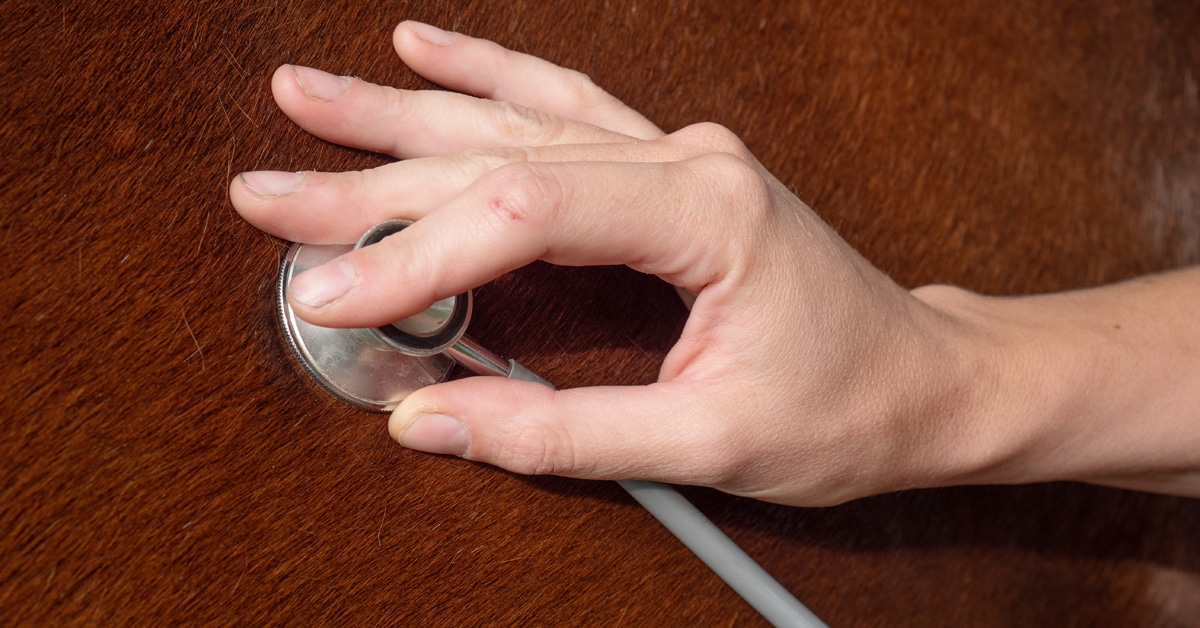
Staff warn that clothing, boots, and hands can transmit the virus between horses and recommend temperature checks twice daily, noting that “fever if >101.5°F” is a key early indicator. Owners are also urged to monitor for nasal discharge, stumbling, loss of tail tone, or difficulty urinating — symptoms commonly seen as respiratory disease progresses toward neurologic involvement...

Read more here:
https://www.agdaily.com/livestock/ehv-1-outbreak-expanding-major-events-texas/

Tuesday, November 18, 2025

Understanding Squamous Ulcers vs. Glandular Ulcers in Horses


TheHorse.com - Watch video

November 13, 2025
Posted by The Horse Staff

Learn the difference between equine squamous gastric disease and equine glandular gastric disease. Sponsored by Kelato.

Understanding the difference between equine squamous gastric disease and equine glandular gastric disease is the first step to effectively managing horses with gastric ulcers. In this video Dr. Ben Sykes, a leading authority in equine gastric ulcer syndrome, explains the difference between the two types of equine gastric ulcers.

Monday, November 03, 2025

Endurance Future Part Two

WeAreOnTheLoose.com - Full Article

by Jamethiel Morse
November 1 2025

Part One, Endurance: Where are the ribbons? is here.

Life got a bit lifey and delayed the second installment of musing about the future of the sport of endurance. We left off talking about the culture of endurance, and it affects the growth (or decline) of the sport. One of the thornier issues I didn’t touch on is the heated debate over what constitutes “real endurance”. There’s a camp of folks that firmly believes that calling anything under a 50 mile ride endurance is doing a disservice to the true ethos of the sport. Some say only 100 mile rides are true endurance, and anything less is “just” training towards that ultimate goal.

This debate comes up like clockwork, to the detriment of our sport I think. Folks should be welcome to share the trails and this horsemanship journey called endurance with us, no matter if their goal is to rack up 100 milers or if completing one LD takes all their effort and time. Crunching current numbers shows that most folks (especially those that “pay a ride managers bills”) are actually “Limited Distance Riders”, between 25 and 35 miles. I myself view 50s as a comfortable middle: I get more bang for my buck than an LD, both in terms of time on the trail and a challenge completed, but I don’t have to stay awake and functional for a full 24 hours to complete 100 miles. Honestly, I also don’t have to push my mare and myself hard enough during training to be 100 miler fit and ready. The leap from comfortably turtling 50s, as my mare and I do, to completing a 100 miler is just as exponential as getting her to the starting line of our first LD was...

Read the rest here:
https://weareontheloose.com/2025/11/01/endurance-future-part-two/

Thursday, October 16, 2025

Pope Leo gifted with “Proton” a purebred Arabian horse

CatholicWorldReport.com - Full Article

By Almudena Martínez-Bordiú for CNA
October 15, 2025

ACI Prensa Staff, Oct 15, 2025 / 14:35 pm

Before the general audience on Oct. 15, Pope Leo XIV was gifted with a 12-year-old purebred Arabian horse named Proton.

The white horse is a gift from Michalski Stables in KoÅ‚obrzeg-Budzistowo, and will reside in Castel Gandolfo, home to the Vatican’s equestrian center. Several purebred Spanish horses are also kept at the facility located within the papal complex.

The horse belongs to one of the oldest and most esteemed equine breeds in the world, known for its elegance and endurance.

According to the Vatican, the Pole Andrzej Michalski, president of the Michalski horse farm, offered the beautiful specimen to the Holy Father, recalling that during his time as a missionary in Peru, Pope Leo XIV frequently rode horses...

Read more here:
https://www.catholicworldreport.com/2025/10/15/pope-leo-gifted-with-proton-a-purebred-arabian-horse/

Tuesday, October 14, 2025

Three Weeks And 600 Miles: Robert Redford’s True Adventure On The Outlaw Trail

CowboyStateDaily.com - Full Article

Robert Redford’s love of the West, Wyoming and their notorious outlaws was well-known. It led him in 1976 to retrace 600 miles of The Outlaw Trail on horseback, by car and by boat over three weeks for National Geographic magazine.

Jackie Dorothy
September 28, 2025

National Geographic asked actor Robert Redford in 1976 to follow in the footsteps of the Wild West's greatest outlaws in a three-week adventure on horseback, by car, and by boat.

It apparently didn't take much convincing because Redford was already in love with the almost too-wild-to-be-true history of the West and Wyoming.

“We tend to view the Western outlaw, rightly or not, as a romantic figure,” Redford later wrote for the magazine. “I know I'm guilty of it, and for years I have been fascinated by that part of the West that offered sanctuary and escape routes to hundreds of colorful, lawless men.”

The Lure Of The Wild West

Before his 1976 trek along a 600-mile stretch of The Outlaw Trail, Redford was already familiar with the wide-open spaces of Wyoming...

Read more here:
https://cowboystatedaily.com/2025/09/28/three-weeks-and-600-miles-robert-redfords-true-adventure-on-the-outlaw-trail/

Monday, October 13, 2025

Solving The Riddle Of Thumps: Electrolytes, Alfalfa Both Play Starring Roles

Benoit Photo

PaulickReport.com - Full Article

Electrolyte imbalances and diet may both play a role in the condition that affected Skippylongstocking in this year's Charles Town Classic.

Bobbie Jo Lieberman
Oct 6, 2025

When Skippylongstocking headed postward for the Grade 2 Charles Town Classic in late August, trainer Saffie Joseph Jr. had plenty of reasons to believe his 6-year-old bay star would capture his third consecutive running of the $1 million, 1 1/8-mile event. Conditions were ideal for the earner of over $3.6 million, affectionately known around the barn as “Skippy.”

West Virginia’s cooler evening weather was a welcome change from the heat and humidity of Joseph’s home base in southern Florida. Skippy, reports Joseph, is an easy horse to be around, but he knows when it’s time to run.

“He walks like he’s in charge—he gets pumped up in the paddock,” said Joseph. “He can be a handful for his groom.”

With Jose Ortiz aboard, Skippy broke well from post position four and went straight for the lead on the rail, carving out fast but comfortable fractions on the half-mile track. He looked strong until right around the half-mile pole, when he inexplicably began to lose momentum and rapidly backed up through the field until he was last on the final turn, only to be eased under the wire.

What happened? Did Skippy go to the lead too quickly? His fans on social media were concerned for his welfare, suggesting perhaps the veteran campaigner had simply grown weary of racing.

Cooling out back at the barn, the reason for his poor performance became clear—Skippy had suffered from a metabolic condition known as synchronous diaphragmatic flutter, better known as the thumps. Thumps occur when the horse’s usually distinct respiration and heart rate are in synch, causing a sound akin to human hiccups...

Read more here:
https://paulickreport.com/horse-care-category/solving-the-riddle-of-thumps-electrolytes-alfalfa-both-play-starring-roles-

Wednesday, October 01, 2025

Endurance: Where are the ribbons?

WeAreOnTheLoose Blog - Full Article

by Jamethiel Morse
September 29 2025

Let’s turn our pens towards the annual signs of autumn: The ponies start getting their soft winter fuzzies on, the sun ditches us before 8pm, you have to return to keeping an extra layer in the truck, and…the AERC page starts to get rambunctious again. All ride season long, most folks are busy clearing trails, driving to rides, following Tevis fever, agonizing over keeping their horses sound and conditioned, so our corner of social media gets a bit of a breather aside from gorgeous ride photos. However, like clockwork, being farm bound for the winter gets endurance rider’s fingers itchy to share their opinions, and if we can’t do it around a ride camp fire with a drink in our hands, we’ll take to the AERC Facebook page instead. I say all this a bit in jest, but quite a bit of good discussion can occur there. Endurance riding brings out the strongest of personalities, you have to be to take care of a 1000 pound animal with their own views of the world over miles and hours of trail.

The latest thread to snag my eye was on the future of endurance and how to grow the sport, in a time it is rapidly contracting. Sharing that post to my own page racked up 68 comments, perhaps the most I’ve ever gotten, and the original thread is 450+. In order to put this post together, I used a bit of code I found on Reddit to copy all the comments to a Word document (cause FB sucks for reading comments this way), then edited it down from 200 odd pages to 60 odd (some comments were duplicated multiple times due to the weird rando code I used), tossed this doc into ChatGPT (legit the first time I’ve used it), and it spit out these top 10 categories of concern:...

Read more here:
https://weareontheloose.com/2025/09/29/endurance-where-are-the-ribbons/

Saturday, September 06, 2025

The Role of Carbohydrates in Horse Feed


Thehorse.com - Full Article

August 17, 2025
Posted by Kelly Vineyard, MS, PhD

Discover which horses can benefit from higher carbohydrate levels in their diets and the feeds that can supply them.

Q: What role do carbohydrates play in horse feed? I often hear about carbohydrates in a negative context because they can be harmful to horses with metabolic problems, but what groups of horses might need more carbohydrates and what sources should they be getting them from?

A: Thank you for asking this question because this is an important but often misunderstood concept in equine nutrition. With the increased awareness of and ability to diagnose horses with carbohydrate sensitivities (i.e., insulin dysregulation, equine metabolic syndrome) and the rise in popularity of low-carb rations for horses, it’s understandable how some horse owners might be unaware there are many benefits of feeding nonstructural carbohydrates (NSCs) to horses.

Nonstructural carbohydrates are the simple sugars (i.e., glucose and fructose) and starches in feeds readily digested and absorbed in the horse’s small intestine. This results in a rise in blood glucose and, subsequently, blood insulin levels following a meal...

Read more here:
https://thehorse.com/1129226/the-role-of-carbohydrates-in-horse-feed/?lid=plijzilkhlhg&uuid=019205ef454c0001d30cabe5878605089009a081004ea