DenverPost.com - Full Article
Colorado officials think 240 horses were on the premises with the infected horse and were sold to people in 20 states
By ANNA STAVER | astaver@denverpost.com | The Denver Post
PUBLISHED: September 7, 2018
A sick horse from Weld County is the reason hundreds of horses in 19 states need to be tracked down, tested and potentially euthanized or live the rest of their lives in quarantine.
And what frustrates horse owners the most is Colorado law prohibits the Department of Agriculture from releasing the name of the lot that sold the sick horse.
“We all know already,” Old Glory Ranch owner Brittnee Woodward-Whithead said. “I don’t know why it’s a big secret.”
What Colorado State Veterinarian Keith Roehr could say is that a gelding (a neutered male) tested positive for Equine Infectious Anemia on Aug. 24. The viral disease, which is spread by bloodsucking insects like horse flies, has no cure. Federal law requires an infected animal spend the rest of its days at least 200 yards from any other horse if the owner doesn’t want to euthanize it.
The rules also require any horse that came into contact with the infected animal be held in quarantine for 60 days because that’s how long it can take from exposure to show a positive test.
And that’s where the problem started...
Read more here:
https://www.denverpost.com/2018/09/07/sick-weld-county-horse-starts-multi-state-quarantine/
Sunday, September 09, 2018


Wednesday, September 05, 2018
Moldy Hay for Horses: Causes and Avoidance
KER.com - Full Article
August 21, 2018
By Kentucky Equine Research Staff
Cultivating good-quality hay is no easy task and is dependent on cooperative weather for optimal success. Hay farmers must keep a keen eye on plant growth, the moisture content at harvest, and other baling considerations. Mold forms on hay because of excessive moisture, which is why it is so critical to harvest hay under the most conducive conditions and then store it properly once baled.
Moisture content is a crucial measure when it comes to hay production. Once hay is cut in the field, it needs to dry. Length of drying time varies based on geographical region and weather. Humidity or rain will slow this process, leaving the crop vulnerable to mold and fungus. If hay is baled at 12-14% moisture or less, the likelihood of mold is reduced.
If a preservative is not used on cut hay, mold will grow if moisture concentration above about 14%-15%. In addition to nutrient loss, mold growth produces heat. If moldy hay is stored in tight stacks or in areas of poor ventilation, there is a risk for spontaneous combustion...
Read more here:
https://ker.com/equinews/moldy-hay-horses-causes-avoidance/?utm_source=KER+Newsletter&utm_campaign=cd7765a2fb-KER_Equinews_9_5_18&utm_medium=email&utm_term=0_0d95781dfc-cd7765a2fb-11166&mc_cid=cd7765a2fb&mc_eid=6283eb0e4a
August 21, 2018
By Kentucky Equine Research Staff
Cultivating good-quality hay is no easy task and is dependent on cooperative weather for optimal success. Hay farmers must keep a keen eye on plant growth, the moisture content at harvest, and other baling considerations. Mold forms on hay because of excessive moisture, which is why it is so critical to harvest hay under the most conducive conditions and then store it properly once baled.
Moisture content is a crucial measure when it comes to hay production. Once hay is cut in the field, it needs to dry. Length of drying time varies based on geographical region and weather. Humidity or rain will slow this process, leaving the crop vulnerable to mold and fungus. If hay is baled at 12-14% moisture or less, the likelihood of mold is reduced.
If a preservative is not used on cut hay, mold will grow if moisture concentration above about 14%-15%. In addition to nutrient loss, mold growth produces heat. If moldy hay is stored in tight stacks or in areas of poor ventilation, there is a risk for spontaneous combustion...
Read more here:
https://ker.com/equinews/moldy-hay-horses-causes-avoidance/?utm_source=KER+Newsletter&utm_campaign=cd7765a2fb-KER_Equinews_9_5_18&utm_medium=email&utm_term=0_0d95781dfc-cd7765a2fb-11166&mc_cid=cd7765a2fb&mc_eid=6283eb0e4a
Tuesday, August 28, 2018
Tips for Managing Gastric Ulcers in Performance Horses
Thehorse.com - Full Article
Up to 93% of performance horses suffer from gastric ulcers. Is yours one of them? Here’s how to manage the condition.
By Nettie Liburt, MS, PhD, PAS | Aug 24, 2018
It’s not a secret that many performance horses suffer from gastric ulcers. In fact, said Frank M. Andrews, DVM, MS, Dipl. ACVIM, equine gastric ulcer syndrome (EGUS) is present in up to 93% of performance horses. What’s worse, this condition is a real problem for training, nutrition, and overall health. Thus, successfully managing EGUS is key to ensuring horses can perform at their best.
Recently, Andrews, LVMA Equine Committee professor and director of the Equine Health Studies Program at Louisiana State University’s School of Veterinary Medicine, reviewed advances in treating and managing gastric ulcers in performance horses during the University of Maryland’s Department of Agriculture and Natural Resources’ 2016 Mid-Atlantic Nutrition Conference, held March 23-24, in Hunt Valley, Maryland.
Gastric Ulcer Basics
Most ulcers occur in the non-glandular mucosa (the upper portion of the stomach), which lacks protective elements to keep it safe from acid, such as thick mucus and bicarbonate layers...
Read more here:
https://thehorse.com/17675/tips-for-managing-gastric-ulcers-in-performance-horses/
Up to 93% of performance horses suffer from gastric ulcers. Is yours one of them? Here’s how to manage the condition.
By Nettie Liburt, MS, PhD, PAS | Aug 24, 2018
It’s not a secret that many performance horses suffer from gastric ulcers. In fact, said Frank M. Andrews, DVM, MS, Dipl. ACVIM, equine gastric ulcer syndrome (EGUS) is present in up to 93% of performance horses. What’s worse, this condition is a real problem for training, nutrition, and overall health. Thus, successfully managing EGUS is key to ensuring horses can perform at their best.
Recently, Andrews, LVMA Equine Committee professor and director of the Equine Health Studies Program at Louisiana State University’s School of Veterinary Medicine, reviewed advances in treating and managing gastric ulcers in performance horses during the University of Maryland’s Department of Agriculture and Natural Resources’ 2016 Mid-Atlantic Nutrition Conference, held March 23-24, in Hunt Valley, Maryland.
Gastric Ulcer Basics
Most ulcers occur in the non-glandular mucosa (the upper portion of the stomach), which lacks protective elements to keep it safe from acid, such as thick mucus and bicarbonate layers...
Read more here:
https://thehorse.com/17675/tips-for-managing-gastric-ulcers-in-performance-horses/
Monday, August 27, 2018
London cavalry counting down to commemorative First World War trek
LFPress.com - Full Article
London’s Europe-bound troop is counting down the days to a monumental trek to mark the centenary of the end of the First World War.
JENNIFER BIEMAN Updated: August 26, 2018
Ten riders, five crew members and three weeks to go — London’s Europe-bound troop is counting down the days to a monumental trek to mark the centenary of the end of the First World War.
The local group is joining at least 50 other riders from across the globe Sept. 14 to trace the path Allied forces took when pushing the Germans back from Cambrai, France to Mons, Belgium during the final 100 days of one of the deadliest conflicts in human history.
The riders will cover the same distance in only 10.
“We’ve been training every day or every second day for the past three weeks. Out doing a lot of distance riding, endurance riding,” said Maj. Allan Finney, the officer in command of the cavalry troop. “It is three weeks away and everyone is so excited...”
Read more here:
https://lfpress.com/news/local-news/london-cavalry-counting-down-to-commemorative-first-world-war-trek
London’s Europe-bound troop is counting down the days to a monumental trek to mark the centenary of the end of the First World War.
JENNIFER BIEMAN Updated: August 26, 2018
Ten riders, five crew members and three weeks to go — London’s Europe-bound troop is counting down the days to a monumental trek to mark the centenary of the end of the First World War.
The local group is joining at least 50 other riders from across the globe Sept. 14 to trace the path Allied forces took when pushing the Germans back from Cambrai, France to Mons, Belgium during the final 100 days of one of the deadliest conflicts in human history.
The riders will cover the same distance in only 10.
“We’ve been training every day or every second day for the past three weeks. Out doing a lot of distance riding, endurance riding,” said Maj. Allan Finney, the officer in command of the cavalry troop. “It is three weeks away and everyone is so excited...”
Read more here:
https://lfpress.com/news/local-news/london-cavalry-counting-down-to-commemorative-first-world-war-trek
Friday, August 24, 2018
Siberia: Preserved paleolithic baby horse emerges from permafrost
 CNet.com - Full Article
Scientists unveil a 40,000-year-old foal found in Siberia's "Mouth of Hell."
by Amanda Kooser
August 24, 2018 11:41 AM PDT
A crater in Russia known as the "Mouth of Hell" has regurgitated a highly unusual find: a perfectly preserved baby horse whose kin roamed Siberia around 30,000 to 40,000 years ago. The state of the tiny horse is remarkable. You can even see the individual hairs on its body.
The Siberian Times first reported on the foal's discovery earlier this month and covered the detailed unveiling of the body this week. Semyon Grigoryev, head of the Mammoth Museum in Yakutsk, estimates the horse was just two months old when it died.
siberianhorsehooves
The horse belonged to an extinct group known as the Lena Horse (Equus lenensis). The Siberian permafrost is responsible for the foal's impressive state of preservation...
Read more here:
https://www.cnet.com/news/preserved-paleolithic-baby-horse-emerges-from-permafrost/
Thursday, August 23, 2018
Taking pictures in dangerous places
 Trailmeister.com - Full Article
August 21, 2018
by Robert Eversole
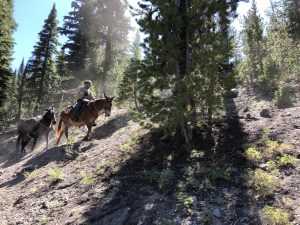
I recently received a private message on facebook about taking pictures while in dangerous places. The sender said that she had seen accidents firsthand and that she felt that taking pictures detracted from the full attention that we should be placing on riding. I agree wholeheartedly. I’ve seen firsthand what can happen if a rider is inattentive (Remember my accident last August!)
However, I’m still going to take as many photos of awe inspiring areas as I can. My job is to try to inspire horse and mule owners to escape the arena and take the trail less traveled. A glorious photo can help get more people out onto the trails and into horse camps, much better than any words that I could write.
That being said after having my own traumatic riding event I have become much more careful about when and where I take my pics...
Read more here:
https://www.trailmeister.com/taking-pictures-in-dangerous-places/
Monday, August 20, 2018
Adventures on the trail: An essential guide to life in the saddle
 Horsetalk.co.nz - Full Article
August 20, 2018
Neil Clarkson
The Encyclopaedia of Equestrian Exploration, hardcover, in three volumes, by CuChullaine O’Reilly. Published by the Long Riders’ Guild Press. Reviewed by Neil Clarkson.
CuChullaine O’Reilly is proof that great feats of equestrian endurance are not limited to the saddle.
His three-volume Encyclopaedia of Equestrian Exploration is a literary tour de force and an important contribution to the collective wisdom of equestrianism.
We should never forget that much of the world was first explored on foot and on horseback. Frontiers were tamed thanks to our partnership with the horse.
Our relationship with these remarkable animals has been recorded through the millennia. They are depicted in ancient cave drawings and described in some of our earliest texts.
It is a rich and varied history.
O’Reilly, in what can only described as a Herculean feat, has distilled the wisdom of more than 400 equestrian explorers, known as Long Riders, into his three-volume encyclopaedia, comprising some 1750 pages...
Read more here:
https://www.horsetalk.co.nz/2018/08/20/adventures-rail-guide-saddle/
Friday, August 17, 2018
Riders4Helmets International Helmet Awareness Day 2018 Set to Break Records
 Riders4Helmets.com
July 21, 2018 by lyndsey
The 2018 Event is On Track To Have More Than 700 Participating Retailers in 19 Countries
Six hundred retailers in 17 countries have already registered to participate in the ninth Riders4Helmets International Helmet Awareness Day, to be held August 18th and 19th. With two weeks to go before the event, Riders4Helmets is on track to exceed the 680 retailers in 19 countries that participated in 2017, with 20% more retailers having already registered than by the same time last year.
“It is a testament to the continued need for educating equestrians on all aspects of helmet wearing that sees this year’s event on track to be our biggest event to date,” said Lyndsey White, Riders4Helmets. “I am absolutely overwhelmed at the continued support shown to the Riders4Helmets campaign by helmet manufacturers, retailers, and equestrians around the globe.”
“Back in 2010 when Riders4Helmets was founded and we hosted the first International Helmet Awareness Day, I never imagined that the campaign would inspire tens of thousands of equestrians to wear a helmet for the first time, and serve as a continued reminder to those who were already wearing a helmet, to ensure it is fitted correctly and that they replace it when appropriate.”
Riders4Helmets.com has teamed up with 22 helmet manufacturers this year, that will offer discounts on their helmets for two days only, via their global retailer network. The helmet brands that have committed involvement are Champion, Charles Owen, Dublin, EQ3 by Back On Track Canada, Eurohunter, Gatehouse, GPA, International Riding Helmets (IRH), Jin Stirrup, JPC, Kask, KEP Italia, Kwesta, LAS helmets (Leslie Sutcliffe UK), One K, Ovation, Samshield America, Tipperary, Trauma Void, Troxel, Uvex and Zilco.
Retailers in Australia, Canada, Denmark, England, Ireland, Italy, Netherlands, New Zealand, Poland, Scotland, South Africa, Spain, USA, and Zambia have already registered to participate in this year’s event.
International Helmet Awareness Day was founded in 2010 as a direct result of US Olympian Courtney King Dye’s accident, with the aim of educating equestrians on the benefits of wearing a properly fitting, secured and certified helmet.
Retailers around the globe who wish to register to participate in the event may register free of charge at this link and will then be added to the participating retailer map. Only retailers who register with riders4helmets will be eligible for restocking discounts from the participating helmet brands (please note – participating brands vary by country). You must register with riders4helmets and not with the helmet brands. Further information for retailers and rules with regards to participating can be found at this link.
Equestrians may visit this link to learn more about International Helmet Awareness Day and can search for participating retailers by “Name” or “Geographic Location”. Equestrians are encouraged to visit the site on August 18th and 19th, 2018, to view the most current update, as participating retailers will continue to be added on a daily basis.
For more information on the Riders4Helmets campaign and more information on rider safety, visit www.riders4helmets.com. You can also follow the campaign at www.facebook.com/riders4helmets, www.instagram.com/riders4helmets, and www.twitter.com/riders4helmets.
Media Contact:
Lyndsey White
lyndsey@equiseen.com
Wednesday, August 15, 2018
Feeding the Ulcer-Prone Horse
Thehorse.com - Full Article
Learn how to craft a diet for the horse with painful lesions in his stomach.
By Kristen M. Janicki, MS, PAS | Aug 13, 2018
How to craft a diet for the horse with painful lesions in his stomach
Which horses would you traditionally consider “ulcer-prone”? Racehorses in training? Western pleasure horses showing competitively on the American Quarter Horse Association circuit? Pony Clubbers’ games ponies? Injured horses on stall rest? Truth is, you could be right with any one of these.
Equine gastric ulcer syndrome (EGUS) can plague any age, breed, or sex, and the risk factors are many—certain types of training and exercise, nutrition, feeding practices, and stabling, to name a few. Let’s take a look at one very important aspect of preventing and managing ulcers: diet...
Read more here:
https://thehorse.com/19510/feeding-the-ulcer-prone-horse/
Learn how to craft a diet for the horse with painful lesions in his stomach.
By Kristen M. Janicki, MS, PAS | Aug 13, 2018
How to craft a diet for the horse with painful lesions in his stomach
Which horses would you traditionally consider “ulcer-prone”? Racehorses in training? Western pleasure horses showing competitively on the American Quarter Horse Association circuit? Pony Clubbers’ games ponies? Injured horses on stall rest? Truth is, you could be right with any one of these.
Equine gastric ulcer syndrome (EGUS) can plague any age, breed, or sex, and the risk factors are many—certain types of training and exercise, nutrition, feeding practices, and stabling, to name a few. Let’s take a look at one very important aspect of preventing and managing ulcers: diet...
Read more here:
https://thehorse.com/19510/feeding-the-ulcer-prone-horse/
Sunday, August 12, 2018
Dramas in the saddle: Encountering a crazy, chaotic world
 Horsetalk.co.nz - Full Article
August 9, 2018 CuChullaine O’Reilly
Armed escorts, roadside shootings, searing temperatures, chaotic traffic and mind-blowing bureaucracy. Despite it all, Filipe Leite completed a two-year 10,000-mile journey on horseback from Canada to Brazil. He chronicles his journey in his new book, Long Ride Home. The founder of the Long Riders’ Guild, CuChullaine O’Reilly, talks to Filipe about his remarkable journey, and the many challenges the Long Rider describes in his new book, which even included the need to befriend drug lords to get through.
You contacted the Long Riders’ Guild is 2011 in search of advice on how to make an equestrian journey from Canada to Brazil. You subsequently completed a 10,000-mile ride that lasted two years and took you and your horses through 10 countries. Can you explain how a childhood story sparked your desire to become a Long Rider?
The first story I can remember as a child is Tschiffely’s epic equestrian journey across the Americas. In the beginning of my book, Long Ride Home, I explain how I was a very scared child and when my dad turned off the lights in my room, many nights I cried, afraid of the dark. My dad would come in and tell me a part of the book Tschiffely’s Ride and use it as an example of how fear is a monster we create in our minds that we must learn to push aside. I loved the story so much. I remember sitting on my horse as a kid imagining what it would be like to cross all of those countries with the same animals. I spent the rest of my life dreaming of going on my own Long Ride...“
Read more here:
https://www.horsetalk.co.nz/2018/08/09/dramas-saddle-crazy-chaotic-world/
Thursday, August 09, 2018
Senate Passes One-Year ELD Extension for Livestock Haulers
Drovers.com - Full Article
Wyatt Bechtel
August 2, 2018
An amendment added to the Senate’s “minibus” spending bill would grant livestock haulers another year-long extension to implement Electronic Logging Devices (ELD).
The amendment was proposed by Senator Deb Fischer (R-Neb.) to delay implementation of the ELD mandate until Sept. 30, 2019. Fischer says the legislation is important because livestock haulers face different challenges from other transporters who are currently using an ELD under regulations from the Department of Transportation.
“With this extension, we will have more time to bring common-sense to these rules and provide additional flexibility,” Fischer says...
Read more here:
https://www.drovers.com/article/senate-passes-one-year-eld-extension-livestock-haulers
Wyatt Bechtel
August 2, 2018
An amendment added to the Senate’s “minibus” spending bill would grant livestock haulers another year-long extension to implement Electronic Logging Devices (ELD).
The amendment was proposed by Senator Deb Fischer (R-Neb.) to delay implementation of the ELD mandate until Sept. 30, 2019. Fischer says the legislation is important because livestock haulers face different challenges from other transporters who are currently using an ELD under regulations from the Department of Transportation.
“With this extension, we will have more time to bring common-sense to these rules and provide additional flexibility,” Fischer says...
Read more here:
https://www.drovers.com/article/senate-passes-one-year-eld-extension-livestock-haulers
Monday, August 06, 2018
Veterinary Toxicologist Warns of Blue-Green Algae Dangers
Thehorse.com - Full Article
Health problems can arise when animals—including horses—and people come into contact with the various toxins produced by blue-green algae.
By Edited Press Release | Jul 8, 2018
Summertime is known for its heat. Add some rainy days to the mix, and this combination can be the recipe for the development of blue-green algae, says a toxicologist at the Kansas State Veterinary Diagnostic Laboratory, a part of Kansas State University’s College of Veterinary Medicine, in Manhattan.
Also known as cyanobacteria, blue-green algae can bloom in fresh water where environmental conditions—warm weather, lots of sunlight and the presence of nutrients in the water, which often are the result of agricultural runoff—make it possible for these organisms to grow and replicate rapidly.
Steve Ensley, DVM, PhD, a clinical veterinary toxicologist at Kansas State, said health problems can arise when animals—including horses—and people come into contact with the various toxins produced by cyanobacteria...
Read more here:
https://thehorse.com/159222/veterinary-toxicologist-warns-of-blue-green-algae-dangers/
Health problems can arise when animals—including horses—and people come into contact with the various toxins produced by blue-green algae.
By Edited Press Release | Jul 8, 2018
Summertime is known for its heat. Add some rainy days to the mix, and this combination can be the recipe for the development of blue-green algae, says a toxicologist at the Kansas State Veterinary Diagnostic Laboratory, a part of Kansas State University’s College of Veterinary Medicine, in Manhattan.
Also known as cyanobacteria, blue-green algae can bloom in fresh water where environmental conditions—warm weather, lots of sunlight and the presence of nutrients in the water, which often are the result of agricultural runoff—make it possible for these organisms to grow and replicate rapidly.
Steve Ensley, DVM, PhD, a clinical veterinary toxicologist at Kansas State, said health problems can arise when animals—including horses—and people come into contact with the various toxins produced by cyanobacteria...
Read more here:
https://thehorse.com/159222/veterinary-toxicologist-warns-of-blue-green-algae-dangers/
Friday, August 03, 2018
Looking Beyond Frequent Hoof Trimming as the Magic Fix for Hoof Rehab
 Easycare blog - Full Article
Tuesday, July 31, 2018 by easycare admin
By Hoof Care Practitioner David Landreville of Landreville Hoof Care
If you’re struggling with hoof issues, don't fool yourself into thinking that merely trimming more frequently is going to be a magic fix. There’s always a learning curve and there are often kinks in that curve.
The key to lameness prevention, rehabilitation, and continued development is keeping the outer wall off of the ground.
To accomplish this, I believe that optimum weight bearing is when the inner wall is loaded at the Four Pillars. I don’t try to make it happen in one trim. It’s built over years of frequent trims. After trimming to the inside of the inner wall, it takes three weeks for the inside of the outer wall to make it to the ground (with this kind of trim), which is why I try to keep them on no more than a 3-week trim schedule. The second and third weeks are the optimum comfort weeks for the horse. The inner wall, through its attachment to the sole, is set up to support the weight of the horse. The strength of the outer wall is not in its ability to support the weight of the horse, but in its ability to contort while simultaneously resisting the forces of contortion.
Frequency is only part of the equation...
Read more here:
http://blog.easycareinc.com/blog/easycare-admin/looking-beyond-frequent-hoof-trimming-as-the-magic-fix-for-hoof-rehab
Wednesday, August 01, 2018
10 Things to Remember on International Helmet Awareness Day
Lexington, KY (July 31, 2018) - The weekend of August 18th and 19th, 2018 marks the ninth annual Riders4Helmets International Helmet Awareness Day — a campaign event designed to educate people about the importance of wearing a hat, following dressage Olympian Courtney King-Dye’s accident from which she suffered a brain injury.
To mark the occasion, the campaign’s Lyndsey White shares 10 important messages that all riders should remember on a daily basis:
• If you have a hard impact blow while wearing your hat, immediately replace it with a new hat. There may be damage to the hat that is not visible to the naked eye.
• Hat manufacturers generally recommend replacing your hat every four to five years. Hats take a beating over time from sweat, heat, dust and rain, and the Styrofoam in the hat relinquishes its ability to protect the head over time. “So, replacing your hat sooner than four to five years may in some circumstance be necessary,” says Lyndsey.
• A ponytail or different hairstyle can affect the fit of your hat. When you try on hats prior to purchase, wear your hair in the style that you expect to wear it when riding.
• If you purchase your hat online, check the date of manufacture. Purchasing a used hat can be very risky and is NOT recommended. The hat may have sustained previous damage that you aren’t able to see.
• There is no statistical correlation between skill level and injury likelihood. Professional riders are just as at risk to sustain injury due to a fall as less frequent riders.
• Even a fall from a standing horse can be catastrophic. Your injury risk depends on the height from which fall, as well as the speed at which you’re traveling.
• Head injuries are cumulative. An original head injury can be made much worse by additional concussions.
• Riding is considered more dangerous than downhill skiing and motorcycling.
• Approximately 20% of accidents which result in head injury happen while the person is on the ground.
• It is best if you invest in your own hat regardless of whether or not you own a horse. “It is a personal purchase. Your hat is designed to fit your head,” says Lyndsey. An incorrectly fitting hat offers very little, to no protection. In addition to wearing a correctly fitting hat, you must have the harness correctly fastened on your hat. If the harness is not fitting snugly, the hat can rotate should you have a fall and it won’t be able to protect your head to its fullest intention.
To celebrate International Helmet Awareness Day, Riders4helmets has teamed up with leading manufacturers to offer special discounts on safety headgear around the globe, via their retailer networks.
Retailers around the globe who wish to register to participate in the event may register free of charge at this link and will then be added to the participating retailer map. Only retailers who register with riders4helmets will be eligible for restocking discounts from the participating helmet brands (please note – participating brands vary by country). You must register directly with riders4helmets and not with the helmet brands. Further information for retailers and rules with regards to participating, can be found at this link.
Equestrians may visit this link to learn more about International Helmet Awareness Day and can search for participating retailers by “Name” or “Geographic Location” on our participating retailer map. Equestrians are encouraged to visit the site on August 18th and 19th, 2018, to view the most current update, as participating retailers will continue to be added on a daily basis.
For more information on the Riders4Helmets campaign and more information on rider safety, visit www.riders4helmets.com. You can also follow the campaign at www.facebook.com/riders4helmets, www.instagram.com/riders4helmets, and www.twitter.com/riders4helmets.
To mark the occasion, the campaign’s Lyndsey White shares 10 important messages that all riders should remember on a daily basis:
• If you have a hard impact blow while wearing your hat, immediately replace it with a new hat. There may be damage to the hat that is not visible to the naked eye.
• Hat manufacturers generally recommend replacing your hat every four to five years. Hats take a beating over time from sweat, heat, dust and rain, and the Styrofoam in the hat relinquishes its ability to protect the head over time. “So, replacing your hat sooner than four to five years may in some circumstance be necessary,” says Lyndsey.
• A ponytail or different hairstyle can affect the fit of your hat. When you try on hats prior to purchase, wear your hair in the style that you expect to wear it when riding.
• If you purchase your hat online, check the date of manufacture. Purchasing a used hat can be very risky and is NOT recommended. The hat may have sustained previous damage that you aren’t able to see.
• There is no statistical correlation between skill level and injury likelihood. Professional riders are just as at risk to sustain injury due to a fall as less frequent riders.
• Even a fall from a standing horse can be catastrophic. Your injury risk depends on the height from which fall, as well as the speed at which you’re traveling.
• Head injuries are cumulative. An original head injury can be made much worse by additional concussions.
• Riding is considered more dangerous than downhill skiing and motorcycling.
• Approximately 20% of accidents which result in head injury happen while the person is on the ground.
• It is best if you invest in your own hat regardless of whether or not you own a horse. “It is a personal purchase. Your hat is designed to fit your head,” says Lyndsey. An incorrectly fitting hat offers very little, to no protection. In addition to wearing a correctly fitting hat, you must have the harness correctly fastened on your hat. If the harness is not fitting snugly, the hat can rotate should you have a fall and it won’t be able to protect your head to its fullest intention.
To celebrate International Helmet Awareness Day, Riders4helmets has teamed up with leading manufacturers to offer special discounts on safety headgear around the globe, via their retailer networks.
Retailers around the globe who wish to register to participate in the event may register free of charge at this link and will then be added to the participating retailer map. Only retailers who register with riders4helmets will be eligible for restocking discounts from the participating helmet brands (please note – participating brands vary by country). You must register directly with riders4helmets and not with the helmet brands. Further information for retailers and rules with regards to participating, can be found at this link.
Equestrians may visit this link to learn more about International Helmet Awareness Day and can search for participating retailers by “Name” or “Geographic Location” on our participating retailer map. Equestrians are encouraged to visit the site on August 18th and 19th, 2018, to view the most current update, as participating retailers will continue to be added on a daily basis.
For more information on the Riders4Helmets campaign and more information on rider safety, visit www.riders4helmets.com. You can also follow the campaign at www.facebook.com/riders4helmets, www.instagram.com/riders4helmets, and www.twitter.com/riders4helmets.
Friday, July 27, 2018
Managing your your horse in the heat- EGB guide
July 27 2018
ENDURANCE GB ADVICE TO KEEP YOU AND YOUR HORSE SAFE IF YOU ARE TRAINING & COMPETING IN WARM OR HOT WEATHER
With horse welfare cemented at the heart of the sport, Endurance GB is committed to educating riders to ensure horse well-being is paramount. With consistently high summer temperatures showing no sign of abating it is important that the necessary steps are taken to ensure horses are managed correctly in the heat.
Recognising high body temperature and the risk to horse welfare is essential for riders and anyone else involved with horses at competitions. There are a number of indicators that a horse is very hot or suffering from heat exhaustion:
Excessive sweating – horse completely covered in sweat and/or sweat running from the body
Whilst they will sweat initially, if severely dehydrated they may have reduced sweating leading to reduced ability to control body temperature
Horse feels very hot to touch and may have prominent blood vessels in the skin
Ataxia (unsteadiness) – especially when stopping after exercise
High or irregular heart rate and respiratory rate
Blowing very hard (deep and laboured breathing)
Panting (fast and shallow breathing)
A high rectal temperature – above 40°C (104°F)
Horse may show little reaction to people or environment or be lethargic
Horse may appear distressed or depressed
Horse becomes colicky
Dark urine and reduced urination
Dark mucous membranes
Muscle spasms
Slow recovery after exercise
Tom Eaton-Evans, 4* FEI Endurance Veterinary Treatment Official, 2* FEI Endurance Official Veterinarian and EGB Welfare Committee Member, team vet for the British Young Riders Endurance team, explains: “Horses are susceptible to heat-related illness whilst being exercised or transported in hot weather. Endurance riders are well practised in keeping their horses cool, but in these hot summer months it is necessary to review the signs to look out for and the actions to take if your horse is overheating.”
Fellow EGB Welfare Committee member, scientific and equine consultant and researcher for FEI and BEF Dr David Marlin shares his expertise on horses at risk in the heat and potential consequences of heat exhaustion: “Older, younger, less fit, dark coloured, unclipped, sick, large and overweight horses will struggle more in the heat. If not managed properly heat exhaustion can quickly progress to heat stroke. If your horse does go down then continue to cool it aggressively and send for a vet! Severe heat stroke/heat exhaustion can lead to renal failure, COLIC, myopathy (muscle damage), laminitis, liver failure and can be fatal if not treated promptly.”
EGB advises that if you suspect your horse is overheating there are measures you should take immediately to help, including:
Stop exercising
Remove the tack
Move your horse out of direct sunlight
Start cooling – this is best achieved with copious amounts of cool water applied all over the horse- if a hose is available use that
If ice is available this can be added to the water to help cool it further
In cases of mild heat stress horses can recover rapidly, however when coupled with dehydration or exhaustion intravenous fluids may be required to help your horse recover in which case a vet will be needed
There are number of things that can be done to reduce the risk of heat exhaustion, David Marlin adds: “Provide water at all times. Don’t remove water. Allow horses to drink immediately before, during and after exercise. If you do put on a sheet then make sure it’s a white one. White material reflects some heat whilst dark colours absorb radiant heat.”
Additional advice includes:
· Travelling Horses lose around 3-5kg per hour. Travelling is tiring, don’t leave horses standing in lorries on hot days.
· Competition – Accept your horse may not be able to achieve the same performance on a hot day.
· Electrolytes – Feed daily in feed according to level of work and weather.
· Warming-up – Cut down warm-up time or break it up and cool if necessary.
Commenting on the recent King Forest event Tom Eaton-Evans said: “The hot weather has been on all riders’ minds for the last few weeks – especially for endurance riders where it represents a particular challenge with horses out in the heat for long periods of time. ‘Crewing’ is an essential part of successful endurance riding and at the Kings Forest ride I was able to watch this in action, resulting in a quiet few days for me in the treatment clinic.
The ride organisers had ensured enough water was available for all competitors (with buckets to decant the water from the troughs to prevent infection risk), ice on hand that helped cool the water in the heat of the day and ride stables were wonderfully cool. I must congratulate all riders and their crew for their diligence in ensuring their horses remained cool and comfortable throughout the weekend, the organisers for ensuring that sufficient water and ice was provided, and the veterinary commission for their care in ensuring that the horses were fit to continue at all times.”
further information from Dr David Marlin on caring for your horse in the heat visit - http://davidmarlin.co.uk/portfolio/advice-for-horse-owners-in-hot-weather/.
ENDURANCE GB ADVICE TO KEEP YOU AND YOUR HORSE SAFE IF YOU ARE TRAINING & COMPETING IN WARM OR HOT WEATHER
With horse welfare cemented at the heart of the sport, Endurance GB is committed to educating riders to ensure horse well-being is paramount. With consistently high summer temperatures showing no sign of abating it is important that the necessary steps are taken to ensure horses are managed correctly in the heat.
Recognising high body temperature and the risk to horse welfare is essential for riders and anyone else involved with horses at competitions. There are a number of indicators that a horse is very hot or suffering from heat exhaustion:
Excessive sweating – horse completely covered in sweat and/or sweat running from the body
Whilst they will sweat initially, if severely dehydrated they may have reduced sweating leading to reduced ability to control body temperature
Horse feels very hot to touch and may have prominent blood vessels in the skin
Ataxia (unsteadiness) – especially when stopping after exercise
High or irregular heart rate and respiratory rate
Blowing very hard (deep and laboured breathing)
Panting (fast and shallow breathing)
A high rectal temperature – above 40°C (104°F)
Horse may show little reaction to people or environment or be lethargic
Horse may appear distressed or depressed
Horse becomes colicky
Dark urine and reduced urination
Dark mucous membranes
Muscle spasms
Slow recovery after exercise
Tom Eaton-Evans, 4* FEI Endurance Veterinary Treatment Official, 2* FEI Endurance Official Veterinarian and EGB Welfare Committee Member, team vet for the British Young Riders Endurance team, explains: “Horses are susceptible to heat-related illness whilst being exercised or transported in hot weather. Endurance riders are well practised in keeping their horses cool, but in these hot summer months it is necessary to review the signs to look out for and the actions to take if your horse is overheating.”
Fellow EGB Welfare Committee member, scientific and equine consultant and researcher for FEI and BEF Dr David Marlin shares his expertise on horses at risk in the heat and potential consequences of heat exhaustion: “Older, younger, less fit, dark coloured, unclipped, sick, large and overweight horses will struggle more in the heat. If not managed properly heat exhaustion can quickly progress to heat stroke. If your horse does go down then continue to cool it aggressively and send for a vet! Severe heat stroke/heat exhaustion can lead to renal failure, COLIC, myopathy (muscle damage), laminitis, liver failure and can be fatal if not treated promptly.”
EGB advises that if you suspect your horse is overheating there are measures you should take immediately to help, including:
Stop exercising
Remove the tack
Move your horse out of direct sunlight
Start cooling – this is best achieved with copious amounts of cool water applied all over the horse- if a hose is available use that
If ice is available this can be added to the water to help cool it further
In cases of mild heat stress horses can recover rapidly, however when coupled with dehydration or exhaustion intravenous fluids may be required to help your horse recover in which case a vet will be needed
There are number of things that can be done to reduce the risk of heat exhaustion, David Marlin adds: “Provide water at all times. Don’t remove water. Allow horses to drink immediately before, during and after exercise. If you do put on a sheet then make sure it’s a white one. White material reflects some heat whilst dark colours absorb radiant heat.”
Additional advice includes:
· Travelling Horses lose around 3-5kg per hour. Travelling is tiring, don’t leave horses standing in lorries on hot days.
· Competition – Accept your horse may not be able to achieve the same performance on a hot day.
· Electrolytes – Feed daily in feed according to level of work and weather.
· Warming-up – Cut down warm-up time or break it up and cool if necessary.
Commenting on the recent King Forest event Tom Eaton-Evans said: “The hot weather has been on all riders’ minds for the last few weeks – especially for endurance riders where it represents a particular challenge with horses out in the heat for long periods of time. ‘Crewing’ is an essential part of successful endurance riding and at the Kings Forest ride I was able to watch this in action, resulting in a quiet few days for me in the treatment clinic.
The ride organisers had ensured enough water was available for all competitors (with buckets to decant the water from the troughs to prevent infection risk), ice on hand that helped cool the water in the heat of the day and ride stables were wonderfully cool. I must congratulate all riders and their crew for their diligence in ensuring their horses remained cool and comfortable throughout the weekend, the organisers for ensuring that sufficient water and ice was provided, and the veterinary commission for their care in ensuring that the horses were fit to continue at all times.”
further information from Dr David Marlin on caring for your horse in the heat visit - http://davidmarlin.co.uk/portfolio/advice-for-horse-owners-in-hot-weather/.
Thursday, July 26, 2018
Endurance Saddles of the future being developed in the Foothills
TryonDailyBulletin.com - Full Article
By Catherine Hunter
Published 8:00 am Wednesday, July 25, 2018
New riding technology being researched in Tryon
TRYON — Ron Friedson, of Pegasus Saddles, was in town this week talking about Pegasus’ new Featherweight saddle designed for endurance riders.
Friedson has been working with Mike Schatzberg, owner of Cherokee Hill Farm in Tryon, to develop the ideal lightweight saddle for endurance riders.
“The Pegasus Saddles are made with a Unicorn Duel Action spring hinge embedded on either side in the front of the saddletree,” Friedson said. “This lets the saddle automatically open and close to fit wide or narrow backed horses, or even a horse that is uneven.”
Pegasus saddles are designed and built by a former Kieffer saddle maker. Friedson himself is a world-renowned saddle designer, and has studied with both German and English saddle makers...
Read more here:
https://www.tryondailybulletin.com/2018/07/25/saddles-of-the-future-being-developed-in-the-foothills/
By Catherine Hunter
Published 8:00 am Wednesday, July 25, 2018
New riding technology being researched in Tryon
TRYON — Ron Friedson, of Pegasus Saddles, was in town this week talking about Pegasus’ new Featherweight saddle designed for endurance riders.
Friedson has been working with Mike Schatzberg, owner of Cherokee Hill Farm in Tryon, to develop the ideal lightweight saddle for endurance riders.
“The Pegasus Saddles are made with a Unicorn Duel Action spring hinge embedded on either side in the front of the saddletree,” Friedson said. “This lets the saddle automatically open and close to fit wide or narrow backed horses, or even a horse that is uneven.”
Pegasus saddles are designed and built by a former Kieffer saddle maker. Friedson himself is a world-renowned saddle designer, and has studied with both German and English saddle makers...
Read more here:
https://www.tryondailybulletin.com/2018/07/25/saddles-of-the-future-being-developed-in-the-foothills/
Wednesday, July 25, 2018
Out-of-control dogs v. horse riders: FEI to fine owners
Horsetalk.co.nz - Full Article
July 17, 2018
Horsetalk.co.nz
Loose dogs have been in the news in recent weeks following the serious injuries sustained by a horse rider on an equestrian trail in New Zealand. Now, horse sport’s governing body is looking to clamp down on loose dogs at events, with fines for the offending owners.
In the latest proposals for modifications to its General Regulations, the FEI said there was currently no provision in its rules about dogs at FEI Events. “It is proposed to clarify that dogs must be leashed at FEI events as otherwise it can be dangerous for the horses/riders if there are loose dogs running.”
If allowed at an event, dogs must be leashed and “affixed to a human or stationary object”, under the new, proposed wording. Violation of the rule will incur a fine of the equivalent of $US100 for each offence. Repeat offenders may be excluded from the venue...
Read more here:
https://www.horsetalk.co.nz/2018/07/17/dogs-horse-riders-fei-fine-owners/
July 17, 2018
Horsetalk.co.nz
Loose dogs have been in the news in recent weeks following the serious injuries sustained by a horse rider on an equestrian trail in New Zealand. Now, horse sport’s governing body is looking to clamp down on loose dogs at events, with fines for the offending owners.
In the latest proposals for modifications to its General Regulations, the FEI said there was currently no provision in its rules about dogs at FEI Events. “It is proposed to clarify that dogs must be leashed at FEI events as otherwise it can be dangerous for the horses/riders if there are loose dogs running.”
If allowed at an event, dogs must be leashed and “affixed to a human or stationary object”, under the new, proposed wording. Violation of the rule will incur a fine of the equivalent of $US100 for each offence. Repeat offenders may be excluded from the venue...
Read more here:
https://www.horsetalk.co.nz/2018/07/17/dogs-horse-riders-fei-fine-owners/
Sunday, July 22, 2018
Feeding Endurance Horses
Thehorse.com - Full Article
Feeding hard-working endurance horses is as much art as it is science. Our sources walk you through an endurance horse’s diet, from conditioning to post-race. Read an excerpt from this feature in our July 2018 issue.
By Heather Smith Thomas | Jul 16, 2018
Make sure your horse gets the energy, nutrients, and water he needs to tackle a long ride
Athletes need fuel to work. Endurance horses, in particular, need a nutrition strategy that will allow them to travel all day at moderate to high speeds without “running out of gas” or becoming dehydrated. They need adequate energy in a form that won’t produce excess body heat and will provide enough fluid and electrolytes to maintain hydration.
Julie Bullock, DVM, of Mount Sidney, Virginia, has been riding endurance horses for 25 years and competes in 100-mile races. She says the endurance community is growing fast, and it’s important for newcomers to the sport to understand these horses’ nutritional needs.
Kathleen Crandell, PhD, an equine nutritionist with Kentucky Equine Research, in Versailles, has extensive background in nutrition science and has trained and competed endurance horses. “When feeding an endurance horse, we think about two programs—feeding the horse on a daily basis as we get the horse into fitness, and then a plan for what we’ll feed the horse on the day of competition,” she says.
In this article our sources will walk you through an endurance horse’s diet, from conditioning to post-race...
Read more here:
https://thehorse.com/159337/feeding-endurance-horses/
Feeding hard-working endurance horses is as much art as it is science. Our sources walk you through an endurance horse’s diet, from conditioning to post-race. Read an excerpt from this feature in our July 2018 issue.
By Heather Smith Thomas | Jul 16, 2018
Make sure your horse gets the energy, nutrients, and water he needs to tackle a long ride
Athletes need fuel to work. Endurance horses, in particular, need a nutrition strategy that will allow them to travel all day at moderate to high speeds without “running out of gas” or becoming dehydrated. They need adequate energy in a form that won’t produce excess body heat and will provide enough fluid and electrolytes to maintain hydration.
Julie Bullock, DVM, of Mount Sidney, Virginia, has been riding endurance horses for 25 years and competes in 100-mile races. She says the endurance community is growing fast, and it’s important for newcomers to the sport to understand these horses’ nutritional needs.
Kathleen Crandell, PhD, an equine nutritionist with Kentucky Equine Research, in Versailles, has extensive background in nutrition science and has trained and competed endurance horses. “When feeding an endurance horse, we think about two programs—feeding the horse on a daily basis as we get the horse into fitness, and then a plan for what we’ll feed the horse on the day of competition,” she says.
In this article our sources will walk you through an endurance horse’s diet, from conditioning to post-race...
Read more here:
https://thehorse.com/159337/feeding-endurance-horses/
Wednesday, July 11, 2018
Acclimating our endurance horses for heat and humidity
KarenChaton.com - Full Article
by Karen Chaton
It has suddenly gotten hotter. It should get up to 90 degrees here today and will get even warmer than that in the next few days. I know in previous years when I have ridden my horses more in the heat, they acclimate to it rather well and have done well on rides that were very hot or else hot and humid.
When my horses have gone to rides that were suddenly hot or abnormally hot and humid compared to the kind of conditions we had been riding in – it was a lot harder on them.
This got me curious about how long it takes to acclimate a horse to riding in heat and humidity. I was able to find quite a bit of information including a few studies where they were able to acclimate horses in 21 days, with results showing up in 14 days. Perfect timing for those planning on going to the Tevis – NOW is the time to really get our horses acclimated to the heat. Later this week we are also due to have afternoon thunderstorms which means it will be hot AND humid. As a side benefit, while I am getting my horses better prepared to handle working in hotter and more humid conditions I will also be acclimating myself.
I know riders who have worked their horses with sheets on in order to help the horse learn to deal with the additional heat load. That makes sense. It’s a lot like working them in the spring with their winter coat and then doing a full body clip just before a ride. With careful monitoring of your horses vital signs you can do this safely – just make sure your horse doesn’t over heat or become dehydrated, and that you allow enough time for the horse to recover after each work out...
Read more here:
http://www.karenchaton.com/2010/07/acclimating-endurance-horses-heat-humidity/
by Karen Chaton
It has suddenly gotten hotter. It should get up to 90 degrees here today and will get even warmer than that in the next few days. I know in previous years when I have ridden my horses more in the heat, they acclimate to it rather well and have done well on rides that were very hot or else hot and humid.
When my horses have gone to rides that were suddenly hot or abnormally hot and humid compared to the kind of conditions we had been riding in – it was a lot harder on them.
This got me curious about how long it takes to acclimate a horse to riding in heat and humidity. I was able to find quite a bit of information including a few studies where they were able to acclimate horses in 21 days, with results showing up in 14 days. Perfect timing for those planning on going to the Tevis – NOW is the time to really get our horses acclimated to the heat. Later this week we are also due to have afternoon thunderstorms which means it will be hot AND humid. As a side benefit, while I am getting my horses better prepared to handle working in hotter and more humid conditions I will also be acclimating myself.
I know riders who have worked their horses with sheets on in order to help the horse learn to deal with the additional heat load. That makes sense. It’s a lot like working them in the spring with their winter coat and then doing a full body clip just before a ride. With careful monitoring of your horses vital signs you can do this safely – just make sure your horse doesn’t over heat or become dehydrated, and that you allow enough time for the horse to recover after each work out...
Read more here:
http://www.karenchaton.com/2010/07/acclimating-endurance-horses-heat-humidity/
Wednesday, July 04, 2018
FEI: Permitted Equine Therapists (PETs)
FEI.org
Permitted Equine Therapist (PET) is a new category of personnel introduced in 2018. PETs are permitted to carry out ‘Restricted Therapies’ in which they have been trained, according to the Veterinary Regulations 2018, Chapter VI.
Registration of Permitted Equine Therapists
As of 1 July 2018 anyone who carries out Restricted Therapies at FEI events must be a PET. PETs are required to fill in the Registration Form (found below) and give it to the Veterinary Delegate on arrival at the event. Stewards have started to carry out PET identification checks at events. Should any person, who is not a PET or Permitted Treating Veterinarian, carry out Restricted Therapies at FEI event they will be sanctioned in accordance with the Veterinary Regulations, Annex VI.
Applying to become a Permitted Equine Therapist
In order to apply to become a PET, we strongly suggest applicants read the 'Guidelines for Applicants' found below. Applications are received and reviewed by the applicant's National Federation. Once their approval has been sought, the applicant must pass an online examination in order to obtain the PET status.
For guidelines and registration form see:
https://inside.fei.org/fei/your-role/veterinarians/permitted-equine-therapists
Permitted Equine Therapist (PET) is a new category of personnel introduced in 2018. PETs are permitted to carry out ‘Restricted Therapies’ in which they have been trained, according to the Veterinary Regulations 2018, Chapter VI.
Registration of Permitted Equine Therapists
As of 1 July 2018 anyone who carries out Restricted Therapies at FEI events must be a PET. PETs are required to fill in the Registration Form (found below) and give it to the Veterinary Delegate on arrival at the event. Stewards have started to carry out PET identification checks at events. Should any person, who is not a PET or Permitted Treating Veterinarian, carry out Restricted Therapies at FEI event they will be sanctioned in accordance with the Veterinary Regulations, Annex VI.
Applying to become a Permitted Equine Therapist
In order to apply to become a PET, we strongly suggest applicants read the 'Guidelines for Applicants' found below. Applications are received and reviewed by the applicant's National Federation. Once their approval has been sought, the applicant must pass an online examination in order to obtain the PET status.
For guidelines and registration form see:
https://inside.fei.org/fei/your-role/veterinarians/permitted-equine-therapists
Tuesday, July 03, 2018
Horses Have Had Dental Appointments in Mongolia for Over 3,000 Years
LiveScience.com - Full Article
By Laura Geggel, Senior Writer | July 2, 2018
Imagine extracting a wayward tooth from a young horse more than two millennia before the discovery of laughing gas. It may sound like a Herculean task, but the ancient people of Mongolia figured it out, making them the oldest veterinary dentists on record.
Researchers made the discovery by examining 85 ancient horse remains, dating from about 1200 B.C. to 700 B.C., that had been buried in equine graves by the nomadic Deer Stone-Khirigsuur culture in Mongolia. The researchers found that one of these teeth was sticking out at an odd angle and had been cut, possibly with a stone, in about 1150 B.C., making it the oldest known evidence of horse dentistry in the world...
Read more here:
https://www.livescience.com/62974-oldest-horse-dentistry-on-record.html
By Laura Geggel, Senior Writer | July 2, 2018
Imagine extracting a wayward tooth from a young horse more than two millennia before the discovery of laughing gas. It may sound like a Herculean task, but the ancient people of Mongolia figured it out, making them the oldest veterinary dentists on record.
Researchers made the discovery by examining 85 ancient horse remains, dating from about 1200 B.C. to 700 B.C., that had been buried in equine graves by the nomadic Deer Stone-Khirigsuur culture in Mongolia. The researchers found that one of these teeth was sticking out at an odd angle and had been cut, possibly with a stone, in about 1150 B.C., making it the oldest known evidence of horse dentistry in the world...
Read more here:
https://www.livescience.com/62974-oldest-horse-dentistry-on-record.html
Monday, July 02, 2018
Trailering the Trail Horse
 Trailmeister.com - Full Article
June 5 2018
by Robert Eversole
Trailering the Trail Horse
As Published in the May 2018 issue of The Horsemen’s Corral
Spring and summer are upon us and with them trail riding. Unless you’re one of the fortunate few that has immediate access to trails you most likely have to load your mounts and haul to the trails. With that in mind let’s take a moment to consider what goes into hauling our horses and mules.
The effort involved with towing starts long before we arrive at the trail head or even hook up the trailer. Consider the training aspect of trailering a horse. Just as we might not enjoy riding down the road in a noisy, bumpy, and drafty trailer, most horses tend to be a bit leery of this dark box, fortunately given enough time and patience most equines learn to tolerate the process.
Most of us have had experience with a horse that refuses to load or races out of the trailer. Practice obedience and calmness by asking him to walk forward, stand quietly, and back up on your command. The objective is for your horse to walk quietly into the trailer, stand there for a bit, and then calmly back out on your command. How long it takes to get here depends on you and your horse. Teaching your horse to load takes patience, trust and much groundwork before he’ll be a consistent loader. But once that happens he’ll step into any trailer when asked and unload easily and relaxed when you arrive at the trailhead. Quiet and confident trailering equates into a pleasure ride for both of you...
Read more here:
https://www.trailmeister.com/trailering-the-trail-horse-2/
How long does strangles survive in the environment?
EquineScienceUpdate Blog - Full Article
June 23 2018
Veterinarians and horse handlers should be aware that Streptococcus equi, the organism responsible for strangles, may survive in the environment for longer than previously thought, according to new research.
The study, by Andy Durham and colleagues, has been reported in the Equine Veterinary Journal.
The researchers inoculated S. equi cultures onto seven surfaces found in veterinary practices or in stables, and took serial samples to see how long the organism remained viable.
The test surfaces included a wet plastic bucket, a dental rasp, inside a naso-gastric tube and a fence post...
Read more here:
https://equinescienceupdate.blogspot.com/2018/06/how-long-does-strangles-survive-in.html
June 23 2018
Veterinarians and horse handlers should be aware that Streptococcus equi, the organism responsible for strangles, may survive in the environment for longer than previously thought, according to new research.
The study, by Andy Durham and colleagues, has been reported in the Equine Veterinary Journal.
The researchers inoculated S. equi cultures onto seven surfaces found in veterinary practices or in stables, and took serial samples to see how long the organism remained viable.
The test surfaces included a wet plastic bucket, a dental rasp, inside a naso-gastric tube and a fence post...
Read more here:
https://equinescienceupdate.blogspot.com/2018/06/how-long-does-strangles-survive-in.html
Sunday, July 01, 2018
Bill Introduced in Senate in Response to ELD Mandate
Thehorse.com - Full Article
Senator Ben Sasse introduced the legislation in an effort to insulate the livestock industry from the electronic logging device (ELD) changes facing the commercial trucking industry.
By American Horse Council | May 30, 2018
On May 23, Senator Ben Sasse (R-MT) introduced the ‘‘Transporting Livestock Across America Safely Act,” in an effort to insulate the livestock industry from the electronic logging device (ELD) mandate facing the commercial trucking industry.
In it the Secretary of Transportation would amend the federal regulations to ensure that a driver transporting livestock or insects within a 300 air-mile radius from the point at which the driver begins the trip shall exclude all time spent;
At a plant, terminal, facility, or other property of a motor carrier or shipper or on any public property during which the driver is waiting to be dispatched;
Loading or unloading a commercial motor vehicle;
Supervising or assisting in the loading or unloading of a commercial motor vehicle;
Attending to a commercial motor vehicle while the vehicle is being loaded or unloaded;
Remaining in readiness to operate a commercial motor vehicle; and
Giving or receiving receipts for shipments loaded or unloaded;...
Read more here:
https://thehorse.com/158319/bill-introduced-in-senate-in-response-to-eld-mandate/
Senator Ben Sasse introduced the legislation in an effort to insulate the livestock industry from the electronic logging device (ELD) changes facing the commercial trucking industry.
By American Horse Council | May 30, 2018
On May 23, Senator Ben Sasse (R-MT) introduced the ‘‘Transporting Livestock Across America Safely Act,” in an effort to insulate the livestock industry from the electronic logging device (ELD) mandate facing the commercial trucking industry.
In it the Secretary of Transportation would amend the federal regulations to ensure that a driver transporting livestock or insects within a 300 air-mile radius from the point at which the driver begins the trip shall exclude all time spent;
At a plant, terminal, facility, or other property of a motor carrier or shipper or on any public property during which the driver is waiting to be dispatched;
Loading or unloading a commercial motor vehicle;
Supervising or assisting in the loading or unloading of a commercial motor vehicle;
Attending to a commercial motor vehicle while the vehicle is being loaded or unloaded;
Remaining in readiness to operate a commercial motor vehicle; and
Giving or receiving receipts for shipments loaded or unloaded;...
Read more here:
https://thehorse.com/158319/bill-introduced-in-senate-in-response-to-eld-mandate/
Could You Be Missing the Signs of Gastric Ulcers in Horses?
Thehorse.com - Full Article
Behavior and performance changes that could be associated with gastric ulcers in horses should prompt further veterinary investigation.
By Edited Press Release | May 29, 2018
Sometimes a training ride or a show doesn’t go well. You wonder, “Is my horse just having a bad day?” But before riders place blame on any variety of causes—from the weather and the environment to the horse’s athletic ability or even their own errors—they should consider another potential problem: equine stomach ulcers.
Less-than-optimal performance, resistance to work, and training difficulties are all common issues associated with gastric ulcers, which can develop in as few as five days. If you have noticed behaviors such as your horse pinning his ears while being groomed, or kicking out when the girth is tightened, equine stomach ulcers could be a possibility, and it might be time to contact your veterinarian.
“When horses are having behavioral issues or even decreased performance in the show ring, riders and trainers should consider stomach ulcers,” says Hoyt Cheramie, DVM, MS, Dipl. ACVS, senior equine professional service veterinarian for Boehringer Ingelheim. “An equine veterinarian will be able to diagnose ulcers via gastroscopy...”
Read more here:
https://thehorse.com/158302/could-you-be-missing-the-signs-of-gastric-ulcers-in-horses/
Behavior and performance changes that could be associated with gastric ulcers in horses should prompt further veterinary investigation.
By Edited Press Release | May 29, 2018
Sometimes a training ride or a show doesn’t go well. You wonder, “Is my horse just having a bad day?” But before riders place blame on any variety of causes—from the weather and the environment to the horse’s athletic ability or even their own errors—they should consider another potential problem: equine stomach ulcers.
Less-than-optimal performance, resistance to work, and training difficulties are all common issues associated with gastric ulcers, which can develop in as few as five days. If you have noticed behaviors such as your horse pinning his ears while being groomed, or kicking out when the girth is tightened, equine stomach ulcers could be a possibility, and it might be time to contact your veterinarian.
“When horses are having behavioral issues or even decreased performance in the show ring, riders and trainers should consider stomach ulcers,” says Hoyt Cheramie, DVM, MS, Dipl. ACVS, senior equine professional service veterinarian for Boehringer Ingelheim. “An equine veterinarian will be able to diagnose ulcers via gastroscopy...”
Read more here:
https://thehorse.com/158302/could-you-be-missing-the-signs-of-gastric-ulcers-in-horses/
Subscribe to:
Posts (Atom)