
Thursday, November 16, 2006


Wednesday, November 15, 2006
Equine Gastric Ulcer Syndrome
by Frank M. Andrews, DVM, MS, DACVIM

Gastric ulcer disease is common in foals and horses and the term Equine Gastric Ulcer Syndrome (EGUS) has been used to describe this disease because of its many causes and complicated nature. Prevalence estimates have been reported to range from 25% to 50% in foals and 60% to 90% in adult horses, depending on age, performance, and evaluated populations. Gastric ulcers have been identified in the non-glandular stratified squamous mucosa, margo plicatus, glandular mucosa, and pyloric regions of the equine stomach. Two age related clinical syndromes have been described, one in foals (<> 9 months of age). Although ulcers are similar in foals and horses, the syndromes frequently have different inciting causes and may produce different clinical signs. A diagnosis of these clinical syndromes relies on recognition of clinical signs and endoscopic examination of the stomach.
The Horse Stomach
The horse stomach is divided into two distinct regions, the esophageal or non-glandular region and the glandular region. The esophageal region or squamous mucosa covers approximately one-third of the equine stomach, is void of glands, and is covered by stratified squamous epithelium similar to the esophagus. The glandular region covers the remaining two-thirds of the stomach and contains glands that secrete hydrochloric acid, pepsin, bicarbonate, and mucus. A sharp demarcation or margo plicatus (cuticular ridge) separates the squamous mucosa from the glandular mucosa. Gastric ulcers in foals (less than 50 days of age) and adult horses are commonly located in the non-glandular region of the stomach adjacent to the margo plicatus along the greater curvature and lesser curvature. However, foals and adult horses with a concurrent medical disorder or being given non-steroidal anti-inflammatory drugs (NSAIDs) (Bute or Banamine) may have gastric ulcers located in the glandular region of the stomach near the pylorus. Foals, and to a lesser extent in adult horses, may have duodenal ulcers, which may lead to gastric and esophageal ulcer, secondary to delayed gastric emptying.
The horse stomach continuously secretes variable amounts of hydrochloric acid throughout the day and night and secretion of acid occurs without the presence of feed material. Foals secrete gastric acid as early as 2-days-of-age and acidity of the gastric fluid is high. High acid in the stomach may predispose foals to EGUS.
The adult horses, the stomach secretes approximately 1.5 liters of gastric juice hourly and acid output ranges from 4 to 60 mmoles hydrochloric acid per hour. The pH of gastric contents ranges from 1.5 to 7.0, depending on region measured. A near neutral pH can be found in the dorsal portion of the esophageal region (saccus cecus) near the lower esophageal sphincter, whereas, more acidic pHs can be found near the margo plicatus (3.0-6.0) and in the glandular region near the pylorus (1.5-4.0). Gastric emptying of a liquid meal occurs within 30 minutes, whereas complete gastric emptying of a roughage hay meal occurs in 24 hours.
Causes of Clinical Syndromes of Gastric Ulceration in Foals and Horses
Equine Gastric Ulcer Syndrome in foals and horses results from a disequilibrium between mucosal aggressive factors (hydrochloric acid, pepsin, bile acids, organic acids) and mucosal protective factors (mucus, bicarbonate). Since mucosal protective factors are more developed in the glandular mucosa of the equine stomach when compared to the squamous mucosa, different causative mechanisms may lead to ulceration in these regions. Ulcers in the squamous mucosa are primarily due to prolonged exposure to hydrochloric acid, pepsin, bile acids or organic acids. Ulcers occurring in this region are similar to Gastroesophageal Reflux Disease Syndrome (GERDS) in humans, since this region lacks well-developed protective factors, similar to the esophagus. The severity of squamous ulcers is probably related to length of time of acid exposure. The squamous mucosa near the margo plicatus is constantly exposed to these acid and this region is where gastric ulcers are frequently found in foals and horses.
Ulcers in the glandular mucosa are primarily due to disruption of blood flow and decreased mucus and bicarbonate secretion, which results in back diffusion of hydrogen ions and damage to the underlying submucosa. Inhibition of prostaglandins may play a major role in the pathogenesis of gastric ulcers in the glandular region of the equine stomach.
Gastric ulceration in the squamous mucosa is directly related to the degree and severity of gastric acid exposure. Several factors have been implicated in causing ulceration and these include, fasting, gastric acid clearance (gastric motility and emptying), aggressiveness of the gastric juice (acid, pepsin, bile acids, organic acids) and the process of desquamation. Fasting is an important factor in causing ulcers in the squamous mucosa in foals and adult horses. In foals, infrequent or interrupted feeding and recumbency has been shown lead to lower gastric fluid pH in foals. These findings suggest that milk may have a buffering effect on gastric acid and recumbency may increase exposure of the squamous mucosa to acid. Low gastric pH from interrupted or infrequent nursing may play a role in the cause of squamous ulceration in foals.
Feed deprivation has been shown to cause ulcers in the squamous mucosa of horses, which is due to repeated exposure of the squamous mucosa to high acidity. In yearling and adult horses, hay and saliva (rich in sodium bicarbonate), may help buffer gastric hydrochloric acid. The timing of feeding and the type of roughage source may contribute to gastric ulceration in yearling and adult horses. In a study, horses fed hay continuously had less acidity, when compared to horses that were fasted. In another study, horses fed alfalfa hay had significantly less acidity and lower gastric ulcer scores, than horses fed bromegrass hay. High protein (21%) and calcium concentration in alfalfa hay provides buffering of stomach acid up to 5 hours after feeding. Also, high roughage diets stimulate production of bicarbonate rich saliva, which may contribute buffering of gastric acid.
Gastric motility and emptying may play a role in squamous mucosal ulcers in foals and horses. In humans with GERDS, acid clearance time and consequent exposure of the esophageal mucosa to potentially injurious agents is inversely proportional to the rate of gastric esophageal and gastric motility. Delayed gastric emptying or decreased gastric motility could potentially increase exposure of the squamous mucosa to gastric juice and other aggressive factors leading to ulceration. In neonatal foals with concurrent disease or with a gastric outflow obstruction, decreased gastric motility and/or delayed gastric emptying may lead to prolonged acid exposure and ulceration, especially during periods of squamous cell desquamation.
In adult horses, the prevalence of gastric ulcers is high in the performance horse and may be due to prolonged exposure of acid to the squamous mucosa. The mechanical aspects of exercise and the abdominal pressure may be sufficient to provide prolonged exposure of the non-glandular mucosa to aggressive factors. Furthermore, especially in racehorses that perform at near maximal levels, exercise may have an inhibitory effect on gastric emptying. Decreased gastric and esophageal motility and delayed gastric emptying have been implicated in the cause of GERDS in humans during exercise and may lead to gastric ulceration in the performance horses, especially the racehorse. Other organic acid may act synergistically with hydrochloric acid to play a role in the pathogenesis of gastric ulcer disease in horses. Recently, volatile fatty acids (VFAs), fermentation byproducts of carbohydrates, were found to induce acid injury to the gastroesophageal (squamous) mucosa of horses. The VFAs easily penetrate the squamous mucosa of the stomach when acid concentrations are high. These VFAs enter the stomach tissue causing cell damage, inflammation and ulceration. In a previous report, VFAs were found to be present in the stomach of horses in significant enough quantities to lead to acid injury. Since performance horses are fed diets that are high in fermentable carbohydrates, VFAs, generated by resident bacteria, may cause acid injury and ulceration in the squamous mucosa.
Other gastric aggressive factors such as, Bile salts, from duodenal reflux and pepsin, have been implicated in causing gastric ulcer disease in other species and possibly the horse. Bile acids, in combination with pepsin act to increase the permeability of the esophageal mucosa to hydrogen ions. Furthermore, bile acids have been shown to act synergistically and in a dose-dependent manner with hydrogen ions to cause damage to the squamous mucosa of pigs. These studies suggest that pepsin and bile acids may contribute to the production of squamous ulceration in horses.
In foals, gastric ulceration may be related to desquamation or ?shedding? of the squamous epithelium of the stomach. Desquamation of the squamous mucosa, occurs in 80% of foals up to 35 days of age. In a study of rats, it was found that the loss of epithelial cells along the margo plicatus resulted in the increased susceptibility of this region to acid injury. Also, acid injury to this region resulted in a delay in reepithelialization. Delayed reepithelialization could result in acid injury of the deeper layers from hydrochloric acid and lead to gastric ulceration.
Glandular gastric ulcers occur most frequently in foals, but can occur in adult horses. The cause of glandular gastric ulcers is most likely due to decreased blood flow and decreased mucus and bicarbonate secretion. Decreased prostaglandin synthesis (primarily PGE2, I and A) has been implicated in the cause of glandular gastric ulcers in foals, since non-steroidal anti-inflammatory drugs (NSAIDs) administration caused gastric ulcers in foals. Blocking prostaglandin synthesis causes deceased mucosal blood flow, stimulates gastric acid secretion, and inhibits bicarbonate secretion by the glandular mucosa. Prostaglandins may also help maintain the integrity of the squamous and glandular mucosa by stimulating production of surface-active protective phospholipid, stimulating mucosal repair, and preventing cell swelling by stimulating sodium transport. Futhermore, stress of parturition in foals and stress of training and confinement in horses, may also lead to excess release of endogenous corticosteroid, which can inhibit prostaglandin synthesis. A decrease in prostaglandins leads to a breakdown in mucosal protective factors and may be the primary cause of glandular gastric ulcers in foals and horses.
Diagnosis
The diagnosis of EGUS is based on the presence of clinical signs and confirmation with endoscopic examination. Clinical signs in foals include intermittent colic (after suckling or eating), frequent dorsal recumbency, intermittent nursing (interrupted nursing due to discomfort), diarrhea or history of diarrhea, poor appetite, bruxism (grinding of teeth), and ptyalism (excess salivation). The later two signs are often signs of an outflow obstruction, such as pyloric obstruction.
Clinical signs in other horses include poor appetite or failure to consume a meal, dullness, attitude changes, poor appetite, decreased performance, reluctance to train, poor body condition, rough hair coat, weight loss, excessive recumbency, and low-grade colic. A presumptive diagnosis of EGUS can be made on these typical clinical signs and response to therapy.
A definitive can only be made using a video or fibreoptic endoscope. The endoscope must be at least 7 feet long. A longer endoscope (11 feet) is necessary to observe the duodenum in adult horses. A shorter scope (5-6 feet) is sufficient to see the stomach of foals.
Treatment
Inhibiting gastric acid secretion is the mainstay of gastric ulcer treatment in horses. A number of treatment modalities have been used for treatment and prevention of gastric ulcers in horses and foals. Currently, there is only one FDA approved treatment for gastric ulcers in horses, GastroGard (Omeprazole paste, Merial Limited, Atlanta, GA). However, many treatment modalities have been described in the literature.
GastroGard (Omeprazole) is one of the most studied medication in horses. It is an ?acid pump inhibitor? and inhibits gastric acid secretion regardless of the stimulus. GastroGard is a paste and is given to horses once daily for 28 days to treat EGUS. It is also labeled for prevention of recurrence of gastric ulcers at ½ dose. The medication contained in GastroGard is the same medication found in the ?Purple Pill? Prilosec that is currently sold to humans for treatment of gastric ulcers.
Gastric ulcer disease is common in foals and horses and the term Equine Gastric Ulcer Syndrome (EGUS) has been used to describe this disease because of its many causes and complicated nature. Prevalence estimates have been reported to range from 25% to 50% in foals and 60% to 90% in adult horses, depending on age, performance, and evaluated populations. Gastric ulcers have been identified in the non-glandular stratified squamous mucosa, margo plicatus, glandular mucosa, and pyloric regions of the equine stomach. Two age related clinical syndromes have been described, one in foals (<> 9 months of age). Although ulcers are similar in foals and horses, the syndromes frequently have different inciting causes and may produce different clinical signs. A diagnosis of these clinical syndromes relies on recognition of clinical signs and endoscopic examination of the stomach.
The Horse Stomach
The horse stomach is divided into two distinct regions, the esophageal or non-glandular region and the glandular region. The esophageal region or squamous mucosa covers approximately one-third of the equine stomach, is void of glands, and is covered by stratified squamous epithelium similar to the esophagus. The glandular region covers the remaining two-thirds of the stomach and contains glands that secrete hydrochloric acid, pepsin, bicarbonate, and mucus. A sharp demarcation or margo plicatus (cuticular ridge) separates the squamous mucosa from the glandular mucosa. Gastric ulcers in foals (less than 50 days of age) and adult horses are commonly located in the non-glandular region of the stomach adjacent to the margo plicatus along the greater curvature and lesser curvature. However, foals and adult horses with a concurrent medical disorder or being given non-steroidal anti-inflammatory drugs (NSAIDs) (Bute or Banamine) may have gastric ulcers located in the glandular region of the stomach near the pylorus. Foals, and to a lesser extent in adult horses, may have duodenal ulcers, which may lead to gastric and esophageal ulcer, secondary to delayed gastric emptying.
The horse stomach continuously secretes variable amounts of hydrochloric acid throughout the day and night and secretion of acid occurs without the presence of feed material. Foals secrete gastric acid as early as 2-days-of-age and acidity of the gastric fluid is high. High acid in the stomach may predispose foals to EGUS.
The adult horses, the stomach secretes approximately 1.5 liters of gastric juice hourly and acid output ranges from 4 to 60 mmoles hydrochloric acid per hour. The pH of gastric contents ranges from 1.5 to 7.0, depending on region measured. A near neutral pH can be found in the dorsal portion of the esophageal region (saccus cecus) near the lower esophageal sphincter, whereas, more acidic pHs can be found near the margo plicatus (3.0-6.0) and in the glandular region near the pylorus (1.5-4.0). Gastric emptying of a liquid meal occurs within 30 minutes, whereas complete gastric emptying of a roughage hay meal occurs in 24 hours.
Causes of Clinical Syndromes of Gastric Ulceration in Foals and Horses
Equine Gastric Ulcer Syndrome in foals and horses results from a disequilibrium between mucosal aggressive factors (hydrochloric acid, pepsin, bile acids, organic acids) and mucosal protective factors (mucus, bicarbonate). Since mucosal protective factors are more developed in the glandular mucosa of the equine stomach when compared to the squamous mucosa, different causative mechanisms may lead to ulceration in these regions. Ulcers in the squamous mucosa are primarily due to prolonged exposure to hydrochloric acid, pepsin, bile acids or organic acids. Ulcers occurring in this region are similar to Gastroesophageal Reflux Disease Syndrome (GERDS) in humans, since this region lacks well-developed protective factors, similar to the esophagus. The severity of squamous ulcers is probably related to length of time of acid exposure. The squamous mucosa near the margo plicatus is constantly exposed to these acid and this region is where gastric ulcers are frequently found in foals and horses.
Ulcers in the glandular mucosa are primarily due to disruption of blood flow and decreased mucus and bicarbonate secretion, which results in back diffusion of hydrogen ions and damage to the underlying submucosa. Inhibition of prostaglandins may play a major role in the pathogenesis of gastric ulcers in the glandular region of the equine stomach.
Gastric ulceration in the squamous mucosa is directly related to the degree and severity of gastric acid exposure. Several factors have been implicated in causing ulceration and these include, fasting, gastric acid clearance (gastric motility and emptying), aggressiveness of the gastric juice (acid, pepsin, bile acids, organic acids) and the process of desquamation. Fasting is an important factor in causing ulcers in the squamous mucosa in foals and adult horses. In foals, infrequent or interrupted feeding and recumbency has been shown lead to lower gastric fluid pH in foals. These findings suggest that milk may have a buffering effect on gastric acid and recumbency may increase exposure of the squamous mucosa to acid. Low gastric pH from interrupted or infrequent nursing may play a role in the cause of squamous ulceration in foals.
Feed deprivation has been shown to cause ulcers in the squamous mucosa of horses, which is due to repeated exposure of the squamous mucosa to high acidity. In yearling and adult horses, hay and saliva (rich in sodium bicarbonate), may help buffer gastric hydrochloric acid. The timing of feeding and the type of roughage source may contribute to gastric ulceration in yearling and adult horses. In a study, horses fed hay continuously had less acidity, when compared to horses that were fasted. In another study, horses fed alfalfa hay had significantly less acidity and lower gastric ulcer scores, than horses fed bromegrass hay. High protein (21%) and calcium concentration in alfalfa hay provides buffering of stomach acid up to 5 hours after feeding. Also, high roughage diets stimulate production of bicarbonate rich saliva, which may contribute buffering of gastric acid.
Gastric motility and emptying may play a role in squamous mucosal ulcers in foals and horses. In humans with GERDS, acid clearance time and consequent exposure of the esophageal mucosa to potentially injurious agents is inversely proportional to the rate of gastric esophageal and gastric motility. Delayed gastric emptying or decreased gastric motility could potentially increase exposure of the squamous mucosa to gastric juice and other aggressive factors leading to ulceration. In neonatal foals with concurrent disease or with a gastric outflow obstruction, decreased gastric motility and/or delayed gastric emptying may lead to prolonged acid exposure and ulceration, especially during periods of squamous cell desquamation.
In adult horses, the prevalence of gastric ulcers is high in the performance horse and may be due to prolonged exposure of acid to the squamous mucosa. The mechanical aspects of exercise and the abdominal pressure may be sufficient to provide prolonged exposure of the non-glandular mucosa to aggressive factors. Furthermore, especially in racehorses that perform at near maximal levels, exercise may have an inhibitory effect on gastric emptying. Decreased gastric and esophageal motility and delayed gastric emptying have been implicated in the cause of GERDS in humans during exercise and may lead to gastric ulceration in the performance horses, especially the racehorse. Other organic acid may act synergistically with hydrochloric acid to play a role in the pathogenesis of gastric ulcer disease in horses. Recently, volatile fatty acids (VFAs), fermentation byproducts of carbohydrates, were found to induce acid injury to the gastroesophageal (squamous) mucosa of horses. The VFAs easily penetrate the squamous mucosa of the stomach when acid concentrations are high. These VFAs enter the stomach tissue causing cell damage, inflammation and ulceration. In a previous report, VFAs were found to be present in the stomach of horses in significant enough quantities to lead to acid injury. Since performance horses are fed diets that are high in fermentable carbohydrates, VFAs, generated by resident bacteria, may cause acid injury and ulceration in the squamous mucosa.
Other gastric aggressive factors such as, Bile salts, from duodenal reflux and pepsin, have been implicated in causing gastric ulcer disease in other species and possibly the horse. Bile acids, in combination with pepsin act to increase the permeability of the esophageal mucosa to hydrogen ions. Furthermore, bile acids have been shown to act synergistically and in a dose-dependent manner with hydrogen ions to cause damage to the squamous mucosa of pigs. These studies suggest that pepsin and bile acids may contribute to the production of squamous ulceration in horses.
In foals, gastric ulceration may be related to desquamation or ?shedding? of the squamous epithelium of the stomach. Desquamation of the squamous mucosa, occurs in 80% of foals up to 35 days of age. In a study of rats, it was found that the loss of epithelial cells along the margo plicatus resulted in the increased susceptibility of this region to acid injury. Also, acid injury to this region resulted in a delay in reepithelialization. Delayed reepithelialization could result in acid injury of the deeper layers from hydrochloric acid and lead to gastric ulceration.
Glandular gastric ulcers occur most frequently in foals, but can occur in adult horses. The cause of glandular gastric ulcers is most likely due to decreased blood flow and decreased mucus and bicarbonate secretion. Decreased prostaglandin synthesis (primarily PGE2, I and A) has been implicated in the cause of glandular gastric ulcers in foals, since non-steroidal anti-inflammatory drugs (NSAIDs) administration caused gastric ulcers in foals. Blocking prostaglandin synthesis causes deceased mucosal blood flow, stimulates gastric acid secretion, and inhibits bicarbonate secretion by the glandular mucosa. Prostaglandins may also help maintain the integrity of the squamous and glandular mucosa by stimulating production of surface-active protective phospholipid, stimulating mucosal repair, and preventing cell swelling by stimulating sodium transport. Futhermore, stress of parturition in foals and stress of training and confinement in horses, may also lead to excess release of endogenous corticosteroid, which can inhibit prostaglandin synthesis. A decrease in prostaglandins leads to a breakdown in mucosal protective factors and may be the primary cause of glandular gastric ulcers in foals and horses.
Diagnosis
The diagnosis of EGUS is based on the presence of clinical signs and confirmation with endoscopic examination. Clinical signs in foals include intermittent colic (after suckling or eating), frequent dorsal recumbency, intermittent nursing (interrupted nursing due to discomfort), diarrhea or history of diarrhea, poor appetite, bruxism (grinding of teeth), and ptyalism (excess salivation). The later two signs are often signs of an outflow obstruction, such as pyloric obstruction.
Clinical signs in other horses include poor appetite or failure to consume a meal, dullness, attitude changes, poor appetite, decreased performance, reluctance to train, poor body condition, rough hair coat, weight loss, excessive recumbency, and low-grade colic. A presumptive diagnosis of EGUS can be made on these typical clinical signs and response to therapy.
A definitive can only be made using a video or fibreoptic endoscope. The endoscope must be at least 7 feet long. A longer endoscope (11 feet) is necessary to observe the duodenum in adult horses. A shorter scope (5-6 feet) is sufficient to see the stomach of foals.
Treatment
Inhibiting gastric acid secretion is the mainstay of gastric ulcer treatment in horses. A number of treatment modalities have been used for treatment and prevention of gastric ulcers in horses and foals. Currently, there is only one FDA approved treatment for gastric ulcers in horses, GastroGard (Omeprazole paste, Merial Limited, Atlanta, GA). However, many treatment modalities have been described in the literature.
GastroGard (Omeprazole) is one of the most studied medication in horses. It is an ?acid pump inhibitor? and inhibits gastric acid secretion regardless of the stimulus. GastroGard is a paste and is given to horses once daily for 28 days to treat EGUS. It is also labeled for prevention of recurrence of gastric ulcers at ½ dose. The medication contained in GastroGard is the same medication found in the ?Purple Pill? Prilosec that is currently sold to humans for treatment of gastric ulcers.
Monday, November 13, 2006
JUST GET OUT AND RIDE
Hey guys,
I just wanted to say a great big thank you to Tammy Robinson, Charley and everyone else on the RM team that put on the new Git-R-Done elevator ride this past weekend. WHAT A HOOT! The weather was great (at least until the wind started whipping something fierce Saturday night, which probably wasn?t much fun for the 75 and 100 milers), and the trail was perfect for this kind of ride---flat, perfect footing, non-technical---I know, a lot of people would find this boring, or a dumbing-down of endurance, or too conducive to overriding a horse. I wasn?t bored, it was the right venue for an elevator ride to encourage moving up, and no one overrode their horse. No metabolic pulls, one minor banamine-deficiency for a colicky horse that Doc Fred thinks was already a bit colicky before the start, and only a few minor lameness pulls. Quite a few people used the elevate option, and most finished the longer distance successfully.
Speaking only for myself, this ride was just what I wanted---starting a young, inexperienced horse in her first ride, being ridden by an owner (me) that also hasn?t actually ridden a ride in over seven years and still not in shape for anything more than getting down the trail for 25 miles. I finished with a lot of horse left and not much rider, which was fine by me, other than being disappointed to learn I have not gotten any younger in the past seven years. Bummer. I remember thinking on the trail that were this a first-time ride ever for me, I would have been very encouraged to continue on and keep coming to rides. There is definitely a niche in the sport for rides that just convince novice riders that this is a DO-ABLE sport, regardless of what your ambitions are for that day.
Jeremy Reynolds won the 100 in (I think) 8 hours and fifty minutes of actual riding time, and Becky Hart won the 100 mile BC. I saw about a half dozen 100 and 75 milers show for BC on Sunday morning and they all looked GREAT---there wasn?t one I wouldn?t have been happy to hand a BC award to. John Parke and his tough little pony Remington elevated from the 75 to the 100 and finished in good style as always. There were lots of really great accomplishments at all levels, forgive me for not remembering exactly who did what. Everyone was a pleasure to be around all weekend, although some unknown riders ran Heather Hackworth off the trail and need to work on their trail manners a bit more. Fred Cluskey continued his ongoing role of Magnificent Pagan God by helping yank my trailer out of the sand on Sunday when what looked like hardpack sand turned out to be siltier than expected.
As I mentioned, this was my first ride in seven years and I did the LD, which was a good day?s work for *me*. I probably expended a lot of energy all day just giggling at having the opportunity to be out riding with friends in beautiful country. After the awards breakfast, a lot of the 100 mile riders told me congratulations for finishing---what a nice way to finish the weekend, and how nice were all those elite riders to even notice my (relatively speaking) measley 25 miles? I guess my point is that there is a lot of sniping and dialogue about what level of mileage constitutes real endurance, but instead of debating it online, for goodness sake, JUST GET OUT AND RIDE---the proof is in the pudding, and the people in camp actually doing it and riding their horses are the salt of the earth.
Thanks again, Tammy!
Susan ?When Did These Knees Stop Working? Garlinghouse, DVM---(still walking around with a big, cheesey grin?)
(posted to Ridecamp 11/13/06)
I just wanted to say a great big thank you to Tammy Robinson, Charley and everyone else on the RM team that put on the new Git-R-Done elevator ride this past weekend. WHAT A HOOT! The weather was great (at least until the wind started whipping something fierce Saturday night, which probably wasn?t much fun for the 75 and 100 milers), and the trail was perfect for this kind of ride---flat, perfect footing, non-technical---I know, a lot of people would find this boring, or a dumbing-down of endurance, or too conducive to overriding a horse. I wasn?t bored, it was the right venue for an elevator ride to encourage moving up, and no one overrode their horse. No metabolic pulls, one minor banamine-deficiency for a colicky horse that Doc Fred thinks was already a bit colicky before the start, and only a few minor lameness pulls. Quite a few people used the elevate option, and most finished the longer distance successfully.
Speaking only for myself, this ride was just what I wanted---starting a young, inexperienced horse in her first ride, being ridden by an owner (me) that also hasn?t actually ridden a ride in over seven years and still not in shape for anything more than getting down the trail for 25 miles. I finished with a lot of horse left and not much rider, which was fine by me, other than being disappointed to learn I have not gotten any younger in the past seven years. Bummer. I remember thinking on the trail that were this a first-time ride ever for me, I would have been very encouraged to continue on and keep coming to rides. There is definitely a niche in the sport for rides that just convince novice riders that this is a DO-ABLE sport, regardless of what your ambitions are for that day.
Jeremy Reynolds won the 100 in (I think) 8 hours and fifty minutes of actual riding time, and Becky Hart won the 100 mile BC. I saw about a half dozen 100 and 75 milers show for BC on Sunday morning and they all looked GREAT---there wasn?t one I wouldn?t have been happy to hand a BC award to. John Parke and his tough little pony Remington elevated from the 75 to the 100 and finished in good style as always. There were lots of really great accomplishments at all levels, forgive me for not remembering exactly who did what. Everyone was a pleasure to be around all weekend, although some unknown riders ran Heather Hackworth off the trail and need to work on their trail manners a bit more. Fred Cluskey continued his ongoing role of Magnificent Pagan God by helping yank my trailer out of the sand on Sunday when what looked like hardpack sand turned out to be siltier than expected.
As I mentioned, this was my first ride in seven years and I did the LD, which was a good day?s work for *me*. I probably expended a lot of energy all day just giggling at having the opportunity to be out riding with friends in beautiful country. After the awards breakfast, a lot of the 100 mile riders told me congratulations for finishing---what a nice way to finish the weekend, and how nice were all those elite riders to even notice my (relatively speaking) measley 25 miles? I guess my point is that there is a lot of sniping and dialogue about what level of mileage constitutes real endurance, but instead of debating it online, for goodness sake, JUST GET OUT AND RIDE---the proof is in the pudding, and the people in camp actually doing it and riding their horses are the salt of the earth.
Thanks again, Tammy!
Susan ?When Did These Knees Stop Working? Garlinghouse, DVM---(still walking around with a big, cheesey grin?)
(posted to Ridecamp 11/13/06)
Saturday, November 11, 2006
Friday, November 10, 2006
Wednesday, November 01, 2006
Bare VS Shod: There must be a compromise - Tom Sites
First off let me start by saying i'm not leaning towards any position, yet see the best both have to offer, hense the compromise.
i had a shoe farrier trim Gabriels feet for over a year and it always seemed to me he had too long a toe. With 2 trims by a 'barefoot' trimmer his foot is the shape i always thought it to be. But she said it'll take a few more trimmings and growth to get it where we want to be. I am considering a number of hoof protection boots and i again admit, i'll lean to what seems easier to me to fit and works best for the horse. Any suggetions would be appreciated. And if it works here in the mountains it'll work anywhere, except we don't have too much swamp but there are a few bogs in the wet season.
Why do farriers leave such a long toe? Does that not put stress on the tendons? I *think* farriers compensate the usage of shoes to cover up inadequate trims. Correct me on your perfect farriers, but they won't come and see me and as i look back all my horses had too long a toe. I must admit Jody had a good trimmed foot on all her horses w/ shoes
Perhaps i may be wrong (again) but this lesson late in life will perhaps change me or take me back to where i was w/ long toes and steel shoes. But if i see i ever again go to shoes, i'll keep this barefoot trim program going, hense the compromise.
ts
i had a shoe farrier trim Gabriels feet for over a year and it always seemed to me he had too long a toe. With 2 trims by a 'barefoot' trimmer his foot is the shape i always thought it to be. But she said it'll take a few more trimmings and growth to get it where we want to be. I am considering a number of hoof protection boots and i again admit, i'll lean to what seems easier to me to fit and works best for the horse. Any suggetions would be appreciated. And if it works here in the mountains it'll work anywhere, except we don't have too much swamp but there are a few bogs in the wet season.
Why do farriers leave such a long toe? Does that not put stress on the tendons? I *think* farriers compensate the usage of shoes to cover up inadequate trims. Correct me on your perfect farriers, but they won't come and see me and as i look back all my horses had too long a toe. I must admit Jody had a good trimmed foot on all her horses w/ shoes
Perhaps i may be wrong (again) but this lesson late in life will perhaps change me or take me back to where i was w/ long toes and steel shoes. But if i see i ever again go to shoes, i'll keep this barefoot trim program going, hense the compromise.
ts
Thursday, October 26, 2006
Updated: Hoof Injury Advice?? - Angie and Gunner
An updated collection of images of the injury -
Read/Add Comments on the Injury
 Attn. Farriers. I've got some photos I'd love for you to debate. (I've already bothered Jody privately) I went out to saddle Gunner yesterday and was surprised to see a big horizontal split about 1/2 way down the inside heel of his right fore. Lifted it up and it goes all the way across to the frog. I mean a wide separation. I took dental floss and put it in there and can go about 1-1.5" forward with no resistance.
 He did not mind me doing that. He did not mind hoof testers on it. He trotted fine on gravel. No sign of blood. I walked my entire fence line wondering if he could have hooked his hoof over wire and sawed that in there. No sign of anything. (and there's a good hotwire 6" inside that fence so they never bother it)
This horse was a thin pasture potato until last Feb. He'd been ridden quite a bit several years ago but had at least 2 years of goofing off. He has done 5 50's this year with no lameness. He had really long toes when I got him. He'd been barefoot a couple of years and had tough feet but *long* toes and we've been backing them up each shoeing.
The question is, did some exterior stress cause the crack? Could the change of angles cause it? We're looking at putting a bar shoe and patching material on there. He's sound. Since I have nothing better to think about until the farrier comes out. Anybody want to venture a guess as to how this could happen and tell me about the horses you've seen win Tevis with worse? (please)
If you want to venture a guess write me and I'll happily send photos. [The Photo's are Below - Editor]
Angie (rides2far at juno.com)
 |  |
 |  |
Updated Images (Oct 27)
 Aug 12 2006 |  Aug 27 2006 |
 Aug 27 2006 |  Aug 27 2006 |
 Aug 27 2006 |  Aug 27 2006 |
Saturday, October 21, 2006
Sunday, October 15, 2006
Friday, October 13, 2006
Tuesday, October 03, 2006
Practical Application for Animal ID
"The most important factor in the equine ID controversy is in the interpretation of what is on the National Animal Identification System web page," said Carl C. Heckendorf, DVM, of the Colorado Department of Agriculture. "Horse owners read the word 'bovine' and exchange it to 'horse.' Perhaps the most visceral objections are about new electronic animal health processes and computer-speak in general." MORE...
Researchers Complete 40 Yare Parasite Study
![[]](http://www.thehorse.com/enews/images/smallstrong.gif) RESEARCHERS COMPLETE 40-YEAR PARASITE STUDY
RESEARCHERS COMPLETE 40-YEAR PARASITE STUDY Researchers at the University of Kentucky's Gluck Equine Research Center recently completed a 40-year investigation of drug-resistant small strongyles in horses. MORE...
Thursday, September 21, 2006
Wednesday, September 13, 2006
Tuesday, September 12, 2006
Endurance in Africa
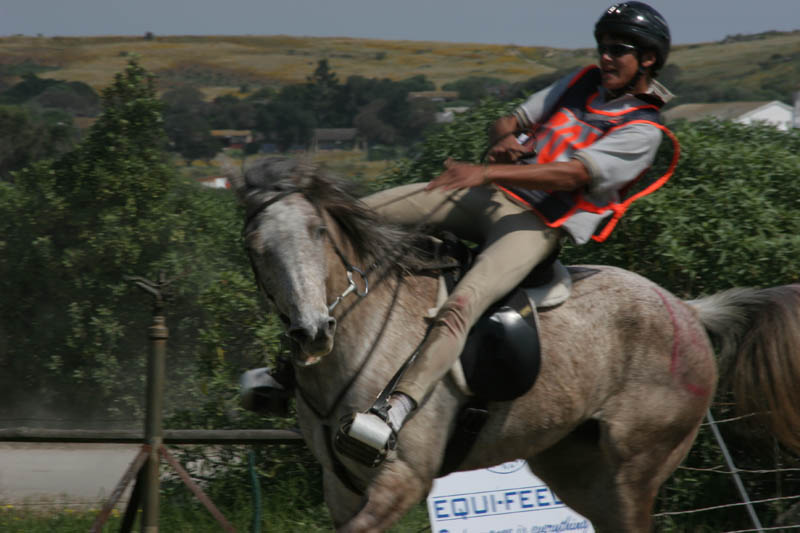
There was a real race to the finish on the 120km ride. Two Young Riders racing off. Not unusual from what I've seen in Namibia and South Africa. These folks call it a race. They don't always try to win, but the one who wins is celebrated by all, and those that try to win, really try to win. Both the 120km and 160km events in Namibia - Walvis Bay - were likewise highly contested - race to the finish.
There are some interesting differences (as well as similarities)between endurance in South Africa and the USA (and other parts of the world). They've been doing some form of Endurance since 1965. The father of Maurius de Swardt (the folks who gave me a horse to ride) actually organized the first 'marathon' for horses 31 years ago. Maurius was just a boy, but remembered it well. The rules have certainly evolved since then, but the riders and horses and spirit have been alive and well in SA for quite some time. Namibia and Botswana are also doing Endurance - both National (club - e.g. AERC) and FEI. These three countries are the only countries currently competing in the southern part of Africa... though Rojan said that Maritius (on the east coast - a major quarantine and export country for horses in Africa) is also thinking of doing a ride. I told him to give them my name :)
There are several siginificant differences.
One - both Namibia and South Africa have a qualification system in place. I think Namibia has stricter qualifications than SA, but basically the horses have to do x number of 60km rides (in Namibia it's 3) and then x number of 80km rides before they can move up to either 120km or 160km rides. Since there aren't that many rides in southern Africa, and folks have to travel fair distances to attend rides, this typically takes 2 seasons. So horses that are entered in 120km or 160km rides usually have a base of 2 years on them.
Two - the rides often have a cut off time. For the 160km, the cutoff was 14 hours ride time. The 80km also had a cutoff - maximum ride time was 8 hours. (Trilby would have to hurry a little over here). They do not polk along like we often do in the USA. Rojan and I rode the 80km ride, this was his horse's first 80km ride and he was 'taking it easy'. Our ride time was 6:45 - maximum would have been 8:00. Still a pretty good clip. I think the winning time was around 4:30 on a fairly flat and easy course.
Three - the National club keeps log books for every horse (at least this was the case in SA - I think it's the same in Namibia). Every ride is recorded, including eliminations for lameness or metabolics. The books also contain vaccination records similar to FEI passports, and horses must be keep current on their vaccinations, just like FEI. (the rider is issued a 'warning' if the vaccinations are out of date, or ID diagram incorrect).
Four - they still run some National rides with an Open Gate system. (though Namibia has almost gone entirely to FEI rules - same as AERC basically). This is more common in South Africa, but some think this will eventually change too. They come into the vetgate - and after they cross the line the horses have 25 minutes to recover. They don't even present to the vet until 25 minutes after they come in. At 25 minutes, they present, (if not recovered they are eliminated) - and then they have another 25 minutes of hold before leaving.
Similarities -
One - like the USA - they have weight division categories in addition to overall placement - light, standard, heavy. Plus Junior/Senior category. They are also very big on Team competitions - typically the clubs from the different regions field a team.
Two - except for the remnants of the Open Gate system in SA, they run the same rules, basically the same as FEI. They also do drug testing. They also have year end awards - sometimes based upon points and rides ridden, as well as judged awards 'most improved', etc.
And finally - they are friendly and supportive and will do anything to help each other out. This is the same the world over I think. It is very much a family sport here, plus a smattering of hired men doing the actual competing (e.g. Franz at Walvis Bay, and Willa at Saldanha). Men or boys who ride for the owners, for the farmers.
It's the same sport - but the most notable difference that I've observered is not beween SA/Namibia/Botswana and the rest of the world, but between the USA and the rest of the world. Certainly we have some very competitive rides - and probably more competitive on the East coast than the West. But we also have a very strong 'recreational' sport in the USA - miles and completions and riding simply for the scenery. This is something that I haven't seen elsewhere, at least not to this degree. (but I think it's a good thing to have this range - this depth - in the sport)
-later
Steph
Thursday, September 07, 2006
Monday, September 04, 2006
Saturday, September 02, 2006
Monday, August 28, 2006
Saturday, August 26, 2006
Tuesday, August 15, 2006
Wednesday, August 09, 2006
Monday, August 07, 2006
Saturday, August 05, 2006
Friday, August 04, 2006
Subscribe to:
Posts (Atom)