Saturday, March 20, 2021

Happy Trails Podcast: Traveling with Horses Full Time

RideClimb.com Podcast - Listen

March 4, 2021
by Jess

In this episode, Jess talks about her lifestyle as a digital nomad with horses. She talks about how and why she chose this life. She details her travels of the first year and the lessons she learned along the way.

Jess is then joined by Michelle Murphy and her daughter, Scout. This mother/daughter team travels the country full time with three horses and two dogs. They have designed their life to satisfy their passion for travel and exploration. Michelle shares that when they lived in Massachusetts, Scout battled with anxiety. Their intent in leaving was to escape the pressures of societal norms and live a stress-free life.

Scout and Joker navigating a tricky trail

Scout and Michelle have been traveling for two years. Scout enjoys her unique lifestyle. She learns through experience and has the freedom to pursue her interests. Artistic expression is very important to her. She paints regularly and has written her first book, A Magical Friendship Journey. It is the story of a band of thrown away misfits who come together to form a special family...

Listen:
https://rideclimb.com/podcast/traveling-with-horses-full-time/

Rochelle's ride to commemorate Australian pioneer women

YoungWitness.com.au - Full Article

March 18 2021
Peter Guthrie

A librarian from Gundagai who is reenacting journeys by Australian pioneer women will begin the first of six treks in Young this weekend.

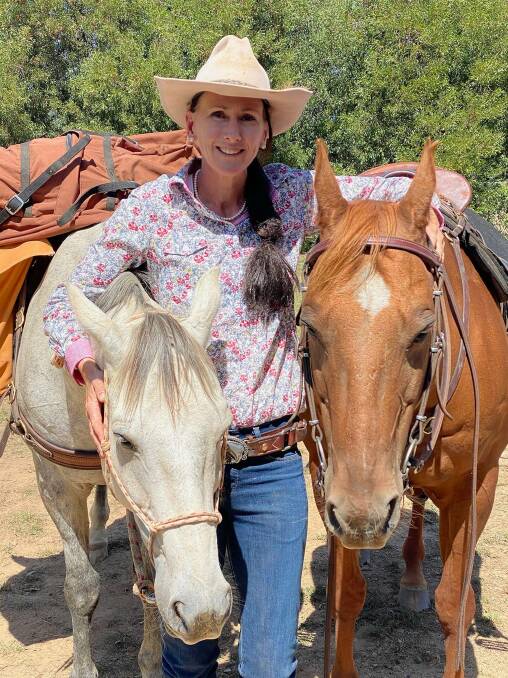
Rochelle Grey will travel with her two horses, Frodo, a 10-year-old grey Australian stock horse, Zee, a 16-year-old chestnut quarter horse, and border collie Rowdy.

The first journey, beginning Saturday, will commemorate Sarah Musgrave, the first European child born west of the Great Divide, who rode 90 miles through bushranger-infested bushland to attend her own wedding in 1853.

"I love Sarah's story - she was clearly a girl of enormous capacity, courage, and endurance. The route of the journey will pass through Young, Wombat, Harden, Galong, Binalong and Yass, over nine days," Rochelle said...

Read more here:
https://www.youngwitness.com.au/story/7170766/rochelles-ride-to-commemorate-australian-pioneer-women/

Thursday, March 18, 2021

Trail Etiquette - What to Do with Horse Poo

Americantrails.org - Full Article

Lora Goerlich, American Trails contributor and equestrian expert, shares trail etiquette around horse manure.

by Lora Goerlich

Trail apples - the organic, naturally beneficial, digested balls of vegetation that host nourishing insect meals for birds and game fowl while also providing valuable minerals for butterflies, moths and dragonflies. On unimproved trail tread, manure will break down in about two weeks with a little help from sun, rain, dung beetles and foraging birds. AND unlike tacky, foul-smelling human or dog feces (which are more frequently found trailside) horse manure is not considered hazardous or toxic and carries no pathogens of concern[1].

Manure on trails, at staging areas and camp sites is unavoidable. Knowing when to take it or leave it can be confusing for both equestrians and non-equestrians. Additionally, park agencies may not understand what to expect from riders and haven’t established or posted clear guidelines. Unless otherwise posted, the standards listed below are appropriate expectations for riders:...

Read more here:
https://www.americantrails.org/resources/trail-etiquette-what-to-do-with-horse-poo?x-craft-preview=MHhkFU2jyy&token=aW_Erh3gbSyVlTl8ELrcoVVb1ruM5dbm

Wednesday, March 17, 2021

Horse Hoofwear Innovations

TheHorse.com - Full Article

Today’s hoof protection options include a variety of glue-on shoes, hoof boots, and even orthotics. Learn about the pros and cons of each.

Posted by Heather Smith Thomas | Mar 10, 2021

Today’s hoof protection options include a variety of glue-on shoes, hoof boots, and even orthotics Far more shoeing and hoof care materials and products are available today than 20 or 30 years ago, and horses are the beneficiaries. No longer are farriers limited to just steel shoes and nails.

“At the first farrier conference I attended, in 1988, one topic of discussion was whether glue-on shoes would ever be possible,” says Pat Reilly, chief of farrier services at the University of Pennsylvania’s New Bolton Center School of Veterinary Medicine, in Kennett Square. “Now glue-on shoes are commonplace; it’s amazing that we’ve made that much progress in my professional lifetime...”

Read more here:
https://thehorse.com/185720/horse-hoofwear-innovations/?utm_medium=Lameness+enews&utm_source=Newsletter

Sunday, March 14, 2021

2021 AERC Convention Notes: Dr. Melissa Ribley on Riding in Different Conditions

TheSweatyEquestrian.com - Full Article

3/11/2021
by Tamara Baysinger

I always enjoy presentations by Melissa Ribley, DVM. Her talk at the AERC Unconventional Convention on March 6, 2021, was especially effective in sharing her passion for traveling to endurance rides all across the country. My notes capture the highlights, but there's no substitute for the full video, now available from AERC through the end of the month.

Dr. Ribley is an extremely experienced endurance vet and rider. Not only does her AERC record span well over 20,000 miles, it also reflects her love of traveling with her horses. Competing in different regions means implementing good hauling practices and being prepared for all types of climate and terrain. Dr. Ribley shared tips on all counts.

Five Reasons to Ride Out-of-Region

Dr. Ribley started by sharing ​some enticing reasons to explore endurance rides in other regions:...

Read more here:
https://www.thesweatyequestrian.com/sweatyequestrianblog/2021-aerc-convention-notes-dr-melissa-ribley-on-riding-in-different-conditions

Don’t Let Your Horse Hay Go Up in Flames

Thehorse.com - Full Article

Learn how to avoid combustion and barn fire caused by your stored hay.

Posted by Clair Thunes, PhD | Jan 25, 2021

Q: A friend recently told me that stored hay can self-combust. I’d never heard of this before. I keep my hay in my horses’ barn, above the stalls, and now I’m terrified it’s going to catch fire! Should I be concerned, and how can I store hay and keep my horses safe?

A: It is, indeed, true that under certain conditions, hay can self-combust. In fact, it’s a major cause of barn fires along with electrical malfunction, poor housekeeping, and careless work habits.

The No. 1 cause of hay self-combustion is that it was put-up (stored) with too high of a moisture content. Whether you should be concerned will depend on the conditions under which your hay was baled...

Read more here:
https://thehorse.com/110861/dont-let-your-horse-hay-go-up-in-flames/?utm_medium=Farm+barn+enews&utm_source=Newsletter

Wednesday, March 10, 2021

2021 AERC Convention Notes: Dr. Langdon Fielding on Electrolyte Problems in Endurance Horses

TheSweatyEquestrian.com - Full Article

by Tamara Baysinger
3/9/2021

I love seminar notes. Rarely can I take the time to go back and watch an entire presentation, but I do re-read my scribbles for a refresher on the key points. I hope that sharing them here will be helpful to you as well.

Of course, I can’t possibly share all the details from this stellar session by Langdon Fielding, DVM, MBA, DAVECC, DACVSMR, and self-proclaimed electrolyte fanatic. To really take advantage of his generosity, register with AERC to access the 2021 Unconventional Convention content, which will be available through the end of March 2021.

Sodium in Endurance Horses

Dr. Fielding began by sharing a typical lab panel taken from an “Ain’t Doin’ Right” horse at an endurance ride. The panel showed higher than normal sodium and lower than normal potassium, chloride, and calcium. He posed the question: Is the problem here too much sodium or too little water? This horse’s sodium was high. How did it get that way? Either he was given too many electrolytes, or he lost more water through sweat then he replaced by drinking. He may also have been dehydrated before the start.

If the horse’s lab panel had shown low sodium levels instead, Dr. Fielding would have been asking if we didn’t administer enough electrolytes, or if the horse actually drank too much. He observed that although it is possible (such as after a tough haul), horses rarely begin rides deficient in electrolytes...

Read more here:
https://www.thesweatyequestrian.com/sweatyequestrianblog/2021-aerc-convention-notes-dr-langdon-fielding-on-electrolyte-problems-in-endurance-horses

Monday, March 08, 2021

2021 AERC Convention Notes: Dr. Stephanie Seheult on How Your Body Works with Your Horse

TheSweatyEquestrian.com - Full Article

by Tamara Baysinger
3/6/2021

Was anybody else thrilled to see that both days of AERC’s 2021 Unconventional Convention start with a focus on rider fitness? It seems to me that interest in this topic has increased recently. Maybe it’s not my imagination!

Dr. Stephanie Seheult kicked things off with a session entitled “How Your Body Works with Your Horse." Dr. Seheult is a Doctor of Physical Therapy with a Bachelors in Health Science, as well as an active equestrian. Most of her clients at Advanced Physio are also riders.

In her presentation, Dr. Seheult focused on the importance of balance in the pelvis and its surrounding muscles. She noted that, in the saddle, many riders feel one seatbone more than the other. Riders may also sit off to one side.

These imbalances worsen as we fatigue – and that’s no small matter for those of us who ride 25, 50, or more miles at a stretch. Dr. Seheult's focus was on the rider, but of course our imbalances affect our horses as well.

Dr. Seheult described two, common causes of pelvic imbalance:...

Read more here:
https://www.thesweatyequestrian.com/sweatyequestrianblog/2021-aerc-convention-notes-dr-stephanie-seheult-on-how-your-body-works-with-your-horse

Wednesday, March 03, 2021

Bahrain: Hope in the saddle

GulfWeekly.com - Full Article

By Mai Al Khatib-Camille
mai.alkhatib@gulfweekly.com
March 3- March 9, 2021

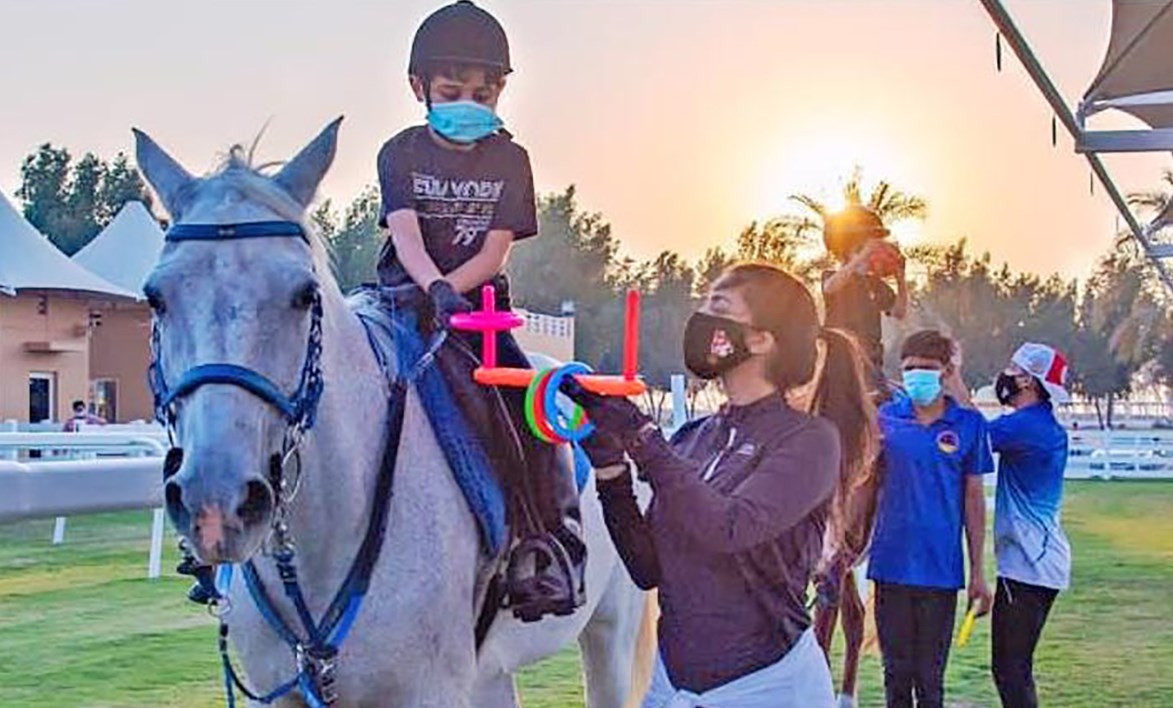
Equine enthusiast Haya Jamal Isa is building emotional bridges for children with autism in Bahrain through her love of horses.

The 23-year-old soon-to-be-mum has been providing equine therapy, known as ‘hippotherapy’ for autistic youngsters aged three to 12 since February last year, in a bid to help them improve their motor, emotional and sensory sensations that will assist them with daily challenges.

“I wanted to create something new, using my love for horses, to benefit the community,” said Haya who is studying therapeutic riding online from a US Indiana university and working on the project under the guidance of the Bahrain Royal Equestrian Endurance Federation...

Read more here:
http://www.gulfweekly.com/Articles/42241/Hope-in-the-saddle

Friday, February 26, 2021

Breed Profile: The Shagya-Arabian

FEI.org - Full article

26 October 2021
Words by Patricia Salem

We find out more about this sturdy, brave and fast horse...

If you admire the appearance of Arabian horses, be sure to check out the Shagya-Arabian, a related breed that brings new characteristics and versatility to the beloved classic desert horse!

Here’s what you need to know about this speedy, intrepid, and friendly sport horse, equally comfortable clearing jumps, Endurance racing, and wowing judges in the Dressage ring.

Tell us about Shagya-Arabian

The Shagya-Arabian breed was originally developed to create a horse that had the endurance of the Arabian with a heavier build suitable for cavalry work and carriage pulling!

The breed began way back in 1789 at Babolna, Hungary, when the military there combined the bloodlines of top Bedouin Arabians with larger native horses...

Read more here:
https://www.fei.org/stories/lifestyle/my-equestrian-life/breed-profile-shagya-arabian

Wednesday, February 24, 2021

Is There a ‘Right Kind of Salt’ for Horses?

Thehorse.com - Full Article

An equine nutritionist addresses the different types of salt available and how to pick the right one.

Posted by Clair Thunes, PhD | Feb 22, 2021

Q: I know I should give my horse salt every day. Does it matter which kind I choose? A: Providing access to or giving salt every day ensures your horse’s maintenance sodium needs are met, which is vital for hydration. So, the first thing to do is make sure you’re feeding sodium chloride and not Lite Salt, which is a blend with potassium chloride that doesn’t provide as much sodium.

Sodium chloride comes in many forms, from plain white blocks to red mineralized blocks to loose forms of the same, plus iodized, sea salt, kosher salt, Himalayan salt, and others. I believe horses should have salt available at all times when not working, and my preference is a plain white salt block unless your horse prefers the taste of another form...

Read more here:
https://thehorse.com/110471/is-there-a-right-kind-of-salt-for-horses/?utm_medium=Nutrition+enews&utm_source=Newsletter

Monday, February 22, 2021

Endurance Horse Podcast: EPM the Master of Disguise - Part 1 of 3 ‘EPM Stories’

EnduranceHorsePodcast - Listen

Welcome to Episode 41 of Endurance Horse Podcast

EPM - The Master of Disguise - Stories of EPM

Part 1 of a 3 part series

Created by: Christina Hyke
February 12th 2021

Today Jim & I tell you about the most difficult day of my life. The day all horse and pet owners dread, the day you have to say goodbye.

This is a difficult episode, as it is about the loss of our beloved Houdini.

EPM will be the topic of the next three episodes. Part one is dedicated to allowing other horse owners to share with you their personal experiences with diagnosing and the ensuing battle with EPM. Most of them won, some did not...

Listen:
https://endurancehorsepodcast.podbean.com/e/epm-the-master-of-disguise-part-1-of-3-epm-stories/

Saturday, February 13, 2021

Keeping the Horse’s Hindgut Happy

Thehorse.com - Full Article

Getting back to basics and simplifying meals might be the key to keeping the horse’s hindgut healthy and functioning properly. Learn more in this article excerpt from the February 2021 issue of The Horse.

Posted by Katie Navarra | Feb 6, 2021

Horses are powerful, athletic animals. Their digestive systems, however, are delicate compared to those of most other types of livestock. Ruminants such as cattle and sheep have multicompartment stomachs. Saliva created by chewing a cud processes food in the front half of ruminants’ digestive tracts. Horses, however, rely on a metabolically complex fermentation process. And because horses only have one stomach, most of that fermentation occurs in the back part or hindgut.

Despite making up the largest portion of a horse’s gastrointestinal (GI) tract, the hindgut, which includes the cecum and large colon (or large intestine), often receives far less attention from owners than the stomach or small intestine, says Kenneth Kopp, DVM, a consulting veterinarian based in St. Louis, Missouri...

Read more here:
https://thehorse.com/197125/keeping-the-horses-hindgut-happy/?utm_medium=Reader+Favorites+enews&utm_source=Newsletter

Wednesday, February 03, 2021

Veterinarians are Considering Lecithin for Treating and Preventing Ulcers

GettyEquineNutrition.com - Full Article

By Juliet M. Getty, Ph.D.

Your horse has an ulcer? “Give him omeprazole.”

Your horse is traveling on a long trip? “Give him omeprazole.”

Your horse is taking pain medication? “Give him omeprazole.”

Sound familiar?

Omeprazole, produced by Merial as GastroGard® and the less concentrated UlcerGard®, is the go-to drug for all these reasons and more. One of my clients recently said, “The people at my barn feed omeprazole like it’s candy!” Does omeprazole have any benefits?

Yes, particularly for ulcers that are found in the upper squamous region of the stomach that is not protected by a mucus layer. Short term usage is usually not problematic as long as care is taken to wean the horse off of it, lest there be a rebound acid effect.

But usage beyond 4 weeks, or giving your horse omeprazole for other reasons, is not a good idea...

https://gettyequinenutrition.com/pages/veterinarians-are-considering-lecithin-for-treating-and-preventing-ulcers

Tuesday, February 02, 2021

Metabolites could be key to predicting endurance horse success, researchers say

Horsetalk.co.nz - Full Article

February 1, 2021
Horsetalk.co.nz

The metabolitic signatures of Endurance horses could potentially be used to predict their performance in competition, according to researchers.

Researchers in Qatar said performance in Endurance racing depends on the interplay between physiological and metabolic processes.

“However, there is currently no parameter for estimating the readiness of animals for competition.”

Alana Halama and her fellow researchers, reporting in the journal Metabolites, set out to characterize the metabolic consequences of endurance racing and to establish a metabolic performance profile for those animals.

The study team monitored metabolite composition in blood plasma samples from 47 Arabian horses participating in endurance races, using a broad non-targeted metabolomics approach...

Read more here:
https://www.horsetalk.co.nz/2021/02/01/metabolites-endurance-horse-success/

Monday, February 01, 2021

American Horse Publications Launches Fifth Equine Industry Survey, Sponsored by Zoetis

POSTED ON JANUARY 18, 2021 BY CHRISTINE BRUNE

American Horse Publications (AHP) launches its fifth Equine Industry Survey at www.ahpequineindustrysurvey.com. Horse owners who live in the United States, are 18 years of age and older, and who currently own or manage at least

The survey, which is conducted every three years, will gauge participation trends and management practices in the U.S. equine industry, identify critical issues facing the equine industry as perceived by those who own or manage horses, and better understand issues pertaining to horse health.

The online survey is made possible by a sponsorship from Zoetis, the leading animal health company dedicated to improving equine wellness, every day. Zoetis has sponsored the survey since its inception in 2009.

“Zoetis is proud to continue our sponsorship of the AHP Equine Industry Survey,” said Jeannie Jeffery, vice president of the Zoetis U.S. equine business. “We hope that the survey will continue to help identify successes and opportunities for improvement in the equine industry that horse owners, veterinarians and professionals can unite to resolve.”

“AHP is grateful for its partnership with Zoetis to provide ongoing and vital data on the trends in horse care, management, and welfare of horses in the U.S.,” said Christine W. Brune, AHP executive director. “We appreciate the collaborated effort of AHP members and the industry in promoting this survey and will strive to maintain or exceed previous responses in 2021.”

The study is anonymous; this means that no one – not even members of the research team – will be able to associate information that is given with respondents. When the survey results are tallied, only aggregated results will be presented.

The survey sponsor and AHP members who promote the survey will receive complete results of the 2021 survey to release through their own channels up to 60 days prior to release of the survey results to the AHP membership. The general equine industry may request a summary of this new information by contacting the AHP office at ahorsepubs@aol.com in October 2021.

Horse owners and enthusiasts are invited to promote the survey by sharing this link with horse-owner groups and individual horse owners. The more information we collect, the better we make our world for horses.

The 2021 AHP Equine Industry Survey is being conducted by American Horse Publications (AHP). Dr. C. Jill Stowe is providing consulting services for data collection and analysis to the AHP. Dr. Stowe is currently an associate professor of Agricultural Economics at the University of Kentucky.
Friday, January 29, 2021

Horse Podcast Ep 89: The Great Trek – Riding Across the USA

EquestrianAdventuresses.com Podcast - Listen

Posted byutetonia
January 27, 2021

On today’s episode, Ute talks with Kathleen Schmitt, Equestrian Adventuress of the first hour. After finishing her education including horsemanship training in England and Germany, Kathleen headed off to her personal adventure of a lifetime. She crossed the USA from coast to coast on the back of her Arabian part-bred Murphy accompanied by her dog Country Boy who went along as her protector. This ride took place in 1981, a time without internet, mobile phones or hand-held GPS devises. Kathleen only had an unreliable map and a direction: West! She was on trail for seven months, crossing mountains, plains and deserts. She met countless people on the ride, got lost ever so often and finally published a book about her ride recently. We talk about her ride, about her book and why it took her such a long time to write it.

Listen:
https://equestrianadventuresses.com/2021/01/27/horse-podcast-ep-89-the-great-trek-riding-across-the-usa/

Wednesday, January 20, 2021

Gaited Horse Versatility – Myths or Facts?

WeRide-magazine.com - Full Article

By Lisa Bialy

Because there is so much misinformation out there about the smooth gaited horse breeds, I have collected and compiled a list of “myths” and “facts” with respect to the versatility of the gaited horse. Sadly, there are so many myths and I’m sure I did not cover every one of them! My facts are based on research and also from personal experience. Over the past 16 years, I have owned several gaited breeds, including Walking Horses, Peruvian Horses, Foxtrotters and Rocky Mountain Horses. I have worked with several excellent trainers (gaited and non-gaited), from dressage and eventing to Western Vaquero style. I have raised and trained several of my own Peruvian and Walking Horses, and have rehabbed rescues, including some ex-biglick Walking Horses. While I mostly trail ride, I enjoy doing about everything from parades to musical performances, obstacle and ranch work, some liberty work, dressage and endurance. I am passionate about learning everything I can about these awesome horses!

Okay, here we go!!...

Read more here:
https://weride-magazine.com/2021/01/16/gaited-horse-versatility-myths-or-facts/

Thursday, January 14, 2021

Vet Check, Halfway Across the Country

HorseNetwork.com - Full Article

Rebecca Didier
January 12, 2021

There aren’t many of us who will ride a horse clear across the country, but in 1982, before GPS and cell phones, Melissa Chapman did it. On her own with just her horse and her dog for company, Melissa depended on the kindness of strangers to help her complete her journey. In this excerpt from her memoir, Distant Skies: An American Journey on Horseback, we see how a sudden sickness led to a chance meeting that would impact her adventure in more ways than one.

***

The sun burned high and hot when I stopped Rainy in the shadow cast by a large billboard along the side of the two lanes of Route 54. Rainy snatched at the green grass growing thick there, the reins lying loose on his neck. Gypsy’s tongue hung out as she stretched in front of me on the saddle. Me, I just stared, in wonder you could say, up at the great sunflower welcoming us to Kansas.

Halfway.

We were halfway across the country...

Read more here:
https://horsenetwork.com/2021/01/vet-check-halfway-across-the-country/?utm_source=Horse+Network+Email+List&utm_campaign=e0e47b5cc2-jan_14_2020&utm_medium=email&utm_term=0_5694ca6b0c-e0e47b5cc2-84641243&goal=0_5694ca6b0c-e0e47b5cc2-84641243&mc_cid=e0e47b5cc2&mc_eid=b3c9897994

Wednesday, January 13, 2021

Keeping Water Troughs Thawed With or Without a Heater

Thehorse.com - Full Article

Our equine nutritionist offers tips and asks for your input on dealing with ice in horse watering tanks.

Posted by Clair Thunes, PhD | Jan 9, 2021

Q. Winter has barely started, and I’m already tired of breaking ice in my horses’ water trough. Is there anything I can do to help stop the water from freezing other than some kind of water heater?

—Via e-mail

A. We all know how important it is for our horses to have ready access to water, but this can pose challenges when temperatures fall below freezing and you’re unable to use a water heater. It’s a lot of, literally, digit-numbing work and sometimes near impossible to break the ice when temperatures fall. There are some things you can try that might help. However, keep in mind that many of these are less effective as temperatures decrease...

Read more here:
https://thehorse.com/137146/keeping-water-troughs-thawed-with-or-without-a-heater/?utm_medium=Nutrition+enews&utm_source=Newsletter

Monday, January 11, 2021

How much does it cost to travel full time with horses?

RideClimb.com - Full Article

January 9, 2021
by Jess

Jess and Byron trail riding in Montana

We’ve been living in an RV and traveling with our horses since June 2018. The most common question we receive about our lives as digital nomads is how we afford it. This is usually asked with a tone of astonishment. People can’t believe that it’s possible to travel full time and not break the bank; with horses nonetheless! In my opinion it’s not that hard when compared to owning a home, raising children, etc. I’ll explain how we do it. How we make money

At this time our income comes entirely from Gunks Apps, a digital rock climbing guidebook platform that Byron and his partner Christian started in 2014. The income from this venture is very small but it continues to grow. We hope that it might one day sustain us completely...

Read more here:
https://rideclimb.com/how-much-does-it-cost-to-travel-full-time-with-horses/

Medical Grade Honey prevents surgical site infections

EquineScienceUpdate.blogspot.com - Full Article

Thursday, December 24, 2020

Medical Grade Honey prevents surgical site infections

Abdominal surgery is a major undertaking in horses, and not without significant risks to the patient. Colic operations, especially those that involve opening the gut wall, risk contaminating the wound with bacteria such that surgical site infection (SSI) is a potential complication.

Medical grade honey (MGH) has been used successfully to treat established infections in both humans and animals, and has been shown to improve wound healing of equine lacerations and significantly reduce infection rate.

Would the application of MGH help abdominal surgical wounds to heal?

A study by Gustafsson and colleagues investigated whether medical grade honey gel, applied on the linea alba during wound closure, would decrease the prevalence of incisional infections in horses undergoing colic surgery...

Read more here:
https://equinescienceupdate.blogspot.com/2020/12/medical-grade-honey-prevents-surgical.html

Friday, January 08, 2021

Keeping Rodents Out of Your Feed Room

Thehorse.com - Full article

Rats and mice spread disease and ruin horse feed. Learn how to reduce populations in your barn.

Posted by Clair Thunes, PhD | Jan 4, 2021

As an equine nutritionist who visits lots of feed rooms, I come in to contact with my fair share of rodents. At one large facility that backed a stream I came within three feet of several large rats snacking in the feed room. I didn’t seem to bother them at all, and the barn cat who was sunning himself in the doorway seemed to have decided they had him out numbered. With cold weather coming and native food sources becoming scarce, the attraction of food and bedding provided by our feed and tack rooms makes these unwanted guests almost a given. However, there are several important reasons why you should not accept the presence of these critters in your feed rooms...

Read more here:
https://thehorse.com/136721/keeping-rodents-out-of-your-feed-room/?utm_source=ActiveCampaign&utm_medium=email&utm_content=Equestrian+Home+D%C3%A9cor+%7C+Horse+Plays+Dead+%7C+Dani+the+BreyerFest+Horse+%7C+Turning+Soap+into+Ponies&utm_campaign=HC_Enewsletter2019-Wednesday+Jan+6+2021

Wednesday, January 06, 2021

Give Colic the Cold Shoulder This Winter

KER.com - Full Article

January 8, 2020
By Kentucky Equine Research Staff

Colic can strike at any time of the day, month, or year, but impaction colic occurs more frequently in winter. Decreased water intake usually carries the blame for these impactions, defined as a blockage in the large colon caused by any feedstuff undergoing digestion, though other management factors also contribute to the problem.

“Horses require approximately 5 to 15 gallons (20-55 liters) of water per day. Signs of inadequate water intake include production of dry, sparse feces and weight loss,” described Catherine Whitehouse, M.S., a nutrition advisor for Kentucky Equine Research.

Forage fermentation requires voluminous water, which is why the large colon and cecum are referred to as fermentation vats. Insufficient water intake forces the body to borrow water from the hindgut, which subsequently hinders the fermentation process and puts horses at risk for impactions...

Read more here:
https://ker.com/equinews/give-colic-the-cold-shoulder-this-winter/?highlight=give%20colic%20the%20cold%20shoulder%20this%20winter

Monday, January 04, 2021

Cold Weather Horse Colic

Thehorse.com - Full Article

With cold weather comes complicating factors that could increase horses’ colic risk.

Posted by Scott Leibsle, DVM | Nov 14, 2016

Well here we are again … winter! The average horse owner is likely well-acquainted with his or her horse’s colic risk regardless of the season, but with cold weather come complicating factors that all owners should prepare for.

The No. 1 cause of colic during winter is a lack of fresh, unfrozen water. Horses must drink 10-12 gallons of fresh water every day and can dehydrate quickly if water is unavailable. Horses that aren’t getting enough water are at a greater risk for conditions such as simple indigestion or impaction. A frozen water trough is the usual dehydration culprit, but occasionally horses choose to not drink water simply because it is so cold. Heaters for your troughs and buckets are therefore an absolute “must” to ensure continual access to water in the winter. Keep in mind that electrolyte supplements are not a suitable water substitute and do not mitigate the risk of dehydration. There is nothing wrong with adding (appropriate amounts of) electrolytes to your horse’s diet, but offer them in a separate container, leaving the main water supply clean and fresh. Horses might attempt to eat snow to compensate for some fluid loss, but snow is largely composed of air and will not provide the volume of water necessary to hydrate a 1,000-pound animal...

Read more here:
https://thehorse.com/120625/cold-weather-horse-colic/?utm_medium=Reader+Favorites+enews&utm_source=Newsletter