NEWS RELEASE
One Hundred Years Ago Today, One Million American Horses and Mules were Joined by American Soldiers in World War One
LEXINGTON, Ky (April 6, 2017) Today the United States commemorates its World War One Centennial, marking the 100th anniversary of its entry into the war, and Brooke USA is officially launching its Horse Heroes program to honor the one million American horses and mules who also served. Brooke USA’s goal is to raise one million dollars this year through its Horse Heroes program – one dollar in memory of each of those American horses and mules, to fund equine welfare programs in some of the poorest countries around the world. See Brooke USA’s special Horse Heroes edition of its newsletter: http://conta.cc/2oa7UKN
***
Brooke USA is a 501(c)(3) charity located at the Kentucky Horse Park in Lexington, which exists solely to support the overseas work of Brooke, the world's largest international equine welfare charity. For more than 80 years, Brooke has been alleviating the suffering of horses, donkeys and mules who work in some of the poorest communities on earth. Brooke's scientifically proven, practical and sustainable solutions to enormous welfare challenges improve the lives of equine animals and the people who depend on them across Africa, Asia, the Middle East and Central America. This year alone, Brooke reached 2 million equines, benefiting 12 million people in the developing world. To learn more, visit BrookeUSA.org.
Cindy Rullman, Brooke USA
859-296-0037
Cindy.Rullman@BrookeUSA.org
Thursday, April 06, 2017
Wednesday, April 05, 2017
Novel Equine Deworming Principles, Procedures in the Works
Thehorse.com - Full Article
By Stacey Oke, DVM, MSc
Apr 4, 2017
After the introduction of safe, effective, easy-to-administer chemical dewormers in the 1960s, the equine industry enjoyed the luxury of being able to control equine internal parasites with a simple push of a plunger.
Parasite-related conditions such as colic, diarrhea, poor hair coat, ill-thrift, poor performance, etc. were essentially eradicated. Rotational deworming programs—involving the frequent administration of chemical dewormers with various products—rapidly became the mainstay. Almost hand-in-hand with the use of those dewormers, however, came the age of resistance: Populations of internal parasites that could not be killed by those coveted chemical dewormers.
“Populations of roundworms and small strongyles resistant to chemical dewormers, also called anthelmintics, have been identified in all parts of the world,” explained Martin Nielsen, DVM, PhD, Dipl. EVPC, ACVM, assistant professor at the University of Kentucky’s Gluck Equine Research Center, in Lexington. “This once again puts horses at risk for the development of parasite-related diseases.”
There are only three classes of chemical dewormers (benzimidazoles, tetrahydropyrimidines, and macrocyclic lactones), and parasites have developed either established or developing resistance to all three. Combined with the fact that there are no new chemical dewormers in the pipeline for horses (a process that usually takes a minimum of five years), horses with once-treatable parasite-related health issues are now in the pre-1960s position of having no (or very few at the least) treatment options.
“New, nonchemical deworming options are necessary to continue to control equine internal parasites and optimize horse health, welfare, and quality of life,” said Nielsen...
Read more here:
http://www.thehorse.com/articles/36473/novel-equine-deworming-principles-procedures-in-the-works?utm_source=Newsletter&utm_medium=health-news&utm_campaign=04-04-2017
By Stacey Oke, DVM, MSc
Apr 4, 2017
After the introduction of safe, effective, easy-to-administer chemical dewormers in the 1960s, the equine industry enjoyed the luxury of being able to control equine internal parasites with a simple push of a plunger.
Parasite-related conditions such as colic, diarrhea, poor hair coat, ill-thrift, poor performance, etc. were essentially eradicated. Rotational deworming programs—involving the frequent administration of chemical dewormers with various products—rapidly became the mainstay. Almost hand-in-hand with the use of those dewormers, however, came the age of resistance: Populations of internal parasites that could not be killed by those coveted chemical dewormers.
“Populations of roundworms and small strongyles resistant to chemical dewormers, also called anthelmintics, have been identified in all parts of the world,” explained Martin Nielsen, DVM, PhD, Dipl. EVPC, ACVM, assistant professor at the University of Kentucky’s Gluck Equine Research Center, in Lexington. “This once again puts horses at risk for the development of parasite-related diseases.”
There are only three classes of chemical dewormers (benzimidazoles, tetrahydropyrimidines, and macrocyclic lactones), and parasites have developed either established or developing resistance to all three. Combined with the fact that there are no new chemical dewormers in the pipeline for horses (a process that usually takes a minimum of five years), horses with once-treatable parasite-related health issues are now in the pre-1960s position of having no (or very few at the least) treatment options.
“New, nonchemical deworming options are necessary to continue to control equine internal parasites and optimize horse health, welfare, and quality of life,” said Nielsen...
Read more here:
http://www.thehorse.com/articles/36473/novel-equine-deworming-principles-procedures-in-the-works?utm_source=Newsletter&utm_medium=health-news&utm_campaign=04-04-2017
How to Back a Trailer
 MelNewton.com - Full Article
March 28, 2017
Posted by Melinda
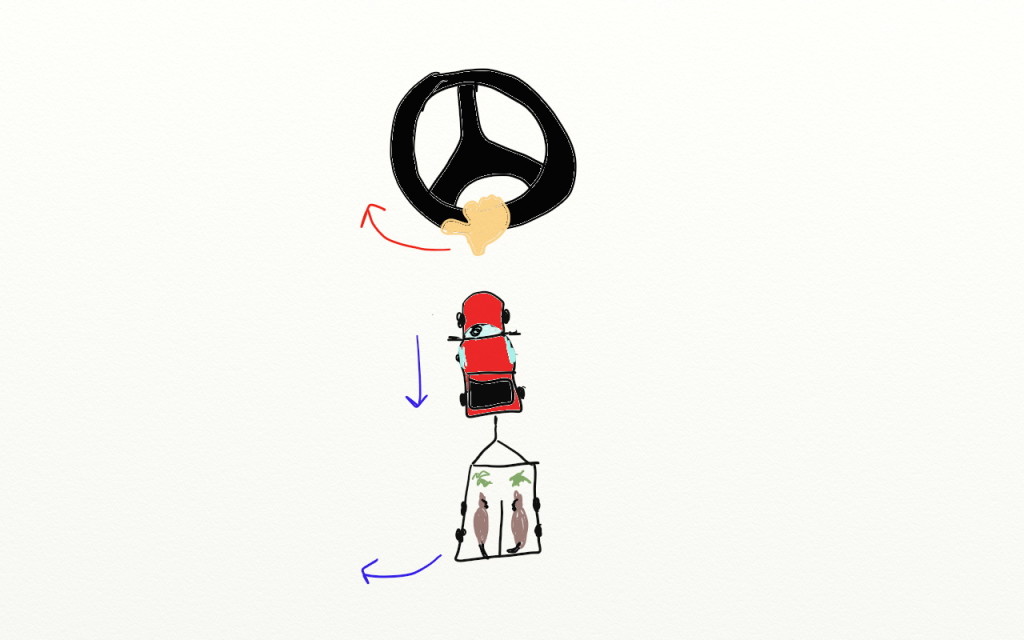
Backing a trailer is an essential skill as I was reminded over and over and OVER this year. Whether you have to put your trailer into a back-in only angled parking spot at the barn, make a “U” turn at a T intersection, navigate a tight ride camp, or turn around in your best friends driveway – knowing how to back a trailer is something you can’t afford to put off any longer.
There is 1 simple trick and 2 skills you need to master NOW.
I’m not going to lie. Certain truck/trailer combinations are easier to back and maneuver than others. My standard-cab long bed pick up + trailer was an absolute dream and I could wiggle my three-horse ANYWHERE. The Dodge MEGA cab 4 door turns-like-a-cruise-liner truck paired with any size trailer is an exercise in patience and near misses as I constantly mis-judge the semi-truck like room it needs to maneuver. BUT, the concepts are exactly the same. You are going to have to practice to get a feel of *your* particular rig, but my “trick” and the execution of the 2 basic skills is exactly the same whether you have a goose-neck, bumper pull, long bed, short bed etc.
The Trick
Don’t try to figure out the physics of how the truck is doing X while the trailer is doing Y. Just do this....
Read more here:
http://melnewton.com/2017/how-to-back-a-trailer/
Wednesday, March 29, 2017
Endurance Riding and Einstein
 Enduranceintrospection.com - Full Article
by Patti Stedman | Mar 28, 2017
Live as if you were to die tomorrow. Learn as if you were to live forever. –Mahatma Ghandi
When we first got into the sport of distance riding, we were no Einsteins, that’s for sure. But we certainly had his enthusiasm for mistakes!
Let me tell you about our first competition.
It was a 20-mile Novice Competitive Trail Ride sponsored by OAATS, near Akron, Ohio, a mere 3 hour drive from home. Our sum total of formal education in the sport was watching Mollie Krumlaw-Smith teaching a brief segment at Equine Affaire in Ohio several months prior.
Richard was competing on his barely 5 year old Arabian, Shantih. I had my 4 year old draft cross mare, the one I’d purchased to do some lower level dressage with, Tess.
To say that Tess was a drafty girl would be like saying Shantih was “green broke.” Both are the kindest possible descriptions.
We’d “conditioned” a bit, riding at Allegany State Park on a loop of trail that we were quite certain must be about 14 miles in distance, which turned out to be about 8 or 9. (No GPS back then and we hadn’t a clue about pacing. We were out there for hours, it had to be a long way, right?)
Richard had purchased a “custom made” saddle for endurance. It was a thing of beauty. Did it ever really fit Shantih? I kind of doubt it, but by the time he was six and had gone from a spindly creature to a broad specimen, I guarantee you it did not.
We bought a used truck camper, entered the ride, left after work on Friday so that we could settle in and relax on Saturday and then compete on Sunday before driving home.
I neatly organized my clothes for the weekend and left them folded on our bed. They never made it to the camper.
We got a little confused on the directions to the ride camp, got lost (and almost broke up right there on the highway outside of Akron), and arrived at camp so late that no one was there to greet us. So we just parked out of the way, tied one horse to each side of the trailer with a hay net full of hay and a bucket of water, and called it a night.
Tess ate her hay in no time and reminded me –gently (as was her way)– to refill it, by kicking the trailer hub cap with her size four shoes, and if that was too subtle, she picked up her water bucket with her teeth and clanged that against the aluminum. The dents from both remain to this day, sort of a testimony to our ignorance and Tess’ love of an endless hay buffet...
Read more here:
http://enduranceintrospection.com/wp/endurance-riding-and-einstein/
Sunday, March 26, 2017
Study: Post-Exercise Snacks Benefit Horses
Thehorse.com - Full Article
By Christa Lesté-Lasserre, MA
Mar 17, 2017
Your horse just had a fabulous workout, got really sweaty, and used up a lot of energy. Now what does he want you to do?
A) Put him back in his stall or paddock and say, “Good job, Buck. Lunch’ll be ready in an hour.”
B) Load him up in the trailer and head for home, where plenty of food and water is waiting for him.
C) Feed and water him right away, and give him plenty of time to finish his food.
Read more here:
http://www.thehorse.com/articles/34350/study-post-exercise-snacks-benefit-horses?utm_source=Newsletter&utm_medium=reader-favorites&utm_campaign=03-24-2017
By Christa Lesté-Lasserre, MA
Mar 17, 2017
Your horse just had a fabulous workout, got really sweaty, and used up a lot of energy. Now what does he want you to do?
A) Put him back in his stall or paddock and say, “Good job, Buck. Lunch’ll be ready in an hour.”
B) Load him up in the trailer and head for home, where plenty of food and water is waiting for him.
C) Feed and water him right away, and give him plenty of time to finish his food.
Read more here:
http://www.thehorse.com/articles/34350/study-post-exercise-snacks-benefit-horses?utm_source=Newsletter&utm_medium=reader-favorites&utm_campaign=03-24-2017
Saturday, March 25, 2017
4 Misconceptions About Alfalfa
Thehorse.com - Full Article
By Heather Smith Thomas
Mar 21, 2017
Despite all the science-backed suggestions about feeding alfalfa, it remains a misunderstood forage. The following are a few misconceptions worth clarifying.
Myth: An alfalfa-rich diet causes kidney problems.
“A normal, healthy horse can metabolize and excrete the extra protein in alfalfa just fine, if the horse has adequate water,” says Ray Smith, PhD, forage extension specialist at the University of Kentucky, in Lexington. Horses with kidney disease shouldn’t consume a high-protein diet (such as alfalfa), but the alfalfa itself won’t cause kidney disease...
Read more here:
http://www.thehorse.com/articles/38962/4-misconceptions-about-alfalfa?utm_source=Newsletter&utm_medium=reader-favorites&utm_campaign=03-24-2017
By Heather Smith Thomas
Mar 21, 2017
Despite all the science-backed suggestions about feeding alfalfa, it remains a misunderstood forage. The following are a few misconceptions worth clarifying.
Myth: An alfalfa-rich diet causes kidney problems.
“A normal, healthy horse can metabolize and excrete the extra protein in alfalfa just fine, if the horse has adequate water,” says Ray Smith, PhD, forage extension specialist at the University of Kentucky, in Lexington. Horses with kidney disease shouldn’t consume a high-protein diet (such as alfalfa), but the alfalfa itself won’t cause kidney disease...
Read more here:
http://www.thehorse.com/articles/38962/4-misconceptions-about-alfalfa?utm_source=Newsletter&utm_medium=reader-favorites&utm_campaign=03-24-2017
Thursday, March 23, 2017
Have You Created a Training Plan Yet?
 EatSleepRideRepeat.com - Full Article
MARCH 20, 2017
by SARAH
March is a tough time of year for getting out riding. I don’t know about you, but by this time, I am no longer excited about the snow and the cold. I find more excuses not to ride than i would have early in the winter, even though I know that now is the time to start ramping up my training. Its just the cold…. I am so sick of it. It has gone on long enough! This year is particularly bad, because we had a brilliant warm snap in February, so going back to temps near -20C feel more like I am jumping into the arctic ocean than looking toward spring.
So what do I do instead? I make my plan for the year! Its a great time to start because it will help me be accountable for the next few weeks while temps remain below 0, but it will also get me psyched up (or perhaps psyched out) because I get to see that the ride season is really not that far out and I have a clear path to get there. Yay!
Unless you are a spreadsheet whiz/junkie like myself, you may feel a little overwhelmed, so today I will share with you what I use to plan my rides.
1. I start with my main goal and a ride calendar...
Read more here:
https://eatsleepriderepeat.com/2017/03/20/have-you-created-a-training-plan-yet/
Parking Lot Ride
MelNewton.com - Full Article
March 23, 2017 Posted by Melinda Newton
Not going to lie, riding the 18 year-old in endless circles around the parking lot was not how I envisioned my first day of spring ride.
Epic spring rains followed by epic sunny skies made for a muddy horse that was perfect for a bareback jaunt in the blooming orchards.
That picture is as close as I got to the lovely blossoms.
Passively refusing to sidle up to the mounting block. Sticking going forward despite kicking heels. Spooking at non-existent monsters between trailers, violent spooking at 3 bikes riding down the deserted road. Leaning and hollowing and not walking in straight lines, offering a 1 mph walk or a bolty trot.
OK then.
Circles and more circles. Yielding to leg pressure. Yielding to the bit. Nope, not taking gait or speed preferences at this time from the pony. That’s a bird. That’s a glint of sunshine. THAT my dear is a leaf.
20 minutes later I had a rideable horse and I was out of riding time...
Read more here:
http://melnewton.com/2017/parking-lot-ride/
March 23, 2017 Posted by Melinda Newton
Not going to lie, riding the 18 year-old in endless circles around the parking lot was not how I envisioned my first day of spring ride.
Epic spring rains followed by epic sunny skies made for a muddy horse that was perfect for a bareback jaunt in the blooming orchards.
That picture is as close as I got to the lovely blossoms.
Passively refusing to sidle up to the mounting block. Sticking going forward despite kicking heels. Spooking at non-existent monsters between trailers, violent spooking at 3 bikes riding down the deserted road. Leaning and hollowing and not walking in straight lines, offering a 1 mph walk or a bolty trot.
OK then.
Circles and more circles. Yielding to leg pressure. Yielding to the bit. Nope, not taking gait or speed preferences at this time from the pony. That’s a bird. That’s a glint of sunshine. THAT my dear is a leaf.
20 minutes later I had a rideable horse and I was out of riding time...
Read more here:
http://melnewton.com/2017/parking-lot-ride/
Monday, March 20, 2017
Endurance and Conscious Competence
Enduranceintrospection.com - Full Article
by Patti Stedman | Nov 19, 2014 | Patti's Blog
There is no end to education. It is not that you read a book, pass an examination, and finish with education. The whole of life, from the moment you are born to the moment you die, is a process of learning.
–Jiddu Krishnamurti
Long before I joined AERC’s Education Committee, I’ve been a teacher.
I come by it genetically, I think. My mother was a third grade teacher and my Dad has a gift for sharing ideas and telling stories to illustrate a point. So I combined my passion for horses and teaching by becoming a certified riding instructor during college before realizing that health insurance and a steady income were going to be beneficial to a theoretical ‘grown up.’
But even as my career changed and evolved to what it is today, teaching has been what I love to do. I think part of it is because I am addicted to learning; I sometimes think I got caught in the intellectual curiosity of a 4th grader. I want to know why and how.
One of my favorite models about learning is the Conscious/Competence matrix, which has been attributed to several different individuals. Never mind that, I think what’s most fascinating is how it fits in with our sport.
We all know that endurance riding has a steep learning curve; I don’t know a single endurance rider, even those with great success, who will not admit to having made dozens of mistakes at the start of their career. Most of us will admit that we still make mistakes, and sadly, most of these come at the expense of our horse’s well-being and therefore we try hard not to make the same mistake repeatedly.
As we’ve begun formalizing and encouraging members to conduct Endurance Clinics and mentor new riders, one of the phenomena I notice is where riders seem to fit in the below matrix:...
Read more here:
http://enduranceintrospection.com/wp/endurance-and-conscious-competence-or-not/
by Patti Stedman | Nov 19, 2014 | Patti's Blog
There is no end to education. It is not that you read a book, pass an examination, and finish with education. The whole of life, from the moment you are born to the moment you die, is a process of learning.
–Jiddu Krishnamurti
Long before I joined AERC’s Education Committee, I’ve been a teacher.
I come by it genetically, I think. My mother was a third grade teacher and my Dad has a gift for sharing ideas and telling stories to illustrate a point. So I combined my passion for horses and teaching by becoming a certified riding instructor during college before realizing that health insurance and a steady income were going to be beneficial to a theoretical ‘grown up.’
But even as my career changed and evolved to what it is today, teaching has been what I love to do. I think part of it is because I am addicted to learning; I sometimes think I got caught in the intellectual curiosity of a 4th grader. I want to know why and how.
One of my favorite models about learning is the Conscious/Competence matrix, which has been attributed to several different individuals. Never mind that, I think what’s most fascinating is how it fits in with our sport.
We all know that endurance riding has a steep learning curve; I don’t know a single endurance rider, even those with great success, who will not admit to having made dozens of mistakes at the start of their career. Most of us will admit that we still make mistakes, and sadly, most of these come at the expense of our horse’s well-being and therefore we try hard not to make the same mistake repeatedly.
As we’ve begun formalizing and encouraging members to conduct Endurance Clinics and mentor new riders, one of the phenomena I notice is where riders seem to fit in the below matrix:...
Read more here:
http://enduranceintrospection.com/wp/endurance-and-conscious-competence-or-not/
Wednesday, March 15, 2017
Is Your Deworming Protocol Helping Make Worms Resistant?
USEF.org
by US Equestrian Communications Department | Mar 13, 2017, 11:00 AM EST
Here’s the bad news: worms are becoming resistant to our efforts to kill them, thanks in part to traditional deworming protocols that called for dosing horses every two months. That was the thinking when the first broad-spectrum dewormers (also called anthelmintics) hit the market back in the 1960s, but over the decades that protocol helped the worms become less sensitive to the medicine. “And there are no new dewormers available for immediate release,” said Dr. Jacquelene Pasko, a field care associate at Hagyard Equine Medical Institute, US Equestrian’s Official Equine Pharmacy and Veterinary Service Provider.
So veterinarians and horse owners today use a different strategy to maximize dewormers’ effectiveness and keep potentially harmful internal parasites at bay. Here’s what you need to know:
The target.
“People used to target for the large strongyles, and that’s kind of how we got into the two-month rotational deworming cycle that we now have to move away from,” said Pasko. “Those large strongyles are still a concern if they’re in a horse in large numbers, but today we have them pretty much under control. So the ones that we’re targeting now are the small strongyles and the tapeworms in our adult horses.”
Your horse’s immune system is your ally.
“Horses have some natural immunity to worms,” said Pasko. “Different horses are going to have different immune status, just like they would to anything else their immune system is exposed to. We’ve found that in a horse that doesn’t need deworming frequently, you don’t see any additional health benefits by deworming him more often than he needs. The only thing that does is help accelerate the process of dewormer resistance.”
Resistance risk factors.
Frequently deworming a horse that doesn’t need it is one. Another: only using the same type of dewormer every time. “Different worms are sensitive to different dewormers,” said Pasko. “So if you use the same type of dewormer over and over again, you’re not affecting the worms that aren’t sensitive to it.” Worse, you’re actually encouraging the worms that are sensitive to it to become resistant.
“The worms are going to try to survive,” Pasko explained. “So the ones that have genes that allow them to expel the dewormer or be insensitive to it are the ones that are going to be left, so effectively you’d be selecting for those resistant worms. You want a worm population that has sensitive worms so that when you use a dewormer you actually get an effect.”
Monitor your horse’s fecal egg count.
“For adult horses, we recommend doing a fecal egg count both in the spring and in the fall,” said Pasko. “We’re looking at the amount of eggs that horse is shedding, and the fecal egg count the best tool we have to evaluate that so we can tailor the deworming to the horse’s specific needs. We use that to determine whether a horse is a high, low, or moderate shedder, based on the number of eggs we count per gram of feces, and we base our deworming recommendations on those categories.”
Pasko recommends taking a fecal egg count in the spring and fall, when worms tend to shed more eggs. Different dewormers have different lengths of effectiveness, but, in general, you want to make sure to take the fecal egg count when the most recent dewormer you’ve given is just past its window of effectiveness—your vet can help with the proper timing, which will help you get an accurate picture of how many eggs your horse is shedding.
To test for resistance to a specific dewormer type, consider taking a fecal egg reduction count (FERC), too.
“For that, you take your initial fecal egg count, then deworm the horse with the appropriate dewormer, and then a couple of weeks later you take a second fecal egg count (the FERC),” explained Pasko. “You’re looking to compare the number of eggs in the first fecal egg count versus the amount in the second. Your vet will be looking for a certain percentage of decrease in those numbers, and if the count doesn’t reach that percentage, then there’s a suspicion that you might have some resistance to that dewormer. That might influence the dewormer choices you make.”
Testing multiple horses in a herd—provided the horses have been on the property for some time and haven’t recently shipped in from elsewhere—can provide a good general picture of how widespread any resistance might be, Pasko added. Be sure to include the highest egg-shedders to get a clearer picture of dewormers’ effectiveness.
Your horse needs a tailored deworming schedule.
Your vet will also consider the climate where your horse lives when making a deworming recommendation, but broadly speaking, Pasko says, “Low shedders really only need to be dewormed once or twice a year, both for strongyles and tapeworms. For moderate shedders, we usually recommend those twice-yearly dewormings as well as one or two additional dewormings in spring and fall, because those are the times when the worms are shedding the most eggs. For the high shedders, you have the basic twice-a-year deworming for strongyles and tapeworms, and then we’d recommend two to three additional dewormings divided up between the spring and the fall, depending on how the seasons progress where the horse is located.”
Mix it up.
Vary the types of dewormers, but consult with your veterinarian, who can help you determine when to use what. “Different dewormers work for strongyles than on tapeworms, so what you use depends on what you’re targeting,” said Pasko. “The twice-a-year dewormings are targeting strongyles and tapeworms, and the additional deworming targets strongyles.”
“Deworm” your pastures, too.
The goal of a good deworming protocol isn’t only to deworm your horse. It’s also to decrease environmental contamination. “We’re really trying to decrease egg-shedding into the environment, where it can then be picked up by other horses,” Pasko said.
Where practical, periodically removing manure from pastures and turnout areas where horses graze is one idea. Controlling pasture population density is also helpful: a crowded pasture means more manure in more places where horses graze, and that’s how worms spread. If you spread manure on your grazing fields, Pasko says, be sure the manure is composted first.
“Composting manure properly should take care of any larvae that was in that manure,” she said. “But when you spread uncomposted manure that has live larvae in it, you’re just contaminating your pastures more.”
by US Equestrian Communications Department | Mar 13, 2017, 11:00 AM EST
Here’s the bad news: worms are becoming resistant to our efforts to kill them, thanks in part to traditional deworming protocols that called for dosing horses every two months. That was the thinking when the first broad-spectrum dewormers (also called anthelmintics) hit the market back in the 1960s, but over the decades that protocol helped the worms become less sensitive to the medicine. “And there are no new dewormers available for immediate release,” said Dr. Jacquelene Pasko, a field care associate at Hagyard Equine Medical Institute, US Equestrian’s Official Equine Pharmacy and Veterinary Service Provider.
So veterinarians and horse owners today use a different strategy to maximize dewormers’ effectiveness and keep potentially harmful internal parasites at bay. Here’s what you need to know:
The target.
“People used to target for the large strongyles, and that’s kind of how we got into the two-month rotational deworming cycle that we now have to move away from,” said Pasko. “Those large strongyles are still a concern if they’re in a horse in large numbers, but today we have them pretty much under control. So the ones that we’re targeting now are the small strongyles and the tapeworms in our adult horses.”
Your horse’s immune system is your ally.
“Horses have some natural immunity to worms,” said Pasko. “Different horses are going to have different immune status, just like they would to anything else their immune system is exposed to. We’ve found that in a horse that doesn’t need deworming frequently, you don’t see any additional health benefits by deworming him more often than he needs. The only thing that does is help accelerate the process of dewormer resistance.”
Resistance risk factors.
Frequently deworming a horse that doesn’t need it is one. Another: only using the same type of dewormer every time. “Different worms are sensitive to different dewormers,” said Pasko. “So if you use the same type of dewormer over and over again, you’re not affecting the worms that aren’t sensitive to it.” Worse, you’re actually encouraging the worms that are sensitive to it to become resistant.
“The worms are going to try to survive,” Pasko explained. “So the ones that have genes that allow them to expel the dewormer or be insensitive to it are the ones that are going to be left, so effectively you’d be selecting for those resistant worms. You want a worm population that has sensitive worms so that when you use a dewormer you actually get an effect.”
Monitor your horse’s fecal egg count.
“For adult horses, we recommend doing a fecal egg count both in the spring and in the fall,” said Pasko. “We’re looking at the amount of eggs that horse is shedding, and the fecal egg count the best tool we have to evaluate that so we can tailor the deworming to the horse’s specific needs. We use that to determine whether a horse is a high, low, or moderate shedder, based on the number of eggs we count per gram of feces, and we base our deworming recommendations on those categories.”
Pasko recommends taking a fecal egg count in the spring and fall, when worms tend to shed more eggs. Different dewormers have different lengths of effectiveness, but, in general, you want to make sure to take the fecal egg count when the most recent dewormer you’ve given is just past its window of effectiveness—your vet can help with the proper timing, which will help you get an accurate picture of how many eggs your horse is shedding.
To test for resistance to a specific dewormer type, consider taking a fecal egg reduction count (FERC), too.
“For that, you take your initial fecal egg count, then deworm the horse with the appropriate dewormer, and then a couple of weeks later you take a second fecal egg count (the FERC),” explained Pasko. “You’re looking to compare the number of eggs in the first fecal egg count versus the amount in the second. Your vet will be looking for a certain percentage of decrease in those numbers, and if the count doesn’t reach that percentage, then there’s a suspicion that you might have some resistance to that dewormer. That might influence the dewormer choices you make.”
Testing multiple horses in a herd—provided the horses have been on the property for some time and haven’t recently shipped in from elsewhere—can provide a good general picture of how widespread any resistance might be, Pasko added. Be sure to include the highest egg-shedders to get a clearer picture of dewormers’ effectiveness.
Your horse needs a tailored deworming schedule.
Your vet will also consider the climate where your horse lives when making a deworming recommendation, but broadly speaking, Pasko says, “Low shedders really only need to be dewormed once or twice a year, both for strongyles and tapeworms. For moderate shedders, we usually recommend those twice-yearly dewormings as well as one or two additional dewormings in spring and fall, because those are the times when the worms are shedding the most eggs. For the high shedders, you have the basic twice-a-year deworming for strongyles and tapeworms, and then we’d recommend two to three additional dewormings divided up between the spring and the fall, depending on how the seasons progress where the horse is located.”
Mix it up.
Vary the types of dewormers, but consult with your veterinarian, who can help you determine when to use what. “Different dewormers work for strongyles than on tapeworms, so what you use depends on what you’re targeting,” said Pasko. “The twice-a-year dewormings are targeting strongyles and tapeworms, and the additional deworming targets strongyles.”
“Deworm” your pastures, too.
The goal of a good deworming protocol isn’t only to deworm your horse. It’s also to decrease environmental contamination. “We’re really trying to decrease egg-shedding into the environment, where it can then be picked up by other horses,” Pasko said.
Where practical, periodically removing manure from pastures and turnout areas where horses graze is one idea. Controlling pasture population density is also helpful: a crowded pasture means more manure in more places where horses graze, and that’s how worms spread. If you spread manure on your grazing fields, Pasko says, be sure the manure is composted first.
“Composting manure properly should take care of any larvae that was in that manure,” she said. “But when you spread uncomposted manure that has live larvae in it, you’re just contaminating your pastures more.”
Sunday, March 05, 2017
700,000-Year-Old Horse Found in Yukon Permafrost Yields Oldest DNA Ever Decoded
 Westerndigs.org - Full Article
POSTED ON NOVEMBER 19, 2013
BY BLAKE DE PASTINO
The frozen remains of a horse more than half a million years old have reluctantly given up their genetic secrets, providing scientists with the oldest DNA ever sequenced.
The horse was discovered in 2003 in the ancient permafrost of Canada’s west-central Yukon Territory, not far from the Alaskan border.
And although the animal was dated to between 560,000 and 780,000 years old, an international team of researchers was able to use a new combination of techniques to decipher its genetic code.
Among the team’s findings is that the genus Equus — which includes all horses, donkeys, and zebras — dates back more than 4 million years, twice as long ago as scientists had previously believed...
Read more here:
http://westerndigs.org/700000-year-old-horse-found-in-yukon-permafrost-yields-oldest-dna-ever-decoded/
Wednesday, March 01, 2017
Stocking Up; A Pain in the Leg
Nouvelleresearch.com - Full Article
Tom Schell, D.V.M.
Nouvelle Research, Inc.
www.nouvelleresearch.com
Stocking up is a familiar term to many horse owners and often is used to refer to a horse that exhibits leg swelling. The exact cause of the swelling can be variable and with this, so can the prescribed treatment course. The more we understand, often the better we can assist these patients, but it is a complicated problem in the equine industry.
One of the most common scenarios amongst horse owners is to have a horse that stocks up or swells up in one or more legs, especially after stall rest or even one night of confinement. Terms including lymphedema, lymphangitis, cellulitus are commonly used, having similar clinical findiings but different origins. We have many remedies for these situaitons, but often the problem persists despite, coming and going with moderate variability. In order to understand the problem, we must have a deeper look at anatomy and physiology.
Blood travels to the horse's limbs via arteries, delivering oxygen and nutrients to the tissues, then returns back to the heart via veins. The blood in the arteries is under pressure, which is determined by the heart rate, vascular resistance of the blood vessel and blood fluid volume. This pressure drops once the blood begins to return to the heart in the veins. Given the lack of significant pressure to assist the flow back to the heart, it is generally accepted that movement and pressure within the equine foot, actually serves as a heart, helping to pump the blood back up the leg. Horses are often referred to as having 5 hearts, implying a true heart in the chest and one heart per foot...
Read more here:
https://nouvelleresearch.com/index.php/articles/398-stocking-up-a-pain-in-the-leg
Tom Schell, D.V.M.
Nouvelle Research, Inc.
www.nouvelleresearch.com
Stocking up is a familiar term to many horse owners and often is used to refer to a horse that exhibits leg swelling. The exact cause of the swelling can be variable and with this, so can the prescribed treatment course. The more we understand, often the better we can assist these patients, but it is a complicated problem in the equine industry.
One of the most common scenarios amongst horse owners is to have a horse that stocks up or swells up in one or more legs, especially after stall rest or even one night of confinement. Terms including lymphedema, lymphangitis, cellulitus are commonly used, having similar clinical findiings but different origins. We have many remedies for these situaitons, but often the problem persists despite, coming and going with moderate variability. In order to understand the problem, we must have a deeper look at anatomy and physiology.
Blood travels to the horse's limbs via arteries, delivering oxygen and nutrients to the tissues, then returns back to the heart via veins. The blood in the arteries is under pressure, which is determined by the heart rate, vascular resistance of the blood vessel and blood fluid volume. This pressure drops once the blood begins to return to the heart in the veins. Given the lack of significant pressure to assist the flow back to the heart, it is generally accepted that movement and pressure within the equine foot, actually serves as a heart, helping to pump the blood back up the leg. Horses are often referred to as having 5 hearts, implying a true heart in the chest and one heart per foot...
Read more here:
https://nouvelleresearch.com/index.php/articles/398-stocking-up-a-pain-in-the-leg
Sunday, February 26, 2017
The art of Turkmen horse breeding
 Tehrantimes.com - Article and Pictures
Sat 25, February
The art of Turkmen horse breeding
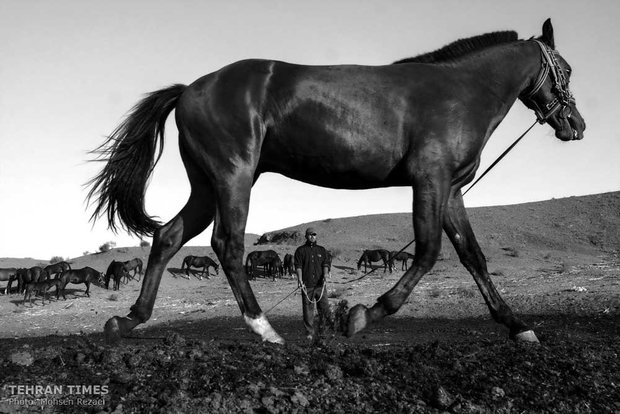
Turkmen horses are one of the most beautiful horse breed of Iran dominantly found in Turkmen Sahra, a region located in northeastern Iran bordering Turkmenistan. The Turkmen horse was originally an oriental horse breed from the steppes of Central Asia which is now extinct. Some horses bred in Iran and Turkmenistan today are still referred to as Turkmen, and have similar characteristics. The Turkmen horse is noted for its endurance, bravery and smartness. It has a slender body and the breed is actually one of the toughest in the world. They have a reputation for speed, endurance, intelligence, and a distinctive metallic sheen. Many theories have been formulated to explain why hair of the Turkmen horse and its descendants shines, but none explain why the this breed in particular benefitted from this genetic difference and why other horses would not. Although Turkmen horse breeding is a very popular among the Turkmen people the officials won’t take it very serious. Here are some photos depicting Turkmen horse breeding in Raz and Jargalan, North Khorasan province.
Tehran Times/ Mohsen Rezaee
See photos here:
http://www.tehrantimes.com/photo/411416/The-art-of-Turkmen-horse-breeding
Friday, February 24, 2017
Equine Ulcers – You Really Need To Know More!
 DrKerryRidgway.com - Full Article
July 5 2016
Ulcers in the digestive track are more than just the latest “disease du jour.” Thus far, for a problem that has been recognized for about 20 years, we are still seeing and understanding only the tip of a metaphorical iceberg. More than two thirds of the iceberg is still not visible and much is still being discovered about this ulcer “iceberg.” We do know that there are, basically, only two kinds of horses – those who have ulcers and those who will have ulcers!
We should all recognize that gastric and intestinal ulcers are literally a slow or non-healing acid burn – a burn such as if hydrochloric acid was splashed on your face. The horse’s ulcers are a combination of this hydrochloric acid, as well as volatile fatty acids and bile acids. In horses, the acid burns holes into the lining of the stomach, small or large bowel. The acids may burn a crater deeply enough to cause bleeding or even burn through and penetrate the gut. When the acid burn craters do heal they can create scar tissue and strictures, especially in the small intestine that may lead to colic.
Therefore, the real purpose of this paper is three fold.
1. The first purpose is to provide a short synopsis regarding the dangers and sometimes-dire consequences of ulcers.
2. The second is to alert you to the signs and symptoms pointing to the presence of ulcers.
3. The third, and a very important purpose: Empower you to use a simple examination technique that can give a very strong presumptive diagnosis of GI ulcers. This technique can, in many cases, bypass the need for endoscopic examination if, for example, this procedure is not readily available or is not affordable. Confirmation by administration of appropriate medications is often used as a diagnostic tool and confirmation of a “presumptive” diagnosis.
Twelve Good Reasons to Understand GI Ulcers in Horses:
1. Ulcers increase the risk to the horse’s health, safety and welfare
2. Ulcers increase the risk to the rider’s safety and welfare
3. Ulcers cause loss of performance and competitive edge
4. Ulcers can upset or interrupt an entire competition schedule
5. Ulcers are very expensive to treat and to resolve – recurrence is common
6. Ulcers cause many “behavioral” problems
7. Ulcers set up many muscle, myofascial and chiropractic issues
8. Ulcers increase risk of injury and lameness as a result of number seven (Musculo-skeletal problems
9. Ulcers increase the risk of colic and diarrhea problems
10. Ulcer stress may deplete the immune system and make a horse more susceptible to disease
11. Ulcers often create “hard keepers” and cause weight loss. The result – an unthrifty horse. (However, some horses with excellent weight also have ulcers)
12. Toxins released from altered gut flora increase a risk of laminitis/founder
Read more here:
http://drkerryridgway.com/2016/07/05/equine-ulcers/
Monday, February 20, 2017
Outlook: Cinnamon for Equine Health?
KER.Equinews.com - Full Article
By Kentucky Equine Research Staff · February 3, 2017
A recent flurry of research activity pertaining to the medical effects of cinnamon suggests the tasty spice could have benefits for horses.
“Cinnamon supplementation provides yet another example of a traditional herbal medicine making a comeback to benefit modern medical patients,” said Kathleen Crandell, Ph.D., a nutritionist for Kentucky Equine Research (KER).
Research* in this field revealed many potential health benefits associated with cinnamon, including:
• Antioxidant properties. These specialized molecules protect the body against a variety of degenerative processes caused by exuberant oxygen molecules, such as arthritis, neurodegenerative and autoimmune disorders, and cancer.
• Antidiabetic effects. Horses don’t develop type 2 diabetes like humans; however, they certainly suffer from similar glucose and insulin dysregulatory issues that contribute to insulin resistance and equine metabolic syndrome, both of which go hand in hand with laminitis.
• Antimicrobial activity. Cinnamon and other plant-derived products were used years ago to fight infections. In light of the growing population of antibiotic-resistant antibiotic strains, interest in plant products capable of warding off infection has renewed...
Read more here:
http://ker.equinews.com/article/outlook-cinnamon-equine-health?utm_source=KER+Newsletter&utm_campaign=2ec0028269-ker-horse-nutri-kentucky-equine-02_15_2017&utm_medium=email&utm_term=0_0d95781dfc-2ec0028269-11166
By Kentucky Equine Research Staff · February 3, 2017
A recent flurry of research activity pertaining to the medical effects of cinnamon suggests the tasty spice could have benefits for horses.
“Cinnamon supplementation provides yet another example of a traditional herbal medicine making a comeback to benefit modern medical patients,” said Kathleen Crandell, Ph.D., a nutritionist for Kentucky Equine Research (KER).
Research* in this field revealed many potential health benefits associated with cinnamon, including:
• Antioxidant properties. These specialized molecules protect the body against a variety of degenerative processes caused by exuberant oxygen molecules, such as arthritis, neurodegenerative and autoimmune disorders, and cancer.
• Antidiabetic effects. Horses don’t develop type 2 diabetes like humans; however, they certainly suffer from similar glucose and insulin dysregulatory issues that contribute to insulin resistance and equine metabolic syndrome, both of which go hand in hand with laminitis.
• Antimicrobial activity. Cinnamon and other plant-derived products were used years ago to fight infections. In light of the growing population of antibiotic-resistant antibiotic strains, interest in plant products capable of warding off infection has renewed...
Read more here:
http://ker.equinews.com/article/outlook-cinnamon-equine-health?utm_source=KER+Newsletter&utm_campaign=2ec0028269-ker-horse-nutri-kentucky-equine-02_15_2017&utm_medium=email&utm_term=0_0d95781dfc-2ec0028269-11166
Sunday, February 19, 2017
Save the Date for the AHC’s Annual Meeting & National Issues Forum
Horsecouncil.org
February 13 2017
Theme to be “The Power of Unity”
Where can you find people involved in every segment of the equine world working together to advance our industry?
How can you find out what projects and initiatives are being worked on in every corner of the equine industry?
The answer: the American Horse Council’s (AHC) Annual Meeting & National Issues Forum, sponsored by Luitpold Animal Health! Save the Date on your calendars for June 11-14, 2017 at the Washington Court Hotel in Washington, DC.
“Even if you are not a member of the American Horse Council, we encourage anyone involved in the industry to try to attend our Annual Meeting and Issues Forum,” said AHC President Julie Broadway. “This is the only meeting where every segment of the industry gets together to discuss issues of importance to not only their respective fields, but to the industry as a whole.”
Monday, June 12, will see committee meetings for the 5 committees the AHC has: Animal Welfare, Horse Show, Health & Regulatory, Recreation, and Racing. “Anyone is welcome to attend any committee meeting they like until they go into executive session. In fact, we encourage people to attend as many as they can to get an idea of what the AHC is working on within each committee,” said Ms. Broadway.
Monday will also spotlight the Van Ness Award, which is given to a member of a State Horse Council who has shown leadership and service to the horse community in his or her state.
The theme of the National Issues Forum (NIF) on Tuesday, June 13, will be “The Power of Unity,” and will feature keynote speaker Roger Dow, President and CEO of the U.S. Travel Association, which is the national umbrella organization representing all segments of travel in America. “The U.S. Travel Association works to engage, connect and inform the travel industry,” said Mr. Dow, “similar to how the AHC seeks to inform and engage all segments of the equine industry. Although different in the types of businesses we work with, the AHC and the Travel Association are similar in that we both encourage working together to advance the industry.”
Additionally, a panel of researchers from the Grayson Jockey Club Research Foundation, AAEP Foundation, AQHA Foundation, Horses & Humans Research Foundation, and Colorado State University’s Temple Grandin Equine Center will discuss the importance of research for the industry, as well as any research they have done and its significance. Allyn Mann, of Lutipold Animal Health, will be the moderator for the panel.
The Innovation Group will also provide a progress report on the update of the National Economic Impact Study- of which its findings are certainly highly anticipated. The AHC will also present its new strategic plan to give attendees an idea of what the AHC will be undertaking in the years ahead.
At the conclusion of the Issues Forum, breakout sessions will be set up to allow groups to have further discussion about topics they found particularly interesting.
Please check the Events tab on the AHC website where a tentative schedule, room reservation information, and more will be posted there in the upcoming weeks.
If you have any questions, please contact the AHC at info@horsecouncil.org
February 13 2017
Theme to be “The Power of Unity”
Where can you find people involved in every segment of the equine world working together to advance our industry?
How can you find out what projects and initiatives are being worked on in every corner of the equine industry?
The answer: the American Horse Council’s (AHC) Annual Meeting & National Issues Forum, sponsored by Luitpold Animal Health! Save the Date on your calendars for June 11-14, 2017 at the Washington Court Hotel in Washington, DC.
“Even if you are not a member of the American Horse Council, we encourage anyone involved in the industry to try to attend our Annual Meeting and Issues Forum,” said AHC President Julie Broadway. “This is the only meeting where every segment of the industry gets together to discuss issues of importance to not only their respective fields, but to the industry as a whole.”
Monday, June 12, will see committee meetings for the 5 committees the AHC has: Animal Welfare, Horse Show, Health & Regulatory, Recreation, and Racing. “Anyone is welcome to attend any committee meeting they like until they go into executive session. In fact, we encourage people to attend as many as they can to get an idea of what the AHC is working on within each committee,” said Ms. Broadway.
Monday will also spotlight the Van Ness Award, which is given to a member of a State Horse Council who has shown leadership and service to the horse community in his or her state.
The theme of the National Issues Forum (NIF) on Tuesday, June 13, will be “The Power of Unity,” and will feature keynote speaker Roger Dow, President and CEO of the U.S. Travel Association, which is the national umbrella organization representing all segments of travel in America. “The U.S. Travel Association works to engage, connect and inform the travel industry,” said Mr. Dow, “similar to how the AHC seeks to inform and engage all segments of the equine industry. Although different in the types of businesses we work with, the AHC and the Travel Association are similar in that we both encourage working together to advance the industry.”
Additionally, a panel of researchers from the Grayson Jockey Club Research Foundation, AAEP Foundation, AQHA Foundation, Horses & Humans Research Foundation, and Colorado State University’s Temple Grandin Equine Center will discuss the importance of research for the industry, as well as any research they have done and its significance. Allyn Mann, of Lutipold Animal Health, will be the moderator for the panel.
The Innovation Group will also provide a progress report on the update of the National Economic Impact Study- of which its findings are certainly highly anticipated. The AHC will also present its new strategic plan to give attendees an idea of what the AHC will be undertaking in the years ahead.
At the conclusion of the Issues Forum, breakout sessions will be set up to allow groups to have further discussion about topics they found particularly interesting.
Please check the Events tab on the AHC website where a tentative schedule, room reservation information, and more will be posted there in the upcoming weeks.
If you have any questions, please contact the AHC at info@horsecouncil.org
Saturday, February 18, 2017
‘Unbranded’ character responds to accusation of ‘mustang neglect’
HCN.org - Full Article
Ben Masters rebukes a recent opinion piece on his 2015 documentary.
Ben Masters OPINION
Feb. 10, 2017
Ben Masters is a filmmaker, writer, and horse hand who splits his time between Bozeman, Montana, and Austin, Texas. Masters studied wildlife management at Texas A&M University and serves as wildlife management chair for the volunteer BLM Wild Horse and Burro Advisory Board. Follow him on Twitter @bencmasters
Last week High Country News released an opinion article by Libby Blanchard that portrayed the film Unbranded, in which I am a character, in a scathing manner that ultimately called for wild horse lovers to “stay away” from the film. I was shocked to hear about the criticism of a film that resulted in hundreds of wild horse adoptions, raised nearly $100,000 for the Mustang Heritage Foundation, and had an entire theatrical release centered around fundraising and press to increase wild horse adoptions.
In addition to calling for a boycott of the film, Blanchard wrote: “As wrong as it was for these young men to treat their mustangs neglectfully, it is also unfortunate for the public to accept this behavior.” While I don’t profess to be a saint by any means, the accusation that we treated our mustangs neglectfully is a remark that stings especially deep, as I spend huge amounts of time and money trying to take care of my horses as properly as possible. Did we make mistakes? Yes. Could we have done better? Yes. But hindsight is 20/20, and I don’t know anyone who’s spent a long time around horses who hasn’t experienced a horse injury, despite their best efforts, of some kind...
Read more here:
http://www.hcn.org/articles/unbranded-documentary-character-responds-to-accusation-of-mustang-neglect?utm_source=wcn1&utm_medium=email
Ben Masters rebukes a recent opinion piece on his 2015 documentary.
Ben Masters OPINION
Feb. 10, 2017
Ben Masters is a filmmaker, writer, and horse hand who splits his time between Bozeman, Montana, and Austin, Texas. Masters studied wildlife management at Texas A&M University and serves as wildlife management chair for the volunteer BLM Wild Horse and Burro Advisory Board. Follow him on Twitter @bencmasters
Last week High Country News released an opinion article by Libby Blanchard that portrayed the film Unbranded, in which I am a character, in a scathing manner that ultimately called for wild horse lovers to “stay away” from the film. I was shocked to hear about the criticism of a film that resulted in hundreds of wild horse adoptions, raised nearly $100,000 for the Mustang Heritage Foundation, and had an entire theatrical release centered around fundraising and press to increase wild horse adoptions.
In addition to calling for a boycott of the film, Blanchard wrote: “As wrong as it was for these young men to treat their mustangs neglectfully, it is also unfortunate for the public to accept this behavior.” While I don’t profess to be a saint by any means, the accusation that we treated our mustangs neglectfully is a remark that stings especially deep, as I spend huge amounts of time and money trying to take care of my horses as properly as possible. Did we make mistakes? Yes. Could we have done better? Yes. But hindsight is 20/20, and I don’t know anyone who’s spent a long time around horses who hasn’t experienced a horse injury, despite their best efforts, of some kind...
Read more here:
http://www.hcn.org/articles/unbranded-documentary-character-responds-to-accusation-of-mustang-neglect?utm_source=wcn1&utm_medium=email
Things You Should and Should Not Put on a Horse's Wound
Thehorse.com - Full Article
By Alexandra Beckstett, The Horse Managing Editor
Feb 18, 2016
Horse owners and veterinarians have been treating equine wounds for centuries. After all, horses are unabashedly practiced at the art of sustaining wounds. Over the years we’ve tried many different wound ointments and salves, cleansers and dressings, but not all of them are backed by evidence of safety and/or efficacy.
So Dean Hendrickson, DVM, MS, Dipl. ACVS, professor of equine surgery at Colorado State University, in Fort Collins, went back to basics, describing effective and ineffective wound-cleaning agents to an audience of veterinarians at the 2015 Annual American Association of Equine Practitioners Convention, held Dec. 5-9, in Las Vegas.
Although our intentions are good, “most wound-cleaning agents and techniques will cause chemical or mechanical trauma to the wound bed,” he said. “Weigh the benefits of cleaning the wound against the trauma that agent will cause.”
In other words, ask yourself: Is that cleaning agent ultimately going to speed up or retard wound-healing?...
Read more here:
http://www.thehorse.com/articles/37165/things-you-should-and-should-not-put-on-a-horses-wound?utm_source=Newsletter&utm_medium=reader-favorites&utm_campaign=02-17-2017
By Alexandra Beckstett, The Horse Managing Editor
Feb 18, 2016
Horse owners and veterinarians have been treating equine wounds for centuries. After all, horses are unabashedly practiced at the art of sustaining wounds. Over the years we’ve tried many different wound ointments and salves, cleansers and dressings, but not all of them are backed by evidence of safety and/or efficacy.
So Dean Hendrickson, DVM, MS, Dipl. ACVS, professor of equine surgery at Colorado State University, in Fort Collins, went back to basics, describing effective and ineffective wound-cleaning agents to an audience of veterinarians at the 2015 Annual American Association of Equine Practitioners Convention, held Dec. 5-9, in Las Vegas.
Although our intentions are good, “most wound-cleaning agents and techniques will cause chemical or mechanical trauma to the wound bed,” he said. “Weigh the benefits of cleaning the wound against the trauma that agent will cause.”
In other words, ask yourself: Is that cleaning agent ultimately going to speed up or retard wound-healing?...
Read more here:
http://www.thehorse.com/articles/37165/things-you-should-and-should-not-put-on-a-horses-wound?utm_source=Newsletter&utm_medium=reader-favorites&utm_campaign=02-17-2017
Friday, February 17, 2017
How to Tell if Your Saddle Hurts Your Horse
Thehorse.com - Full Article
By Erica Larson, News Editor
Feb 14, 2017
In recent years, researchers have conducted several studies that make one thing crystal clear: A properly fitting saddle is key to keeping any ridden horse healthy and performing at its best. But how, exactly, can you tell if your saddle doesn’t fit your horse?
At the 2016 American Association of Equine Practitioners’ Convention, held Dec. 3-7 in Orlando, Florida, Scott Anderson, DVM, reviewed how veterinarians and owners can tell if the saddle is causing a horse pain in six easy steps. Anderson is a sport horse practitioner and owner of Woodside Equine Clinic, in Ashland, Virginia.
“The initial examination is performed with the horse standing squarely and without a saddle pad,” Anderson said. Then, he said, place the saddle on the horse’s back so the front of the flaps don’t interfere with the scapulae’s (shoulders) movement when the horse is working. This is usually 3 to 5 centimeters (about 1 to 2 inches) behind the scapulae, he added.
Once your saddle is in place, you’re ready to start your evaluation...
Read more here:
No comments:

By Erica Larson, News Editor
Feb 14, 2017
In recent years, researchers have conducted several studies that make one thing crystal clear: A properly fitting saddle is key to keeping any ridden horse healthy and performing at its best. But how, exactly, can you tell if your saddle doesn’t fit your horse?
At the 2016 American Association of Equine Practitioners’ Convention, held Dec. 3-7 in Orlando, Florida, Scott Anderson, DVM, reviewed how veterinarians and owners can tell if the saddle is causing a horse pain in six easy steps. Anderson is a sport horse practitioner and owner of Woodside Equine Clinic, in Ashland, Virginia.
“The initial examination is performed with the horse standing squarely and without a saddle pad,” Anderson said. Then, he said, place the saddle on the horse’s back so the front of the flaps don’t interfere with the scapulae’s (shoulders) movement when the horse is working. This is usually 3 to 5 centimeters (about 1 to 2 inches) behind the scapulae, he added.
Once your saddle is in place, you’re ready to start your evaluation...
Read more here:
No comments:
Wednesday, February 15, 2017
When Winter Laminitis Strikes Out Of Nowhere
Americanfarrier.com - Full Article
By Eleanor Kellon VMD posted on February 8, 2017
For the insulin resistant horse, winter laminitis can strike seemingly out of nowhere, with no change in diet or management and some puzzling inconsistencies.
The horse may not necessarily have a prior history of laminitis. The pain is often severe, but the feet aren’t hot as they are in classical acute laminitis cases. The digital pulses may or may not be elevated. Radiographs tend to remain stable in most cases; without major changes with rotation or sinking. NSAIDs (Non-Steroidal Anti-Inflammatories) like phenylbutazone, which are commonly used any time there is foot pain similar to this, have no positive effect.
It can be confusing when the horse looks like a typical laminitis case, but without the heat and high pulses. Inadequate blood supply is the perfect explanation. The body’s normal response to cold is to constrict blood vessels in the periphery to reduce heat losses, but in IR horses the reaction appears to be exaggerated. This is because of the well-documented role of the potent vasoconstrictor endothelin-1 in IR horses, with the most recent study confirming that endothelin-1 is involved with laminitis because of elevated blood insulin...
- See more at: https://www.americanfarriers.com/articles/8965-when-winter-laminitis-strikes-out-of-nowhere#sthash.64RCx1Xb.dpuf
By Eleanor Kellon VMD posted on February 8, 2017
For the insulin resistant horse, winter laminitis can strike seemingly out of nowhere, with no change in diet or management and some puzzling inconsistencies.
The horse may not necessarily have a prior history of laminitis. The pain is often severe, but the feet aren’t hot as they are in classical acute laminitis cases. The digital pulses may or may not be elevated. Radiographs tend to remain stable in most cases; without major changes with rotation or sinking. NSAIDs (Non-Steroidal Anti-Inflammatories) like phenylbutazone, which are commonly used any time there is foot pain similar to this, have no positive effect.
It can be confusing when the horse looks like a typical laminitis case, but without the heat and high pulses. Inadequate blood supply is the perfect explanation. The body’s normal response to cold is to constrict blood vessels in the periphery to reduce heat losses, but in IR horses the reaction appears to be exaggerated. This is because of the well-documented role of the potent vasoconstrictor endothelin-1 in IR horses, with the most recent study confirming that endothelin-1 is involved with laminitis because of elevated blood insulin...
- See more at: https://www.americanfarriers.com/articles/8965-when-winter-laminitis-strikes-out-of-nowhere#sthash.64RCx1Xb.dpuf
Tuesday, February 14, 2017
Author Interview with Endurance Rider Kasey Riley
 MarciaWeber Blog - Full Story
by Marcia Weber Martins
12 Feb 2017
Today I welcome Kasey Riley of “Desperate Endurance”, “August Fire” and “The Skeleton Trail”
With over twenty years of horse ownership and Endurance riding to her credit, Kasey Riley (Kim) brings a wealth of knowledge to her novels. Her love of the trail, outdoors, and rural living give color and vibrancy to her books. This realism has drawn many readers to her novels. She strives to make readers see through the eyes of her characters and imagine themselves enmeshed in the plot.
Her first two novels are mysteries with romances building around them and the third is a romance, which uses suspense to draw the couple together as they strive to stay alive. She plans on each book being a stand-alone novel that can be read in any sequence without the reader missing details of the story. Her current work in progress comes from a discussion between Kasey and her husband, Jeff, in one of the several drives between Oklahoma and their new home in Tennessee. Tossing around an idea about a young woman who keeps being involved in mysterious violence. Then coming up with an idea as to why she’s involved and solving the situation kept them occupied for many miles. Kasey’s mind sees every news article as a possible story plot for her characters.
When not writing or riding, she enjoys reading a wide variety of genre novels and sounding out new plots on her husband of 40+ years. Together, they moved two horses, four dogs, two cats and all their assorted belongings from SE Oklahoma to Central Tennessee in 2016. Now able to ride out the back door, Kasey finds less time to write, but has many viable ideas to work from. Soon she will have “Do Not Assume” completed and be able to get back to the young adult work in progress she set aside when the mystery of Do Not Assume kept distracting her.
Since the horrible forest fires in the Gatlinburg, TN area in November, Kasey has committed all of her royalties to the Dollywood Foundation’s My People Fund to aid the hundreds of victims who have lost everything in the wake of the fires. Details can be found on her website:
www.kaseyriley.com Even those who choose to use their Kindle Unlimited accounts to read her works will help this effort since the royalties all are paid to the Foundation for 2017.
When did you start writing?
I’ve been writing in one form or another for years. Essays, monthly newsletters, and short stories have been submitted and even won contests since my early 20’s. I finally got the chance to really sit down and write after we sold our online catalog back in 2012. My first novel, Desperate Endurance was published in 2013.
What motivated you to start writing?
I got serious about writing after becoming very irritated at another author who completely misrepresented my sport of Endurance Horse Riding/Racing. I knew I could do better and show readers the true nature of the sport. So I did...
Read more here:
https://marciacweber.wordpress.com/2017/02/12/author-interview-12/
Sunday, February 12, 2017
The 2017 Time to Ride Challenge: More Winners, More Ways to Win!
The contest’s fourth year will bring significant changes, including more cash prizes than ever before.
Georgetown, TX, February 7, 2017 - The Time to Ride Challenge, a grassroots competition that offers support and incentives to businesses growing the horse industry, will return for its fourth year in 2017. This year’s contest will award more cash than ever before and introduce significant structure changes to help contestants focus on creating new long-term horse enthusiasts.
Since 2014, the Challenge has introduced nearly 100,000 new enthusiasts to horses through more than 2,000 fun, beginner-friendly, hands-on horse events that kick-start a lifelong journey with horses. In 2017, that same structure will comprise Phase I of the Challenge: $40,000 cash plus prizes will be awarded to the hosts who introduce the greatest number of newcomers through these events. New in 2017, Phase II will award an equal amount of cash and prizes to the hosts who encourage the most newcomers to return for a more personal, in-depth horse experience, such as a riding lesson. By doing so, hosts will help newcomers cement newcomers’ connections with horses, while directly building their own businesses.
While competing hosts have always cited the business-building benefits of the Challenge as a main motivation for participating, this structure shift will directly place $40,000 worth of cash and prizes behind the goal of getting newcomers regularly involved in their programs through riding and other equine activities. The 2017 Challenge will now measure not only how many newcomers have a single introductory horse experience, but how many of that population become actively involved thereafter.
“The Challenge is a unique contest that’s constantly evolving to provide the best experience for competing hosts while achieving its mission of growing the horse industry,” said Time to Ride spokesperson Christie Schulte. “It’s evolved to a point where we will be able to measure the number of new participants entering the horse industry and regularly, actively participating as riders, students, volunteers, and eventually owners, competitors, shoppers, and organization members.”
Last year, over 78% of participating businesses and groups reported that their participation in the Challenge resulted in a positive effect on their businesses - new clients, students, or members. In 2016, thirty winners across three divisions took home a cash prize; in 2017, fifty or more will!
Competing in the Challenge is free and registration opens March 1st. Stables, clubs, businesses, instructors, veterinarians, and all other horse professionals are welcome. Upon creating an account, users will receive a point on the Time to Ride map and have access to a marketing toolkit and other supporting resources. For more information, please visit https://www.timetoride.com/time-to-ride-challenge/ or contact info@timetoride.com.
The American Horse Council’s Marketing Alliance
Time to Ride is an initiative of the American Horse Council’s Marketing Alliance, formed to connect people with horses. It is designed to encourage horse-interested consumers to enjoy the benefits of horse activities. Since 2014, Time to Ride programs have introduced nearly 100,000 newcomers to horses and helped grow 78% of the participating horse businesses. The AHC Marketing Alliance is made up of the following organizations: the American Association of Equine Practitioners, Active Interest Media, the American Quarter Horse Association, Farnam, Merck, Merial, Morris Media Network Equine Group, Purina Animal Nutrition LLC, Platinum Performance, United States Equestrian Federation, The Right Horse Initiative, and Zoetis. Program Partners are Absorbine, the American Paint Horse Association, ASPCA, Equibrand, the National Cutting Horse Association, the National Reining Horse Association, Lumina Media, Pyranha Inc., the America’s Mustang Campaign, and Colorado State University Equine Sciences Program.
About the American Horse Council
The American Horse Council is a non-profit organization that includes all segments of the horse industry. While its primary mission is to represent the industry before Congress and the federal regulatory agencies in Washington, DC, it also undertakes national initiatives for the horse industry. Time to Ride, the AHC’s marketing alliance to connect horses and people, is such an effort. The American Horse Council hopes that Time to Ride will encourage people and businesses to participate in the industry, enjoy our horses, and support our equine activities and events. The AHC believes a healthy horse industry contributes to the health of Americans and America in many ways.
Contact: Christie Schulte - info@timetoride.com or 512-591-7811
Georgetown, TX, February 7, 2017 - The Time to Ride Challenge, a grassroots competition that offers support and incentives to businesses growing the horse industry, will return for its fourth year in 2017. This year’s contest will award more cash than ever before and introduce significant structure changes to help contestants focus on creating new long-term horse enthusiasts.
Since 2014, the Challenge has introduced nearly 100,000 new enthusiasts to horses through more than 2,000 fun, beginner-friendly, hands-on horse events that kick-start a lifelong journey with horses. In 2017, that same structure will comprise Phase I of the Challenge: $40,000 cash plus prizes will be awarded to the hosts who introduce the greatest number of newcomers through these events. New in 2017, Phase II will award an equal amount of cash and prizes to the hosts who encourage the most newcomers to return for a more personal, in-depth horse experience, such as a riding lesson. By doing so, hosts will help newcomers cement newcomers’ connections with horses, while directly building their own businesses.
While competing hosts have always cited the business-building benefits of the Challenge as a main motivation for participating, this structure shift will directly place $40,000 worth of cash and prizes behind the goal of getting newcomers regularly involved in their programs through riding and other equine activities. The 2017 Challenge will now measure not only how many newcomers have a single introductory horse experience, but how many of that population become actively involved thereafter.
“The Challenge is a unique contest that’s constantly evolving to provide the best experience for competing hosts while achieving its mission of growing the horse industry,” said Time to Ride spokesperson Christie Schulte. “It’s evolved to a point where we will be able to measure the number of new participants entering the horse industry and regularly, actively participating as riders, students, volunteers, and eventually owners, competitors, shoppers, and organization members.”
Last year, over 78% of participating businesses and groups reported that their participation in the Challenge resulted in a positive effect on their businesses - new clients, students, or members. In 2016, thirty winners across three divisions took home a cash prize; in 2017, fifty or more will!
Competing in the Challenge is free and registration opens March 1st. Stables, clubs, businesses, instructors, veterinarians, and all other horse professionals are welcome. Upon creating an account, users will receive a point on the Time to Ride map and have access to a marketing toolkit and other supporting resources. For more information, please visit https://www.timetoride.com/time-to-ride-challenge/ or contact info@timetoride.com.
The American Horse Council’s Marketing Alliance
Time to Ride is an initiative of the American Horse Council’s Marketing Alliance, formed to connect people with horses. It is designed to encourage horse-interested consumers to enjoy the benefits of horse activities. Since 2014, Time to Ride programs have introduced nearly 100,000 newcomers to horses and helped grow 78% of the participating horse businesses. The AHC Marketing Alliance is made up of the following organizations: the American Association of Equine Practitioners, Active Interest Media, the American Quarter Horse Association, Farnam, Merck, Merial, Morris Media Network Equine Group, Purina Animal Nutrition LLC, Platinum Performance, United States Equestrian Federation, The Right Horse Initiative, and Zoetis. Program Partners are Absorbine, the American Paint Horse Association, ASPCA, Equibrand, the National Cutting Horse Association, the National Reining Horse Association, Lumina Media, Pyranha Inc., the America’s Mustang Campaign, and Colorado State University Equine Sciences Program.
About the American Horse Council
The American Horse Council is a non-profit organization that includes all segments of the horse industry. While its primary mission is to represent the industry before Congress and the federal regulatory agencies in Washington, DC, it also undertakes national initiatives for the horse industry. Time to Ride, the AHC’s marketing alliance to connect horses and people, is such an effort. The American Horse Council hopes that Time to Ride will encourage people and businesses to participate in the industry, enjoy our horses, and support our equine activities and events. The AHC believes a healthy horse industry contributes to the health of Americans and America in many ways.
Contact: Christie Schulte - info@timetoride.com or 512-591-7811
Positive Hoof Changes
 Easycare Blog - Full Article
Tuesday, January 31, 2017 by Guest HCP
Submitted by Sossity Gargiulo, Wild Hearts Hoof Care
I was recently asked by EasyCare to write up a few words about our trimming theory and approach. This always ends up being quite difficult to be succinct with, as there are so many ways depending on the horse. But, at our foundation we believe that the hoof is a highly adaptable “smart structure” as said by Dr. Taylor of Auburn University. The hoof is capable of positive change given the opportunity with supportive trims, diet and lifestyle. We have seen it over and over and over again in our hoof care practice.
We have found that if you help the hoof a little bit with your trim, by setting it up to grow better between cycles, making sure the horse is comfortable to move properly with minimal or no compensative movement, and then get out of their way, they can develop a pretty awesome hoof. It may not be the picture in some people’s mind of The Perfect Hoof, but it can be a pretty awesome, functional, sound and improving hoof for that horse...
- See more at: http://blog.easycareinc.com/blog/insights-from-the-inside/positive-changes#sthash.GjxKd2y4.dpuf
Friday, February 03, 2017
The challenge of catastrophic bone fractures in endurance
Horsetalk.co.nz - Full Article
February 3, 2017
Neil Clarkson
The sport of endurance has suffered irreparable harm in recent years over catastrophic leg injuries to horses.
The images we have seen out of the Middle East over the years have been harrowing.
Followers of the sport don’t need me to tell them that the United Arab Emirates has been a hot-spot for such catastrophic failures, no doubt due to the fast desert courses and the speeds that result. The big prizes on offer and the use of jockey-style riders are hardly conducive to horse welfare, either.
I have advocated before for the grading of endurance courses, in which races on tracks that are assessed as “fast” are run under more stringent parameters. However, even that would be only part of the solution.
These leg fractures may be catastrophic, but research suggests there is a common background that sets horses on a path to these leg breaks...
Read more: http://www.horsetalk.co.nz/2017/02/03/challenge-catastrophic-bone-fractures-endurance/#ixzz4Xdn3BOhR
February 3, 2017
Neil Clarkson
The sport of endurance has suffered irreparable harm in recent years over catastrophic leg injuries to horses.
The images we have seen out of the Middle East over the years have been harrowing.
Followers of the sport don’t need me to tell them that the United Arab Emirates has been a hot-spot for such catastrophic failures, no doubt due to the fast desert courses and the speeds that result. The big prizes on offer and the use of jockey-style riders are hardly conducive to horse welfare, either.
I have advocated before for the grading of endurance courses, in which races on tracks that are assessed as “fast” are run under more stringent parameters. However, even that would be only part of the solution.
These leg fractures may be catastrophic, but research suggests there is a common background that sets horses on a path to these leg breaks...
Read more: http://www.horsetalk.co.nz/2017/02/03/challenge-catastrophic-bone-fractures-endurance/#ixzz4Xdn3BOhR
Wednesday, February 01, 2017
Australia: Latest Equine Hendra Case 'Unusual,' Veterinarians Say
Thehorse.com - Full Article
By Edited Press Release
Jan 6, 2017
Equine Veterinarians Australia (EVA), a special interest group of the Australian Veterinary Association, says the Hendra virus case confirmed in a horse near Casino, New South Wales, last week revealed unusual signs and aspects of the disease.
Ben Poole, BVSc, MANZCVS, EVA spokesman, said that this latest case in northeastern New South Wales makes dealing with Hendra even more complicated and concerning.
“The facts of the case would suggest the horse may have initially received a low infectious dose of the virus that eventually led to the horse succumbing to the disease, after an unusually protracted illness,” he said. “What’s different about this case is that the horse initially tested negative for Hendra virus after losing weight for two weeks and presenting with a sore mouth. It was given medication and the horse started recuperating while in quarantine on the farm.
“A week later the horse deteriorated rapidly and died a few days later,” he continued. “A nasal swab taken from the carcass a week after the horse died returned a positive test for Hendra virus. Further testing of tissue samples indicated that the horse had mounted an immune response to the virus.”
Poole said this demonstrates the difficulty of making an initial diagnosis of Hendra virus infection, and highlights the risk that Hendra virus poses to anyone including horse owners, veterinarians, and those who come in contact with horses displaying vague signs of illness.
“That’s why vaccination of horses against Hendra virus is important for managing the risks involved with the disease,” he said. “The summer timing of this case in the Northern Rivers is unusual and is probably due to food shortages and environmental stress on the bats in the area – so it’s really important to be vigilant all year round...”
Read more here:
http://www.thehorse.com/articles/38641/latest-equine-hendra-case-unusual-veterinarians-say?utm_source=Newsletter&utm_medium=welfare-industry&utm_campaign=01-12-2017
By Edited Press Release
Jan 6, 2017
Equine Veterinarians Australia (EVA), a special interest group of the Australian Veterinary Association, says the Hendra virus case confirmed in a horse near Casino, New South Wales, last week revealed unusual signs and aspects of the disease.
Ben Poole, BVSc, MANZCVS, EVA spokesman, said that this latest case in northeastern New South Wales makes dealing with Hendra even more complicated and concerning.
“The facts of the case would suggest the horse may have initially received a low infectious dose of the virus that eventually led to the horse succumbing to the disease, after an unusually protracted illness,” he said. “What’s different about this case is that the horse initially tested negative for Hendra virus after losing weight for two weeks and presenting with a sore mouth. It was given medication and the horse started recuperating while in quarantine on the farm.
“A week later the horse deteriorated rapidly and died a few days later,” he continued. “A nasal swab taken from the carcass a week after the horse died returned a positive test for Hendra virus. Further testing of tissue samples indicated that the horse had mounted an immune response to the virus.”
Poole said this demonstrates the difficulty of making an initial diagnosis of Hendra virus infection, and highlights the risk that Hendra virus poses to anyone including horse owners, veterinarians, and those who come in contact with horses displaying vague signs of illness.
“That’s why vaccination of horses against Hendra virus is important for managing the risks involved with the disease,” he said. “The summer timing of this case in the Northern Rivers is unusual and is probably due to food shortages and environmental stress on the bats in the area – so it’s really important to be vigilant all year round...”
Read more here:
http://www.thehorse.com/articles/38641/latest-equine-hendra-case-unusual-veterinarians-say?utm_source=Newsletter&utm_medium=welfare-industry&utm_campaign=01-12-2017
Subscribe to:
Posts (Atom)