Horsetalk.co.nz - Full Article
December 28, 2017
Horsetalk.co.nz
A leading horse-cloning company has raised the prospect of using gene-editing to produce horses with superior athletic ability.
Argentina-based Kheiron Biotech says it has been able to produce genetically engineered embryos for the first time, using a gene-editing system known as CRISPR-Cas9.
The use of the technology would allow the creation of equine clones with improved genetic make-up, it said, and “accelerate genetic evolution in sports animals”.
The work was conducted by scientists from Kheiron working with the Fleni Foundation. Their findings will be published in an upcoming issue of the journal Cloning And Stem Cells.
“This technology brings additional progress in horse breeding,” Kheiron founder Daniel Sammartino said. “It could be possible to achieve better horses in less time...
Read more at https://www.horsetalk.co.nz/2017/12/28/sport-horses-genetic-edits-researchers/#Vy7wVVqyRLMG63KK.99
Thursday, December 28, 2017


Equine Thermography
 Thehorse.com - Full Article
By Joanna L. Robson, DVM, CVSMT, CVA, CSFT, CIT
Nov 25, 2017
Comparing parts left-to-right is key to interpreting images, with the horse as its own control.
Photo: Joanna L. Robson, DVM, CVSMT, CVA, CSFT, CIT
Thermography presents a noninvasive, safe, and cost-effective diagnostic imaging modality (on average, $350 for a whole horse scan and interpretation) that is a valuable complementary tool in equine health care. As with other technologies, we are seeing considerable advancements in thermographic cameras’ resolution and user-friendliness, along with significant decreases in physical size and initial purchase costs. As thermography gains popularity and interest, it is tremendously important that veterinarians, technicians, and horse owners understand the advantages this physiologic imaging tool offers, as well as its limitations.
The first step in understanding what thermography can and can’t do is learning the difference between anatomic and physiologic imaging...
Read more here:
http://www.thehorse.com/articles/33247/equine-thermography?utm_source=Newsletter&utm_medium=sports-medicine&utm_campaign=12-24-2017
Wednesday, December 27, 2017
Heated Water Trough Safety
Thehorse.com - Full Article
By Clair Thunes, PhD
Dec 25, 2017
Last week I shared with you several tips on how to keep your water troughs ice-free. Later that day I came across the following images and a story that I think we can all learn from.
When I’m taking a break between tasks I scroll through my Facebook feed to see what is going on in the world. This time of year it is filled with seasonal posts of peoples horses, barn parties, their families and, of course, cat videos. However last Monday I saw the image above. At first I couldn’t figure exactly what it was, but it was looked vaguely familiar and, at the same time, unrecognizable.
I read the accompanying post and did a double take. It was the image of a melted rubber water trough. Given the commentary I had just written and the fact that I had included trough heaters I wanted to know more. I had heard of horses being shocked drinking from toughs with electric heaters that are not correctly grounded, but I had never seen nor heard of a trough melting!
The trough belongs to Charish Arthur, a United States Dressage Federation silver medalist and former long-time American Riding Instructors Association certified instructor, who came home last Saturday evening every horse owner’s nightmare:...
Read more here:
http://www.thehorse.com/articles/40085/heated-water-trough-safety?utm_source=Newsletter&utm_medium=health-news&utm_campaign=12-26-2017
By Clair Thunes, PhD
Dec 25, 2017
Last week I shared with you several tips on how to keep your water troughs ice-free. Later that day I came across the following images and a story that I think we can all learn from.
When I’m taking a break between tasks I scroll through my Facebook feed to see what is going on in the world. This time of year it is filled with seasonal posts of peoples horses, barn parties, their families and, of course, cat videos. However last Monday I saw the image above. At first I couldn’t figure exactly what it was, but it was looked vaguely familiar and, at the same time, unrecognizable.
I read the accompanying post and did a double take. It was the image of a melted rubber water trough. Given the commentary I had just written and the fact that I had included trough heaters I wanted to know more. I had heard of horses being shocked drinking from toughs with electric heaters that are not correctly grounded, but I had never seen nor heard of a trough melting!
The trough belongs to Charish Arthur, a United States Dressage Federation silver medalist and former long-time American Riding Instructors Association certified instructor, who came home last Saturday evening every horse owner’s nightmare:...
Read more here:
http://www.thehorse.com/articles/40085/heated-water-trough-safety?utm_source=Newsletter&utm_medium=health-news&utm_campaign=12-26-2017
Sunday, December 17, 2017
Study Confirms Common Shoeing Interval Benefits Horses
Thehorse.com - Full Article
By Christa Lesté-Lasserre, MA
Nov 15, 2017
If you’re shoeing every four to six weeks, science says you’re on the right track. According to recent study results, that historic four- to six-week interval aligns perfectly with what’s going on physiologically within the horse’s hoof.
“We might have known the ideal or optimum interval time between trimming and shoeing for a long time, but only more recently has science enabled us to better understand why,” said Kirsty Lesniak, SFHEA, PGCHE, MSc, BSc (Hons), a senior lecturer of equine science and equine postgraduate program manager at Hartpury College University Centre, in the U.K.
In their study, Lesniak and colleagues compared 17 hoof length and angle measurements from 26 predominantly stabled riding horses of mixed breed, age, and height. They took the measurements before and after farriery, following a four- to six-week period of growth since the last farrier treatment.
During that period, the hoof grew such that the angles began to change, which could negatively impact soundness, Lesniak said. If left untrimmed, that hoof growth and angle change could result in the heels and back of the hoof becoming loaded with too much weight. However, farriery work in this population of horses maintained healthy angles when performed within four to six weeks...
Read more here:
http://www.thehorse.com/articles/39910/study-confirms-common-shoeing-interval-benefits-horses?utm_source=Newsletter&utm_medium=reader-favorites&utm_campaign=11-24-2017
By Christa Lesté-Lasserre, MA
Nov 15, 2017
If you’re shoeing every four to six weeks, science says you’re on the right track. According to recent study results, that historic four- to six-week interval aligns perfectly with what’s going on physiologically within the horse’s hoof.
“We might have known the ideal or optimum interval time between trimming and shoeing for a long time, but only more recently has science enabled us to better understand why,” said Kirsty Lesniak, SFHEA, PGCHE, MSc, BSc (Hons), a senior lecturer of equine science and equine postgraduate program manager at Hartpury College University Centre, in the U.K.
In their study, Lesniak and colleagues compared 17 hoof length and angle measurements from 26 predominantly stabled riding horses of mixed breed, age, and height. They took the measurements before and after farriery, following a four- to six-week period of growth since the last farrier treatment.
During that period, the hoof grew such that the angles began to change, which could negatively impact soundness, Lesniak said. If left untrimmed, that hoof growth and angle change could result in the heels and back of the hoof becoming loaded with too much weight. However, farriery work in this population of horses maintained healthy angles when performed within four to six weeks...
Read more here:
http://www.thehorse.com/articles/39910/study-confirms-common-shoeing-interval-benefits-horses?utm_source=Newsletter&utm_medium=reader-favorites&utm_campaign=11-24-2017
Saturday, December 16, 2017
Senate Calls for 'Politically Viable' Wild Horse Solutions
Thehorse.com - Full Article
By Pat Raia
Nov 27, 2017
The U.S. Senate's proposed spending bill for fiscal 2018 calls for the Department of the Interior (DOI) to explore “politically viable” options for maintaining wild horse herds under Bureau of Land Management (BLM) jurisdiction.
The legislation differs from a budget bill passed in July by the U.S. House of Representatives Appropriations Committee that some wild horse advocates believe would ultimately allow the sale of unwanted mustangs for slaughter.
Released on Nov. 20 by the Senate's Appropriations Committee, the proposed $32.6 billion DOI fiscal 2018 budget allocates $1.23 billion for the BLM, $16 million below the enacted amount enacted for fiscal 2017.
The measure also contains a so-called explanatory statement from the Committee's chairman that calls for “a range of humane and politically viable options” to put the wild horse and burro program “on a path to sustainability...”
Read more here:
http://www.thehorse.com/articles/39971/senate-calls-for-politically-viable-wild-horse-solutions
By Pat Raia
Nov 27, 2017
The U.S. Senate's proposed spending bill for fiscal 2018 calls for the Department of the Interior (DOI) to explore “politically viable” options for maintaining wild horse herds under Bureau of Land Management (BLM) jurisdiction.
The legislation differs from a budget bill passed in July by the U.S. House of Representatives Appropriations Committee that some wild horse advocates believe would ultimately allow the sale of unwanted mustangs for slaughter.
Released on Nov. 20 by the Senate's Appropriations Committee, the proposed $32.6 billion DOI fiscal 2018 budget allocates $1.23 billion for the BLM, $16 million below the enacted amount enacted for fiscal 2017.
The measure also contains a so-called explanatory statement from the Committee's chairman that calls for “a range of humane and politically viable options” to put the wild horse and burro program “on a path to sustainability...”
Read more here:
http://www.thehorse.com/articles/39971/senate-calls-for-politically-viable-wild-horse-solutions
Jaguar Health and Dubai-based Seed Mena Enter Collaboration Agreement for Equilevia, Jaguar’s Personalized, Premium Product for Total Gut Health and Wellness in Horses
Businesswire.com - Full Article
December 14, 2017 10:09 AM Eastern Standard Time
SAN FRANCISCO--(BUSINESS WIRE)--Jaguar Health, Inc. (NASDAQ: JAGX) (Jaguar), a natural-products pharmaceuticals company focused on developing and commercializing novel, sustainably derived gastrointestinal products for both human prescription use and animals on a global basis, announced today that it has entered into a collaboration agreement (the Agreement) with Seed Mena Businessmen Services LLC (SEED) for Equilevia™, Jaguar’s non-prescription, personalized, premium product for total gut health in equine athletes. Based in Dubai in the United Arab Emirates (UAE), SEED is affiliated with Seed Group, a diversified group of companies under the umbrella of The Private Office of His Royal Highness Sheikh Saeed Bin Ahmed Al Maktoum establishing strategic partnerships with multinational companies from around the globe in an aim to leverage Seed Group’s network to support potential business expansion in the MENA (Middle East and North Africa) region.
Equilevia™ contains ingredients isolated and purified from the medicinal Croton lechleri tree, which is sustainably harvested from the rainforest. Equilevia™ acts locally in the gut. Gut health is of critical importance in competitive horses, as conditions such as ulcers can meaningfully impair equine athlete performance, and colic can lead to the death of an otherwise healthy horse in a matter of hours. According to a third-party 2005 study, as many as 55% of performance horses have both colonic and gastric ulcers, and 97% of performance horses have either a gastric (87%) or a colonic (63%) ulcer.1
“In the Gulf economies, the traditional hobbies of local populations have become widespread activities—and nowhere is this more true than for horses, an age-old passion of the region’s Bedouin tribes. The modernization of the competitive equine industry in the UAE has mirrored the development of the nation, and the country has become a global leader in horse racing, equine endurance competitions, and other equine athletic activities,” commented Mohammed Al Banna, Senior Director, International Ventures at Seed Group. “We look forward to capitalizing on SEED’s network and contacts in the private and public sector in the UAE as part of our strategic partnership with Jaguar to drive improved gut health management in these exquisite athletes through Equilevia™ awareness and sales in the region...”
Read more here:
https://www.businesswire.com/news/home/20171214005874/en/Jaguar-Health-Dubai-based-Seed-Mena-Enter-Collaboration
December 14, 2017 10:09 AM Eastern Standard Time
SAN FRANCISCO--(BUSINESS WIRE)--Jaguar Health, Inc. (NASDAQ: JAGX) (Jaguar), a natural-products pharmaceuticals company focused on developing and commercializing novel, sustainably derived gastrointestinal products for both human prescription use and animals on a global basis, announced today that it has entered into a collaboration agreement (the Agreement) with Seed Mena Businessmen Services LLC (SEED) for Equilevia™, Jaguar’s non-prescription, personalized, premium product for total gut health in equine athletes. Based in Dubai in the United Arab Emirates (UAE), SEED is affiliated with Seed Group, a diversified group of companies under the umbrella of The Private Office of His Royal Highness Sheikh Saeed Bin Ahmed Al Maktoum establishing strategic partnerships with multinational companies from around the globe in an aim to leverage Seed Group’s network to support potential business expansion in the MENA (Middle East and North Africa) region.
Equilevia™ contains ingredients isolated and purified from the medicinal Croton lechleri tree, which is sustainably harvested from the rainforest. Equilevia™ acts locally in the gut. Gut health is of critical importance in competitive horses, as conditions such as ulcers can meaningfully impair equine athlete performance, and colic can lead to the death of an otherwise healthy horse in a matter of hours. According to a third-party 2005 study, as many as 55% of performance horses have both colonic and gastric ulcers, and 97% of performance horses have either a gastric (87%) or a colonic (63%) ulcer.1
“In the Gulf economies, the traditional hobbies of local populations have become widespread activities—and nowhere is this more true than for horses, an age-old passion of the region’s Bedouin tribes. The modernization of the competitive equine industry in the UAE has mirrored the development of the nation, and the country has become a global leader in horse racing, equine endurance competitions, and other equine athletic activities,” commented Mohammed Al Banna, Senior Director, International Ventures at Seed Group. “We look forward to capitalizing on SEED’s network and contacts in the private and public sector in the UAE as part of our strategic partnership with Jaguar to drive improved gut health management in these exquisite athletes through Equilevia™ awareness and sales in the region...”
Read more here:
https://www.businesswire.com/news/home/20171214005874/en/Jaguar-Health-Dubai-based-Seed-Mena-Enter-Collaboration
Thursday, December 14, 2017
Study: Some Endurance Horses Lacking in Lameness Care
Thehorse.com - Full Article
By Christa Lesté-Lasserre, MA
Dec 13, 2017
Lameness is the No. 1 health issue affecting endurance horses across England and Wales. But recent study results suggest that nearly half of those lameness cases are never treated by a veterinarian.
“If an endurance horse goes lame, owners should get the lameness investigated as soon as possible to allow timely diagnosis, targeted treatment, and hopefully earlier return to work,” said Annamaria Nagy, DrMedVet, PhD, Dipl. ACVSMR, FRCVS, of the Animal Health Trust (AHT) Centre for Equine Studies, in Newmarket, U.K.
Nagy worked with fellow researchers Sue Dyson, MA, Vet MB, PhD, DEO, FRCVS, head of clinical orthopedics at the AHT, and Jane K. Murray, BScEcon, MSc, PhD, of the University of Bristol School of Veterinary Science. They reviewed questionnaires completed by endurance riders about veterinary problems. Results showed that 80% of the 190 horses ridden by the respondents had a lameness issue affect their endurance career. More than half had been lame within the last year...
Read more here:
http://www.thehorse.com/articles/40037/study-some-endurance-horses-lacking-in-lameness-care
By Christa Lesté-Lasserre, MA
Dec 13, 2017
Lameness is the No. 1 health issue affecting endurance horses across England and Wales. But recent study results suggest that nearly half of those lameness cases are never treated by a veterinarian.
“If an endurance horse goes lame, owners should get the lameness investigated as soon as possible to allow timely diagnosis, targeted treatment, and hopefully earlier return to work,” said Annamaria Nagy, DrMedVet, PhD, Dipl. ACVSMR, FRCVS, of the Animal Health Trust (AHT) Centre for Equine Studies, in Newmarket, U.K.
Nagy worked with fellow researchers Sue Dyson, MA, Vet MB, PhD, DEO, FRCVS, head of clinical orthopedics at the AHT, and Jane K. Murray, BScEcon, MSc, PhD, of the University of Bristol School of Veterinary Science. They reviewed questionnaires completed by endurance riders about veterinary problems. Results showed that 80% of the 190 horses ridden by the respondents had a lameness issue affect their endurance career. More than half had been lame within the last year...
Read more here:
http://www.thehorse.com/articles/40037/study-some-endurance-horses-lacking-in-lameness-care
Sunday, December 10, 2017
Beating Botulism in Horses
Equinews.com - Full Article
By Kentucky Equine Research Staff · October 16, 2017
Botulism, the bad boy of the equine toxin world, can kill horses and foals swiftly. As one of the most potent toxins known to affect horses (yes, even more toxic than snake and spider venom, arsenic, and mercury), botulism causes death almost undoubtedly unless affected animals receive the botulism endotoxin and aggressive supportive care. Want to do everything possible to prevent botulism and safeguard your steeds? Review this list to learn how, bearing in mind most of this particular article refers to forage poisoning rather than the less common shaker foal syndrome and wound contamination.
Feed and forage selection. Many cases of botulism occur after ingestion of the toxin from feed. The bacterium Clostridium botulinum (from decomposing small animal carcasses trapped in hay bales, for example) produces toxins, labeled A through H, which horses may ingest. Type B botulism occurs most frequently in adult horses, but horses and foals can also suffer from types A and C.
“Following ingestion, the toxin quickly blocks the junction between nerves and muscle. As a result, horses rapidly lose the ability to swallow, stand, and void their urinary bladder,” explained Kathleen Crandell, Ph.D., a Kentucky Equine Research (KER) nutritionist...
Read more here:
http://www.equinews.com/article/beating-botulism-horses?utm_source=KER+Newsletter&utm_campaign=6b6f881a41-Seasonal_Spotlight_Autumn_2017&utm_medium=email&utm_term=0_0d95781dfc-6b6f881a41-11166&mc_cid=6b6f881a41&mc_eid=6283eb0e4a
By Kentucky Equine Research Staff · October 16, 2017
Botulism, the bad boy of the equine toxin world, can kill horses and foals swiftly. As one of the most potent toxins known to affect horses (yes, even more toxic than snake and spider venom, arsenic, and mercury), botulism causes death almost undoubtedly unless affected animals receive the botulism endotoxin and aggressive supportive care. Want to do everything possible to prevent botulism and safeguard your steeds? Review this list to learn how, bearing in mind most of this particular article refers to forage poisoning rather than the less common shaker foal syndrome and wound contamination.
Feed and forage selection. Many cases of botulism occur after ingestion of the toxin from feed. The bacterium Clostridium botulinum (from decomposing small animal carcasses trapped in hay bales, for example) produces toxins, labeled A through H, which horses may ingest. Type B botulism occurs most frequently in adult horses, but horses and foals can also suffer from types A and C.
“Following ingestion, the toxin quickly blocks the junction between nerves and muscle. As a result, horses rapidly lose the ability to swallow, stand, and void their urinary bladder,” explained Kathleen Crandell, Ph.D., a Kentucky Equine Research (KER) nutritionist...
Read more here:
http://www.equinews.com/article/beating-botulism-horses?utm_source=KER+Newsletter&utm_campaign=6b6f881a41-Seasonal_Spotlight_Autumn_2017&utm_medium=email&utm_term=0_0d95781dfc-6b6f881a41-11166&mc_cid=6b6f881a41&mc_eid=6283eb0e4a
Saturday, December 09, 2017
Endurance and Conscious Competence (Updated 12/07/2017!)
EnduranceIntrospection.com - Full Article
by Patti Stedman | Nov 19, 2014
[Update added 12/07/2017 —
I wrote this blog just a bit over three years ago, after teaching and co-teaching a series of Endurance 101 and Beyond the Basics Clinics all over the Northeast Region. Dinah Rojek — who graciously hosted and co-taught one of the clinics — and I had a long discussion on this topic over a cup of tea, or maybe it was a glass of red wine. I recall sharing both! Since we’re both teachers, we are fascinated with the psychology of learning. That’s what inspired this blog.
Since that time, we developed Endurance Essentials, a web-based version of the Endurance 101 Clinic, which is both basic and deceptively complex, breaking down complicated concepts into simple building blocks. The learners who have tested and taken the course have given it rave reviews. However, it has not been the tremendous hit we had hoped it would be, not in terms of sign ups, although if you counted Facebook “likes” we would be a best seller.
I’m somewhat perplexed as to why, but as one very successful business man and endurance rider told me when I shared with him our plans for horselearningonline.com — “I think it’s a great idea, Patti, but never forget that horsepeople are incredibly thrifty, particularly when it comes to spending on education.” So I was forewarned.
Still, for us this is a Passion Project, and most of the cost investment (outside of the LMS and software and insurance and such) is time time time. So we spend it as we have it...
Read more here:
http://enduranceintrospection.com/wp/endurance-and-conscious-competence-or-not/
by Patti Stedman | Nov 19, 2014
[Update added 12/07/2017 —
I wrote this blog just a bit over three years ago, after teaching and co-teaching a series of Endurance 101 and Beyond the Basics Clinics all over the Northeast Region. Dinah Rojek — who graciously hosted and co-taught one of the clinics — and I had a long discussion on this topic over a cup of tea, or maybe it was a glass of red wine. I recall sharing both! Since we’re both teachers, we are fascinated with the psychology of learning. That’s what inspired this blog.
Since that time, we developed Endurance Essentials, a web-based version of the Endurance 101 Clinic, which is both basic and deceptively complex, breaking down complicated concepts into simple building blocks. The learners who have tested and taken the course have given it rave reviews. However, it has not been the tremendous hit we had hoped it would be, not in terms of sign ups, although if you counted Facebook “likes” we would be a best seller.
I’m somewhat perplexed as to why, but as one very successful business man and endurance rider told me when I shared with him our plans for horselearningonline.com — “I think it’s a great idea, Patti, but never forget that horsepeople are incredibly thrifty, particularly when it comes to spending on education.” So I was forewarned.
Still, for us this is a Passion Project, and most of the cost investment (outside of the LMS and software and insurance and such) is time time time. So we spend it as we have it...
Read more here:
http://enduranceintrospection.com/wp/endurance-and-conscious-competence-or-not/
Thursday, December 07, 2017
US Compounding, a Subsidiary of Adamis Pharmaceuticals, Develops a Unique Compound to Manage Ulcers in Horses
Globenewswire.com - Full Article
SAN DIEGO, Dec. 06, 2017 (GLOBE NEWSWIRE) -- Adamis Pharmaceuticals Corporation (NASDAQ:ADMP) (“Adamis”) today announced that its subsidiary, US Compounding, has developed a unique compound to manage ulcers in horses. Ulcers are common in the majority of horses that are subject to stress. Examples of horses under stress include race horses, endurance horses, dressage horses, hunters, jumpers, 3-day eventers and any type of rodeo horse. In general, horses that are in active training tend to have a prevalence of ulcers in the range of 90 to 95%. Historically, ulcers have been known to negatively affect feeding habits and performance on the track.
A study, utilizing US Compounding’s unique drug formulation, was conducted in approximately 50 race horses. Gastric endoscopy was performed at day 0 and any time between days 14 and 21. Drug was administered after the first endoscopy as a paste given orally for 30 days. Endoscopic improvement was seen as early as 14 days. In greater than 95% of the horses the ulcers were shown to be clinically healed, as confirmed by endoscopy, with a reduction in gastric ulcer recovery times. A patent application covering this unique compounded product has been filed by the Company. In addition, a manuscript is in preparation...
Read more here
https://globenewswire.com/news-release/2017/12/06/1234308/0/en/US-Compounding-a-Subsidiary-of-Adamis-Pharmaceuticals-Develops-a-Unique-Compound-to-Manage-Ulcers-in-Horses.html
SAN DIEGO, Dec. 06, 2017 (GLOBE NEWSWIRE) -- Adamis Pharmaceuticals Corporation (NASDAQ:ADMP) (“Adamis”) today announced that its subsidiary, US Compounding, has developed a unique compound to manage ulcers in horses. Ulcers are common in the majority of horses that are subject to stress. Examples of horses under stress include race horses, endurance horses, dressage horses, hunters, jumpers, 3-day eventers and any type of rodeo horse. In general, horses that are in active training tend to have a prevalence of ulcers in the range of 90 to 95%. Historically, ulcers have been known to negatively affect feeding habits and performance on the track.
A study, utilizing US Compounding’s unique drug formulation, was conducted in approximately 50 race horses. Gastric endoscopy was performed at day 0 and any time between days 14 and 21. Drug was administered after the first endoscopy as a paste given orally for 30 days. Endoscopic improvement was seen as early as 14 days. In greater than 95% of the horses the ulcers were shown to be clinically healed, as confirmed by endoscopy, with a reduction in gastric ulcer recovery times. A patent application covering this unique compounded product has been filed by the Company. In addition, a manuscript is in preparation...
Read more here
https://globenewswire.com/news-release/2017/12/06/1234308/0/en/US-Compounding-a-Subsidiary-of-Adamis-Pharmaceuticals-Develops-a-Unique-Compound-to-Manage-Ulcers-in-Horses.html
Monday, December 04, 2017
Pride, Passion and Palestinian Horses
BBC.co.uk - Listen to the report
2 December 2017
In the West Bank hundreds of families share a passion for breeding horses. Amid the narrow streets and cramped apartment buildings small stables can be found with owners grooming beautiful Arabian colts and fillies. These new breeders are now making their mark at Israeli horse shows where competition to produce the best in breed is intense. As Palestinian and Israeli owners mingle on the show ground, political differences are put to one side as they share a passion for the Arabian horse.
For Assignment, Linda Pressly follows one Palestinian owner and his colt as they navigate their way through Israeli checkpoints to the next big event in the Israeli Kibbutz of Alonim. Winning best in show is the plan but will they even get there?
Estelle Doyle producing
Listen:
http://www.bbc.co.uk/programmes/w3csvnzr
2 December 2017
In the West Bank hundreds of families share a passion for breeding horses. Amid the narrow streets and cramped apartment buildings small stables can be found with owners grooming beautiful Arabian colts and fillies. These new breeders are now making their mark at Israeli horse shows where competition to produce the best in breed is intense. As Palestinian and Israeli owners mingle on the show ground, political differences are put to one side as they share a passion for the Arabian horse.
For Assignment, Linda Pressly follows one Palestinian owner and his colt as they navigate their way through Israeli checkpoints to the next big event in the Israeli Kibbutz of Alonim. Winning best in show is the plan but will they even get there?
Estelle Doyle producing
Listen:
http://www.bbc.co.uk/programmes/w3csvnzr
Alfalfa: When Is It the Right Choice for Horses?
Equinews.com - Full Article
By Kentucky Equine Research Staff · March 14, 2014
When the word “alfalfa” is bandied about among horsemen, most immediately think of high-quality forage, a vividly green, sweet-smelling, leafy legume. Like all forages, though, not all alfalfa (lucerne) is grown, cured, or harvested identically, which makes the hay’s ultimate quality variable.
Differences in growing conditions and harvesting methods impact nutritional quality. Alfalfa hay can be off-colored, dusty, moldy, or weed-ridden, just as any grass hay might be. Therefore, it important to carefully evaluate any alfalfa hay intended for horses. If you are uncomfortable with this task, drag along an experienced hay buyer when it comes time to fill the hay-mow.
Most people can distinguish high-quality hay because its color is often bright and the smell is sweet and pure. An experienced cohort will help you choose between alfalfa that is likely rich in energy and nutrients, and alfalfa that is inferior in one way or another. Word of caution: do not let color be the only determining factor. Alfalfa hay does not need to be fluorescent green to be appropriate for horses. Good-quality hay comes in all shades of green. Forage testing by an accredited laboratory can reveal the nutrient composition of the forage and is the best measure of adequacy for horses.
Which horses benefit most from the inclusion of alfalfa hay in their diets?...
Read more here:
http://www.equinews.com/article/alfalfa-when-it-right-choice-horses
By Kentucky Equine Research Staff · March 14, 2014
When the word “alfalfa” is bandied about among horsemen, most immediately think of high-quality forage, a vividly green, sweet-smelling, leafy legume. Like all forages, though, not all alfalfa (lucerne) is grown, cured, or harvested identically, which makes the hay’s ultimate quality variable.
Differences in growing conditions and harvesting methods impact nutritional quality. Alfalfa hay can be off-colored, dusty, moldy, or weed-ridden, just as any grass hay might be. Therefore, it important to carefully evaluate any alfalfa hay intended for horses. If you are uncomfortable with this task, drag along an experienced hay buyer when it comes time to fill the hay-mow.
Most people can distinguish high-quality hay because its color is often bright and the smell is sweet and pure. An experienced cohort will help you choose between alfalfa that is likely rich in energy and nutrients, and alfalfa that is inferior in one way or another. Word of caution: do not let color be the only determining factor. Alfalfa hay does not need to be fluorescent green to be appropriate for horses. Good-quality hay comes in all shades of green. Forage testing by an accredited laboratory can reveal the nutrient composition of the forage and is the best measure of adequacy for horses.
Which horses benefit most from the inclusion of alfalfa hay in their diets?...
Read more here:
http://www.equinews.com/article/alfalfa-when-it-right-choice-horses
Sunday, December 03, 2017
Are You Riding a Lame Horse?
Thehorse.com - Full Article
By Christa Lesté-Lasserre, MA
Nov 20, 2017
Would you knowingly ride a lame horse? Few people would, yet in a recent study, scientists found that nearly three-fourths of study horses had significant motion asymmetry, confirmed by motion analysis. Every one of those horses was being ridden regularly. And according to their owners, they were sound.
“It’s important to educate riders and trainers in visual lameness assessment to detect changes in their horses´ motion symmetry (early),” said Marie Rhodin, PhD, of the Swedish University of Agricultural Sciences, in Uppsala...
Read more here:
http://www.thehorse.com/articles/39919/are-you-riding-a-lame-horse?utm_source=Newsletter&utm_medium=sports-medicine&utm_campaign=11-26-2017
By Christa Lesté-Lasserre, MA
Nov 20, 2017
Would you knowingly ride a lame horse? Few people would, yet in a recent study, scientists found that nearly three-fourths of study horses had significant motion asymmetry, confirmed by motion analysis. Every one of those horses was being ridden regularly. And according to their owners, they were sound.
“It’s important to educate riders and trainers in visual lameness assessment to detect changes in their horses´ motion symmetry (early),” said Marie Rhodin, PhD, of the Swedish University of Agricultural Sciences, in Uppsala...
Read more here:
http://www.thehorse.com/articles/39919/are-you-riding-a-lame-horse?utm_source=Newsletter&utm_medium=sports-medicine&utm_campaign=11-26-2017
A Window Into Your Horse's Sole
Thehorse.com - Full Article
By Heather Smith Thomas
Nov 29, 2017
If you're lucky, your horse has been blessed with thick soles; if not, here's how to manage his feet to help keep him sound.
A thick, strong sole on a horse’s foot lays the foundation for soundness. Too-thin soles can’t support the structures above them, potentially leading to hoof wall flares, distortions, and imbalances. These horses are also more likely to have poor hoof conformation and are more susceptible to bruising, tenderness, and even navicular issues and arthritis. And if they do develop a hoof condition, particularly one as serious as laminitis, they’re usually more challenging to rehabilitate.
In this article two veterinarians and a farrier will describe sole quality and management methods...
Read more here:
http://www.thehorse.com/articles/39941/a-window-into-your-horses-sole?utm_source=Newsletter&utm_medium=lameness&utm_campaign=11-29-2017
By Heather Smith Thomas
Nov 29, 2017
If you're lucky, your horse has been blessed with thick soles; if not, here's how to manage his feet to help keep him sound.
A thick, strong sole on a horse’s foot lays the foundation for soundness. Too-thin soles can’t support the structures above them, potentially leading to hoof wall flares, distortions, and imbalances. These horses are also more likely to have poor hoof conformation and are more susceptible to bruising, tenderness, and even navicular issues and arthritis. And if they do develop a hoof condition, particularly one as serious as laminitis, they’re usually more challenging to rehabilitate.
In this article two veterinarians and a farrier will describe sole quality and management methods...
Read more here:
http://www.thehorse.com/articles/39941/a-window-into-your-horses-sole?utm_source=Newsletter&utm_medium=lameness&utm_campaign=11-29-2017
Saturday, December 02, 2017
Back Country Horsemen of America Makes Christmas Wishes Come True
December 1 2017
by Sarah Wynne Jackson
As one of the largest contributors of volunteer trail service in the nation, it seems that Back Country Horsemen of America members have earned a breather for the holidays. But these folks know that not everyone can afford a happy Christmas. They partner with businesses and charity organizations in their area to make the season bright in their own, friendly Back Country Horsemen way.
Horses Only!
The Northwest Chapter of Back Country Horsemen of New Mexico participates in the Corrales Christmas de Los Caballos Toys for Tots Parade. This equines-only event in the village of Corrales collects food and toys for Marines to give to local families who might otherwise go without at Christmastime. The parade typically features close to 100 horses, including some pulling carriages. To the delight of spectators, horses and riders dress in festive seasonal costumes.
People and Pets
Members of the Squaw Butte Chapter of Back Country Horsemen of Idaho bring food donations to their annual Christmas party. Last year, chapter members brought so much that they delivered 259 pounds of food items to the Emmett Valley Friendship Coalition. The EVFC services Gem County residents by providing a weekly dinner, a food pantry, and Christmas Cheer food baskets and toy distribution.
Because most horse lovers are also pet lovers, the Squaw Butte Chapter also donated 150 pounds of pet food and supplies to the Pet Adoption League of Gem County. PAL’s promotes responsible pet ownership through education, helps return lost pets to their owners, and finds loving homes for pets that have none.
Right to Ride Representatives
The Front Range Back Country Horsemen Chapter of Colorado works throughout the seasons with the US Forest Service on various trail projects. The highlight of their year is performing ambassador patrol to families cutting their Christmas trees in an area near Buffalo Creek with a Forest Service permit. Chapter members dress themselves and their horses in holiday gear and ride around offering assistance with the family’s chosen tree.
The families love seeing the horses, and parents snap endless photos while the children reach out to touch the horses. Some of the children have never seen a horse in real life before. One year, a boy in a wheelchair asked to pat the horses, and his evident joy at doing that melted every member’s heart.
Fighting Hunger
The Redwood Unit of Back Country Horsemen of California partners with Food for People for the Cowboy Canned Food Convoy as part of the Hunger Fighter Challenge in Eureka. One year they donated nearly 450 pounds of food, and last year 63,000 cans were donated. This event, now in its 11th year, is organized by the Redwood Unit and very popular with the public.
Share Your Christmas
Every year, the High Sierra Chapter of Back Country Horsemen of Nevada participates in Share Your Christmas Food Drive, hosted by their local Channel 2 TV station. Members bring a non-perishable food item to every monthly chapter meeting throughout the year, and bring even more donations to their chapter Christmas party.
They typically donate several hundred pounds of food and always deliver it by pack string. A reporter from Channel 2 rides with the chapter on horseback and interviews members. The public loves seeing the horses, and children and adults alike always want their photos taken with them. Not only does this get food onto empty dinner tables, it’s a great way to educate folks about horses and the mission of Back Country Horsemen of America.
Give a Gift that Supports the Cause
If you’re looking for a unique gift that supports a valuable cause, take a look at BCHA’s logo merchandise. From www.BCHA.org, under the Resources tab, click Country Store. You’ll find the perfect gift for someone who has everything, including men’s and women’s denim shirts, water bottles, insulated lunch boxes, ball caps, safety vests, and even patches to add to your own clothing… all emblazoned with the recognizable logo of this highly respected service organization.
You can even buy someone special a gift membership or give a gift to BCHA in their name. At www.BCHA.org, look under the Get Involved tab to learn how.
About Back Country Horsemen of America
Back Country Horsemen of America wishes everyone a safe and happy holiday season filled with peace.
BCHA is a non-profit corporation made up of state organizations, affiliates, and at-large members. Their efforts have brought about positive changes regarding the use of horses and stock in wilderness and public lands.
If you want to know more about Back Country Horsemen of America or become a member, visit their website: www.bcha.org; call 888-893-5161; or write 342 North Main Street, West Hartford, CT 06117. The future of horse use on public lands is in our hands!
by Sarah Wynne Jackson
As one of the largest contributors of volunteer trail service in the nation, it seems that Back Country Horsemen of America members have earned a breather for the holidays. But these folks know that not everyone can afford a happy Christmas. They partner with businesses and charity organizations in their area to make the season bright in their own, friendly Back Country Horsemen way.
Horses Only!
The Northwest Chapter of Back Country Horsemen of New Mexico participates in the Corrales Christmas de Los Caballos Toys for Tots Parade. This equines-only event in the village of Corrales collects food and toys for Marines to give to local families who might otherwise go without at Christmastime. The parade typically features close to 100 horses, including some pulling carriages. To the delight of spectators, horses and riders dress in festive seasonal costumes.
People and Pets
Members of the Squaw Butte Chapter of Back Country Horsemen of Idaho bring food donations to their annual Christmas party. Last year, chapter members brought so much that they delivered 259 pounds of food items to the Emmett Valley Friendship Coalition. The EVFC services Gem County residents by providing a weekly dinner, a food pantry, and Christmas Cheer food baskets and toy distribution.
Because most horse lovers are also pet lovers, the Squaw Butte Chapter also donated 150 pounds of pet food and supplies to the Pet Adoption League of Gem County. PAL’s promotes responsible pet ownership through education, helps return lost pets to their owners, and finds loving homes for pets that have none.
Right to Ride Representatives
The Front Range Back Country Horsemen Chapter of Colorado works throughout the seasons with the US Forest Service on various trail projects. The highlight of their year is performing ambassador patrol to families cutting their Christmas trees in an area near Buffalo Creek with a Forest Service permit. Chapter members dress themselves and their horses in holiday gear and ride around offering assistance with the family’s chosen tree.
The families love seeing the horses, and parents snap endless photos while the children reach out to touch the horses. Some of the children have never seen a horse in real life before. One year, a boy in a wheelchair asked to pat the horses, and his evident joy at doing that melted every member’s heart.
Fighting Hunger
The Redwood Unit of Back Country Horsemen of California partners with Food for People for the Cowboy Canned Food Convoy as part of the Hunger Fighter Challenge in Eureka. One year they donated nearly 450 pounds of food, and last year 63,000 cans were donated. This event, now in its 11th year, is organized by the Redwood Unit and very popular with the public.
Share Your Christmas
Every year, the High Sierra Chapter of Back Country Horsemen of Nevada participates in Share Your Christmas Food Drive, hosted by their local Channel 2 TV station. Members bring a non-perishable food item to every monthly chapter meeting throughout the year, and bring even more donations to their chapter Christmas party.
They typically donate several hundred pounds of food and always deliver it by pack string. A reporter from Channel 2 rides with the chapter on horseback and interviews members. The public loves seeing the horses, and children and adults alike always want their photos taken with them. Not only does this get food onto empty dinner tables, it’s a great way to educate folks about horses and the mission of Back Country Horsemen of America.
Give a Gift that Supports the Cause
If you’re looking for a unique gift that supports a valuable cause, take a look at BCHA’s logo merchandise. From www.BCHA.org, under the Resources tab, click Country Store. You’ll find the perfect gift for someone who has everything, including men’s and women’s denim shirts, water bottles, insulated lunch boxes, ball caps, safety vests, and even patches to add to your own clothing… all emblazoned with the recognizable logo of this highly respected service organization.
You can even buy someone special a gift membership or give a gift to BCHA in their name. At www.BCHA.org, look under the Get Involved tab to learn how.
About Back Country Horsemen of America
Back Country Horsemen of America wishes everyone a safe and happy holiday season filled with peace.
BCHA is a non-profit corporation made up of state organizations, affiliates, and at-large members. Their efforts have brought about positive changes regarding the use of horses and stock in wilderness and public lands.
If you want to know more about Back Country Horsemen of America or become a member, visit their website: www.bcha.org; call 888-893-5161; or write 342 North Main Street, West Hartford, CT 06117. The future of horse use on public lands is in our hands!
Thursday, November 23, 2017
Duvall traveler returns from five month journey across Mongolia
 ValleyRecord.com - Full Story
By Evan Pappas
Wednesday, November 22, 2017
Not everyone has the urge to go on a months-long trips to different countries, but one local traveler did just that earlier this year.
Duvall’s Lynnea Zuniga recently returned from a five-month journey into and across Mongolia. She made it through several landscapes and provinces in the country, all between May and September.
A trip like that was made possible through experience. This wasn’t her first long-term, long-distance travel. Zuniga said she grew up adventuring in the back woods of Duvall, dirt biking and horse riding. Being so close to the outdoors and away from some of the larger urban areas informed her personal interests when she went to Northwest University where she studied environmental science, international development and sustainable agriculture.
When she was 17, Zuniga went on her first trip to the island of New Guinea, where she lived with two native tribes. A few years later she completed a solo bike tour from Hungary to Germany and Switzerland. Her experience travelling inspired her to keep finding new places. Traveling to Mongolia, however, was recommended to her by a friend.
“One of my good friends said in passing ‘wouldn’t it be amazing to ride a horse across Mongolia?’ and from that instant I knew that I was going to do it some day,” she said.
In 2015, she began research and preparation into traveling Mongolia, and used the time to save up some money to fund her trip. In her research she came across a subculture of long-distance equestrian exploration, The Long Riders’ Guild. The group provided her with resources and access to other riders who had done similar trips across the country. After asking questions and finishing her research, Zuniga left for Mongolia in May...
Read more here:
https://www.valleyrecord.com/life/duvall-traveler-returns-from-five-month-journey-across-mongolia/
Tuesday, November 21, 2017
Got Bots?
Thehorse.com - Full Article
by Les Sellnow
Oct 10, 2017
Bots are pesky creatures, capable of causing irritation and physical damage to horses. They aren't categorized as being the worst of internal parasites, but they can cause problems externally and internally.
The external aspect is primarily one of irritation to the horse. The botfly is about the size of a honeybee, and its prime purpose in life is to lay eggs on the hairs of equine legs, necks, faces, and other parts of the anatomy.
And although we will talk later about "deworming" as a weapon against these parasites, they are not really worms, such as ascarids and strongyles. Instead they are flies, and like other flies their life cycle involves four distinct stages—egg, larva, pupa, and adult fly.
As is the case with other parasites, bots need a host to carry out their life cycle. They are specialists, in that they only attack horses, mules, and donkeys—perhaps zebras as well—and do not seek to use cattle or other livestock as hosts.
When attacking equids, the botfly is a pest supreme. Botflies generally lay only one egg at a time, but depending on the species, one female is capable of depositing 150 to 500 eggs...
Read more here:
http://www.thehorse.com/articles/19459/got-bots?utm_source=Newsletter&utm_medium=health-news&utm_campaign=10-17-2017
by Les Sellnow
Oct 10, 2017
Bots are pesky creatures, capable of causing irritation and physical damage to horses. They aren't categorized as being the worst of internal parasites, but they can cause problems externally and internally.
The external aspect is primarily one of irritation to the horse. The botfly is about the size of a honeybee, and its prime purpose in life is to lay eggs on the hairs of equine legs, necks, faces, and other parts of the anatomy.
And although we will talk later about "deworming" as a weapon against these parasites, they are not really worms, such as ascarids and strongyles. Instead they are flies, and like other flies their life cycle involves four distinct stages—egg, larva, pupa, and adult fly.
As is the case with other parasites, bots need a host to carry out their life cycle. They are specialists, in that they only attack horses, mules, and donkeys—perhaps zebras as well—and do not seek to use cattle or other livestock as hosts.
When attacking equids, the botfly is a pest supreme. Botflies generally lay only one egg at a time, but depending on the species, one female is capable of depositing 150 to 500 eggs...
Read more here:
http://www.thehorse.com/articles/19459/got-bots?utm_source=Newsletter&utm_medium=health-news&utm_campaign=10-17-2017
Saturday, November 18, 2017
South Africa: Horse Riding on the Wild Coast
CountryLife.co.za - Full Article
January 19, 2017
Words: Grant Hollins. Images: Julie-Anne Gower.
Wild Coast Horseback Adventures has been offering horse riding trails along the Eastern Cape’s spectacular eastern coast for more than a decade and is listed as one of the top beach riding destinations in the world. Grant Hollins went to Kei Mouth to meet with owner Julie-Anne Gower to find out more.
The Eastern Cape’s Wild Coast, which stretches some 280km from the Mtamvuna River in the north to the Great Kei River in the south, has a rich history of adventure and is renowned for its rugged beauty. It forms the coastal heartland of the Xhosa people whose cattle often roam unattended along vacant beaches or graze on grass covered hilltops with cliff faces that plummet directly into the ocean. Notorious in the seafaring community as one of the world’s most treacherous stretches of coastline, the region is home to numerous shipwrecks and with about half of the area comprised of indigenous forest, it supports a myriad of fauna and flora. This largely untouched coast is also interspersed with quaint hotels, which make it an ideal destination for nature-loving, adventure-minded travellers to visit...
Read more here:
https://www.countrylife.co.za/adventure/horse-riding-on-the-wild-coast
January 19, 2017
Words: Grant Hollins. Images: Julie-Anne Gower.
Wild Coast Horseback Adventures has been offering horse riding trails along the Eastern Cape’s spectacular eastern coast for more than a decade and is listed as one of the top beach riding destinations in the world. Grant Hollins went to Kei Mouth to meet with owner Julie-Anne Gower to find out more.
The Eastern Cape’s Wild Coast, which stretches some 280km from the Mtamvuna River in the north to the Great Kei River in the south, has a rich history of adventure and is renowned for its rugged beauty. It forms the coastal heartland of the Xhosa people whose cattle often roam unattended along vacant beaches or graze on grass covered hilltops with cliff faces that plummet directly into the ocean. Notorious in the seafaring community as one of the world’s most treacherous stretches of coastline, the region is home to numerous shipwrecks and with about half of the area comprised of indigenous forest, it supports a myriad of fauna and flora. This largely untouched coast is also interspersed with quaint hotels, which make it an ideal destination for nature-loving, adventure-minded travellers to visit...
Read more here:
https://www.countrylife.co.za/adventure/horse-riding-on-the-wild-coast
Fantastic Tips for Endurance Riding
AloeRide.com - Full Article & videos
Endurance riders have a great many Endurance Riding events to choose from, each with its own particular set of challenges. Many riders learn the ropes via their local Endurance GB, ILDRA or SERC group or similar clubs overseas. With respect, but novices don’t always get advice from the most accomplished riders. This page aims to help you to several fantastic tips for Endurance Riding which make Endurance Riding more enjoyable and successful for you and your horse. These videos feature Sally Toye and her horse Emira Bint Letifa. Kindly note that the number of videos in this page will grow, we have lots more tips for you! Like our facebook page so you won’t miss out on the next video tip. Aloeride is very proud to sponsor Sally Toye who is a very experienced and successful Endurance rider both in the UK, Ireland and the US. She also qualified for the 2017 Mongol Derby.
Tip 1 for Endurance Riding: Sponge
[video]...
Read/see more at:
https://www.aloeride.com/fantastic-tips-endurance-riding/
Endurance riders have a great many Endurance Riding events to choose from, each with its own particular set of challenges. Many riders learn the ropes via their local Endurance GB, ILDRA or SERC group or similar clubs overseas. With respect, but novices don’t always get advice from the most accomplished riders. This page aims to help you to several fantastic tips for Endurance Riding which make Endurance Riding more enjoyable and successful for you and your horse. These videos feature Sally Toye and her horse Emira Bint Letifa. Kindly note that the number of videos in this page will grow, we have lots more tips for you! Like our facebook page so you won’t miss out on the next video tip. Aloeride is very proud to sponsor Sally Toye who is a very experienced and successful Endurance rider both in the UK, Ireland and the US. She also qualified for the 2017 Mongol Derby.
Tip 1 for Endurance Riding: Sponge
[video]...
Read/see more at:
https://www.aloeride.com/fantastic-tips-endurance-riding/
Friday, November 17, 2017
Oops! My Horse Stumbles!
 PracticalHorsemanmag.com - Full Article
Stumbling in horses is serious business. Here's advice from a veterinarian and a trainer on dealing with this dangerous problem.
ELAINE PASCOEOCT 26, 2011
Your horse suddenly pitches forward and drops out from under you. For a split second, his balance and yours teeter on the brink. Few things are more alarming than a horse stumbling, even for an experienced rider: Will he go down and take you with him?
Horses usually manage to stay upright when they trip, and (after you catch your breath) it's tempting to quickly laugh these incidents off. Even when a horse stumbles repeatedly, you'll hear people dismiss it: "He's just lazy," or "That's just him."
Yet it takes only one misstep for Twinkletoes to go down and flip over, with results that we'd all rather not contemplate. But let's, briefly, contemplate them: You could be killed. So could your horse.
This is a problem you can't ignore.
Stumbling in horses can be a training issue, but it can also have physical causes. We asked equine veterinarian Duncan Peters of Lexington, Kentucky, to explain those causes and what you can do to correct them. For the training angle, we went to longtime Massachusetts eventer Mark Weissbecker...
Read more here:
https://practicalhorsemanmag.com/health-archive/oops-my-horse-stumbles-11609
Four Ways to Save Your Life
 Trailmeister.com - Full Article
As published in The Northwest Horse Source, November 2017 edition.
My summer of trail rides and horse camping was wonderful. Until it wasn’t.
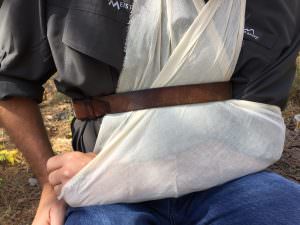
You might have heard that I took a tumble recently. It’s true. I was riding in the Three Sisters Wilderness in central Oregon when I joined the unplanned dismount club. Although I don’t remember all of it, I got to visit the hospital ER, met some great doctors, toured the surgery, and now I have a shiny new shoulder! Fun times.
I can’t tell you with certainty what went wrong, although I think it was bees. One moment I was in the saddle taking pictures and the next my head was impacting a tree followed by proof that Newton’s law of gravity is true. As I’m finding that narcotic-fueled dreams are anything but pleasant, I’ve had plenty of time to ponder what went right during my misadventure....
Read more here:
https://www.trailmeister.com/four-ways-save-life/
Tuesday, November 14, 2017
Fat Options to Help Your Horse Hold Weight During the Winter
Thehorse.com - Full Article
By Clair Thunes, PhD
Nov 13, 2017
What is the best use of fats to help horses maintain weight during the cooler winter months?
Julie , Hawaii
A. Fat sources are often used for weight gain because they’re significantly more calorie-dense than carbohydrates. There are numerous products that can add fat to a horse’s diet, including:
• High-fat commercial performance feeds, which typically have 10-13% crude fat and when fed correctly provide all the necessary vitamins and minerals to complement the forage in the ration;
• High-fat feeds, such as rice bran (which contains approximately 18% fat and might or might not have added vitamin E, calcium, and other minerals) or flax seeds (which might have up to 40% fat content);
• Fat supplements either in feed form—which might have as much as 30% crude fat—or a dried vegetable oil at 90% fat; and
• Oils, which include everything from common vegetable oils such as canola oil to less well-known vegetable oils such as camelina. Fish oil is even an option.
But First…
Before you reach for your preferred fat source, though, first try to determine why your horse isn’t maintaining weight...
Read more here:
http://www.thehorse.com/articles/39912/fat-options-to-help-your-horse-hold-weight-during-the-winter?utm_source=Newsletter&utm_medium=nutrition&utm_campaign=11-13-2017
By Clair Thunes, PhD
Nov 13, 2017
What is the best use of fats to help horses maintain weight during the cooler winter months?
Julie , Hawaii
A. Fat sources are often used for weight gain because they’re significantly more calorie-dense than carbohydrates. There are numerous products that can add fat to a horse’s diet, including:
• High-fat commercial performance feeds, which typically have 10-13% crude fat and when fed correctly provide all the necessary vitamins and minerals to complement the forage in the ration;
• High-fat feeds, such as rice bran (which contains approximately 18% fat and might or might not have added vitamin E, calcium, and other minerals) or flax seeds (which might have up to 40% fat content);
• Fat supplements either in feed form—which might have as much as 30% crude fat—or a dried vegetable oil at 90% fat; and
• Oils, which include everything from common vegetable oils such as canola oil to less well-known vegetable oils such as camelina. Fish oil is even an option.
But First…
Before you reach for your preferred fat source, though, first try to determine why your horse isn’t maintaining weight...
Read more here:
http://www.thehorse.com/articles/39912/fat-options-to-help-your-horse-hold-weight-during-the-winter?utm_source=Newsletter&utm_medium=nutrition&utm_campaign=11-13-2017
Monday, November 13, 2017
Back Country Horsemen of America Cares for the Front Country Gems Outside Your Back Door
November 11 2017
by Sarah Wynne Jackson
Back Country Horsemen of America formed over 40 years ago to protect our right to ride horses on public lands. The original founders cherished the wide swaths of wild land that encompass hundreds of thousands of acres with trails inaccessible to nearly anything but those on foot or hoof. Today, we still treasure those vast areas, but we also highly value the smaller public lands nestled between cities and highways, the few hundreds or thousands of acres that give us a respite from our busy daily life.
These front country gems may not sit on mountaintops where the worst of weather pulls down trees and washes out trail treads, but they still need consistent maintenance due to the heavy use we give them. In fact, this is a strong argument for creating more local public lands. Easy accessibility to the few that we have attracts recreationists of every kind, including hikers, dog walkers, bicyclists, equestrians, and more, in numbers higher than most lands can sustain. Instead of limiting use at individual public lands, creating more recreation opportunities would spread our use across more lands.
Back Country Horsemen chapters across the nation carefully plan their resources to attend to the places with the highest needs and the heaviest use first. At least once yearly, the Olympic Chapter of Back Country Horsemen of Washington reviews its work budget to determine where its effort is most badly needed. Members realized that they tend to return to Green Mountain Horse Camp in Green Mountain State Forest several times each year to repeatedly perform the same repairs. To reduce this inefficient use of their limited time, the chapter decided to overhaul the horse corrals, the biggest maintenance need in the camp.
A Big Job
The land surrounding the popular corrals collected rainwater, making the corral area muddy and difficult for campers to clean, and the wood rails had rotted from exposure to the elements. To overhaul the corrals, the Olympic Chapter drew on the skill within their membership: landscape designer Brian Sundberg created the plan, former Chapter President Jim Davis served as liaison and procured materials, past BCHA Chair Jim Murphy wrote up the specifications, and other chapter members provided tools, equipment (including a Bobcat), hard work, and rations.
Chapter volunteers began by removing all the soft and rotten posts and rails. To reduce the level of maintenance required after renovation, they hardened the corral footing, which would allow water to drain away while providing a firm surface that would be easier to keep clean. After excavating the 100-foot-by-30-foot footprint of the corral area about 8 inches deep, they installed a drainpipe system to carry water away from the camp, then filled in the area with crushed rock. They then installed corral posts and rails, using pressure treated and metal materials for durability.
An Expensive Job
Anyone who has done landscaping or similar construction knows that these materials aren’t cheap, making a project like this pricey, even when the labor is free. Including over $6000 for footing materials, nearly $2000 for weather-durable gates and posts, and over $500 for heavy equipment fuel along with other miscellaneous costs, the final price tag came to almost $10,000 for the sixteen 12-foot-by-12-foot corrals.
The state Department of Natural Resources (DNR) donated the pressure treated posts and rails, but the rest of the cost was carried by the Olympic Chapter Back Country Horsemen. How did they do it? They organize the Western Dream Ride at a dude ranch in the stunning Cascade Mountains. Horse lovers spend three days living in rustic ranch cabins, eating authentic back country meals, and riding amazing trails. The Olympic Back Country Horsemen also provide western style entertainment, Cowboy Church, a silent auction, and even a swimming pool.
Offering this well-loved event to up to 130 riders every year takes the full commitment of the entire chapter, but participants and volunteers know that it makes funds available to perform maintenance and improvements to trails, trailheads, and camps in Green Mountain State Forest.
A Job Worth Every Effort
Although northwest Washington boasts many horse trails that traverse its awe-inspiring mountains, riders still enjoy front country trails for day rides and when mountain trails are closed. Managed by the state DNR, Green Mountain State Forest is an undeveloped working land that provides habitat for native plants and animals, water retention, and water quality benefits. Its 6,000 acres provide diverse recreation opportunities to more than 150,000 people each year.
The Olympic Chapter has a volunteer contract with the DNR to maintain the trails and the horse camp. As part of the contract, the chapter also provides a friendly Camp Host at the horse camp on weekends from Memorial Day weekend through Labor Day.
When recreational trail riders started using the horse corrals renovated by the Olympic Chapter Back Country Horsemen, compliments and rave reviews began coming in. People love the new corrals as well as the minor repairs and grooming the chapter completed on the 17 camp sites.
About Back Country Horsemen of America
BCHA is a non-profit corporation made up of state organizations, affiliates, and at-large members. Their efforts have brought about positive changes regarding the use of horses and stock in wilderness and public lands.
If you want to know more about Back Country Horsemen of America or become a member, visit their website: www.bcha.org; call 888-893-5161; or write 342 North Main Street, West Hartford, CT 06117. The future of horse use on public lands is in our hands!
by Sarah Wynne Jackson
Back Country Horsemen of America formed over 40 years ago to protect our right to ride horses on public lands. The original founders cherished the wide swaths of wild land that encompass hundreds of thousands of acres with trails inaccessible to nearly anything but those on foot or hoof. Today, we still treasure those vast areas, but we also highly value the smaller public lands nestled between cities and highways, the few hundreds or thousands of acres that give us a respite from our busy daily life.
These front country gems may not sit on mountaintops where the worst of weather pulls down trees and washes out trail treads, but they still need consistent maintenance due to the heavy use we give them. In fact, this is a strong argument for creating more local public lands. Easy accessibility to the few that we have attracts recreationists of every kind, including hikers, dog walkers, bicyclists, equestrians, and more, in numbers higher than most lands can sustain. Instead of limiting use at individual public lands, creating more recreation opportunities would spread our use across more lands.
Back Country Horsemen chapters across the nation carefully plan their resources to attend to the places with the highest needs and the heaviest use first. At least once yearly, the Olympic Chapter of Back Country Horsemen of Washington reviews its work budget to determine where its effort is most badly needed. Members realized that they tend to return to Green Mountain Horse Camp in Green Mountain State Forest several times each year to repeatedly perform the same repairs. To reduce this inefficient use of their limited time, the chapter decided to overhaul the horse corrals, the biggest maintenance need in the camp.
A Big Job
The land surrounding the popular corrals collected rainwater, making the corral area muddy and difficult for campers to clean, and the wood rails had rotted from exposure to the elements. To overhaul the corrals, the Olympic Chapter drew on the skill within their membership: landscape designer Brian Sundberg created the plan, former Chapter President Jim Davis served as liaison and procured materials, past BCHA Chair Jim Murphy wrote up the specifications, and other chapter members provided tools, equipment (including a Bobcat), hard work, and rations.
Chapter volunteers began by removing all the soft and rotten posts and rails. To reduce the level of maintenance required after renovation, they hardened the corral footing, which would allow water to drain away while providing a firm surface that would be easier to keep clean. After excavating the 100-foot-by-30-foot footprint of the corral area about 8 inches deep, they installed a drainpipe system to carry water away from the camp, then filled in the area with crushed rock. They then installed corral posts and rails, using pressure treated and metal materials for durability.
An Expensive Job
Anyone who has done landscaping or similar construction knows that these materials aren’t cheap, making a project like this pricey, even when the labor is free. Including over $6000 for footing materials, nearly $2000 for weather-durable gates and posts, and over $500 for heavy equipment fuel along with other miscellaneous costs, the final price tag came to almost $10,000 for the sixteen 12-foot-by-12-foot corrals.
The state Department of Natural Resources (DNR) donated the pressure treated posts and rails, but the rest of the cost was carried by the Olympic Chapter Back Country Horsemen. How did they do it? They organize the Western Dream Ride at a dude ranch in the stunning Cascade Mountains. Horse lovers spend three days living in rustic ranch cabins, eating authentic back country meals, and riding amazing trails. The Olympic Back Country Horsemen also provide western style entertainment, Cowboy Church, a silent auction, and even a swimming pool.
Offering this well-loved event to up to 130 riders every year takes the full commitment of the entire chapter, but participants and volunteers know that it makes funds available to perform maintenance and improvements to trails, trailheads, and camps in Green Mountain State Forest.
A Job Worth Every Effort
Although northwest Washington boasts many horse trails that traverse its awe-inspiring mountains, riders still enjoy front country trails for day rides and when mountain trails are closed. Managed by the state DNR, Green Mountain State Forest is an undeveloped working land that provides habitat for native plants and animals, water retention, and water quality benefits. Its 6,000 acres provide diverse recreation opportunities to more than 150,000 people each year.
The Olympic Chapter has a volunteer contract with the DNR to maintain the trails and the horse camp. As part of the contract, the chapter also provides a friendly Camp Host at the horse camp on weekends from Memorial Day weekend through Labor Day.
When recreational trail riders started using the horse corrals renovated by the Olympic Chapter Back Country Horsemen, compliments and rave reviews began coming in. People love the new corrals as well as the minor repairs and grooming the chapter completed on the 17 camp sites.
About Back Country Horsemen of America
BCHA is a non-profit corporation made up of state organizations, affiliates, and at-large members. Their efforts have brought about positive changes regarding the use of horses and stock in wilderness and public lands.
If you want to know more about Back Country Horsemen of America or become a member, visit their website: www.bcha.org; call 888-893-5161; or write 342 North Main Street, West Hartford, CT 06117. The future of horse use on public lands is in our hands!
Innovative wheelbarrow seat could help horsey parents
 Horseandhound.co.uk - Full Article
Rachael Turner
15:55 - 12 November, 2017
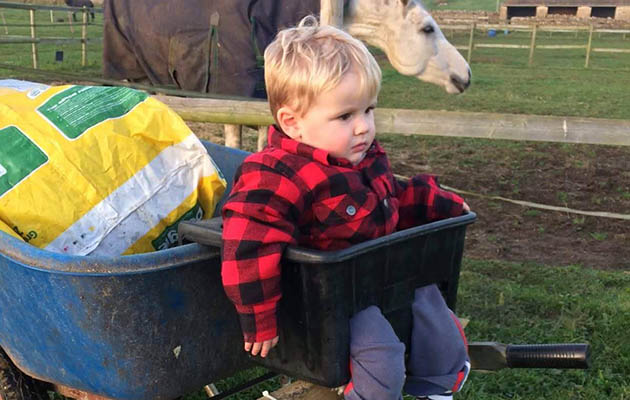
An endurance rider and her husband have developed an innovative way of keeping toddlers safe and involved at the yard.
Gloucestershire-based Adam Farley thought up the idea last October when he was looking after his then 18-month-old son Ollie while his wife Rachael Claridge was in Australia.
Adam was kept busy looking after the family’s four horses and two dogs, as well as working full-time.
“He was thinking of a way to keep our toddler safe,” Rachael told H&H.
“He bought a bucket, cut a couple of holes in it, fixed it to the wheelbarrow and stuck Ollie in it.
Read more at http://www.horseandhound.co.uk/news/innovative-wheelbarrow-seat-help-horsey-parents-637249#mszToRh4fe6HQ8a5.99
MT. BIKERS vs EQUESTRIANS: An explanation of horses to bikers – written by a biker
Horseandman.com - Full Article
Sunday, January 26th, 2014
You have all heard me rant about bikers that seem to have no regard for equestrians.
I’ve had an accident caused by a biker and many near misses since we live in a hilly and curvy landscape… Hilly and curvy makes for great riding and also many blind and speedy corners.
Yikes.
WHAT TO SAY TO CYCLISTS?
I know that I always thank cyclist who are kind towards equestrians. But, what do you say to those who aren’t respectful?
Usually, I yell something like, “It wouldn’t be funny if this was your kid on board!”… but they’re so far down the trail they never hear me.
So, when I saw this posted on our Equestrian board today, I thought some of you out there might find this handy if you get the chance to offer a cyclist’s explanation to other cyclists about equine safely.
HERE IS WHAT WAS WRITTEN:
The Silicon Valley Mountain Bikers, an International Mountain Bicycling Association (IMBA) affiliate, has posted information for mt. bikers on their shared trails that is thoughtful and informed. Please share with other horse and bike groups and with your friends who mountain bike so they can understand how to keep everyone safe on our multi-use trails:
Getting on with Equestrians...
Read more here:
http://www.horseandman.com/handy-tips/mt-bikers-vs-equestrians-explanation-horses-bikers-written-biker/01/26/2014/
Sunday, January 26th, 2014
You have all heard me rant about bikers that seem to have no regard for equestrians.
I’ve had an accident caused by a biker and many near misses since we live in a hilly and curvy landscape… Hilly and curvy makes for great riding and also many blind and speedy corners.
Yikes.
WHAT TO SAY TO CYCLISTS?
I know that I always thank cyclist who are kind towards equestrians. But, what do you say to those who aren’t respectful?
Usually, I yell something like, “It wouldn’t be funny if this was your kid on board!”… but they’re so far down the trail they never hear me.
So, when I saw this posted on our Equestrian board today, I thought some of you out there might find this handy if you get the chance to offer a cyclist’s explanation to other cyclists about equine safely.
HERE IS WHAT WAS WRITTEN:
The Silicon Valley Mountain Bikers, an International Mountain Bicycling Association (IMBA) affiliate, has posted information for mt. bikers on their shared trails that is thoughtful and informed. Please share with other horse and bike groups and with your friends who mountain bike so they can understand how to keep everyone safe on our multi-use trails:
Getting on with Equestrians...
Read more here:
http://www.horseandman.com/handy-tips/mt-bikers-vs-equestrians-explanation-horses-bikers-written-biker/01/26/2014/
Subscribe to:
Posts (Atom)