Thehorse.com - Full Article
Bowker: Long toes and underrun heels set horses up for failure. Here are recommendations for an improved trim to help correct this condition.
Posted by Stephanie L. Church, Editor-in-Chief | Dec 18, 2019
“When I see the 15-centimeter clear and pliable rulers in the university bookstore, I have to buy them, usually 15 to 20 at a time” says Robert Bowker, VMD, PhD. “They are very important to demonstrate to the horse owner and hoof care professional exactly what the problem is with a horse’s foot and what we hope to accomplish with our treatment. The ruler always makes us look a little more objectively at the foot as opposed to just with our eyes and brain. The latter two can be easily tricked!”
The veteran practitioner and professor never leaves home without one of these rulers—at least when he’s working on horses’ feet and helping owners, veterinarians, and farriers see and understand what’s going on inside them and recognizing whether they’re balanced and, if not, how to get there.
Bowker, longtime podiatry researcher and former professor and head of the Equine Foot Laboratory at Michigan State University’s (MSU) College of Veterinary Medicine, in East Lansing, described his perspectives and trimming approaches during a presentation at the 11th annual Northeast Association of Equine Practitioners (NEAEP) symposium, held Sept. 25-28 in Saratoga Springs, New York.
Reaching for the Right Ratio
Bowker measures every foot, and even photos and drawings of feet shown in seminar presentations or books, to illustrate balance—evidence of his passion for equine hoof health...
Read more here:
https://thehorse.com/182606/hoof-trimming-to-improve-structure-and-function/?utm_medium=Old+horse+enews&utm_source=Newsletter
Monday, December 30, 2019


Sunday, December 29, 2019
Separation Strategies for the Herd-Bound Horse
Horse-canada.com - Full Article
When you remove your horse from his herd or take away his buddy, he may start having separation anxiety and become agitated and whinny, find out more.
By: Antonia J.Z. Henderson | June 30, 2017
Dealing with a “buddy sour” or “herd-bound” horse can be a frustrating experience, but this “herdiness” is an entirely natural behaviour. Horses have social needs similar to humans, and most of our equine management practices thwart this innate desire for connection. When you remove your horse from his herd or take away his buddy, he may start having separation anxiety and become agitated and whinny, for example, because everything in his evolutionary development has hard-wired him to feel unsafe without his herdmates.
If the situation is threatening, or even moderately stressful, such as a trailer ride, new environment, or the demands of a horse show, then it pays for him to be extra vigilant about keeping his pals in sight.
Since horses’ precarious survival on the range hinged on sticking together, this behaviour was evolutionarily selected for. Horses that wandered off were much more likely to get eaten by a predator and thus not have the opportunity to pass on that behavioural trait to future generations. Horses that stuck together survived and so too did the trait of maintaining close bonds. Remembering this will go a long way toward helping you work patiently with your horse to build his separation tolerance. Following are some tips for dealing with the natural, albeit annoying and, at times, even dangerous, equine trait of separation anxiety...
Read more here:
https://horse-canada.com/magazine/behaviour/separation-strategies-for-the-herd-bound-horse/
When you remove your horse from his herd or take away his buddy, he may start having separation anxiety and become agitated and whinny, find out more.
By: Antonia J.Z. Henderson | June 30, 2017
Dealing with a “buddy sour” or “herd-bound” horse can be a frustrating experience, but this “herdiness” is an entirely natural behaviour. Horses have social needs similar to humans, and most of our equine management practices thwart this innate desire for connection. When you remove your horse from his herd or take away his buddy, he may start having separation anxiety and become agitated and whinny, for example, because everything in his evolutionary development has hard-wired him to feel unsafe without his herdmates.
If the situation is threatening, or even moderately stressful, such as a trailer ride, new environment, or the demands of a horse show, then it pays for him to be extra vigilant about keeping his pals in sight.
Since horses’ precarious survival on the range hinged on sticking together, this behaviour was evolutionarily selected for. Horses that wandered off were much more likely to get eaten by a predator and thus not have the opportunity to pass on that behavioural trait to future generations. Horses that stuck together survived and so too did the trait of maintaining close bonds. Remembering this will go a long way toward helping you work patiently with your horse to build his separation tolerance. Following are some tips for dealing with the natural, albeit annoying and, at times, even dangerous, equine trait of separation anxiety...
Read more here:
https://horse-canada.com/magazine/behaviour/separation-strategies-for-the-herd-bound-horse/
Saturday, December 21, 2019
12 Life Lessons I Learned as a Rocky Mountain Horse Guide
HorseNetwork.com - Full Article
What I learned from keeping guests happy, laughing, and (more or less) on their horses
Caelan Beard
December 18 2019
Many of us, at some point in our horse careers, end up as trail guides.
Whether it’s taking out guests occasionally at your regular riding stable, or a summer job at a destination ranch, that first time you lead a ride can be a bit scary.
It can also teach you some surprising lessons about life, horses, and yourself
Here’s what I picked up on the trail while keeping people entertained, on their horses, and (pretty much) all in one piece.
1. Learn to ride backwards
Because you’re going to spend 90% of your time twisted around, trying to watch everyone at once and make sure that none of your first-time, unbalanced riders are about to topple off their mounts.
Life lesson: The path forward goes more smoothly when you keep potential problems in your peripheral vision...
Read more here:
https://horsenetwork.com/2019/12/12-life-lessons-i-learned-as-a-rocky-mountain-horse-guide/?utm_source=MASTER&utm_campaign=d8725eb00c-HN_2019_12_20_2019&utm_medium=email&utm_term=0_5694ca6b0c-d8725eb00c-84641243&goal=0_5694ca6b0c-d8725eb00c-84641243&mc_cid=d8725eb00c&mc_eid=b3c9897994
What I learned from keeping guests happy, laughing, and (more or less) on their horses
Caelan Beard
December 18 2019
Many of us, at some point in our horse careers, end up as trail guides.
Whether it’s taking out guests occasionally at your regular riding stable, or a summer job at a destination ranch, that first time you lead a ride can be a bit scary.
It can also teach you some surprising lessons about life, horses, and yourself
Here’s what I picked up on the trail while keeping people entertained, on their horses, and (pretty much) all in one piece.
1. Learn to ride backwards
Because you’re going to spend 90% of your time twisted around, trying to watch everyone at once and make sure that none of your first-time, unbalanced riders are about to topple off their mounts.
Life lesson: The path forward goes more smoothly when you keep potential problems in your peripheral vision...
Read more here:
https://horsenetwork.com/2019/12/12-life-lessons-i-learned-as-a-rocky-mountain-horse-guide/?utm_source=MASTER&utm_campaign=d8725eb00c-HN_2019_12_20_2019&utm_medium=email&utm_term=0_5694ca6b0c-d8725eb00c-84641243&goal=0_5694ca6b0c-d8725eb00c-84641243&mc_cid=d8725eb00c&mc_eid=b3c9897994
Monday, December 16, 2019
Riding Horses Across Ireland Ep 3 : The Mizen Head Peninsula Long Distance Horse Riding Travel

UCStrike.com - Watch the video
Watch Episode 3: Horses Across Ireland Ep 3 : The Mizen Head Peninsula Long Distance Horse Riding Travel
Microchipping Your Horse
TheHorse.com - Full Article
Register and track your horse with this important identification tool.
Posted by Alexandra Beckstett, The Horse Managing Editor | Aug 15, 2019
Each spring the veterinarian comes out to the barn where I board my off-track Thoroughbred and, stall by stall, conducts exams for health certificates, pulls blood for Coggins tests and administers vaccinations. This April, she came armed with another tool. After each injection and blood draw, she used a scanner to check the horse’s neck for evidence of a microchip. If it didn’t beep in recognition, she inserted a chip into the horse’s crest, noted the identification number and continued to the next horse.
Increasingly, major equine registries and organizations are mandating horses be microchipped with 15-digit International Organization of Standardization (ISO) chips for identification purposes. The Fédération Equestre Internationale (FEI) has required it since 2013. All Thoroughbred foals born in 2017 and later must be microchipped to register with The Jockey Club. And, starting in 2019, all horses competing at United States Equestrian Federation (USEF) and United States Hunter Jumper Association (USHJA) events, as well as the Thoroughbred Makeover, must have one. Western disciplines don’t yet mandate microchipping, but organizations such as the American Quarter Horse Association are encouraging it through educational and pilot programs...
Read more here:
https://thehorse.com/177516/microchipping-your-horse/
Register and track your horse with this important identification tool.
Posted by Alexandra Beckstett, The Horse Managing Editor | Aug 15, 2019
Each spring the veterinarian comes out to the barn where I board my off-track Thoroughbred and, stall by stall, conducts exams for health certificates, pulls blood for Coggins tests and administers vaccinations. This April, she came armed with another tool. After each injection and blood draw, she used a scanner to check the horse’s neck for evidence of a microchip. If it didn’t beep in recognition, she inserted a chip into the horse’s crest, noted the identification number and continued to the next horse.
Increasingly, major equine registries and organizations are mandating horses be microchipped with 15-digit International Organization of Standardization (ISO) chips for identification purposes. The Fédération Equestre Internationale (FEI) has required it since 2013. All Thoroughbred foals born in 2017 and later must be microchipped to register with The Jockey Club. And, starting in 2019, all horses competing at United States Equestrian Federation (USEF) and United States Hunter Jumper Association (USHJA) events, as well as the Thoroughbred Makeover, must have one. Western disciplines don’t yet mandate microchipping, but organizations such as the American Quarter Horse Association are encouraging it through educational and pilot programs...
Read more here:
https://thehorse.com/177516/microchipping-your-horse/
Wednesday, December 11, 2019
Four Tips to Help Prevent Gastric Ulcers
 USEF.org - Full Article
by Glenye Oakford | Dec 10, 2019
Has your horse’s behavior changed? Are his eating habits different? Does he seem mildly colicky after meals? Gastric ulcers could be the culprit. As many as 80% of active sport horses might have gastric ulcers at one time or another, says Dr. Nathan Slovis, a board-certified internal medicine veterinarian and the director of the McGee Medical Center at Hagyard Equine Medical Institute in Lexington, Kentucky. He has a strong interest in gastrointestinal disorders in the horse and is currently doing research on alternative natural therapies to promote a healthy digestive system, including this recent practical study.
“That doesn’t mean they’re all going to be bothered by it,” he said, “but there are some in which it can be significant. Even broodmares out in a pasture can have them, though at a lower rate.”
How serious are ulcers? Their effects can range from mild discomfort to serious intestinal impaction. Severe ulcers also can also result in bleeding and on rare occasions gastric perforations, as they can in humans.
Gastric ulcer symptoms can vary, says Slovis. Symptoms can include:...
Read more here:
https://www.usef.org/tune-in/equestrian-weekly/four-tips-to-help-prevent-gastric-ulcers
Tuesday, December 10, 2019
Managing Horse Wounds: To Bandage or Not to Bandage?
Thehorse.com - Full Article
Ah, the age-old question: When managing horse wounds, should you wrap them or let them “air out”? Researchers are working to determine whether bandaging or not bandaging is a better option and in what circumstances.
Posted by Christa Lesté-Lasserre, MA | Jun 10, 2019
Ah, the age-old question: When managing horse wounds, especially superficial ones, should you wrap them or let them “air out”?
While, in the past, the course of action you took might have come down to personal preference (maybe you’ve had good luck leaving it be or keeping it wrapped), wound location (not all are easy to bandage), or other extenuating circumstances (raise your hand if you’ve ever run out of Vetrap), researchers are working to determine whether one option is better for managing horse wounds.
“There’s still a long way to go before we can make recommendations about what’s better, but at this stage we’ve been able to complete a descriptive study, showing what’s going on in these wounds during healing,” said Marcio Costa, DVM, PhD, an assistant professor in the University of Montreal Department of Veterinary Biomedical Sciences, in Canada.
He and colleagues recently evaluated the wound-healing process in four study horses, with and without bandaging, as well as the types of bacteria colonizing those wounds...
Read more here:
https://thehorse.com/174101/managing-horse-wounds-to-bandage-or-not-to-bandage/
Ah, the age-old question: When managing horse wounds, should you wrap them or let them “air out”? Researchers are working to determine whether bandaging or not bandaging is a better option and in what circumstances.
Posted by Christa Lesté-Lasserre, MA | Jun 10, 2019
Ah, the age-old question: When managing horse wounds, especially superficial ones, should you wrap them or let them “air out”?
While, in the past, the course of action you took might have come down to personal preference (maybe you’ve had good luck leaving it be or keeping it wrapped), wound location (not all are easy to bandage), or other extenuating circumstances (raise your hand if you’ve ever run out of Vetrap), researchers are working to determine whether one option is better for managing horse wounds.
“There’s still a long way to go before we can make recommendations about what’s better, but at this stage we’ve been able to complete a descriptive study, showing what’s going on in these wounds during healing,” said Marcio Costa, DVM, PhD, an assistant professor in the University of Montreal Department of Veterinary Biomedical Sciences, in Canada.
He and colleagues recently evaluated the wound-healing process in four study horses, with and without bandaging, as well as the types of bacteria colonizing those wounds...
Read more here:
https://thehorse.com/174101/managing-horse-wounds-to-bandage-or-not-to-bandage/
The Long Haul: Traveling Long-Distances With Horses
Thehorse.com - Full Article
A U.S. Equestrian Team veterinarian who has overseen the shipping of horses to six Olympic Games shares what steps to take before, during, and after a long-distance trailer ride.
Posted by Alayne Blickle | Jun 12, 2019
Steps to take before, during, and after a long-distance trailer ride
Sarah Burris bought a lovely young cowhorse from Idaho in an online sale. There was only one problem: She lives in North Carolina and needed to ship the filly across the country to get her home. The filly was sensitive and not a good eater to begin with, says Burris. As a result, she arrived underweight, depressed, slightly dehydrated, and sporting a snotty nose.
Many owners ship horses all over the country these days, whether to attend competitions or relocate. Some haul their horses themselves, while others hire carriers to do the job.
Regardless of who’s behind the steering wheel, long trailer rides are associated with many stresses, including temperature extremes and humidity, flies and other insects, air quality issues, and potential exhaustion, dehydration, and disease exposure. So what should you do if you are preparing a horse for a long haul?
Rick Mitchell, DVM, MRCVS, Dipl. ACVSMR, Certified ISELP, of Fairfield Equine Associates, in Connecticut, will help us answer this question. As a U.S. Equestrian team veterinarian for 25 years, he’s overseen the shipping of horses to six Olympic Games and still regularly manages horses traveling from New England to Florida and back...
Read more here:
https://thehorse.com/158895/the-long-haul-traveling-long-distances-with-horses/
A U.S. Equestrian Team veterinarian who has overseen the shipping of horses to six Olympic Games shares what steps to take before, during, and after a long-distance trailer ride.
Posted by Alayne Blickle | Jun 12, 2019
Steps to take before, during, and after a long-distance trailer ride
Sarah Burris bought a lovely young cowhorse from Idaho in an online sale. There was only one problem: She lives in North Carolina and needed to ship the filly across the country to get her home. The filly was sensitive and not a good eater to begin with, says Burris. As a result, she arrived underweight, depressed, slightly dehydrated, and sporting a snotty nose.
Many owners ship horses all over the country these days, whether to attend competitions or relocate. Some haul their horses themselves, while others hire carriers to do the job.
Regardless of who’s behind the steering wheel, long trailer rides are associated with many stresses, including temperature extremes and humidity, flies and other insects, air quality issues, and potential exhaustion, dehydration, and disease exposure. So what should you do if you are preparing a horse for a long haul?
Rick Mitchell, DVM, MRCVS, Dipl. ACVSMR, Certified ISELP, of Fairfield Equine Associates, in Connecticut, will help us answer this question. As a U.S. Equestrian team veterinarian for 25 years, he’s overseen the shipping of horses to six Olympic Games and still regularly manages horses traveling from New England to Florida and back...
Read more here:
https://thehorse.com/158895/the-long-haul-traveling-long-distances-with-horses/
Bute vs. Firocoxib: Which NSAID Results in More Severe Gastric Ulcers?
Thehorse.com - Full Article
Both NSAIDs induced GI tract inflammation, but phenylbutazone might result in more severe inflammation in the lower GI tract.
Posted by Clair Thunes, PhD | Aug 12, 2019
Non-steroidal anti-inflammatory drugs (NSAIDs) are the second-most frequently used drug class in horses after dewormers. Veterinarians prescribe them for a wide range of issues ranging from post-surgical recovery to orthopedic issues. While they’re invaluable for managing horses’ pain, one of their side effects is gastric ulcers.
A group of researchers from Texas A&M University recently compared two types of NSAIDs’ effects on gastric ulceration in horses. Lauren M. Richardson, DVM, a resident in large animal surgery at the College of Veterinary Medicine and Biomedical Sciences, presented their findings at the 2017 American Association of Equine Practitioners convention, held Nov. 17-21 in San Antonio, Texas.
But first, let’s review how NSAIDs work...
Read more here:
https://thehorse.com/155604/bute-vs-firocoxib-nsaid-results-severe-gastric-ulcers/
Both NSAIDs induced GI tract inflammation, but phenylbutazone might result in more severe inflammation in the lower GI tract.
Posted by Clair Thunes, PhD | Aug 12, 2019
Non-steroidal anti-inflammatory drugs (NSAIDs) are the second-most frequently used drug class in horses after dewormers. Veterinarians prescribe them for a wide range of issues ranging from post-surgical recovery to orthopedic issues. While they’re invaluable for managing horses’ pain, one of their side effects is gastric ulcers.
A group of researchers from Texas A&M University recently compared two types of NSAIDs’ effects on gastric ulceration in horses. Lauren M. Richardson, DVM, a resident in large animal surgery at the College of Veterinary Medicine and Biomedical Sciences, presented their findings at the 2017 American Association of Equine Practitioners convention, held Nov. 17-21 in San Antonio, Texas.
But first, let’s review how NSAIDs work...
Read more here:
https://thehorse.com/155604/bute-vs-firocoxib-nsaid-results-severe-gastric-ulcers/
Friday, December 06, 2019
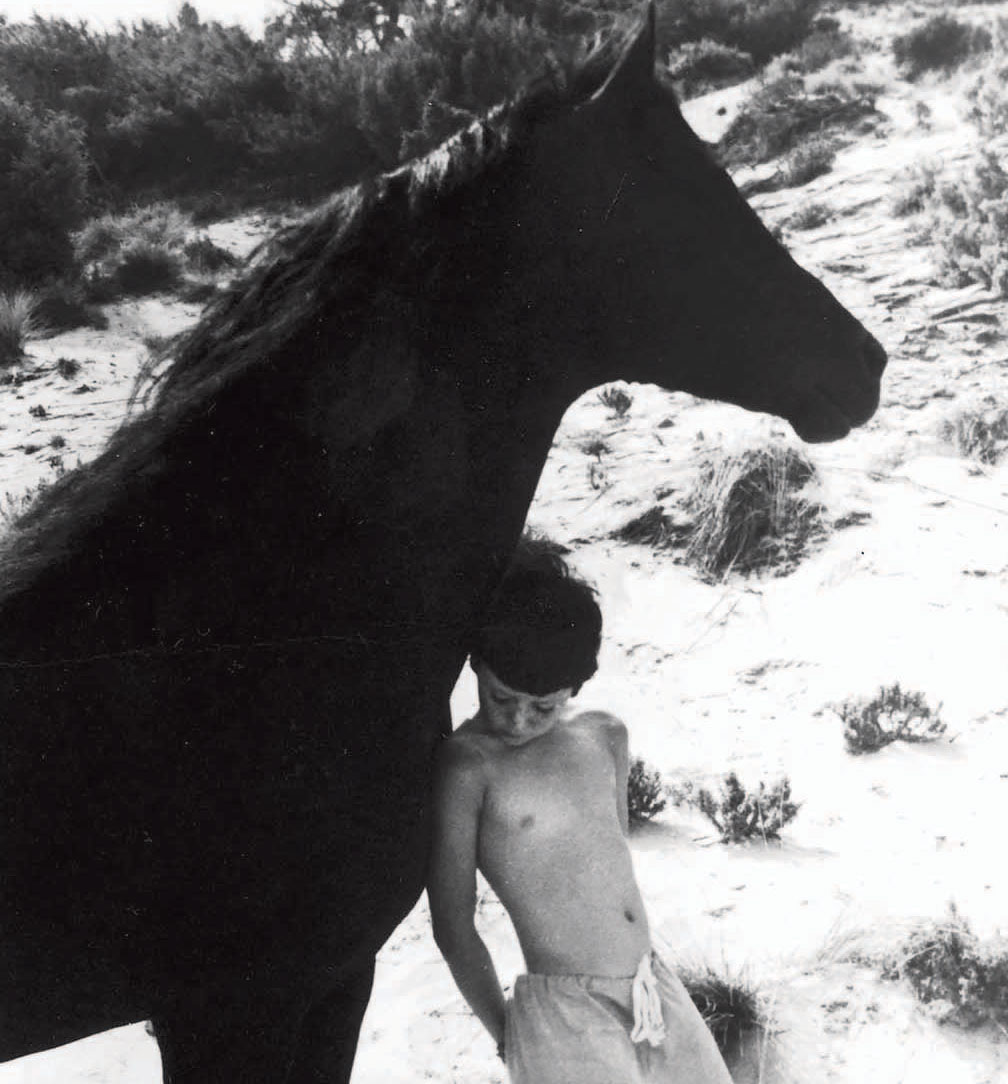
The Black Stallion: A Heartwarming Epic For The Ages
 CowboysIndians.com - Full Article
BY Elizabeth Kaye McCall
November 25, 2019
Still fantastic at 40, one of the best-loved horse movies of all time almost didn’t get made.
It was 3 a.m. when Carroll Ballard’s phone rang with a call from Francis Ford Coppola, who was then in Sicily filming The Godfather: Part II. The two had gone to film school together at UCLA and the middle-of-the-night call was Coppola telling him he thought they should do a film together. Months and ideas later, Coppola sent Ballard a copy of a novel that producer pal Fred Roos had heard about from his then girlfriend. It was her favorite childhood book: The Black Stallion.
“I didn’t like the book when it was first presented to me,” says Ballard, 83, in a rare interview at his hilltop home in St. Helena, California. “I thought, What is this? Leave It to Beaver? I wanted to make War and Peace!” But he finally “wised up” about the opportunity at hand, and in a truth-is-stranger-than-fiction convergence of events — including a typhoon in the Philippines that destroyed the set on Coppola’s Apocalypse Now — the modern classic, turning 40 this October, came to life.
Ballard munches on a quesadilla in a sunroom looking out on the pond flanked by his vineyard, as recollections of years spent on his visual masterpiece return. “I wondered for a long time, How is it that this book became such a big hit. Because I was dwelling on the old trainer and the kid talking,” he says. “Stuff I thought was totally predictable. But, there is this thing. I really didn’t see it for a long time. There is a mythic element in the book. It’s every child’s desire to have a powerful friend who can do things and who will make him powerful too. That’s what’s in this film. It’s mythic and in the form of a black horse...”
Read more here:
https://www.cowboysindians.com/2019/11/the-black-stallion-a-heartwarming-epic-for-the-ages/?utm_medium=email&utm_campaign=Cowboys%20Indians%20Newsletter%201204&utm_content=Cowboys%20Indians%20Newsletter%201204+CID_f323465c51c07556b65287051fa1ae61&utm_source=Campaign%20Monitor&utm_term=Read%20More
Tuesday, December 03, 2019
Water Temperature and Horse Drinking Behavior
Thehorse.com - Full Article
Why might our horses drink from an ice cold creek or tank rather than from the heated water buckets? Equine behaviorist Dr. Sue McDonnell explains.
Posted by Sue McDonnell, PhD, Certified AAB | Nov 18, 2019
Q: A few years ago I read an article describing research done at New Bolton Center on drinking behavior. It said that the research showed that in winter, horses prefer to drink warm water rather than ice cold water, and as a result veterinarians recommend giving horses warm water during the winter to be sure that they drink enough.
So, that winter we hung buckets of water along the fence every morning and evening at feeding time. It seemed our horses drank very little warm water from the buckets. Instead, they kept going to the stream even when it was partially frozen over. On days that the stream was completely frozen, they would drink from the buckets. We thought they might not like something about the hanging buckets, which were quite a distance from their hay racks.
So, the next year we put a heated plastic stock tank in the pasture near the hay racks. We put in a large heating element so the water stayed warm to the touch. Again, once we started heating the water in the tank, our horses seemed to drink mostly from the stream, as if they really preferred the ice cold stream water to the warmed water in the tank.
This year, the day before Thanksgiving, we had a sudden cold snap. I filled up the stock tank, but forgot to plug in the heating element. In the morning, there was a thin layer of ice on the tank. We were surprised to see that the horses had been drinking from the cold tank, breaking through the icy crust. Anyway, I turned the heater on so it wouldn’t freeze. After two weeks of paying close attention, I’m pretty sure they don’t seem to drink much at all from the tank when the heater is on. They are going back to the icy stream.
My veterinarian and I were talking about this, and she thought you might have been involved with drinking behavior research cited in the magazine article, or that she might have heard you talk about it somewhere. Was that you, or do you know about it? Do you have an explanation why in these circumstances our horses drink the ice cold water from the creek or tank rather than the warm water in the buckets or the water that is warmed in the tank? It would seem they actually prefer cold water over warm water.
—Robert, New York
A: Thank you so much for bringing up this question...
Read more here:
https://thehorse.com/13960/water-temperature-and-drinking-behavior/?utm_medium=Behavior+enews&utm_source=Newsletter
Why might our horses drink from an ice cold creek or tank rather than from the heated water buckets? Equine behaviorist Dr. Sue McDonnell explains.
Posted by Sue McDonnell, PhD, Certified AAB | Nov 18, 2019
Q: A few years ago I read an article describing research done at New Bolton Center on drinking behavior. It said that the research showed that in winter, horses prefer to drink warm water rather than ice cold water, and as a result veterinarians recommend giving horses warm water during the winter to be sure that they drink enough.
So, that winter we hung buckets of water along the fence every morning and evening at feeding time. It seemed our horses drank very little warm water from the buckets. Instead, they kept going to the stream even when it was partially frozen over. On days that the stream was completely frozen, they would drink from the buckets. We thought they might not like something about the hanging buckets, which were quite a distance from their hay racks.
So, the next year we put a heated plastic stock tank in the pasture near the hay racks. We put in a large heating element so the water stayed warm to the touch. Again, once we started heating the water in the tank, our horses seemed to drink mostly from the stream, as if they really preferred the ice cold stream water to the warmed water in the tank.
This year, the day before Thanksgiving, we had a sudden cold snap. I filled up the stock tank, but forgot to plug in the heating element. In the morning, there was a thin layer of ice on the tank. We were surprised to see that the horses had been drinking from the cold tank, breaking through the icy crust. Anyway, I turned the heater on so it wouldn’t freeze. After two weeks of paying close attention, I’m pretty sure they don’t seem to drink much at all from the tank when the heater is on. They are going back to the icy stream.
My veterinarian and I were talking about this, and she thought you might have been involved with drinking behavior research cited in the magazine article, or that she might have heard you talk about it somewhere. Was that you, or do you know about it? Do you have an explanation why in these circumstances our horses drink the ice cold water from the creek or tank rather than the warm water in the buckets or the water that is warmed in the tank? It would seem they actually prefer cold water over warm water.
—Robert, New York
A: Thank you so much for bringing up this question...
Read more here:
https://thehorse.com/13960/water-temperature-and-drinking-behavior/?utm_medium=Behavior+enews&utm_source=Newsletter
Sunday, December 01, 2019
Bomb-Proofing Tips from Mounted Police Officers
HorseIllustrated.com - Full Article
All riders can benefit from the techniques police departments use to train their horses to stay calm in challenging situations.
By Patrice D. Bucciarelli -
September 12, 2016
Along with their human partners, police horses are conspicuous everywhere from riots to county fairs. But even more than holding the line between crowds and bystanders, horses ridden by mounted police officers seem totally impervious to placards, banners and noise. So how exactly do mounted police units train their horses for street duty? The process takes time and dedication, but any horse and rider team can benefit from what this kind of training provides.
“I don’t like the term ‘bomb-proofing’ because people are like horses and none of us is bomb-proof,” says Capt. Lisa Rakes of the Kentucky Horse Park Mounted Police. “Even with the training, the horses are going to be startled, but the trick is to teach them that while it’s okay to jump in their tracks, it’s not okay to run away...”
Read more here:
https://www.horseillustrated.com/horse-training-bomb-proofing-tips-from-mounted-police-officers
All riders can benefit from the techniques police departments use to train their horses to stay calm in challenging situations.
By Patrice D. Bucciarelli -
September 12, 2016
Along with their human partners, police horses are conspicuous everywhere from riots to county fairs. But even more than holding the line between crowds and bystanders, horses ridden by mounted police officers seem totally impervious to placards, banners and noise. So how exactly do mounted police units train their horses for street duty? The process takes time and dedication, but any horse and rider team can benefit from what this kind of training provides.
“I don’t like the term ‘bomb-proofing’ because people are like horses and none of us is bomb-proof,” says Capt. Lisa Rakes of the Kentucky Horse Park Mounted Police. “Even with the training, the horses are going to be startled, but the trick is to teach them that while it’s okay to jump in their tracks, it’s not okay to run away...”
Read more here:
https://www.horseillustrated.com/horse-training-bomb-proofing-tips-from-mounted-police-officers
Friday, November 29, 2019
Gastric Ulcers in Horses: Consensus Statement Statistics
KER.com - Full Article
September 14, 2019
By Kentucky Equine Research Staff
Ulcers or erosions in the lining of the equine stomach are reportedly a common condition in performance animals. In racehorses, for example, ulcers are believed to occur in an estimated 50-90% of horses. Similarly, weanling foals have equally high rates of ulcers. Stress caused by changes in routine is thought to be an important contributor to the development of gastric ulcers.
“While some gastric ulcers can go undetected and seem not to bother certain horses, other horses show a variety of clinical signs, including colic, diarrhea, poor appetite, dull coat, decreased performance, and even behavior changes,” said Kathleen Crandell, Ph.D., an equine nutritionist for Kentucky Equine Research (KER)...
Read more here:
https://ker.com/equinews/gastric-ulcers-horses-update/?partner=ker&utm_source=KER+Newsletter&utm_campaign=4322755467-KER_Equinews_112719&utm_medium=email&utm_term=0_0d95781dfc-4322755467-11166
September 14, 2019
By Kentucky Equine Research Staff
Ulcers or erosions in the lining of the equine stomach are reportedly a common condition in performance animals. In racehorses, for example, ulcers are believed to occur in an estimated 50-90% of horses. Similarly, weanling foals have equally high rates of ulcers. Stress caused by changes in routine is thought to be an important contributor to the development of gastric ulcers.
“While some gastric ulcers can go undetected and seem not to bother certain horses, other horses show a variety of clinical signs, including colic, diarrhea, poor appetite, dull coat, decreased performance, and even behavior changes,” said Kathleen Crandell, Ph.D., an equine nutritionist for Kentucky Equine Research (KER)...
Read more here:
https://ker.com/equinews/gastric-ulcers-horses-update/?partner=ker&utm_source=KER+Newsletter&utm_campaign=4322755467-KER_Equinews_112719&utm_medium=email&utm_term=0_0d95781dfc-4322755467-11166
Saturday, November 23, 2019
Alfalfa or Grass Hay: Which Is Better for Winter Warmth?
TheHorse.com - Full Article
Our equine nutritionist weighs in on which type of hay best helps horses stay warm during cold nights.
Posted by Clair Thunes, PhD | Nov 18, 2019 |
Q.I’ve heard that alfalfa is a good hay choice at night for horses because it helps generate heat and keep them warm. Where I board my horse, the barn managers feed grass hay at night and told me that it keeps horses full longer. So, which is better for winter night feedings: grass or alfalfa hay?
—Julie, via e-mail
A.As we head toward the colder winter months, you’re not alone in wanting to make sure your horse stays warm overnight. When temperatures drop, feed requirements increase for your horse to consume enough calories to maintain condition. Staying warm requires calories beyond those needed for regular maintenance. Horses have different ways to regulate their body temperature depending on the ambient temperature, wind chill, and other climatic challenges they face...
Read more here:
https://thehorse.com/181582/alfalfa-or-grass-hay-which-is-better-for-winter-warmth/?utm_medium=Nutrition+enews&utm_source=Newsletter
Our equine nutritionist weighs in on which type of hay best helps horses stay warm during cold nights.
Posted by Clair Thunes, PhD | Nov 18, 2019 |
Q.I’ve heard that alfalfa is a good hay choice at night for horses because it helps generate heat and keep them warm. Where I board my horse, the barn managers feed grass hay at night and told me that it keeps horses full longer. So, which is better for winter night feedings: grass or alfalfa hay?
—Julie, via e-mail
A.As we head toward the colder winter months, you’re not alone in wanting to make sure your horse stays warm overnight. When temperatures drop, feed requirements increase for your horse to consume enough calories to maintain condition. Staying warm requires calories beyond those needed for regular maintenance. Horses have different ways to regulate their body temperature depending on the ambient temperature, wind chill, and other climatic challenges they face...
Read more here:
https://thehorse.com/181582/alfalfa-or-grass-hay-which-is-better-for-winter-warmth/?utm_medium=Nutrition+enews&utm_source=Newsletter
Yellowjackets on the Trail
AmericanTrails.org - Full Article
This first hand account from American Trails contributor Lora Goerlich is a great reminder about why you need to be prepared for yellowjackets on the trail.
by Lora Goerlich
Yellowjackets – the aggressive wasps that emerge from ground or cavity nests ready to do battle at the slightest provocation. From August until the first frost, these battle-minded buggers are to be feared. Not only do they sting multiple times, but as they sting, they release a pheromone trail for their associates, leading straight to the target. Their more docile, relatives include honey and bumble bees, paper and mud dauber wasps, hornets and caricature mascots. Honey and bumble bees sport fuzzy bodies; they don’t typically attack unless they are heavily provoked. Hornets, mud dauber and paper wasps commonly build visible nests among tree branches or on building structures, they are easy to avoid. Clear identification is vital to the survival of the more passive pollinators whose population numbers are dwindling.
On the trail, lead riders unknowingly stir up trouble as their horse’s hooves hit the ground near buried hives creating a wake of mayhem for the riders in the rear...
Read more here:
https://www.americantrails.org/resources/yellowjackets
This first hand account from American Trails contributor Lora Goerlich is a great reminder about why you need to be prepared for yellowjackets on the trail.
by Lora Goerlich
Yellowjackets – the aggressive wasps that emerge from ground or cavity nests ready to do battle at the slightest provocation. From August until the first frost, these battle-minded buggers are to be feared. Not only do they sting multiple times, but as they sting, they release a pheromone trail for their associates, leading straight to the target. Their more docile, relatives include honey and bumble bees, paper and mud dauber wasps, hornets and caricature mascots. Honey and bumble bees sport fuzzy bodies; they don’t typically attack unless they are heavily provoked. Hornets, mud dauber and paper wasps commonly build visible nests among tree branches or on building structures, they are easy to avoid. Clear identification is vital to the survival of the more passive pollinators whose population numbers are dwindling.
On the trail, lead riders unknowingly stir up trouble as their horse’s hooves hit the ground near buried hives creating a wake of mayhem for the riders in the rear...
Read more here:
https://www.americantrails.org/resources/yellowjackets
Friday, November 22, 2019
Breaking Down the $5b to Solve the US Wild Horse Problem
Horse-canada.com - Full Article
The acting head of the U.S. Bureau of Land Management has said it will take $5 billion and 15 years to control the wild horse population in the western US.
October 28, 2019
The acting head of the U.S. Bureau of Land Management, William Perry Pendley, has said it will take five billion dollars and 15 years control the overpopulation of wild horses on federal lands in the western United States. The current population of 88,000 mustangs and burros, the majority of which reside in Nevada, needs to be reduced to 27,000 ‒ a number the over-grazed ranges can reasonably sustain.
To kickstart the initiative, the Senate Appropriations Committee approved $35 million in September to support the implementation of a comprehensive package of humane and non-lethal management strategies for wild horses and burros on federal range lands. The effort is supported by a new coalition of animal welfare advocates and ranchers including the Humane Society of the United States, American Society for the Prevention of Cruelty to Animals, National Cattlemen’s Beef Association and the American Farm Bureau Federation...
Read more here:
https://horse-canada.com/horse-news/breaking-5b-solve-us-wild-horse-problem/
The acting head of the U.S. Bureau of Land Management has said it will take $5 billion and 15 years to control the wild horse population in the western US.
October 28, 2019
The acting head of the U.S. Bureau of Land Management, William Perry Pendley, has said it will take five billion dollars and 15 years control the overpopulation of wild horses on federal lands in the western United States. The current population of 88,000 mustangs and burros, the majority of which reside in Nevada, needs to be reduced to 27,000 ‒ a number the over-grazed ranges can reasonably sustain.
To kickstart the initiative, the Senate Appropriations Committee approved $35 million in September to support the implementation of a comprehensive package of humane and non-lethal management strategies for wild horses and burros on federal range lands. The effort is supported by a new coalition of animal welfare advocates and ranchers including the Humane Society of the United States, American Society for the Prevention of Cruelty to Animals, National Cattlemen’s Beef Association and the American Farm Bureau Federation...
Read more here:
https://horse-canada.com/horse-news/breaking-5b-solve-us-wild-horse-problem/
Thursday, November 21, 2019
Appaloosa horses gave Nez Percé advantage over US cavalry
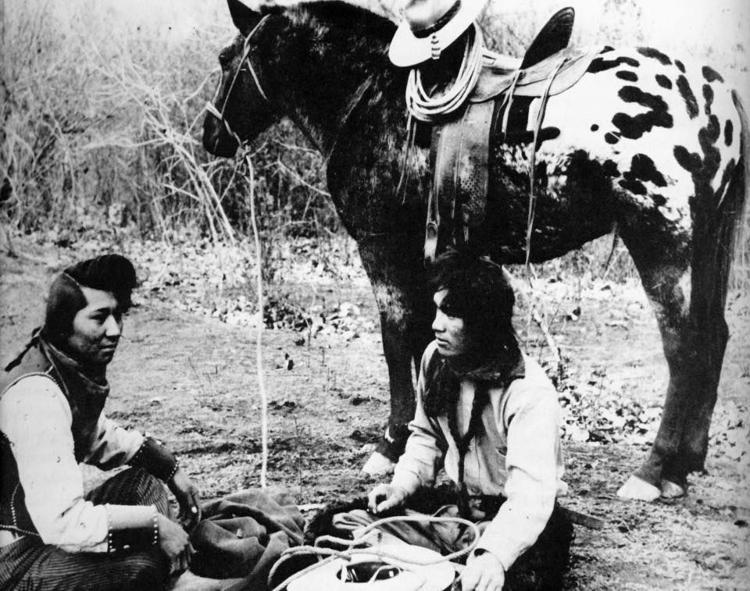 Two Nez Percé men with an Appaloosa c. 1895
PostRegister.com - Full Article
By JUSTIN SMITH For Farm & Ranch
November 20 2019
One of the reasons the Nez Percé warriors were so effective against the US cavalry during the legendary Nez Percé war lead by Chief Joseph was their distinctive horse, the Appaloosa. Named after the Palouse River, it was selectively bred by the Nez Percé for speed and endurance. Their beauty was a happy side effect of the breeding program.
While the US Army horses were primarily drawn from stock in the East and were ill-fit for the environment, the horses used by Native Americans in the West largely came from the Spanish horses brought into Mexico with partial lineages going back to Arabia. In the mid-17th century large Spanish herds were used around Santa Fe and Taos. The Spaniards attempted to keep the horses from the Native Americans, but escaped Indian slaves and stolen horses resulted in Apache and Navajo acquiring horses rapidly and putting their new equestrian skills to masterful use...
Read more here:
https://www.postregister.com/farmandranch/livestock/horses/appaloosa-horses-gave-nez-perc-advantage-over-us-cavalry/article_219fd99f-ad17-57b0-9bda-5b69d112e8c9.html
Home Off the Range: What the $35 Million Population Control Plan Means for America’s Wild Horses
HorseNetwork.com - Full Article
November 2 2019
MARINA CALLAHAN
Wild horses are an iconic feature of the American West, but now on Capitol Hill in Washington, DC, their future as a symbol of freedom on the frontier is threatened.
On September 23rd, the United States Senate Committee on Appropriations passed a Fiscal Year 2020 spending bill that includes a budget increase of $35 million for the Bureau of Land Management’s (BLM) Wild Horse and Burro Program.
It’s a contentious population control plan, involving large scale helicopter roundups and fertility management, that has animal welfare groups in fierce division. The American Society for the Prevention of Cruelty to Animals (ASPCA) told the Associated Press it was a historic win for horses while critics such as Animal Wellness Action call it a “poorly disguised path to slaughter...”
Read more here:
https://horsenetwork.com/2019/10/home-off-the-range-what-the-35-million-population-control-plan-means-for-americas-wild-horses/?utm_source=MASTER&utm_campaign=cba886c6ff-HNS_2019_11_2_19&utm_medium=email&utm_term=0_5694ca6b0c-cba886c6ff-84641243&goal=0_5694ca6b0c-cba886c6ff-84641243&mc_cid=cba886c6ff&mc_eid=b3c9897994
November 2 2019
MARINA CALLAHAN
Wild horses are an iconic feature of the American West, but now on Capitol Hill in Washington, DC, their future as a symbol of freedom on the frontier is threatened.
On September 23rd, the United States Senate Committee on Appropriations passed a Fiscal Year 2020 spending bill that includes a budget increase of $35 million for the Bureau of Land Management’s (BLM) Wild Horse and Burro Program.
It’s a contentious population control plan, involving large scale helicopter roundups and fertility management, that has animal welfare groups in fierce division. The American Society for the Prevention of Cruelty to Animals (ASPCA) told the Associated Press it was a historic win for horses while critics such as Animal Wellness Action call it a “poorly disguised path to slaughter...”
Read more here:
https://horsenetwork.com/2019/10/home-off-the-range-what-the-35-million-population-control-plan-means-for-americas-wild-horses/?utm_source=MASTER&utm_campaign=cba886c6ff-HNS_2019_11_2_19&utm_medium=email&utm_term=0_5694ca6b0c-cba886c6ff-84641243&goal=0_5694ca6b0c-cba886c6ff-84641243&mc_cid=cba886c6ff&mc_eid=b3c9897994
Monday, November 18, 2019
I Bought a Lame Horse: What Are My Legal Options?
 EquineLegalSoutions.com - Full Article
At Equine Legal Solutions, unhappy horse buyers contact us for legal advice, telling us, “I bought a horse – it seemed sound when I tried it out, but now that I have it at home IT IS LAME!! Can you help me??” Has this happened to YOU? If so, here is what we need to know to help determine what your legal options are.
Did You Have a Pre-Purchase Exam?
If the buyer had a pre-purchase examination (PPE), the veterinarian who performed the exam assessed the horse’s overall physical condition, which provides valuable data about its condition on the day of the exam. The buyer should have received a written report from the veterinarian, as well as copies of any diagnostic imaging and/or laboratory tests (such as drug screening) that were included in the exam. If the buyer did not receive these records, they should call the clinic and ask for copies. Because the buyer paid for the exam, the buyer owns the exam records, and in most states, the seller cannot obtain copies without the buyer’s permission. PPE reports vary greatly in formatting and content, but the most informative reports are very detailed and explain exactly what the veterinarian examined and what her findings were. Some PPE reports even include photos and/or video of any notable findings.
What the pre-purchase examination report says is critical...
Read more here:
https://www.equinelegalsolutions.com/I-bought-a-lame-horse.html
Sunday, November 17, 2019
BLM’s Attempts to Solve the U.S. Wild Horse Problem
HorseSport.com - Full Article
What’s the US Bureau of Land Management’s plan to reduce the population of wild mustangs and burros to a number the over-grazed ranges can sustain?
By: Horse Media Group | 3 weeks ago
UPDATE:
After repeated requests, the U.S. Bureau of Land Management (BLM) was unable to justify the originally quoted $5 billion cost to manage the wild mustangs and burros. As per publicly available information, BLM is currently spending $80 million on housing and caring for the horses and burros. A further $35 million has been requested, which could bring the total funding to $115 million per year, and $1.7 billion over 15 years.
The acting head of the U.S. Bureau of Land Management, William Perry Pendley, has said it will take $5 billion dollars and 15 years to control the overpopulation of wild horses on federal lands in the western United States. The current population of 88,000 mustangs and burros, the majority of which reside in Nevada, needs to be reduced to 27,000 ‒ a number the over-grazed ranges can reasonably sustain.
To kickstart the initiative, the Senate Appropriations Committee approved $35 million in September to support the implementation of a comprehensive package of humane and non-lethal management strategies for wild horses and burros on federal range lands. The effort is supported by a new coalition of animal welfare advocates and ranchers including the Humane Society of the United States, American Society for the Prevention of Cruelty to Animals, National Cattlemen’s Beef Association and the American Farm Bureau Federation.
The funds are part of a $35.8 billion Interior Department appropriation bill which provides funding to address National Park maintenance backlogs and environmental and conservation programs, although it is not known when the full Senate will vote on the measure. The monies would be used to pay for additional staff to carry out roundups in densely-populated, for fertility control measures, and to move horses currently in short-term holding pens to larger, more humane pastures...
Read more at:
https://horsesport.com/horse-news/breaking-5b-solve-us-wild-horse-problem/
What’s the US Bureau of Land Management’s plan to reduce the population of wild mustangs and burros to a number the over-grazed ranges can sustain?
By: Horse Media Group | 3 weeks ago
UPDATE:
After repeated requests, the U.S. Bureau of Land Management (BLM) was unable to justify the originally quoted $5 billion cost to manage the wild mustangs and burros. As per publicly available information, BLM is currently spending $80 million on housing and caring for the horses and burros. A further $35 million has been requested, which could bring the total funding to $115 million per year, and $1.7 billion over 15 years.
The acting head of the U.S. Bureau of Land Management, William Perry Pendley, has said it will take $5 billion dollars and 15 years to control the overpopulation of wild horses on federal lands in the western United States. The current population of 88,000 mustangs and burros, the majority of which reside in Nevada, needs to be reduced to 27,000 ‒ a number the over-grazed ranges can reasonably sustain.
To kickstart the initiative, the Senate Appropriations Committee approved $35 million in September to support the implementation of a comprehensive package of humane and non-lethal management strategies for wild horses and burros on federal range lands. The effort is supported by a new coalition of animal welfare advocates and ranchers including the Humane Society of the United States, American Society for the Prevention of Cruelty to Animals, National Cattlemen’s Beef Association and the American Farm Bureau Federation.
The funds are part of a $35.8 billion Interior Department appropriation bill which provides funding to address National Park maintenance backlogs and environmental and conservation programs, although it is not known when the full Senate will vote on the measure. The monies would be used to pay for additional staff to carry out roundups in densely-populated, for fertility control measures, and to move horses currently in short-term holding pens to larger, more humane pastures...
Read more at:
https://horsesport.com/horse-news/breaking-5b-solve-us-wild-horse-problem/
Horse Poop Powers Helsinki International Horse Show
HorseSport.com - Full Article
For the fifth year in-a-row, all the electricity used at the Helsinki International Horse Show was generated entirely from horse manure.
By: Horse Sport Ireland | 3 weeks ago
All the electricity used at the Helsinki International Horse Show, which hosted yesterday’s Longines FEI World Cup™ Show Jumping qualifier, was generated with horse manure. Over 150 megawatt hours of energy was created from the 100 tons of manure collected from competing horses during the four-day event in the Finnish capital.
Ireland was represented at the event by Tipperary’s Denis Lynch, Clare’s Eoin McMahon and Derry’s David Simpson with all of their competing horses contributing towards the unique ‘Horse Powered’ energy output.
The manure-to-energy system developed by Fortum, an international company specialising in electricity generation, heat production and waste recycling, met all the equestrian event’s electricity needs, including lighting, scoreboards and cell phone charging stations. The surplus energy that was generated went back into the national grid to heat homes in the Helsinki area.
What started off as a desk project in 2014 is now a resounding endorsement of the power of horse manure as a reliable source of renewable energy, not just at equestrian competitions but also for local communities...
Read more here:
https://horsesport.com/horse-news/horse-poop-powers-helsinki-international-horse-show/
For the fifth year in-a-row, all the electricity used at the Helsinki International Horse Show was generated entirely from horse manure.
By: Horse Sport Ireland | 3 weeks ago
All the electricity used at the Helsinki International Horse Show, which hosted yesterday’s Longines FEI World Cup™ Show Jumping qualifier, was generated with horse manure. Over 150 megawatt hours of energy was created from the 100 tons of manure collected from competing horses during the four-day event in the Finnish capital.
Ireland was represented at the event by Tipperary’s Denis Lynch, Clare’s Eoin McMahon and Derry’s David Simpson with all of their competing horses contributing towards the unique ‘Horse Powered’ energy output.
The manure-to-energy system developed by Fortum, an international company specialising in electricity generation, heat production and waste recycling, met all the equestrian event’s electricity needs, including lighting, scoreboards and cell phone charging stations. The surplus energy that was generated went back into the national grid to heat homes in the Helsinki area.
What started off as a desk project in 2014 is now a resounding endorsement of the power of horse manure as a reliable source of renewable energy, not just at equestrian competitions but also for local communities...
Read more here:
https://horsesport.com/horse-news/horse-poop-powers-helsinki-international-horse-show/
Tuesday, November 12, 2019
Qatar: Inside the 'Hollywood' of horses, Al Shaqab is the essence of equine luxury
CNN.com - Full Article
By Matt Majendie, for CNN
Updated 5:27 AM ET, Mon November 11, 2019
(CNN)It has been described as the "Hollywood" of horses, and it's certainly a winner in the glamor stakes. But Qatar's Al Shaqab is more of a seven-star equine resort than a make-believe movie set.
The multi-million-dollar center on the outskirts of the capital Doha is Qatar's luxury launchpad into equine excellence, from elite show jumpers to Arabian show horses and endurance racers. It is also helping to spawn the highly successful thoroughbred horse racing operation now predominantly based in France under the same name.
The stunning complex has been built in the shape of a horseshoe around an old Ottoman stable and fort. It serves to promote both Qatar's rich heritage with Arabian horses, and set the "highest standards in horse welfare, breeding, equine education and research," according to its website.
The facilities include a breeding center and stabling for more than 400 horses, a state-of-the-art equine hospital, indoor and outdoor performance arenas as well as an air-conditioned hydrotherapy and exercise unit complete with walking carousel, a circular swimming pool akin to a lazy river and a therapeutic spray bath like an equine Jacuzzi. Huge heat lamps dry the horses after their dips...
Read more here:
https://www.cnn.com/2019/11/11/sport/al-shaqab-hollywood-horses/?utm_medium=40digest.7days3.20191112.home&utm_source=email&utm_content=&utm_campaign=campaign
By Matt Majendie, for CNN
Updated 5:27 AM ET, Mon November 11, 2019
(CNN)It has been described as the "Hollywood" of horses, and it's certainly a winner in the glamor stakes. But Qatar's Al Shaqab is more of a seven-star equine resort than a make-believe movie set.
The multi-million-dollar center on the outskirts of the capital Doha is Qatar's luxury launchpad into equine excellence, from elite show jumpers to Arabian show horses and endurance racers. It is also helping to spawn the highly successful thoroughbred horse racing operation now predominantly based in France under the same name.
The stunning complex has been built in the shape of a horseshoe around an old Ottoman stable and fort. It serves to promote both Qatar's rich heritage with Arabian horses, and set the "highest standards in horse welfare, breeding, equine education and research," according to its website.
The facilities include a breeding center and stabling for more than 400 horses, a state-of-the-art equine hospital, indoor and outdoor performance arenas as well as an air-conditioned hydrotherapy and exercise unit complete with walking carousel, a circular swimming pool akin to a lazy river and a therapeutic spray bath like an equine Jacuzzi. Huge heat lamps dry the horses after their dips...
Read more here:
https://www.cnn.com/2019/11/11/sport/al-shaqab-hollywood-horses/?utm_medium=40digest.7days3.20191112.home&utm_source=email&utm_content=&utm_campaign=campaign
5 Steps to Prevent Trailer Theft
Horseandrider.com - Full Article
Don't leave your rig at a trailhead without taking these proven trailer-theft-prevention steps from our panel of experts and on-the-go trail riders.
AUDREY PAVIAUPDATED:OCT 17, 2019
It's a familiar scenario. You and your horse have been out on the trail for hours, riding up hills, wading in streams, and trotting through gulleys. When the day is nearly over and the two of you are getting tired, you start back to the trailhead. You get to your trailer, untack your horse, load him up, and head home.
Now imagine that same scenario—but when you get back to the trailhead, your trailer is gone! Your truck is still there, but your trailer is nowhere to be found.
If this seems like a horrifying development, it is. Not only are you and your tired and hungry horse stranded, but your valuable trailer and everything in it are in the hands of a thief.
Every year, horse trailers are stolen right off towing vehicles, some from trailheads. In fact, trailheads are a good place for thieves to look for trailers, since they're often in remote areas with no one around to witness the theft...
Read more here:
https://horseandrider.com/western-horse-training-tips/prevent-horse-trailer-theft?utm_source=Horse&RiderNL&utm_medium=email&utm_campaign=Newsletter&_hsenc=p2ANqtz-9cddYWEShMh8E9fdyg0BIQRh895AwXn3-y5eRRNqnJlZHy7_p-ZyXdzgLgi33Ew4ifh670vzRJ_C4wk_gA4cM7kpvsiQ&_hsmi=79264203
Don't leave your rig at a trailhead without taking these proven trailer-theft-prevention steps from our panel of experts and on-the-go trail riders.
AUDREY PAVIAUPDATED:OCT 17, 2019
It's a familiar scenario. You and your horse have been out on the trail for hours, riding up hills, wading in streams, and trotting through gulleys. When the day is nearly over and the two of you are getting tired, you start back to the trailhead. You get to your trailer, untack your horse, load him up, and head home.
Now imagine that same scenario—but when you get back to the trailhead, your trailer is gone! Your truck is still there, but your trailer is nowhere to be found.
If this seems like a horrifying development, it is. Not only are you and your tired and hungry horse stranded, but your valuable trailer and everything in it are in the hands of a thief.
Every year, horse trailers are stolen right off towing vehicles, some from trailheads. In fact, trailheads are a good place for thieves to look for trailers, since they're often in remote areas with no one around to witness the theft...
Read more here:
https://horseandrider.com/western-horse-training-tips/prevent-horse-trailer-theft?utm_source=Horse&RiderNL&utm_medium=email&utm_campaign=Newsletter&_hsenc=p2ANqtz-9cddYWEShMh8E9fdyg0BIQRh895AwXn3-y5eRRNqnJlZHy7_p-ZyXdzgLgi33Ew4ifh670vzRJ_C4wk_gA4cM7kpvsiQ&_hsmi=79264203
Monday, November 11, 2019
How to Get a Horse’s Coat to Dapple
Thehorse.com - Full Article
A dappled coat has long been a sign of optimum equine health and good nutrition, but the reality behind dappling is more complicated. Our equine nutritionist offers advice on bringing out the bloom in your horse’s coat.
Posted by Clair Thunes, PhD | Nov 4, 2019
Q.Earlier this year I purchased a mare who had a dull coat and needed to gain weight. After several months she now looks amazing and has developed beautiful dapples. I’ve always heard dapples are related to diet, specifically fat. However, I don’t feed her that differently than my other horses, and they don’t have dapples. Why do some horses get dapples and some don’t?
A.Dapples on nongray horses are interesting. These irregular spots where the coat appears as a slightly different shade are seen on some horses but not others. Horses might only get them at certain times of the year. In the winter some horses have them, but when you clip them the dapples disappear. And as you have observed, dapples often appear to be condition-dependent. Traditionally, they are thought to be a sign of good health, so that would somewhat explain the condition connection...
Read more here:
https://thehorse.com/180950/how-to-get-a-horses-coat-to-dapple/?utm_medium=Reader+Favorites+enews&utm_source=Newsletter
A dappled coat has long been a sign of optimum equine health and good nutrition, but the reality behind dappling is more complicated. Our equine nutritionist offers advice on bringing out the bloom in your horse’s coat.
Posted by Clair Thunes, PhD | Nov 4, 2019
Q.Earlier this year I purchased a mare who had a dull coat and needed to gain weight. After several months she now looks amazing and has developed beautiful dapples. I’ve always heard dapples are related to diet, specifically fat. However, I don’t feed her that differently than my other horses, and they don’t have dapples. Why do some horses get dapples and some don’t?
A.Dapples on nongray horses are interesting. These irregular spots where the coat appears as a slightly different shade are seen on some horses but not others. Horses might only get them at certain times of the year. In the winter some horses have them, but when you clip them the dapples disappear. And as you have observed, dapples often appear to be condition-dependent. Traditionally, they are thought to be a sign of good health, so that would somewhat explain the condition connection...
Read more here:
https://thehorse.com/180950/how-to-get-a-horses-coat-to-dapple/?utm_medium=Reader+Favorites+enews&utm_source=Newsletter
Sunday, November 10, 2019
Arthur B. King, DVM Breaks Down the Endurance Vet Check
Equestrian.ca - Full Article
6 November 2019
An endurance race can last from sunup to sundown, with horses traveling up to 160km in a single day. Amongst the throng of horses, athletes, grooms and crew members constantly milling about race headquarters, there’s one figure who’s always easy to find in the crowd: the veterinarian.
In addition to a pre- and post-inspection, FEI endurance races include at least one compulsory hold of 40 minutes with an additional vet check. Arthur B. King, DVM of Fort Erie, ON, is an FEI 3* Endurance Official Veterinarian and 3* Endurance Veterinary Treatment Official, and he took us through what goes on behind the scenes to keep horses healthy throughout the day of competition.
Read on to get the inside scoop from Arthur!
Equestrian Canada: What are the components of an endurance vet check?
Arthur King: It’s very simple, really. The main thing is to make sure the horse is reasonably sound. It’s just like marathon runners: If you watch them, a lot of them have odd ways of going and part of it is the way they’re put together – confirmation as opposed to an unsoundness that’s painful. But if the horse has a consistent gate aberration, something abnormal that they didn’t start with, then it gets eliminated.
The other important thing is to make sure that the horse is metabolically stable, so if it’s eating alright and that its heart rate is coming down. Obviously, horses have a high heart rate when they’re on the trail, but when they come into the vet check they should recover down to 64bpm in a matter of minutes and probably 48bpm or less by the time they’re going out on the trail again...
Read more here:
https://www.equestrian.ca/news/Bdc9aJdp5nkNwHLA8/arthur-b-king-dvm-breaks-down-the
6 November 2019
An endurance race can last from sunup to sundown, with horses traveling up to 160km in a single day. Amongst the throng of horses, athletes, grooms and crew members constantly milling about race headquarters, there’s one figure who’s always easy to find in the crowd: the veterinarian.
In addition to a pre- and post-inspection, FEI endurance races include at least one compulsory hold of 40 minutes with an additional vet check. Arthur B. King, DVM of Fort Erie, ON, is an FEI 3* Endurance Official Veterinarian and 3* Endurance Veterinary Treatment Official, and he took us through what goes on behind the scenes to keep horses healthy throughout the day of competition.
Read on to get the inside scoop from Arthur!
Equestrian Canada: What are the components of an endurance vet check?
Arthur King: It’s very simple, really. The main thing is to make sure the horse is reasonably sound. It’s just like marathon runners: If you watch them, a lot of them have odd ways of going and part of it is the way they’re put together – confirmation as opposed to an unsoundness that’s painful. But if the horse has a consistent gate aberration, something abnormal that they didn’t start with, then it gets eliminated.
The other important thing is to make sure that the horse is metabolically stable, so if it’s eating alright and that its heart rate is coming down. Obviously, horses have a high heart rate when they’re on the trail, but when they come into the vet check they should recover down to 64bpm in a matter of minutes and probably 48bpm or less by the time they’re going out on the trail again...
Read more here:
https://www.equestrian.ca/news/Bdc9aJdp5nkNwHLA8/arthur-b-king-dvm-breaks-down-the
Subscribe to:
Posts (Atom)