Thehorse.com - Full Article
Reduce sporadic episodes of exertional rhabdomyolysis by providing plenty of forage and meeting these unique equine athletes’ nutrient requirements.
Posted by Jennifer Madera, DVM | Apr 25, 2022
The endurance horse is a distance athlete with high nutritional demands to support his work. Competitors can cover 25 to 100 miles in a single day. One health risk endurance can pose is exertional rhabdomyolysis (ER) or “tying-up.” This is a condition where a horse experiences some degree of muscle stiffness usually shortly after starting exercise. It might progress to severe muscle damage or necrosis, and renal (kidney) failure secondary to myoglobinuria, which is the presence of the broken-down muscle protein in urine.
Sporadic ER is a single or rare occurrence due to overwork or other confounding factors such as hot, humid weather. Veterinarians diagnose ER episodes using bloodwork. Chronic ER is a collection of heritable myopathies, including recurrent exertional rhabdomyolysis (RER), myofibrillar myopathy (MFM), and polysaccharide storage myopathy (PSSM) types 1 and 2. Veterinarians make definitive diagnoses of these conditions via muscle biopsy. In this article, I’ll provide nutritional recommendations to decrease episodes of sporadic ER. If you’re concerned your horse could be affected by a chronic ER condition, work closely with your veterinarian, who can make a diagnosis and management plan...
Read more here:
https://thehorse.com/1110873/nutrition-tips-to-prevent-endurance-horses-from-tying-up/
Tuesday, April 26, 2022


Monday, April 25, 2022
Redwood Rangers rode horseback 125 miles in four days in 1947
SUSAN MINICHIELLO
FOR THE PRESS DEMOCRAT
April 11, 2022
While most horseback riders travel with a horse trailer hitched to their car, four Sonoma County men in 1947 decided to take a more unconventional path.
They mounted their horses in Guerneville, and after riding 125 miles in four days, they arrived during a downpour of rain in Stockton for the California State Horsemen's Association Convention on Oct. 16.
The quartet were part of the Redwood Rangers Riding and Driving Club, a group based out of Guerneville from the 1940s to the 1970s. The 1947 riders included the club’s president, Jack Luttrell, vice president Leo O’Connors and members Jack Williams and David Grant. Media sometimes referred to them as the “hardy four” or the “four mesquiteers...”
Read more here:
https://www.pressdemocrat.com/article/news/redwood-rangers-rode-horseback-125-miles-in-four-days-in-1947/
Sunday, April 24, 2022
Ride & Tie 50th Annual World Championship in California in July
 Rideandtie.org
Location: Cuneo Creek Horse Camp, located in Humboldt Redwoods State Park, CA Date: July 29-30, 2022
Things to Know: In the early 1900s, loggers came to what is now Humboldt Redwoods State Park to cut down lofty ancient redwoods for grape stakes and shingles. The founders of Save the Redwoods League thought that was akin to “chopping up a grandfather clock for kindling.” From the acquisition of a single grove in 1921, the League has raised millions of dollars to build and expand this park. Today Humboldt Redwoods spans 53,000 acres, an area almost twice the size of San Francisco. About one third, or 17,000 acres, of the park is old- growth redwood forest—the largest expanse of ancient redwoods left on the planet. The South Fork of the Eel River provides excellent opportunities for fishing, boating, picnicking, and swimming. More than 100 miles of trails await hikers, bicyclists, and equestrians. Summer temperatures range from 70s to 90s, with lows in the 50s. Visitors should come prepared for any type of weather. The park receives between 60 and 80 inches of rain per year; the vast majority falls between October and May. Rain in the summer season is unusual, but does occur. In the summer, frequent morning fog usually burns off by noon.
Prizes/Awards: All participants in each race will receive an athletic t-shirt. All long course finishers in the Ride & Tie as well as in the equathon will receive belt buckles. Turtle awards will be presented for each race. Top woman/woman, woman/man, and man/man awards will be given to the first place finishers for each division in the long course Ride & Tie. First, second, and third place awards will be presented to short course Ride & Tie, long and short course equathons. Best condition will be awarded to horse in the long course Ride & Tie. Special awards will be presented to: the team traveling the furthest; oldest team competing, top Pro/Am and Am/Am teams, among others...
For more information and entry form, see:
https://www.rideandtie.org/mec-schedule/50th-annual-world-championship/
Friday, April 22, 2022
How Horses Heat Up and Cool Down Varies Considerably
Thehorse.com - Full Article
Measure and understand your horse’s unique exercise heat patterns so you can promote recovery and prevent heat stroke.
Posted by Christa Lesté-Lasserre, MA | Apr 19, 2022
As the planet heats up, so will our equine athletes. Belgian and Australian researchers recently reported that it’s more important than ever to understand how hot horses get during and after exercise, as well as how fast they recover.
“In the last 10 years, we have been alarmed by heat waves due to climate change and global warming,” said Elisabeth-Lidwien (E.J.M.M.) Verdegaal, MVM, DVM, Dipl. RDVS, ECEIM, a Dutch, European, and Australian registered specialist in equine internal medicine, senior lecturer equine medicine, and joint PhD candidate at Ghent University, in Belgium, and the University of Adelaide, in Australia.
“The sudden unexpected increase in hot ambient temperatures results in a significantly increased risk of heat stress because horses have not been able to acclimatize,” she said. “The global warming aspect underlines that we need to be prepared to prevent exertional heat illness...”
Read more here:
https://thehorse.com/1110733/how-horses-heat-up-and-cool-down-varies-considerably/
Measure and understand your horse’s unique exercise heat patterns so you can promote recovery and prevent heat stroke.
Posted by Christa Lesté-Lasserre, MA | Apr 19, 2022
As the planet heats up, so will our equine athletes. Belgian and Australian researchers recently reported that it’s more important than ever to understand how hot horses get during and after exercise, as well as how fast they recover.
“In the last 10 years, we have been alarmed by heat waves due to climate change and global warming,” said Elisabeth-Lidwien (E.J.M.M.) Verdegaal, MVM, DVM, Dipl. RDVS, ECEIM, a Dutch, European, and Australian registered specialist in equine internal medicine, senior lecturer equine medicine, and joint PhD candidate at Ghent University, in Belgium, and the University of Adelaide, in Australia.
“The sudden unexpected increase in hot ambient temperatures results in a significantly increased risk of heat stress because horses have not been able to acclimatize,” she said. “The global warming aspect underlines that we need to be prepared to prevent exertional heat illness...”
Read more here:
https://thehorse.com/1110733/how-horses-heat-up-and-cool-down-varies-considerably/
Friday, April 01, 2022
Short course: Preventing lameness in sport horses
 Horsetalk.co.nz - full article
April 1, 2022
Horsetalk.co.nz
Canada’s Equine Guelph is offering a new two-week online short course on the care and prevention of injuries in sport horses.
Course instructor Dr Brianne Henderson of Rivendell Equine Veterinary Services will take the course, which runs from April 25 to May 6, 2022.
Participants will learn daily practices that can optimize health and performance and reduce the risk of lameness issues in their athletic horses. Everything from early detection, footing and exercise regime can have an impact on soundness.
Henderson will discuss common lameness issues for horses as well as early detection and prevention. Those attending will also learn about the horse’s musculoskeletal system, how they move, best practices for detecting lameness, assessment tools, management of a lame horse and the latest research...
More at:
https://www.horsetalk.co.nz/2022/04/01/lameness-sport-horses/
Thursday, March 31, 2022
Hindgut Happiness: Forages and Their Alternatives
HorseSport.com - Full Article
Good-quality forages can provide a horse with all the energy he needs, most of his protein requirements, plus many minerals and vitamins.
By: Shannon Pratt-Phillips, Ph.D. | March 23, 2022
Forages are long-stem plants and include pasture, hay (cut and dried plants) and haylage (cut and fermented plants). They typically provide the bulk of the equine diet and for good reason. The horse’s digestive system, with its well-developed cecum and large colon full of microbial organisms – or hindgut – is designed to digest and ferment these high-fibre plants to provide useful nutrients.
The fragile ecosystem of the horse’s hindgut needs a constant influx of fibre and it is well recognized that diets low in fibrous plant material can increase a horse’s risk of digestive upset such as colic. In feral horse populations, and even many domesticated populations, animals will spend up to 70 per cent of their day “foraging” and eating plant material as they meander around their location...
Read more here:
https://horsesport.com/magazine/nutrition/hindgut-happiness-forages-their-alternatives/
Good-quality forages can provide a horse with all the energy he needs, most of his protein requirements, plus many minerals and vitamins.
By: Shannon Pratt-Phillips, Ph.D. | March 23, 2022
Forages are long-stem plants and include pasture, hay (cut and dried plants) and haylage (cut and fermented plants). They typically provide the bulk of the equine diet and for good reason. The horse’s digestive system, with its well-developed cecum and large colon full of microbial organisms – or hindgut – is designed to digest and ferment these high-fibre plants to provide useful nutrients.
The fragile ecosystem of the horse’s hindgut needs a constant influx of fibre and it is well recognized that diets low in fibrous plant material can increase a horse’s risk of digestive upset such as colic. In feral horse populations, and even many domesticated populations, animals will spend up to 70 per cent of their day “foraging” and eating plant material as they meander around their location...
Read more here:
https://horsesport.com/magazine/nutrition/hindgut-happiness-forages-their-alternatives/
Tuesday, March 29, 2022
Does Your Horse Need Probiotics?
Thehorse.com - Full Article
By supplementing horses with the same kind of beneficial microorganisms that colonize their guts, probiotics might help reestablish healthy balances in the gut microbiome without causing harm. Learn more in this article from the September 2021 issue of The Horse.
Posted by Christa Lesté-Lasserre, MA | Sep 27, 2021
If your horse’s gut microbiota is out of whack, microorganism-packed products might get him back on track
Inside the digestive system live millions of microscopic organisms that play vital roles in the horse’s digestive—and general—health. Many of these of bacteria, protozoa, archaea, and fungi help break down food and usher nutrients efficiently into the bloodstream. They play a role in metabolizing fiber, generating energy, and promoting proper intestinal transit.
While scientists still don’t know what makes up the ideal equine gut microbiota, they do know it’s a question of balance. “All these microorganisms live in a kind of symbiotic relationship when they’re in balance,” says Kathleen Crandell, PhD, a nutritionist with Kentucky Equine Research, in Versailles...
Read more here:
https://thehorse.com/1104644/does-your-horse-need-probiotics/
By supplementing horses with the same kind of beneficial microorganisms that colonize their guts, probiotics might help reestablish healthy balances in the gut microbiome without causing harm. Learn more in this article from the September 2021 issue of The Horse.
Posted by Christa Lesté-Lasserre, MA | Sep 27, 2021
If your horse’s gut microbiota is out of whack, microorganism-packed products might get him back on track
Inside the digestive system live millions of microscopic organisms that play vital roles in the horse’s digestive—and general—health. Many of these of bacteria, protozoa, archaea, and fungi help break down food and usher nutrients efficiently into the bloodstream. They play a role in metabolizing fiber, generating energy, and promoting proper intestinal transit.
While scientists still don’t know what makes up the ideal equine gut microbiota, they do know it’s a question of balance. “All these microorganisms live in a kind of symbiotic relationship when they’re in balance,” says Kathleen Crandell, PhD, a nutritionist with Kentucky Equine Research, in Versailles...
Read more here:
https://thehorse.com/1104644/does-your-horse-need-probiotics/
Equestrian Adventuresses Podcast: Traveling Mongolia by Horse Cart
 EquestrianAdventuresses.com Podcast - Listen
by utetonia
March 23, 2022
If you love books, this is the perfect place for you. Once a month, Heather, Ute, and sometimes Krystal, will talk about their favorite horsey book. In today’s episode of the EQA Book Club, Ute is talking with Ruth Cox about her book Exodus, a classic traveler story about her incredible journey through Mongolia with a bunch of hippies, two horses and a cart...
Read more and listen here:
https://equestrianadventuresses.com/2022/03/23/horse-podcast-ep-248-travelling-mongolia-by-horse-cart/
Tuesday, March 22, 2022
Equestrian Adventuresses Podcast: Horse - Ukraine: From Horse Tour Operator to Relief Worker
 EquestrianAdventuresses.com - Listen
by utetonia
March 18, 2022
The Ukraine still tops the news and the war is on-going, soon to enter its fourth week. Millions of people are fleeing the bombings and they bring their animals too if they can. Horses sometimes cannot be taken along as roads and bridges are destroyed and fodder is almost unavailable. In today’s episode I am talking to Pawel Jasinski from Poland who normally operates horse trails in different countries including the Ukraine. Poland shares a long border with Ukraine and is the prime spot to get relief aid into the war-torn country as well as welcoming refugees.
Pawel speaks Ukrainian and has a lot of friends there, bringing groups of riders several times a year. When the war started he decided to do something to help the Ukrainian people. He started a fundraiser and personally drives convoys of aid to the border where it is received by his Ukrainian horse riding partner who makes sure it will be distributed to those in need. In today’s episode he tells us about the Ukraine and his views on the war.
Listen:
https://equestrianadventuresses.com/2022/03/18/horse-podcast-ep-246-from-horse-tour-operator-to-relief-worker/
Thursday, March 17, 2022
New York: Riding the local trails for a good cause
 LockportJournal.com - Full Article
March 17 2022
By Jacob Fries
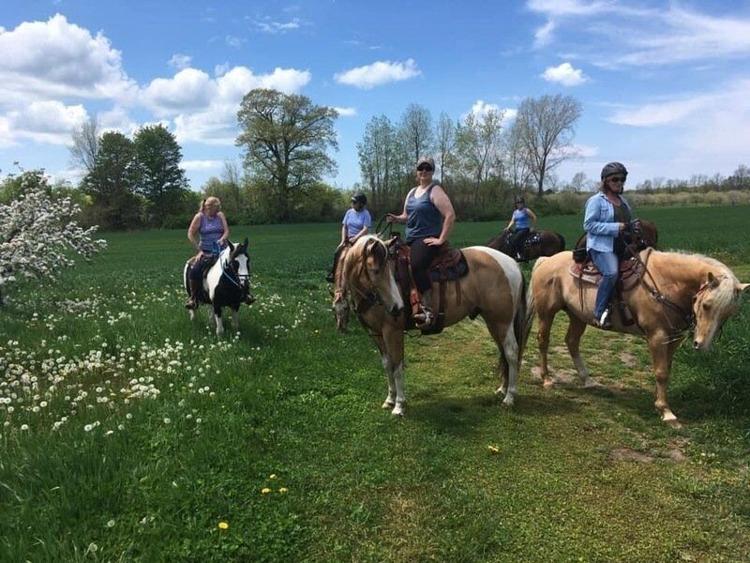
During the early period of the Covid pandemic, many sports and hobbies had to be put on hold. However, horseback riding was one activity that could still be done, as it’s inherently socially distanced. Considering how their activities were able to go on uninterrupted by the pandemic, a few riders from the Western New York area decided to put their hobby to good use through their riding group “RiDE,” or Riders Donating Everywhere.
“It started out of a sense of gratitude for our hobby, and the fact that we’re so fortunate to be able to do the things we do,” said RiDE member Lynn Schauer-Bewley from Newfane. “We’re able to ride our horses in our neighborhoods and communities because we have so many people who support us. We just wanted to do something to give back.”
Many of the members had known each other for years through endurance riding. They decided to make donating to charity a regular thing near the beginning of the pandemic after traveling on horseback from Burt to Olcott to deliver homemade masks...
Read more here:
https://www.lockportjournal.com/news/local_news/riding-the-local-trails-for-a-good-cause/article_568fe07c-0db8-53b5-b8c3-5e7787bc77df.html
Wednesday, March 16, 2022
Equestrian Adventuresses Podcast: Travel Tips for Your Next Horse Riding Holiday

EquestrianAdventuresses.com - Listen
by utetonia
March 14, 2022
Holidays are the best time of the year and you want to make sure that you enjoy every single minute of them! As the world is slowly opening up, we are back looking for amazing horse riding opportunities around the world. Today Heather and Ute talk about some important points to consider while choosing and booking your next horse riding adventure.
Listen:
https://equestrianadventuresses.com/2022/03/14/horse-podcast-ep-241-travel-tips-for-your-next-horse-riding-holiday/
Tuesday, March 15, 2022
Gastric Ulcers as a Cause of Poor Performance in Horses
Thehorse.com - Full Article
Learn how gastric ulcers affect equine performance and the best ways for treating them in actively competing horses.
Posted by Alexandra Beckstett, The Horse Managing Editor | Mar 4, 2022
Poor performance in horses can result from a single cause or a combination of factors, ranging from injury to illness. When trying to diagnose a medical reason for poor performance, veterinarians should always consider gastric ulcers as a potential problem. This is because these painful lesions are incredibly common in athletic horses. Fortunately, treatment and management methods are quite effective.
Frank M. Andrews, DVM, MS, Dipl. ACVIM (LAIM), LVMA department head, equine committee professor, and director of the Equine Health Studies Program at Louisiana State University’s School of Veterinary Medicine, in Baton Rouge, described the association between gastric ulcers and equine performance and how to treat the condition during the 2021 American Association of Equine Practitioners (AAEP) Convention, held Dec. 4-8 in Nashville, Tennessee...
Read more here:
https://thehorse.com/1109363/gastric-ulcers-as-a-cause-of-poor-performance-in-horses/
Learn how gastric ulcers affect equine performance and the best ways for treating them in actively competing horses.
Posted by Alexandra Beckstett, The Horse Managing Editor | Mar 4, 2022
Poor performance in horses can result from a single cause or a combination of factors, ranging from injury to illness. When trying to diagnose a medical reason for poor performance, veterinarians should always consider gastric ulcers as a potential problem. This is because these painful lesions are incredibly common in athletic horses. Fortunately, treatment and management methods are quite effective.
Frank M. Andrews, DVM, MS, Dipl. ACVIM (LAIM), LVMA department head, equine committee professor, and director of the Equine Health Studies Program at Louisiana State University’s School of Veterinary Medicine, in Baton Rouge, described the association between gastric ulcers and equine performance and how to treat the condition during the 2021 American Association of Equine Practitioners (AAEP) Convention, held Dec. 4-8 in Nashville, Tennessee...
Read more here:
https://thehorse.com/1109363/gastric-ulcers-as-a-cause-of-poor-performance-in-horses/
Sunday, March 13, 2022
Horse Foot Bruises
Thehorse.com - Full Article
The average horse is more likely to encounter a foot bruise than any other lameness. If you recognize the causes of foot bruises and understand their treatment and prevention, you can stave off discomfort in your horse and perhaps avoid an abscess.
Posted by Tracy Gantz | Feb 15, 2022
Understanding what causes foot bruises and how to treat and possibly prevent them can save your horse from sore feet.
While laminitis and navicular disease pose more dangerous threats to your horse’s feet, the average horse is more likely to encounter a foot bruise than any other lameness. If you recognize the causes of foot bruises and understand their treatment and prevention, you can stave off discomfort in your horse and perhaps avoid an abscess, which is a more serious problem that can develop in a bruised hoof...
Read more here:
https://thehorse.com/150651/horse-foot-bruises/?utm_medium=Health+enews&utm_source=Newsletter
The average horse is more likely to encounter a foot bruise than any other lameness. If you recognize the causes of foot bruises and understand their treatment and prevention, you can stave off discomfort in your horse and perhaps avoid an abscess.
Posted by Tracy Gantz | Feb 15, 2022
Understanding what causes foot bruises and how to treat and possibly prevent them can save your horse from sore feet.
While laminitis and navicular disease pose more dangerous threats to your horse’s feet, the average horse is more likely to encounter a foot bruise than any other lameness. If you recognize the causes of foot bruises and understand their treatment and prevention, you can stave off discomfort in your horse and perhaps avoid an abscess, which is a more serious problem that can develop in a bruised hoof...
Read more here:
https://thehorse.com/150651/horse-foot-bruises/?utm_medium=Health+enews&utm_source=Newsletter
Friday, March 11, 2022
Faced With Scary Objects, Is Your Horse Left- or Right-Brained?
Thehorse.com - Full Article
Researchers studied which eye horses used to look at new objects. Their findings were unexpected.
Posted by Christa Lesté-Lasserre, MA | Feb 6, 2022
Horses tend to look at scary or surprising things with one eye—but the eye they choose depends on the individual horse.
Previous study results have suggested horses investigate new and scary objects mainly with the left eye and, hence, the right brain. New research by Italian behaviorists, however, has revealed the “unexpected” finding that horses use whichever eye—and brain hemisphere—they prefer on an individual basis when they’re tackling sources of potentially negative emotions...
Read more here:
https://thehorse.com/1108480/faced-with-scary-objects-is-your-horse-left-or-right-brained/?utm_medium=Behavior+enews&utm_source=Newsletter
Researchers studied which eye horses used to look at new objects. Their findings were unexpected.
Posted by Christa Lesté-Lasserre, MA | Feb 6, 2022
Horses tend to look at scary or surprising things with one eye—but the eye they choose depends on the individual horse.
Previous study results have suggested horses investigate new and scary objects mainly with the left eye and, hence, the right brain. New research by Italian behaviorists, however, has revealed the “unexpected” finding that horses use whichever eye—and brain hemisphere—they prefer on an individual basis when they’re tackling sources of potentially negative emotions...
Read more here:
https://thehorse.com/1108480/faced-with-scary-objects-is-your-horse-left-or-right-brained/?utm_medium=Behavior+enews&utm_source=Newsletter
Tuesday, March 08, 2022
Can I Tow This Horse Trailer?
 Trailmeister.com - Full Article
February 28, 2022
by Robert Eversole
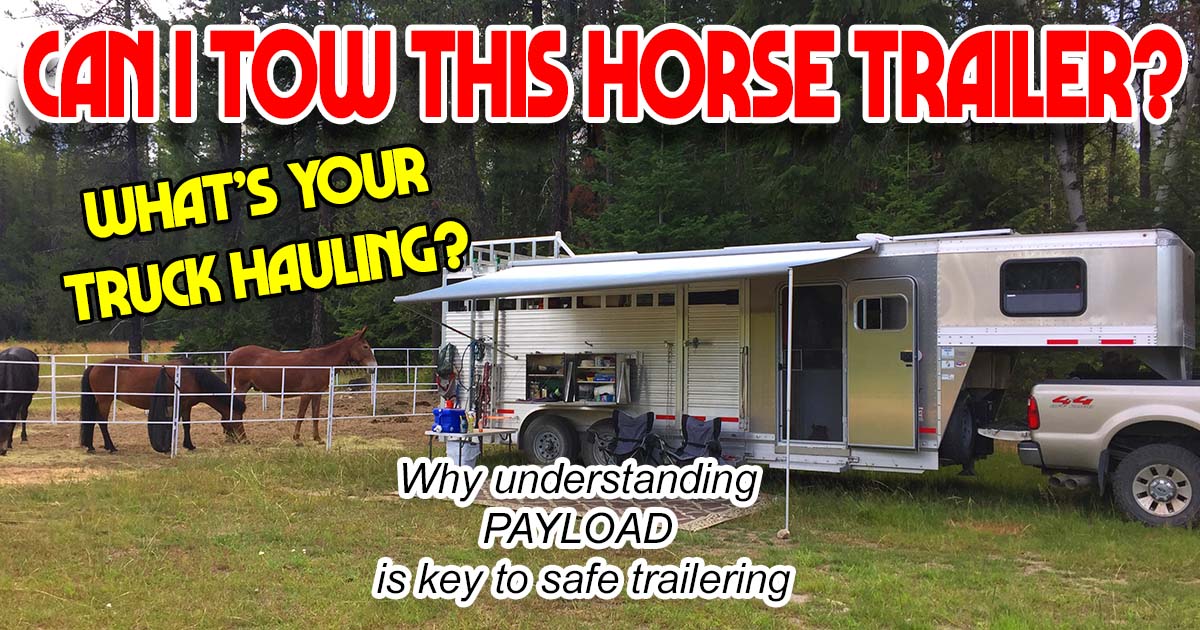
“Can I tow this horse trailer?” It’s a common question that I hear regularly at my horse camping clinics.
Safely towing a horse trailer can be confusing. It seems that there are a million different acronyms to learn and know. GCWR, GAWR, Tow Rating, Payload, and many more. What do all these things mean? Understanding these acronyms and numbers can be confusing without a degree in “Towology.” And, if you get it wrong, you or your horses can get hurt.
Let’s take the mystery out of one of these figures and talk about PAYLOAD Ratings – What it is and how to find yours. Most of us have an idea about towing ratings. But payload is something else entirely. We’ve all heard it – I’ve got a ¾ ton truck, and the dealer says it can tow 21,000 lbs. That’s nice, but what can it carry? You see what you can tow and what you can handle are two different things...
Read more here:
https://www.trailmeister.com/can-i-tow-this-horse-trailer/?utm_source=MailingList&utm_medium=email&utm_campaign=MAR+2022+general
Tuesday, February 15, 2022
Trailer Maintenance
 Trailmeister.com - Full Article & Video
March 5, 2021
by Trailmeister
Horse Trailer Maintenance
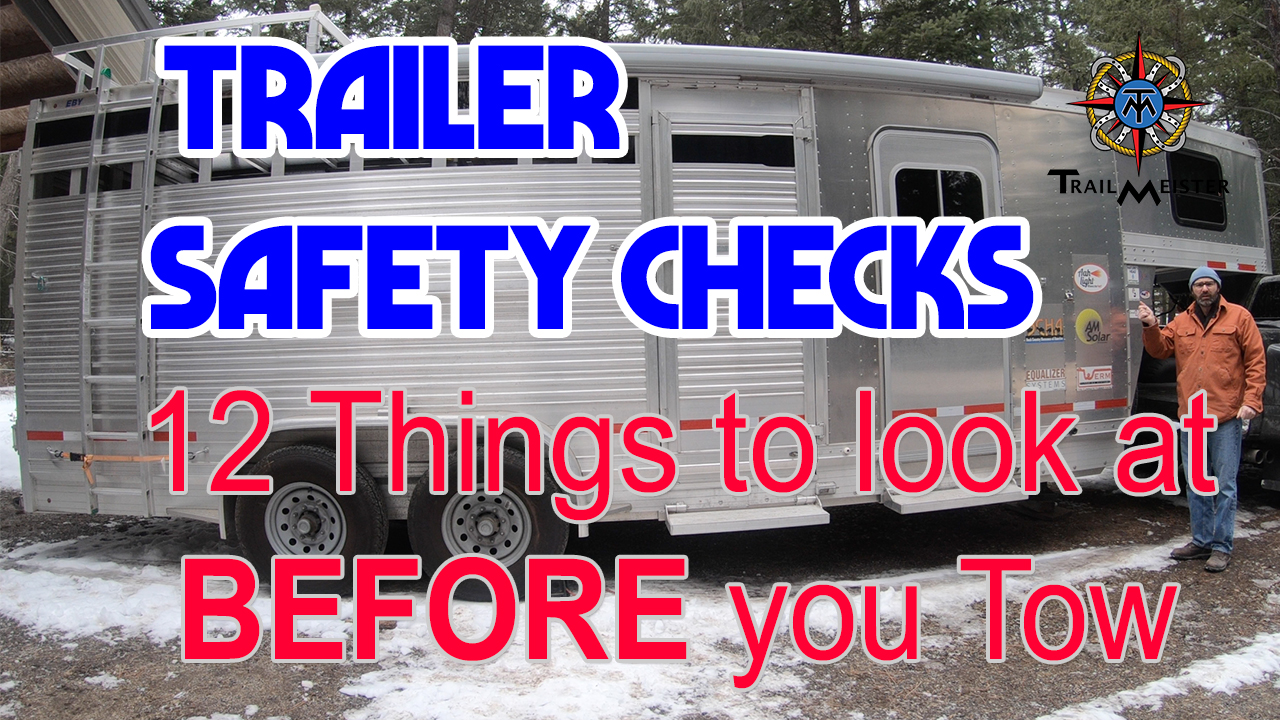
Before the riding and camping season gets going full swing, now is a good time for your horse trailer’s yearly safety checks and trailer maintenance service. If you aren’t mechanically savvy, or just not inclined, to do the job yourself a qualified professional can do all the work for you. Just make sure that they know what you want to be examined as the mechanic may not be familiar enough with horse trailers unless you ask for specific tasks...
Read more and see video here:
https://www.trailmeister.com/trailer-maintenance/?utm_source=MailingList&utm_medium=email&utm_campaign=Feb+2022+general
Monday, February 14, 2022
Inexpensive Pain Drug Gets a Boost for Treating Horses
Thehorse.com - Full Article
Researchers found acetaminophen is readily and rapidly absorbed, and most of the horses appeared to feel and move better.
Posted by Betsy Lynch | Feb 2, 2022
Editor’s note: Always consult your veterinarian before giving your horse any pharmaceuticals, including over-the-counter drugs.
If a little bit of acetaminophen makes your horse feel better, a little bit more might make him feel a little bit better for a little bit longer. This is welcome news for owners who are managing horses with chronic aches and pains.
Acetaminophen is a cheap and effective over-the-counter pain reliever that provides an alternative to non-steroidal anti-inflammatory drugs (NSAIDS) with undesirable side effects such as gastric ulcers and kidney damage. Researchers confirmed that acetaminophen is safe for horses at a higher dose than tested previously, even when administered for weeks at a time...
Read more here:
https://thehorse.com/1108425/inexpensive-pain-drug-gets-a-boost-for-treating-horses/?utm_medium=vet+and+professional+enews&utm_source=Newsletter
Researchers found acetaminophen is readily and rapidly absorbed, and most of the horses appeared to feel and move better.
Posted by Betsy Lynch | Feb 2, 2022
Editor’s note: Always consult your veterinarian before giving your horse any pharmaceuticals, including over-the-counter drugs.
If a little bit of acetaminophen makes your horse feel better, a little bit more might make him feel a little bit better for a little bit longer. This is welcome news for owners who are managing horses with chronic aches and pains.
Acetaminophen is a cheap and effective over-the-counter pain reliever that provides an alternative to non-steroidal anti-inflammatory drugs (NSAIDS) with undesirable side effects such as gastric ulcers and kidney damage. Researchers confirmed that acetaminophen is safe for horses at a higher dose than tested previously, even when administered for weeks at a time...
Read more here:
https://thehorse.com/1108425/inexpensive-pain-drug-gets-a-boost-for-treating-horses/?utm_medium=vet+and+professional+enews&utm_source=Newsletter
Monday, February 07, 2022
Study: Preload Horses With Electrolytes Before Travel, Exercise
Thehorse.com - Full article
Horses lose large quantities of sodium, potassium, and chloride, as well as smaller amounts of magnesium and calcium, through their sweat. Supplementation before work might help.
Posted by Christa Lesté-Lasserre, MA | Feb 7, 2022
Horses lose so many electrolytes through their sweat—even when you don’t see them sweating—they risk drawing electrolytes from muscle cells to replace the lost ones. Fortunately, “preloading” horses with electrolytes, by having them consume an electrolyte mixture before travel or exercise, appears to protect them from such deprivation, said a team of Canadian researchers.
More specifically, a 2-gallon dose of a hypotonic electrolyte supplement can help keep fluids in the muscular cells and lead to longer exercise times, while maintaining high sweating rates—meaning the horse’s cooling system is still working as it should, said Michael Lindinger, PhD, president of The Nutraceutical Alliance, in Burlington, Ontario.
Horses lose large quantities of sodium, potassium, and chloride, as well as smaller amounts of magnesium and calcium, through their sweat...
Read more here:
https://thehorse.com/1108544/study-preload-horses-with-electrolytes-before-travel-exercise/
Horses lose large quantities of sodium, potassium, and chloride, as well as smaller amounts of magnesium and calcium, through their sweat. Supplementation before work might help.
Posted by Christa Lesté-Lasserre, MA | Feb 7, 2022
Horses lose so many electrolytes through their sweat—even when you don’t see them sweating—they risk drawing electrolytes from muscle cells to replace the lost ones. Fortunately, “preloading” horses with electrolytes, by having them consume an electrolyte mixture before travel or exercise, appears to protect them from such deprivation, said a team of Canadian researchers.
More specifically, a 2-gallon dose of a hypotonic electrolyte supplement can help keep fluids in the muscular cells and lead to longer exercise times, while maintaining high sweating rates—meaning the horse’s cooling system is still working as it should, said Michael Lindinger, PhD, president of The Nutraceutical Alliance, in Burlington, Ontario.
Horses lose large quantities of sodium, potassium, and chloride, as well as smaller amounts of magnesium and calcium, through their sweat...
Read more here:
https://thehorse.com/1108544/study-preload-horses-with-electrolytes-before-travel-exercise/
Sunday, January 09, 2022
Endurance Horse Podcast: Pony Express National Museum
 EnduranceHorsePodcast - Listen
28 December 2021
Created by: Christina Hyke
Welcome to Episode 53 of Endurance Horse Podcast.
April 24th of 2021 was the day I turned 50 and I wanted it to be a memorable occasion. So Jim and I loaded up a rented van with two of our sons and our German Shepard and headed out our Wisconsin driveway bound for St. Joseph Missouri as our destination. We were on a mission to visit two museums, one way station and also to present the National Pony Express Museum with the 16 x 20 large wooden plaque engraved with the names of 500 riders in our Pony Express 1900 Mile Challenge.
The Pony Express 1900 Mile Challenge has been popular with our listeners and the riders of the WARHORSE Endurance Challenges as we help to promote and preserve the Pony Express National Museum. We believe that the Pony Express Museum is a unique part of equine history and one that is deserving of preservation.
We hope you enjoy a stroll down this very unique part of equine history where horses and riders were the main characters in the story.
Without further ado, I bring to you episode 53 of Endurance Horse Podcast, The Pony Express National Museum.
Listen:
https://endurancehorsepodcast.podbean.com/e/pony-express-national-museum/
Thursday, December 23, 2021
Good to Go: Feeding for the Long Haul
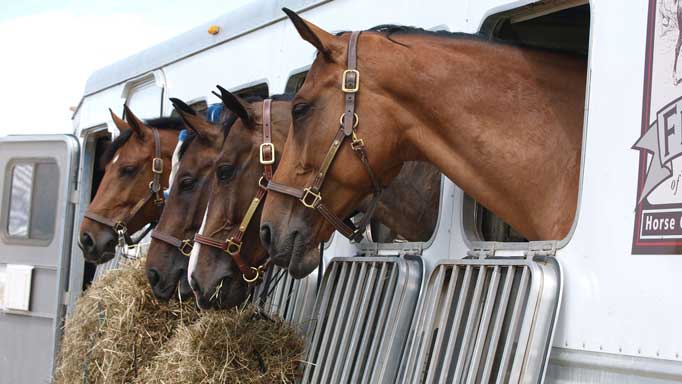 HorseSport.com - Full Article
Pam Mackenzie photo
Travel is very stressful on horses, especially long-haul ground trips or flights. There is evidence to suggest that cortisol increases with such travel.
By: Shannon Pratt-Phillips, PhD | October 17, 2013
Travel is very stressful on horses, especially long-haul ground trips or flights. There is ample evidence to suggest that cortisol (the stress hormone) levels increase with such travel. While there is very little research that has been conducted on the feeding management of horses prior to, during, or following travel, there is significant research on physiologic changes during transport that give insight on how we should feed our horses prior to and during transport.
The physical demands of travel
An increase in cortisol is frequently observed in research examining the effects of travel. Cortisol causes the body to be prepared for ‘flight or fight’ and acts to release blood glucose and counteract insulin (causing insulin to increase with travel), which might be detrimental for horses with metabolic issues. An increase in stress is also associated with gastric ulcers; however, cortisol itself is not usually directly to blame for ulcers in horses. Gastric ulcer development is generally secondary to changes in eating habits – such as in a horse that may go off his feed for a long period of time during transport...
Read more here:
https://horsesport.com/magazine/nutrition/good-to-go-feeding-for-the-long-haul/
Tuesday, December 14, 2021
Stand Still for Mounting
 DownUnderHorsemanship.com - Full Article
A Well-trained Horse Stands Quietly
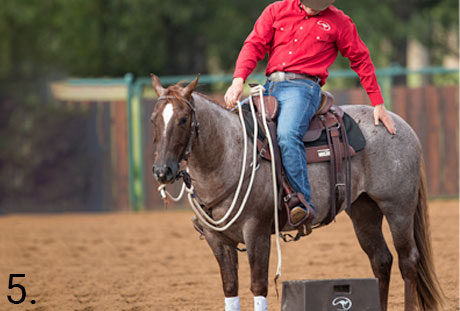
A horse that constantly moves around when you try to slip your foot in the stirrup is not only frustrating, but potentially dangerous. A well-trained horse stands quietly while you mount and waits for your cue to move off once you’re situated in the saddle. The secret to getting a horse to stand quietly when you go to get in the saddle is to get him to use the thinking side of his brain and tune in to you. Then, if he shimmies away from you when you go to swing up in the saddle, redirect his feet. You’ll make the right thing (standing still while you get in the saddle) easy and the wrong thing (fidgeting) difficult.
Follow these steps:
https://downunderhorsemanship.com/stand-still-for-mounting/
Sunday, December 12, 2021
Micro RNA profiles show potential in assessing Endurance ability in horses
 Horsetalk.co.nz - Full Article
December 11, 2021
Horsetalk.co.nz
New scenarios in the way in which metabolic adaptations are viewed in Endurance horses have been raised by scientists in Italy.
Katia Cappelli and her fellow researchers described Endurance as one of the most challenging equestrian disciplines. Endurance horses are susceptible to metabolic imbalance through dehydration, acid balance and electrolyte abnormalities. There is also the risk of heat accumulation, which can trigger life-threatening conditions.
Endurance horses are subjected to specific training that induces the adaptations required for prolonged moderate-intensity exercise on different ground surfaces and under different weather conditions. The training is dominated by aerobic conditioning.
The University of Perugia researchers, writing in the journal Genes, said evidence has been found that alterations in circulating micro RNA expression are triggered by physical exercise and endurance. These micro-RNAs include regulatory molecules that play active roles in cell differentiation, proliferation and metabolism...
Read more here:
https://www.horsetalk.co.nz/2021/12/11/micro-rna-endurance-ability-horses/
Wednesday, December 08, 2021
Knowledge Certificate for all Horse Owners will be Required by Law in France
 Horsesandpeople.com.au - Full Article
By Cristina Wilkins
December 8, 202
As part of their inter-species legislation, which aims to combat animal abuse and strengthen the bond between humans and companion animals, the French Parliament has introduced three laws that affect horse owners.
They were published in the Official Journal of the French Republic on December 1, 2021 and include a requirement for all horse owners to demonstrate sufficient knowledge of equine-specific needs; the registration of neurectomies in horse passports; and safeguards for agistment centre operators against unpaid fees...
Read more at:
https://horsesandpeople.com.au/france-horse-owners-licence-laws/
Tuesday, December 07, 2021
Happy Trails Podcast: Riding in California with Damara Mullens
 RideClimb.com - Listen
Recorded on November 24, 2021
by Jessica Isbrecht
Damara Mullens is probably one of the most well known trail riders in the West because of her social media presence. She loves riding in beautiful places and sharing her photos. She has collected detailed information on nearly all of the horse camps in California. She freely shares this knowledge on HorsePoor4Ever.com and in her Facebook group. In this interview, we discuss her favorite places to ride in California, Utah, Wyoming, and Arizona.
Adventures on Horseback Virtual Workshop
This is a three-day online event from November 29 to December 1, 2021. Jess is one of the speakers. She’ll be interviewed on the topic of Endurance riding. Other speakers will cover topics related to trail riding and traveling. Go to the website to see descriptions of each presentation. There will be everything from camping with your horse, to trailering tips, even safety tips for female solo travelers. It’s going to be great!
Listen to the episode:
https://rideclimb.com/podcast/riding-in-california-with-damara-mullens/
Thursday, December 02, 2021
Equestrian Adventuresses Podcast: Virtual Challenges – Covid Derby 2021
 Equestrian Adventuresses Podcast - Listen
by utetonia
November 30, 2021
Today’s topic is Virtual Challenges and Competitions, something which has mushroomed since the beginning of the Corona pandemic almost two years ago. Since a lot of real life events had to be postponed or cancelled, virtual challenges and competitions have become a way to stay connected with the sport and the community and a big motivator to get into the saddle and ride. I was part of a team of six dedicated women from India and Germany participating in the 2021 Covid Derby, a 1000-km challenge. We managed to complete the distance in 27 days and finished in 6th place. Today I am talking with some of my team mates about our riding, the challenges we faced and the experiences we had. And of course asking the big question: Would we do it all again?...
Listen:
https://equestrianadventuresses.com/2021/11/30/horse-podcast-ep-208-virtual-challenges-covid-derby-2021/
Subscribe to:
Posts (Atom)