Thehorse.com - Full Article
By Kristen M. Janicki, MS, PAS
Mar 3, 2017
Decipher fact vs. fiction when it comes to the complicated world of feeding horses.
Haven’t you heard that feeding a hot bran mash will help prevent colic in the winter?” Horse owners pass feed fallacies such as this down the barn aisle on a daily basis. Nutrition is one of the most difficult aspects of horse management to understand, so it’s no wonder that forage and other fodder falsehoods sprout and take root, becoming accepted as conventional wisdom. Without getting a master’s or doctorate degree in equine nutrition, how do you decipher fact vs. fiction? Here we’ll help you bust some common myths about feeding horses.
Myth 1: Horses have “nutritional wisdom” and will seek out nutrients to meet their needs
“I recently started noticing my horse licking the dirt out in the pasture. Could he be missing important nutrients in his diet?”
Read more here:
http://www.thehorse.com/articles/37698/7-equine-nutrition-myths-busted?utm_source=Newsletter&utm_medium=breeding&utm_campaign=03-19-2017
Sunday, May 07, 2017


Thursday, May 04, 2017
How Endurance Cross-Training Can Help Your Performance Horse
OnTheHorse.com - Full Article
Sarah Cuthbertson and Ashley Tomaszewski
01 May 2017
Cross training has proven its benefits in human athletics but did you know it’s good for your horse too?! Like a human, horses need cardiovascular and muscular endurance to be able to perform, especially in equestrian sports like eventing, jumping, and dressage. Although, every horse benefits from a good exercise program! Endurance riders seem to have this down to a science and it’s not uncommon to hear of horses competing well into their 20’s.By incorporating endurance training into your program, your performance horse will benefit in a number of ways.
Longevity
Time is something we all seem to lack but need in endless amounts. Most Endurance riders have time to condition and campaign only one horse, which means we want to do whatever it takes to keep a sound, happy horse working for a lifetime.
Longevity is one of the greatest honours in competitive distance sports with many local and national organizations giving special awards for Decade Teams, and some riders have even reached the rare, but possible achievement of a Double Decade Team. So how do these distance riders do it? The secret, is LSD...
Read more here:
https://onthehorse.com/how-endurance-cross-training-can-help-your-performance-horse/?v=7516fd43adaa
Sarah Cuthbertson and Ashley Tomaszewski
01 May 2017
Cross training has proven its benefits in human athletics but did you know it’s good for your horse too?! Like a human, horses need cardiovascular and muscular endurance to be able to perform, especially in equestrian sports like eventing, jumping, and dressage. Although, every horse benefits from a good exercise program! Endurance riders seem to have this down to a science and it’s not uncommon to hear of horses competing well into their 20’s.By incorporating endurance training into your program, your performance horse will benefit in a number of ways.
Longevity
Time is something we all seem to lack but need in endless amounts. Most Endurance riders have time to condition and campaign only one horse, which means we want to do whatever it takes to keep a sound, happy horse working for a lifetime.
Longevity is one of the greatest honours in competitive distance sports with many local and national organizations giving special awards for Decade Teams, and some riders have even reached the rare, but possible achievement of a Double Decade Team. So how do these distance riders do it? The secret, is LSD...
Read more here:
https://onthehorse.com/how-endurance-cross-training-can-help-your-performance-horse/?v=7516fd43adaa
Wednesday, May 03, 2017
Cross Training: Good for Humans, Good for Horses
Horsenetwork.com - Full Article
by Tim Hayes
April 27 2017
In 1996 I participated in a Natural Horsemanship clinic given by the late Tom Dorrance.
Even though he was a cowboy, well over half of his students rode English. Tom was a creator of miracles when it came to helping people with their horse problems (he called them: “people problems”). His message was simple: “humans and horses need to get along better.”
Tom was not only acknowledged as a great horseman but the father of a revolution in horse training…what is now referred to as Natural Horsemanship.
When the clinic was over I asked Tom what books he would recommend I read. I was expecting him to say a book with a title like, “Lessons From The Ranch.” Instead he simply said read Dressage by Henry Wynmalen. I had heard of dressage. I knew riders with English saddles practiced it. However, it was the last thing I thought a California cowboy would know about much less be recommending.
In the spring of 2001 I attended Equitana USA in Louisville Kentucky.
It was a four-day event held in two buildings each the size of New York’s Madison Square Garden. One was totally devoted to English, the other Western. On the fourth day, I listened to a wonderful talk on the benefits achieved in competitive equine events with something called Cross Training by a 28-year-old rodeo star named Ty Murray.
Two years before Ty had received the award of World Champion All Around Cowboy. It was the seventh time he received it. No one has ever done it since. Ty began his talk by saying: “When I began training for the rodeo, I realized that at 5’8” and 150lbs, there was no way I could ever control a 2,000 lb. bull. But I could learn to control myself and how I reacted and responded to them.”
Ty went on to say that he began to practice martial arts and use a trampoline to master his equine reflexes and balance. He called it “cross training.”
As I listened to Ty, I thought back to Tom Dorrance recommending I study and practice Dressage. I began to think that maybe one way to become good at one sport was to practice a different sport that has similar physical skills. I remembered years ago reading an article about professional football players who used ballet exercises in their practice to improve their agility...
Read more here:
http://horsenetwork.com/2017/04/cross-training/?utm_source=horsenetwork&utm_medium=HNS&utm_campaign=5099567&utm_term=
by Tim Hayes
April 27 2017
In 1996 I participated in a Natural Horsemanship clinic given by the late Tom Dorrance.
Even though he was a cowboy, well over half of his students rode English. Tom was a creator of miracles when it came to helping people with their horse problems (he called them: “people problems”). His message was simple: “humans and horses need to get along better.”
Tom was not only acknowledged as a great horseman but the father of a revolution in horse training…what is now referred to as Natural Horsemanship.
When the clinic was over I asked Tom what books he would recommend I read. I was expecting him to say a book with a title like, “Lessons From The Ranch.” Instead he simply said read Dressage by Henry Wynmalen. I had heard of dressage. I knew riders with English saddles practiced it. However, it was the last thing I thought a California cowboy would know about much less be recommending.
In the spring of 2001 I attended Equitana USA in Louisville Kentucky.
It was a four-day event held in two buildings each the size of New York’s Madison Square Garden. One was totally devoted to English, the other Western. On the fourth day, I listened to a wonderful talk on the benefits achieved in competitive equine events with something called Cross Training by a 28-year-old rodeo star named Ty Murray.
Two years before Ty had received the award of World Champion All Around Cowboy. It was the seventh time he received it. No one has ever done it since. Ty began his talk by saying: “When I began training for the rodeo, I realized that at 5’8” and 150lbs, there was no way I could ever control a 2,000 lb. bull. But I could learn to control myself and how I reacted and responded to them.”
Ty went on to say that he began to practice martial arts and use a trampoline to master his equine reflexes and balance. He called it “cross training.”
As I listened to Ty, I thought back to Tom Dorrance recommending I study and practice Dressage. I began to think that maybe one way to become good at one sport was to practice a different sport that has similar physical skills. I remembered years ago reading an article about professional football players who used ballet exercises in their practice to improve their agility...
Read more here:
http://horsenetwork.com/2017/04/cross-training/?utm_source=horsenetwork&utm_medium=HNS&utm_campaign=5099567&utm_term=
Monday, May 01, 2017
Trailer tack room organization
 MelNewton.com - Full Article
April 26, 2017
Posted by Melinda Newton
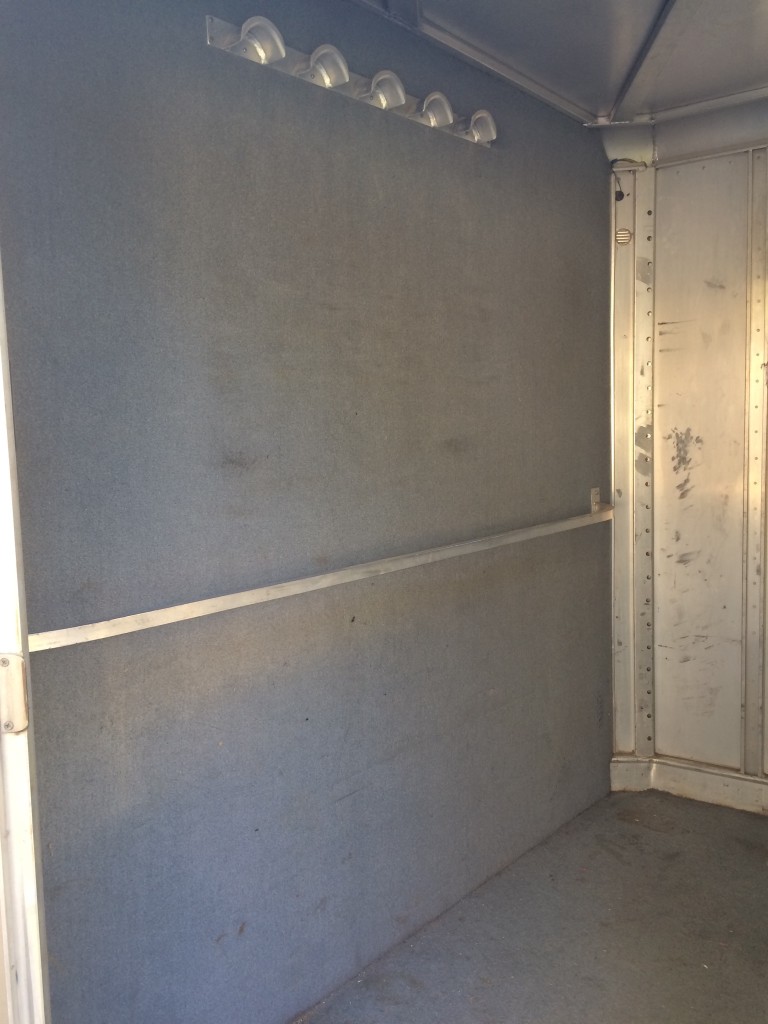
The most important part of this post is where you don’t laugh at my “ingenuity” – i.e. red-neck git’er done technique – of creating horse trailer organization.
I haven’t yet summoned up the courage to show my husband. Several months ago he replaced the flooring in the tack room – pulled up the old carpet, carefully scraped the floor, and perfectly cut some left over rubber interlocking flooring to fit back in. It’s lovely.
I’m not so sure he would say the same about my….”storage creation” scheme, or the cowhide rug now covering the floor….
:)
The tack room in my trailer is huge but lacked anything but the basics for organization. It came with…a handful of bridle holders, 2 saddle racks, and a fixed bar. That was it.
I asked for Lowe’s gift cards for Birthday/Xmas for the project and I’ve spent 5 months thinking about different ways to modify the interior that wouldn’t require me to drill additional holes into the walls, use adhesive that will melt in the summer, and doesn’t rely on magnets (the joys of an aluminum trailer!)...
Read more here:
http://melnewton.com/2017/trailer-tack-room-organization/
Friday, April 28, 2017
Life, Loss and Stewardship
 EnduranceIntrospection.com - Full Article
By Patti Stedman | Apr 24, 2017
Damn. This one is tough to write.
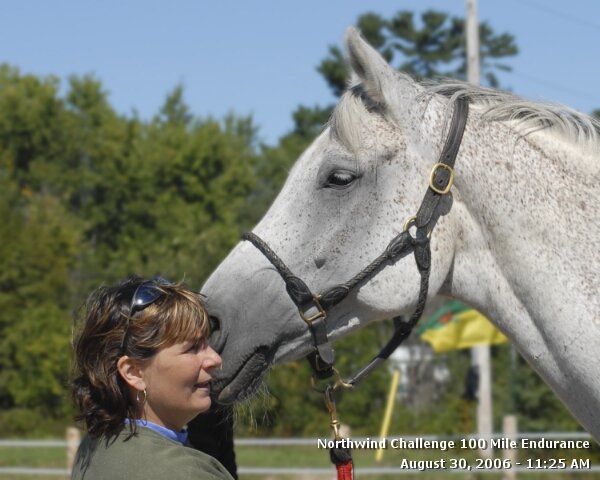
Ned has been a huge part of my life for nearly twenty years. And tomorrow we will be letting him go.
Some creatures — human or equine or canine — just have more personality than others. Ned has been mammoth in more than stature. When we were competing heavily and walked up to vet in, I’d see the eyes go up and down the 16+H, 1200-pound, size 4-hooved creature and I’d just say “he’s half Trakehner.”
He was meant to be the competition dressage horse whose half-Arabian self could condition with my husband.
Ned was naughty. From the day I went to look at him to purchase — he kicked at me twice when I did his flexion tests — to the last time I swung a leg over him, he had a propensity for mischief. His bolting won me a severe concussion and a fractured pelvic rim when he was just five. I learned to sit up and ride him from Moment One, helmet firmly buckled on. Still, I fell off him more times than I’ve come off in my life previous or since. He taught me fear.
Bucking was too pedestrian for Ned, so he perfected the art of leaping. The better he felt, the more he leapt. I learned to keep my reins short, my shoulders behind my seat bones and my heels down. Walter Zettl, with whom I took dressage lessons back then implored me to keep him in dressage for at least a year, “stay off ze trail.”
Back when I was first getting into the sport, there was no Facebook. There was Ridecamp. I recall asking the group, after Ned spooked on a trail and promptly jumped down a steep, treed embankment, if there was hope for a horse that appeared to have little sense of self-preservation. Almost universally, I was told to move on to a safer horse. For some reason, I didn’t.
I know why, in retrospect. It was because when he was on, he was the most amazing ride. Big gaits and full of attitude, smooth and handsome. When he wasn’t misbehaving — and to be clear, he was mostly gentlemanly — I felt like a dressage queen sitting up there on that powerful keg of horseflesh. He could dance like no other horse. And I liked him. Naughty as he was, he wasn’t mean. He was smart and opinionated and had a ridiculous sense of humor, if a horse can have such a thing. He was all about Ned...
Read more here:
http://enduranceintrospection.com/wp/life-loss-and-stewardship/
Sunday, April 23, 2017
Subtle Signs of Improper Saddle Fit
Thehorse.com - Full Article
By Heather Smith Thomas
Apr 16, 2017
Saddle fit is a hot topic. Everyone seems to know someone battling an ill-fitting saddle, if they’re not dealing with it themselves. But first things first: What are some early warning signs that your tack and your horse’s back aren’t meshing?
Clues include dry spots under the saddle after a workout (indicating too much pressure in small areas, inhibiting sweat glands). You might also see hair starting to rub the wrong way or broken off, falling out, or replaced by white hairs due to pressure necrosis (tissue death) or damage to pigment-producing portions of the hair follicles. Wet spots and dry spots indicate saddle pressure isn’t evenly distributed.
“It isn’t always the saddle causing a dry spot,” says Mike Scott, a South Carolina-based equine massage therapist and Master Saddlers Association-certified fitter. “It could be the way the rider is sitting with uneven weight distribution. Or, if the horse is high-headed with its back inverted, there may not be any pressure in certain areas because the back is hollow instead of rounded. There are multiple reasons, but uneven pressure is something to look for...”
Read more here:
http://www.thehorse.com/articles/39069/subtle-signs-of-improper-saddle-fit?utm_source=Newsletter&utm_medium=health-news&utm_campaign=04-18-2017
By Heather Smith Thomas
Apr 16, 2017
Saddle fit is a hot topic. Everyone seems to know someone battling an ill-fitting saddle, if they’re not dealing with it themselves. But first things first: What are some early warning signs that your tack and your horse’s back aren’t meshing?
Clues include dry spots under the saddle after a workout (indicating too much pressure in small areas, inhibiting sweat glands). You might also see hair starting to rub the wrong way or broken off, falling out, or replaced by white hairs due to pressure necrosis (tissue death) or damage to pigment-producing portions of the hair follicles. Wet spots and dry spots indicate saddle pressure isn’t evenly distributed.
“It isn’t always the saddle causing a dry spot,” says Mike Scott, a South Carolina-based equine massage therapist and Master Saddlers Association-certified fitter. “It could be the way the rider is sitting with uneven weight distribution. Or, if the horse is high-headed with its back inverted, there may not be any pressure in certain areas because the back is hollow instead of rounded. There are multiple reasons, but uneven pressure is something to look for...”
Read more here:
http://www.thehorse.com/articles/39069/subtle-signs-of-improper-saddle-fit?utm_source=Newsletter&utm_medium=health-news&utm_campaign=04-18-2017
Friday, April 21, 2017
AHC Urges Horse Community to Take Part in USDA Agricultural Census
Horsecouncil.org
The U.S. Department of Agriculture’s (USDA) National Agricultural Statistics Service (NASS) is preparing to conduct its 2017 USDA Census of Agriculture. Horses will be included in the Census. Every five years, USDA-NASS conducts an agriculture census to determine the number of U.S. farms and ranches and gather vital information about U.S agriculture, including the horse community. The census is a valuable tool to help the USDA determine land use and ownership, livestock populations, operator characteristics, production practices, farm income as well as other important information.
The announcement of the USDA-NASS census comes as the American Horse Council has initiated their 2017 Equine Industry Economic Impact Study. The AHC economic study questionnaire will be finalized this month and begin collecting data in the following weeks. These two separate, yet concurrent studies will provide both the industry and the public with a strong image of the state of the industry in 2017. The AHC strongly encourages everyone who is offered the opportunity to participate in either, or both, of these studies to do so. The economic impact and the census are critical to promoting the horse industry.
The AHC continues to promote the USDA-NASS census due to the critical need for the horse community to be properly accounted for in the federal governments agricultural findings. The information collected by the Census will be used to develop federal and state agricultural policy for the next five years. It’s vital all farms and ranches with horses participate in the census so the USDA, and the nation at large, has accurate information regarding the size and scope of the horse community.
Farm or ranch owners who participated in the last Census in 2012 will automatically be mailed a survey that can be filled in and mailed back. If a farm or ranch was not part of the 2012 Census or has not received a form in the mail, the owner can go to the USDA’s census website http://www.agcensus.usda.gov and clicking on the ‘Make Sure You Are Counted’ button through June.
According to the USDA guidelines for the Census, a farm is any place from which $1,000 or more of agricultural products, including horses, were produced and sold, or normally would have been sold, during the year.
Further information on the 2017 Census of Agriculture can be found on the USDA’s website http://www.agcensus.usda.gov.
The U.S. Department of Agriculture’s (USDA) National Agricultural Statistics Service (NASS) is preparing to conduct its 2017 USDA Census of Agriculture. Horses will be included in the Census. Every five years, USDA-NASS conducts an agriculture census to determine the number of U.S. farms and ranches and gather vital information about U.S agriculture, including the horse community. The census is a valuable tool to help the USDA determine land use and ownership, livestock populations, operator characteristics, production practices, farm income as well as other important information.
The announcement of the USDA-NASS census comes as the American Horse Council has initiated their 2017 Equine Industry Economic Impact Study. The AHC economic study questionnaire will be finalized this month and begin collecting data in the following weeks. These two separate, yet concurrent studies will provide both the industry and the public with a strong image of the state of the industry in 2017. The AHC strongly encourages everyone who is offered the opportunity to participate in either, or both, of these studies to do so. The economic impact and the census are critical to promoting the horse industry.
The AHC continues to promote the USDA-NASS census due to the critical need for the horse community to be properly accounted for in the federal governments agricultural findings. The information collected by the Census will be used to develop federal and state agricultural policy for the next five years. It’s vital all farms and ranches with horses participate in the census so the USDA, and the nation at large, has accurate information regarding the size and scope of the horse community.
Farm or ranch owners who participated in the last Census in 2012 will automatically be mailed a survey that can be filled in and mailed back. If a farm or ranch was not part of the 2012 Census or has not received a form in the mail, the owner can go to the USDA’s census website http://www.agcensus.usda.gov and clicking on the ‘Make Sure You Are Counted’ button through June.
According to the USDA guidelines for the Census, a farm is any place from which $1,000 or more of agricultural products, including horses, were produced and sold, or normally would have been sold, during the year.
Further information on the 2017 Census of Agriculture can be found on the USDA’s website http://www.agcensus.usda.gov.
Monday, April 17, 2017
The Trouble With Mud
Thehorse.com - Full Article
By Heather Smith Thomas
Apr 9, 2017
When the going gets muddy, the muddy get hoof problems; here's what to look out for.
Horses’ hooves are finicky when it comes to moisture. In arid environments they tend to dry out, and in wet conditions they become too soft. If you had to choose between the two, however, dry would probably be the winner.
Continuous exposure to moisture can cause a long list of hoof problems, ranging from difficult-to-manage soft, sensitive feet that won’t hold their shape or nails, to various types of damage and infections in the capsule and its structures. Then there are the injuries due to slipping and scrambling in deep mud or bad footing, lost bell boots, and pulled-off shoes. In short, keeping horses’ feet sound and healthy can be a difficult challenge when weather is wet and footing precarious...
Read more here:
http://www.thehorse.com/articles/35687/the-trouble-with-mud?utm_source=Newsletter&utm_medium=reader-favorites&utm_campaign=04-14-2017
By Heather Smith Thomas
Apr 9, 2017
When the going gets muddy, the muddy get hoof problems; here's what to look out for.
Horses’ hooves are finicky when it comes to moisture. In arid environments they tend to dry out, and in wet conditions they become too soft. If you had to choose between the two, however, dry would probably be the winner.
Continuous exposure to moisture can cause a long list of hoof problems, ranging from difficult-to-manage soft, sensitive feet that won’t hold their shape or nails, to various types of damage and infections in the capsule and its structures. Then there are the injuries due to slipping and scrambling in deep mud or bad footing, lost bell boots, and pulled-off shoes. In short, keeping horses’ feet sound and healthy can be a difficult challenge when weather is wet and footing precarious...
Read more here:
http://www.thehorse.com/articles/35687/the-trouble-with-mud?utm_source=Newsletter&utm_medium=reader-favorites&utm_campaign=04-14-2017
Thursday, April 13, 2017
Condition Your Horse Like a Pro
Thehorse.com - Full Article
By Nancy S. Loving, DVM
Apr 12, 2017
How to help endurance horses, venters, racehorses, or Western performance horses reach peak fitness
That competitive edge. It might look different for different disciplines, but this intangible has its roots in the same concept: conditioning. In short, conditioning develops the musculoskeletal, neurologic, and cardiovascular systems so they can perform athletic endeavors with the greatest efficiency and the least stress on the body.
In this article we’ll learn how riders from different disciplines condition their horses. While there is no magic recipe fit for all equestrian sports, the basic principles of conditioning remain the same across the board...
The Basics
To get fit for competition, your horse needs to be “legged up,” which entails preparing the musculoskeletal system to withstand a certain amount of impact, speed, and duration of work...
Read more here:
http://www.thehorse.com/articles/39051/condition-your-horse-like-a-pro
By Nancy S. Loving, DVM
Apr 12, 2017
How to help endurance horses, venters, racehorses, or Western performance horses reach peak fitness
That competitive edge. It might look different for different disciplines, but this intangible has its roots in the same concept: conditioning. In short, conditioning develops the musculoskeletal, neurologic, and cardiovascular systems so they can perform athletic endeavors with the greatest efficiency and the least stress on the body.
In this article we’ll learn how riders from different disciplines condition their horses. While there is no magic recipe fit for all equestrian sports, the basic principles of conditioning remain the same across the board...
The Basics
To get fit for competition, your horse needs to be “legged up,” which entails preparing the musculoskeletal system to withstand a certain amount of impact, speed, and duration of work...
Read more here:
http://www.thehorse.com/articles/39051/condition-your-horse-like-a-pro
Tuesday, April 11, 2017
The 2017 Egyptian Event: For the Love of the Horse
Lexington, KY | Apr 10, 2017
The 37th Annual Egyptian Event will be held June 7-10, 2017 at the beautiful Kentucky Horse Park in Lexington, Kentucky. Entitled For the Love of the Horse, this year’s Event and will celebrate the devotion and dedication that Egyptian Arabian horses have ignited in owners, breeders and enthusiasts throughout history.
Attendees from over 15 countries throughout North & South America, Europe, the Middle East and Australia travel to Lexington each year to enjoy the Event’s world-class competition, festivities, educational activities, camaraderie and of course, the world’s most beautiful horses.
Show chair and Pyramid Society Vice President, Lisa Cifrese states, “The Egyptian Event is the only show of its kind in America dedicated to featuring the world’s top caliber Egyptian Arabian horses. Our members share a deep passion for the rich history and rare bloodlines of these horses, and often state that attending the Event each year is like coming home.”
Competitions and activities scheduled for this year’s Event include: halter and performance classes, championships and awards ceremonies, formal and casual socials, educational seminars, youth & family activities, unique shopping opportunities and auctions, liberty classes, a stick horse class and more. The Event will also feature the ever-popular Egyptian Breeders’ Challenge Auction on Thursday, June 8th, sponsored by DeShazer Arabians and offering breedings to over 30 exquisite Straight Egyptian stallions. On Friday evening, June 9th, attendees will enjoy The Pyramid Society’s annual Gala & Fundraiser at Fasig Tipton. The evening will begin with cocktails and superb dining followed by a live auction of fine art and other unique offerings and closing out the evening with dancing to the exciting sounds of The Body & Soul Band.
Special thanks to The Egyptian Event’s Signature Sponsor, Arabians Ltd. of Waco, Texas for their ongoing support of The Pyramid Society, The Egyptian Event and the Egyptian Arabian horse.
Sincere gratitude also goes to Albaydaa Stud of Egypt as The Pyramid Society’s Emissary Sponsor and provider of this year’s Egyptian Event show trophies and ribbons.
For a complete show schedule and spectator or participant information, visit www.theegyptianevent.com, email: info@pyramidsociety.org or call (859) 231-0771.
The Egyptian Event is hosted each year by The Pyramid Society, the world’s leading international membership organization dedicated to the Egyptian Arabian horse. Founded in 1969, The Society has maintained its mission to promote and advance these unique bloodlines through educational venues, local and regional activities, international representation and an active online community.
For more information, contact:
Carol Aldridge
The Pyramid Society
4067 Iron Works Parkway, Suite 1, Lexington, KY 40511
Ph: (859) 231-0771, Info@pyramidsociety.org, www.pyramidsociety.org
The 37th Annual Egyptian Event will be held June 7-10, 2017 at the beautiful Kentucky Horse Park in Lexington, Kentucky. Entitled For the Love of the Horse, this year’s Event and will celebrate the devotion and dedication that Egyptian Arabian horses have ignited in owners, breeders and enthusiasts throughout history.
Attendees from over 15 countries throughout North & South America, Europe, the Middle East and Australia travel to Lexington each year to enjoy the Event’s world-class competition, festivities, educational activities, camaraderie and of course, the world’s most beautiful horses.
Show chair and Pyramid Society Vice President, Lisa Cifrese states, “The Egyptian Event is the only show of its kind in America dedicated to featuring the world’s top caliber Egyptian Arabian horses. Our members share a deep passion for the rich history and rare bloodlines of these horses, and often state that attending the Event each year is like coming home.”
Competitions and activities scheduled for this year’s Event include: halter and performance classes, championships and awards ceremonies, formal and casual socials, educational seminars, youth & family activities, unique shopping opportunities and auctions, liberty classes, a stick horse class and more. The Event will also feature the ever-popular Egyptian Breeders’ Challenge Auction on Thursday, June 8th, sponsored by DeShazer Arabians and offering breedings to over 30 exquisite Straight Egyptian stallions. On Friday evening, June 9th, attendees will enjoy The Pyramid Society’s annual Gala & Fundraiser at Fasig Tipton. The evening will begin with cocktails and superb dining followed by a live auction of fine art and other unique offerings and closing out the evening with dancing to the exciting sounds of The Body & Soul Band.
Special thanks to The Egyptian Event’s Signature Sponsor, Arabians Ltd. of Waco, Texas for their ongoing support of The Pyramid Society, The Egyptian Event and the Egyptian Arabian horse.
Sincere gratitude also goes to Albaydaa Stud of Egypt as The Pyramid Society’s Emissary Sponsor and provider of this year’s Egyptian Event show trophies and ribbons.
For a complete show schedule and spectator or participant information, visit www.theegyptianevent.com, email: info@pyramidsociety.org or call (859) 231-0771.
The Egyptian Event is hosted each year by The Pyramid Society, the world’s leading international membership organization dedicated to the Egyptian Arabian horse. Founded in 1969, The Society has maintained its mission to promote and advance these unique bloodlines through educational venues, local and regional activities, international representation and an active online community.
For more information, contact:
Carol Aldridge
The Pyramid Society
4067 Iron Works Parkway, Suite 1, Lexington, KY 40511
Ph: (859) 231-0771, Info@pyramidsociety.org, www.pyramidsociety.org
Monday, April 10, 2017
I Bought Him For His Brain …
 EnduranceIntrospection.com - Full Story
by Patti Stedman | Apr 10, 2017
This week I am vacationing with my brother’s family in the Outer Banks of North Carolina.
My nieces are almost “up and out” as I like to call it, in their late teens and early twenties, and the youngest two are here, with friends in tow.
I turn 50 this year.
The platitudes I heard in my youth (largely ignored) have come home to roost.
“Youth is wasted on the young.”
“Just wait ’til you’re my age … ”
“If you don’t have your health, you don’t have anything.”
Everything from quips about metabolism, sun exposure, financial security, to notions about taking risks, and the benefits of sleep.
At 50, you are solidly who you are.
I was astounded to hear, over dinner conversation, that one of my niece’s friends had recently tattooed on an arm — “Love yours.” That’s pretty connected and heady insight for a barely twenty-something.
Perhaps this generation won’t be our ruination. (This was something I heard a lot about my own generation from folks in the grandparents’ age-range.)
I take secret joy at the uncanny personality traits I share with my older brother.
Each morning, we are the first to rise, within minutes of each other. We’re quiet and seek coffee, then immediately settle into work, or at the hotel on our way to our destination, do a tap dance of happy feet. We are anxious for the folks who sleep to a more civilized time to join us so we can hit the road.
But don’t rush us if we are on our own timeline.
When he’s in the kitchen cooking, like me, he just wants to be left alone. Help? No, thanks. I stay away. I get it.
Our Dad is just the same. Add one more vote to the “it’s all in the genes” bucket.
I marvel at my nieces. They are witty and sharp and irreverent and so uniquely them.
Our generations are so different. They are attached to their electronic devices in a fierce way, they are acutely aware of their appearance — my peers didn’t have our eyebrows “done” or sit in shops getting pedicures in our teen years — and part of me envies their self-awareness, another mourns their freedom from the burden of self-criticism.
They fight. They are cruel. As I walk on the beach, I contemplate sitting them down, admonishing them for the sharp words and the associated hurt feelings that lie deep after the battle is over. My brother and I were torturous to one another.
But the platitudes would be lost in the generational translation. If I were lucky, they might recall them as they hit my age, so what’s the point? We must make our own mistakes, take our own path, and the comfortable and peaceful ease with which my brother and I share space is a testament to the fact that we do learn, we forgive, we find a restful place to settle in with one another.
We find our lane.
I like walking alone on the beach. There’s something about the sound of the waves, the seeking out of the ‘just right’ texture and firmness of sand. I didn’t have time to paint my toenails before I left. They are bare and plain. The teens’ nails are done, of course, various shades of pastels and pinks and bright colors. I feel unfinished for a few moments as I stroll along, like a woman caught with her hair in a mess in her sweats at the grocery store by someone she’d prefer to impress.
I turn back for our rental house, hoping I’ll be able to spot our beach access stairway from the dozens that look exactly alike.
I find myself following my own footsteps. They are clear and straight and firm, and I recognize instinctively my own despite all the others. The width, the narrowness of the heel, the depth of the push-off, but most of all, I recognize the path chosen. No longer am I thinking of my feet with regard to their decoration, or their unsightly callouses in need of a good pumice stone, but the fact that they have carried me, held me up, propelled me forward (and occasionally off course) for nearly half a century.
The last year or two have been for me, lived in a bit of a fog. For reasons I cannot say, I had to choose a path that left me starting over in a way that I never imagined. It was the right thing to do, I can say that as sure as I can look in a mirror, hard, and tell myself I could begin again. These were both things I did as a mantra of sorts, during days and nights where I was unsure of either. My friends and Richard held space for my temporary insanity. Some battles you wage alone.
It has only been in the last few months that the fog has cleared a bit. I stopped waiting to live until ‘things were better.’
That, of course, was mostly because things had gotten better.
With Ace and Ned, my long-time partners and 100-mile horses retired (Ace due to ringbone; Ned due to growing melanomas), I put it out gently to the universe that I was open to a new horse for me. Sure, Richard had Sarge and Wynne and I was happily riding both, but there is something about a horse of your own. A partner.
As these things happen, I’ve found, horses started to appear. Some rejected outright, some needed a visit.
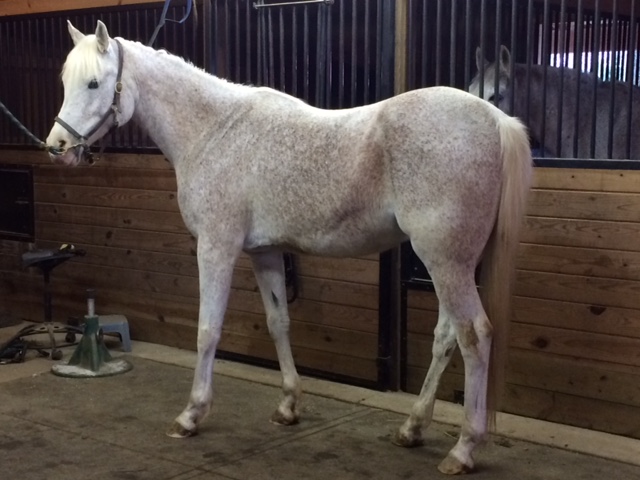
Enter Iggy. I hope his former owner will forgive me for changing his barn name...
Read more here:
http://enduranceintrospection.com/wp/i-bought-him-for-his-brain/
Friday, April 07, 2017
Carbohydrates Defined
Thehorse.com - Full Article
By Nettie Liburt, MS, PhD, PAS
Mar 29, 2017
Carbohydrates are the main source of dietary energy for horses and are important for fast, quick burning power to blast out of the gate or clear a jump.
What are carbohydrates?
Carbohydrates, also known as saccharides, are made up of sugar molecules and classified as either structural or nonstructural. Structural carbohydrates contribute to the fiber portion of the horse’s diet, while nonstructural carbohydrates (you might have heard them called NSCs) do not.
Monosaccharides contain one sugar molecule (e.g. glucose, fructose, and mannose). Disaccharides contain two sugar molecules (lactose and maltose). Oligosaccharides contain several sugar molecules, of which the most common in horse feeds is fructooligosaccharide. Polysaccharides contain 10 or more sugar molecules, and are more commonly known as starch, cellulose, hemicellulose, and pectin...
Read more here:
http://www.thehorse.com/articles/37925/carbohydrates-defined?utm_source=Newsletter&utm_medium=nutrition&utm_campaign=04-03-2017
By Nettie Liburt, MS, PhD, PAS
Mar 29, 2017
Carbohydrates are the main source of dietary energy for horses and are important for fast, quick burning power to blast out of the gate or clear a jump.
What are carbohydrates?
Carbohydrates, also known as saccharides, are made up of sugar molecules and classified as either structural or nonstructural. Structural carbohydrates contribute to the fiber portion of the horse’s diet, while nonstructural carbohydrates (you might have heard them called NSCs) do not.
Monosaccharides contain one sugar molecule (e.g. glucose, fructose, and mannose). Disaccharides contain two sugar molecules (lactose and maltose). Oligosaccharides contain several sugar molecules, of which the most common in horse feeds is fructooligosaccharide. Polysaccharides contain 10 or more sugar molecules, and are more commonly known as starch, cellulose, hemicellulose, and pectin...
Read more here:
http://www.thehorse.com/articles/37925/carbohydrates-defined?utm_source=Newsletter&utm_medium=nutrition&utm_campaign=04-03-2017
Thursday, April 06, 2017
American Military Horses and Mules Remembered Today
NEWS RELEASE
One Hundred Years Ago Today, One Million American Horses and Mules were Joined by American Soldiers in World War One
LEXINGTON, Ky (April 6, 2017) Today the United States commemorates its World War One Centennial, marking the 100th anniversary of its entry into the war, and Brooke USA is officially launching its Horse Heroes program to honor the one million American horses and mules who also served. Brooke USA’s goal is to raise one million dollars this year through its Horse Heroes program – one dollar in memory of each of those American horses and mules, to fund equine welfare programs in some of the poorest countries around the world. See Brooke USA’s special Horse Heroes edition of its newsletter: http://conta.cc/2oa7UKN
***
Brooke USA is a 501(c)(3) charity located at the Kentucky Horse Park in Lexington, which exists solely to support the overseas work of Brooke, the world's largest international equine welfare charity. For more than 80 years, Brooke has been alleviating the suffering of horses, donkeys and mules who work in some of the poorest communities on earth. Brooke's scientifically proven, practical and sustainable solutions to enormous welfare challenges improve the lives of equine animals and the people who depend on them across Africa, Asia, the Middle East and Central America. This year alone, Brooke reached 2 million equines, benefiting 12 million people in the developing world. To learn more, visit BrookeUSA.org.
Cindy Rullman, Brooke USA
859-296-0037
Cindy.Rullman@BrookeUSA.org
One Hundred Years Ago Today, One Million American Horses and Mules were Joined by American Soldiers in World War One
LEXINGTON, Ky (April 6, 2017) Today the United States commemorates its World War One Centennial, marking the 100th anniversary of its entry into the war, and Brooke USA is officially launching its Horse Heroes program to honor the one million American horses and mules who also served. Brooke USA’s goal is to raise one million dollars this year through its Horse Heroes program – one dollar in memory of each of those American horses and mules, to fund equine welfare programs in some of the poorest countries around the world. See Brooke USA’s special Horse Heroes edition of its newsletter: http://conta.cc/2oa7UKN
***
Brooke USA is a 501(c)(3) charity located at the Kentucky Horse Park in Lexington, which exists solely to support the overseas work of Brooke, the world's largest international equine welfare charity. For more than 80 years, Brooke has been alleviating the suffering of horses, donkeys and mules who work in some of the poorest communities on earth. Brooke's scientifically proven, practical and sustainable solutions to enormous welfare challenges improve the lives of equine animals and the people who depend on them across Africa, Asia, the Middle East and Central America. This year alone, Brooke reached 2 million equines, benefiting 12 million people in the developing world. To learn more, visit BrookeUSA.org.
Cindy Rullman, Brooke USA
859-296-0037
Cindy.Rullman@BrookeUSA.org
Wednesday, April 05, 2017
Novel Equine Deworming Principles, Procedures in the Works
Thehorse.com - Full Article
By Stacey Oke, DVM, MSc
Apr 4, 2017
After the introduction of safe, effective, easy-to-administer chemical dewormers in the 1960s, the equine industry enjoyed the luxury of being able to control equine internal parasites with a simple push of a plunger.
Parasite-related conditions such as colic, diarrhea, poor hair coat, ill-thrift, poor performance, etc. were essentially eradicated. Rotational deworming programs—involving the frequent administration of chemical dewormers with various products—rapidly became the mainstay. Almost hand-in-hand with the use of those dewormers, however, came the age of resistance: Populations of internal parasites that could not be killed by those coveted chemical dewormers.
“Populations of roundworms and small strongyles resistant to chemical dewormers, also called anthelmintics, have been identified in all parts of the world,” explained Martin Nielsen, DVM, PhD, Dipl. EVPC, ACVM, assistant professor at the University of Kentucky’s Gluck Equine Research Center, in Lexington. “This once again puts horses at risk for the development of parasite-related diseases.”
There are only three classes of chemical dewormers (benzimidazoles, tetrahydropyrimidines, and macrocyclic lactones), and parasites have developed either established or developing resistance to all three. Combined with the fact that there are no new chemical dewormers in the pipeline for horses (a process that usually takes a minimum of five years), horses with once-treatable parasite-related health issues are now in the pre-1960s position of having no (or very few at the least) treatment options.
“New, nonchemical deworming options are necessary to continue to control equine internal parasites and optimize horse health, welfare, and quality of life,” said Nielsen...
Read more here:
http://www.thehorse.com/articles/36473/novel-equine-deworming-principles-procedures-in-the-works?utm_source=Newsletter&utm_medium=health-news&utm_campaign=04-04-2017
By Stacey Oke, DVM, MSc
Apr 4, 2017
After the introduction of safe, effective, easy-to-administer chemical dewormers in the 1960s, the equine industry enjoyed the luxury of being able to control equine internal parasites with a simple push of a plunger.
Parasite-related conditions such as colic, diarrhea, poor hair coat, ill-thrift, poor performance, etc. were essentially eradicated. Rotational deworming programs—involving the frequent administration of chemical dewormers with various products—rapidly became the mainstay. Almost hand-in-hand with the use of those dewormers, however, came the age of resistance: Populations of internal parasites that could not be killed by those coveted chemical dewormers.
“Populations of roundworms and small strongyles resistant to chemical dewormers, also called anthelmintics, have been identified in all parts of the world,” explained Martin Nielsen, DVM, PhD, Dipl. EVPC, ACVM, assistant professor at the University of Kentucky’s Gluck Equine Research Center, in Lexington. “This once again puts horses at risk for the development of parasite-related diseases.”
There are only three classes of chemical dewormers (benzimidazoles, tetrahydropyrimidines, and macrocyclic lactones), and parasites have developed either established or developing resistance to all three. Combined with the fact that there are no new chemical dewormers in the pipeline for horses (a process that usually takes a minimum of five years), horses with once-treatable parasite-related health issues are now in the pre-1960s position of having no (or very few at the least) treatment options.
“New, nonchemical deworming options are necessary to continue to control equine internal parasites and optimize horse health, welfare, and quality of life,” said Nielsen...
Read more here:
http://www.thehorse.com/articles/36473/novel-equine-deworming-principles-procedures-in-the-works?utm_source=Newsletter&utm_medium=health-news&utm_campaign=04-04-2017
How to Back a Trailer
 MelNewton.com - Full Article
March 28, 2017
Posted by Melinda
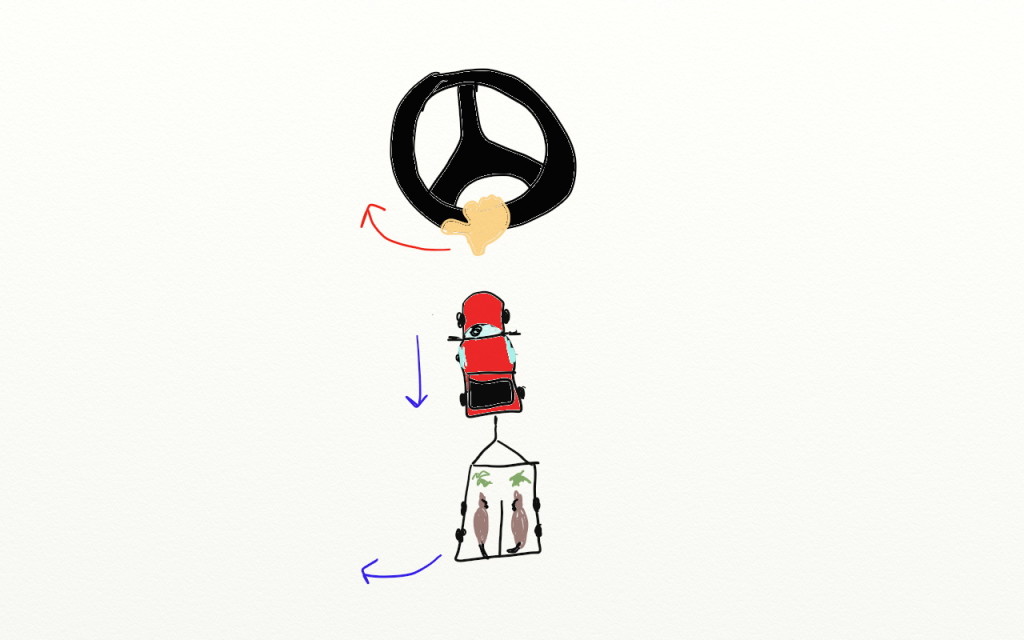
Backing a trailer is an essential skill as I was reminded over and over and OVER this year. Whether you have to put your trailer into a back-in only angled parking spot at the barn, make a “U” turn at a T intersection, navigate a tight ride camp, or turn around in your best friends driveway – knowing how to back a trailer is something you can’t afford to put off any longer.
There is 1 simple trick and 2 skills you need to master NOW.
I’m not going to lie. Certain truck/trailer combinations are easier to back and maneuver than others. My standard-cab long bed pick up + trailer was an absolute dream and I could wiggle my three-horse ANYWHERE. The Dodge MEGA cab 4 door turns-like-a-cruise-liner truck paired with any size trailer is an exercise in patience and near misses as I constantly mis-judge the semi-truck like room it needs to maneuver. BUT, the concepts are exactly the same. You are going to have to practice to get a feel of *your* particular rig, but my “trick” and the execution of the 2 basic skills is exactly the same whether you have a goose-neck, bumper pull, long bed, short bed etc.
The Trick
Don’t try to figure out the physics of how the truck is doing X while the trailer is doing Y. Just do this....
Read more here:
http://melnewton.com/2017/how-to-back-a-trailer/
Wednesday, March 29, 2017
Endurance Riding and Einstein
 Enduranceintrospection.com - Full Article
by Patti Stedman | Mar 28, 2017
Live as if you were to die tomorrow. Learn as if you were to live forever. –Mahatma Ghandi
When we first got into the sport of distance riding, we were no Einsteins, that’s for sure. But we certainly had his enthusiasm for mistakes!
Let me tell you about our first competition.
It was a 20-mile Novice Competitive Trail Ride sponsored by OAATS, near Akron, Ohio, a mere 3 hour drive from home. Our sum total of formal education in the sport was watching Mollie Krumlaw-Smith teaching a brief segment at Equine Affaire in Ohio several months prior.
Richard was competing on his barely 5 year old Arabian, Shantih. I had my 4 year old draft cross mare, the one I’d purchased to do some lower level dressage with, Tess.
To say that Tess was a drafty girl would be like saying Shantih was “green broke.” Both are the kindest possible descriptions.
We’d “conditioned” a bit, riding at Allegany State Park on a loop of trail that we were quite certain must be about 14 miles in distance, which turned out to be about 8 or 9. (No GPS back then and we hadn’t a clue about pacing. We were out there for hours, it had to be a long way, right?)
Richard had purchased a “custom made” saddle for endurance. It was a thing of beauty. Did it ever really fit Shantih? I kind of doubt it, but by the time he was six and had gone from a spindly creature to a broad specimen, I guarantee you it did not.
We bought a used truck camper, entered the ride, left after work on Friday so that we could settle in and relax on Saturday and then compete on Sunday before driving home.
I neatly organized my clothes for the weekend and left them folded on our bed. They never made it to the camper.
We got a little confused on the directions to the ride camp, got lost (and almost broke up right there on the highway outside of Akron), and arrived at camp so late that no one was there to greet us. So we just parked out of the way, tied one horse to each side of the trailer with a hay net full of hay and a bucket of water, and called it a night.
Tess ate her hay in no time and reminded me –gently (as was her way)– to refill it, by kicking the trailer hub cap with her size four shoes, and if that was too subtle, she picked up her water bucket with her teeth and clanged that against the aluminum. The dents from both remain to this day, sort of a testimony to our ignorance and Tess’ love of an endless hay buffet...
Read more here:
http://enduranceintrospection.com/wp/endurance-riding-and-einstein/
Sunday, March 26, 2017
Study: Post-Exercise Snacks Benefit Horses
Thehorse.com - Full Article
By Christa Lesté-Lasserre, MA
Mar 17, 2017
Your horse just had a fabulous workout, got really sweaty, and used up a lot of energy. Now what does he want you to do?
A) Put him back in his stall or paddock and say, “Good job, Buck. Lunch’ll be ready in an hour.”
B) Load him up in the trailer and head for home, where plenty of food and water is waiting for him.
C) Feed and water him right away, and give him plenty of time to finish his food.
Read more here:
http://www.thehorse.com/articles/34350/study-post-exercise-snacks-benefit-horses?utm_source=Newsletter&utm_medium=reader-favorites&utm_campaign=03-24-2017
By Christa Lesté-Lasserre, MA
Mar 17, 2017
Your horse just had a fabulous workout, got really sweaty, and used up a lot of energy. Now what does he want you to do?
A) Put him back in his stall or paddock and say, “Good job, Buck. Lunch’ll be ready in an hour.”
B) Load him up in the trailer and head for home, where plenty of food and water is waiting for him.
C) Feed and water him right away, and give him plenty of time to finish his food.
Read more here:
http://www.thehorse.com/articles/34350/study-post-exercise-snacks-benefit-horses?utm_source=Newsletter&utm_medium=reader-favorites&utm_campaign=03-24-2017
Saturday, March 25, 2017
4 Misconceptions About Alfalfa
Thehorse.com - Full Article
By Heather Smith Thomas
Mar 21, 2017
Despite all the science-backed suggestions about feeding alfalfa, it remains a misunderstood forage. The following are a few misconceptions worth clarifying.
Myth: An alfalfa-rich diet causes kidney problems.
“A normal, healthy horse can metabolize and excrete the extra protein in alfalfa just fine, if the horse has adequate water,” says Ray Smith, PhD, forage extension specialist at the University of Kentucky, in Lexington. Horses with kidney disease shouldn’t consume a high-protein diet (such as alfalfa), but the alfalfa itself won’t cause kidney disease...
Read more here:
http://www.thehorse.com/articles/38962/4-misconceptions-about-alfalfa?utm_source=Newsletter&utm_medium=reader-favorites&utm_campaign=03-24-2017
By Heather Smith Thomas
Mar 21, 2017
Despite all the science-backed suggestions about feeding alfalfa, it remains a misunderstood forage. The following are a few misconceptions worth clarifying.
Myth: An alfalfa-rich diet causes kidney problems.
“A normal, healthy horse can metabolize and excrete the extra protein in alfalfa just fine, if the horse has adequate water,” says Ray Smith, PhD, forage extension specialist at the University of Kentucky, in Lexington. Horses with kidney disease shouldn’t consume a high-protein diet (such as alfalfa), but the alfalfa itself won’t cause kidney disease...
Read more here:
http://www.thehorse.com/articles/38962/4-misconceptions-about-alfalfa?utm_source=Newsletter&utm_medium=reader-favorites&utm_campaign=03-24-2017
Thursday, March 23, 2017
Have You Created a Training Plan Yet?
 EatSleepRideRepeat.com - Full Article
MARCH 20, 2017
by SARAH
March is a tough time of year for getting out riding. I don’t know about you, but by this time, I am no longer excited about the snow and the cold. I find more excuses not to ride than i would have early in the winter, even though I know that now is the time to start ramping up my training. Its just the cold…. I am so sick of it. It has gone on long enough! This year is particularly bad, because we had a brilliant warm snap in February, so going back to temps near -20C feel more like I am jumping into the arctic ocean than looking toward spring.
So what do I do instead? I make my plan for the year! Its a great time to start because it will help me be accountable for the next few weeks while temps remain below 0, but it will also get me psyched up (or perhaps psyched out) because I get to see that the ride season is really not that far out and I have a clear path to get there. Yay!
Unless you are a spreadsheet whiz/junkie like myself, you may feel a little overwhelmed, so today I will share with you what I use to plan my rides.
1. I start with my main goal and a ride calendar...
Read more here:
https://eatsleepriderepeat.com/2017/03/20/have-you-created-a-training-plan-yet/
Parking Lot Ride
MelNewton.com - Full Article
March 23, 2017 Posted by Melinda Newton
Not going to lie, riding the 18 year-old in endless circles around the parking lot was not how I envisioned my first day of spring ride.
Epic spring rains followed by epic sunny skies made for a muddy horse that was perfect for a bareback jaunt in the blooming orchards.
That picture is as close as I got to the lovely blossoms.
Passively refusing to sidle up to the mounting block. Sticking going forward despite kicking heels. Spooking at non-existent monsters between trailers, violent spooking at 3 bikes riding down the deserted road. Leaning and hollowing and not walking in straight lines, offering a 1 mph walk or a bolty trot.
OK then.
Circles and more circles. Yielding to leg pressure. Yielding to the bit. Nope, not taking gait or speed preferences at this time from the pony. That’s a bird. That’s a glint of sunshine. THAT my dear is a leaf.
20 minutes later I had a rideable horse and I was out of riding time...
Read more here:
http://melnewton.com/2017/parking-lot-ride/
March 23, 2017 Posted by Melinda Newton
Not going to lie, riding the 18 year-old in endless circles around the parking lot was not how I envisioned my first day of spring ride.
Epic spring rains followed by epic sunny skies made for a muddy horse that was perfect for a bareback jaunt in the blooming orchards.
That picture is as close as I got to the lovely blossoms.
Passively refusing to sidle up to the mounting block. Sticking going forward despite kicking heels. Spooking at non-existent monsters between trailers, violent spooking at 3 bikes riding down the deserted road. Leaning and hollowing and not walking in straight lines, offering a 1 mph walk or a bolty trot.
OK then.
Circles and more circles. Yielding to leg pressure. Yielding to the bit. Nope, not taking gait or speed preferences at this time from the pony. That’s a bird. That’s a glint of sunshine. THAT my dear is a leaf.
20 minutes later I had a rideable horse and I was out of riding time...
Read more here:
http://melnewton.com/2017/parking-lot-ride/
Monday, March 20, 2017
Endurance and Conscious Competence
Enduranceintrospection.com - Full Article
by Patti Stedman | Nov 19, 2014 | Patti's Blog
There is no end to education. It is not that you read a book, pass an examination, and finish with education. The whole of life, from the moment you are born to the moment you die, is a process of learning.
–Jiddu Krishnamurti
Long before I joined AERC’s Education Committee, I’ve been a teacher.
I come by it genetically, I think. My mother was a third grade teacher and my Dad has a gift for sharing ideas and telling stories to illustrate a point. So I combined my passion for horses and teaching by becoming a certified riding instructor during college before realizing that health insurance and a steady income were going to be beneficial to a theoretical ‘grown up.’
But even as my career changed and evolved to what it is today, teaching has been what I love to do. I think part of it is because I am addicted to learning; I sometimes think I got caught in the intellectual curiosity of a 4th grader. I want to know why and how.
One of my favorite models about learning is the Conscious/Competence matrix, which has been attributed to several different individuals. Never mind that, I think what’s most fascinating is how it fits in with our sport.
We all know that endurance riding has a steep learning curve; I don’t know a single endurance rider, even those with great success, who will not admit to having made dozens of mistakes at the start of their career. Most of us will admit that we still make mistakes, and sadly, most of these come at the expense of our horse’s well-being and therefore we try hard not to make the same mistake repeatedly.
As we’ve begun formalizing and encouraging members to conduct Endurance Clinics and mentor new riders, one of the phenomena I notice is where riders seem to fit in the below matrix:...
Read more here:
http://enduranceintrospection.com/wp/endurance-and-conscious-competence-or-not/
by Patti Stedman | Nov 19, 2014 | Patti's Blog
There is no end to education. It is not that you read a book, pass an examination, and finish with education. The whole of life, from the moment you are born to the moment you die, is a process of learning.
–Jiddu Krishnamurti
Long before I joined AERC’s Education Committee, I’ve been a teacher.
I come by it genetically, I think. My mother was a third grade teacher and my Dad has a gift for sharing ideas and telling stories to illustrate a point. So I combined my passion for horses and teaching by becoming a certified riding instructor during college before realizing that health insurance and a steady income were going to be beneficial to a theoretical ‘grown up.’
But even as my career changed and evolved to what it is today, teaching has been what I love to do. I think part of it is because I am addicted to learning; I sometimes think I got caught in the intellectual curiosity of a 4th grader. I want to know why and how.
One of my favorite models about learning is the Conscious/Competence matrix, which has been attributed to several different individuals. Never mind that, I think what’s most fascinating is how it fits in with our sport.
We all know that endurance riding has a steep learning curve; I don’t know a single endurance rider, even those with great success, who will not admit to having made dozens of mistakes at the start of their career. Most of us will admit that we still make mistakes, and sadly, most of these come at the expense of our horse’s well-being and therefore we try hard not to make the same mistake repeatedly.
As we’ve begun formalizing and encouraging members to conduct Endurance Clinics and mentor new riders, one of the phenomena I notice is where riders seem to fit in the below matrix:...
Read more here:
http://enduranceintrospection.com/wp/endurance-and-conscious-competence-or-not/
Wednesday, March 15, 2017
Is Your Deworming Protocol Helping Make Worms Resistant?
USEF.org
by US Equestrian Communications Department | Mar 13, 2017, 11:00 AM EST
Here’s the bad news: worms are becoming resistant to our efforts to kill them, thanks in part to traditional deworming protocols that called for dosing horses every two months. That was the thinking when the first broad-spectrum dewormers (also called anthelmintics) hit the market back in the 1960s, but over the decades that protocol helped the worms become less sensitive to the medicine. “And there are no new dewormers available for immediate release,” said Dr. Jacquelene Pasko, a field care associate at Hagyard Equine Medical Institute, US Equestrian’s Official Equine Pharmacy and Veterinary Service Provider.
So veterinarians and horse owners today use a different strategy to maximize dewormers’ effectiveness and keep potentially harmful internal parasites at bay. Here’s what you need to know:
The target.
“People used to target for the large strongyles, and that’s kind of how we got into the two-month rotational deworming cycle that we now have to move away from,” said Pasko. “Those large strongyles are still a concern if they’re in a horse in large numbers, but today we have them pretty much under control. So the ones that we’re targeting now are the small strongyles and the tapeworms in our adult horses.”
Your horse’s immune system is your ally.
“Horses have some natural immunity to worms,” said Pasko. “Different horses are going to have different immune status, just like they would to anything else their immune system is exposed to. We’ve found that in a horse that doesn’t need deworming frequently, you don’t see any additional health benefits by deworming him more often than he needs. The only thing that does is help accelerate the process of dewormer resistance.”
Resistance risk factors.
Frequently deworming a horse that doesn’t need it is one. Another: only using the same type of dewormer every time. “Different worms are sensitive to different dewormers,” said Pasko. “So if you use the same type of dewormer over and over again, you’re not affecting the worms that aren’t sensitive to it.” Worse, you’re actually encouraging the worms that are sensitive to it to become resistant.
“The worms are going to try to survive,” Pasko explained. “So the ones that have genes that allow them to expel the dewormer or be insensitive to it are the ones that are going to be left, so effectively you’d be selecting for those resistant worms. You want a worm population that has sensitive worms so that when you use a dewormer you actually get an effect.”
Monitor your horse’s fecal egg count.
“For adult horses, we recommend doing a fecal egg count both in the spring and in the fall,” said Pasko. “We’re looking at the amount of eggs that horse is shedding, and the fecal egg count the best tool we have to evaluate that so we can tailor the deworming to the horse’s specific needs. We use that to determine whether a horse is a high, low, or moderate shedder, based on the number of eggs we count per gram of feces, and we base our deworming recommendations on those categories.”
Pasko recommends taking a fecal egg count in the spring and fall, when worms tend to shed more eggs. Different dewormers have different lengths of effectiveness, but, in general, you want to make sure to take the fecal egg count when the most recent dewormer you’ve given is just past its window of effectiveness—your vet can help with the proper timing, which will help you get an accurate picture of how many eggs your horse is shedding.
To test for resistance to a specific dewormer type, consider taking a fecal egg reduction count (FERC), too.
“For that, you take your initial fecal egg count, then deworm the horse with the appropriate dewormer, and then a couple of weeks later you take a second fecal egg count (the FERC),” explained Pasko. “You’re looking to compare the number of eggs in the first fecal egg count versus the amount in the second. Your vet will be looking for a certain percentage of decrease in those numbers, and if the count doesn’t reach that percentage, then there’s a suspicion that you might have some resistance to that dewormer. That might influence the dewormer choices you make.”
Testing multiple horses in a herd—provided the horses have been on the property for some time and haven’t recently shipped in from elsewhere—can provide a good general picture of how widespread any resistance might be, Pasko added. Be sure to include the highest egg-shedders to get a clearer picture of dewormers’ effectiveness.
Your horse needs a tailored deworming schedule.
Your vet will also consider the climate where your horse lives when making a deworming recommendation, but broadly speaking, Pasko says, “Low shedders really only need to be dewormed once or twice a year, both for strongyles and tapeworms. For moderate shedders, we usually recommend those twice-yearly dewormings as well as one or two additional dewormings in spring and fall, because those are the times when the worms are shedding the most eggs. For the high shedders, you have the basic twice-a-year deworming for strongyles and tapeworms, and then we’d recommend two to three additional dewormings divided up between the spring and the fall, depending on how the seasons progress where the horse is located.”
Mix it up.
Vary the types of dewormers, but consult with your veterinarian, who can help you determine when to use what. “Different dewormers work for strongyles than on tapeworms, so what you use depends on what you’re targeting,” said Pasko. “The twice-a-year dewormings are targeting strongyles and tapeworms, and the additional deworming targets strongyles.”
“Deworm” your pastures, too.
The goal of a good deworming protocol isn’t only to deworm your horse. It’s also to decrease environmental contamination. “We’re really trying to decrease egg-shedding into the environment, where it can then be picked up by other horses,” Pasko said.
Where practical, periodically removing manure from pastures and turnout areas where horses graze is one idea. Controlling pasture population density is also helpful: a crowded pasture means more manure in more places where horses graze, and that’s how worms spread. If you spread manure on your grazing fields, Pasko says, be sure the manure is composted first.
“Composting manure properly should take care of any larvae that was in that manure,” she said. “But when you spread uncomposted manure that has live larvae in it, you’re just contaminating your pastures more.”
by US Equestrian Communications Department | Mar 13, 2017, 11:00 AM EST
Here’s the bad news: worms are becoming resistant to our efforts to kill them, thanks in part to traditional deworming protocols that called for dosing horses every two months. That was the thinking when the first broad-spectrum dewormers (also called anthelmintics) hit the market back in the 1960s, but over the decades that protocol helped the worms become less sensitive to the medicine. “And there are no new dewormers available for immediate release,” said Dr. Jacquelene Pasko, a field care associate at Hagyard Equine Medical Institute, US Equestrian’s Official Equine Pharmacy and Veterinary Service Provider.
So veterinarians and horse owners today use a different strategy to maximize dewormers’ effectiveness and keep potentially harmful internal parasites at bay. Here’s what you need to know:
The target.
“People used to target for the large strongyles, and that’s kind of how we got into the two-month rotational deworming cycle that we now have to move away from,” said Pasko. “Those large strongyles are still a concern if they’re in a horse in large numbers, but today we have them pretty much under control. So the ones that we’re targeting now are the small strongyles and the tapeworms in our adult horses.”
Your horse’s immune system is your ally.
“Horses have some natural immunity to worms,” said Pasko. “Different horses are going to have different immune status, just like they would to anything else their immune system is exposed to. We’ve found that in a horse that doesn’t need deworming frequently, you don’t see any additional health benefits by deworming him more often than he needs. The only thing that does is help accelerate the process of dewormer resistance.”
Resistance risk factors.
Frequently deworming a horse that doesn’t need it is one. Another: only using the same type of dewormer every time. “Different worms are sensitive to different dewormers,” said Pasko. “So if you use the same type of dewormer over and over again, you’re not affecting the worms that aren’t sensitive to it.” Worse, you’re actually encouraging the worms that are sensitive to it to become resistant.
“The worms are going to try to survive,” Pasko explained. “So the ones that have genes that allow them to expel the dewormer or be insensitive to it are the ones that are going to be left, so effectively you’d be selecting for those resistant worms. You want a worm population that has sensitive worms so that when you use a dewormer you actually get an effect.”
Monitor your horse’s fecal egg count.
“For adult horses, we recommend doing a fecal egg count both in the spring and in the fall,” said Pasko. “We’re looking at the amount of eggs that horse is shedding, and the fecal egg count the best tool we have to evaluate that so we can tailor the deworming to the horse’s specific needs. We use that to determine whether a horse is a high, low, or moderate shedder, based on the number of eggs we count per gram of feces, and we base our deworming recommendations on those categories.”
Pasko recommends taking a fecal egg count in the spring and fall, when worms tend to shed more eggs. Different dewormers have different lengths of effectiveness, but, in general, you want to make sure to take the fecal egg count when the most recent dewormer you’ve given is just past its window of effectiveness—your vet can help with the proper timing, which will help you get an accurate picture of how many eggs your horse is shedding.
To test for resistance to a specific dewormer type, consider taking a fecal egg reduction count (FERC), too.
“For that, you take your initial fecal egg count, then deworm the horse with the appropriate dewormer, and then a couple of weeks later you take a second fecal egg count (the FERC),” explained Pasko. “You’re looking to compare the number of eggs in the first fecal egg count versus the amount in the second. Your vet will be looking for a certain percentage of decrease in those numbers, and if the count doesn’t reach that percentage, then there’s a suspicion that you might have some resistance to that dewormer. That might influence the dewormer choices you make.”
Testing multiple horses in a herd—provided the horses have been on the property for some time and haven’t recently shipped in from elsewhere—can provide a good general picture of how widespread any resistance might be, Pasko added. Be sure to include the highest egg-shedders to get a clearer picture of dewormers’ effectiveness.
Your horse needs a tailored deworming schedule.
Your vet will also consider the climate where your horse lives when making a deworming recommendation, but broadly speaking, Pasko says, “Low shedders really only need to be dewormed once or twice a year, both for strongyles and tapeworms. For moderate shedders, we usually recommend those twice-yearly dewormings as well as one or two additional dewormings in spring and fall, because those are the times when the worms are shedding the most eggs. For the high shedders, you have the basic twice-a-year deworming for strongyles and tapeworms, and then we’d recommend two to three additional dewormings divided up between the spring and the fall, depending on how the seasons progress where the horse is located.”
Mix it up.
Vary the types of dewormers, but consult with your veterinarian, who can help you determine when to use what. “Different dewormers work for strongyles than on tapeworms, so what you use depends on what you’re targeting,” said Pasko. “The twice-a-year dewormings are targeting strongyles and tapeworms, and the additional deworming targets strongyles.”
“Deworm” your pastures, too.
The goal of a good deworming protocol isn’t only to deworm your horse. It’s also to decrease environmental contamination. “We’re really trying to decrease egg-shedding into the environment, where it can then be picked up by other horses,” Pasko said.
Where practical, periodically removing manure from pastures and turnout areas where horses graze is one idea. Controlling pasture population density is also helpful: a crowded pasture means more manure in more places where horses graze, and that’s how worms spread. If you spread manure on your grazing fields, Pasko says, be sure the manure is composted first.
“Composting manure properly should take care of any larvae that was in that manure,” she said. “But when you spread uncomposted manure that has live larvae in it, you’re just contaminating your pastures more.”
Sunday, March 05, 2017
700,000-Year-Old Horse Found in Yukon Permafrost Yields Oldest DNA Ever Decoded
 Westerndigs.org - Full Article
POSTED ON NOVEMBER 19, 2013
BY BLAKE DE PASTINO
The frozen remains of a horse more than half a million years old have reluctantly given up their genetic secrets, providing scientists with the oldest DNA ever sequenced.
The horse was discovered in 2003 in the ancient permafrost of Canada’s west-central Yukon Territory, not far from the Alaskan border.
And although the animal was dated to between 560,000 and 780,000 years old, an international team of researchers was able to use a new combination of techniques to decipher its genetic code.
Among the team’s findings is that the genus Equus — which includes all horses, donkeys, and zebras — dates back more than 4 million years, twice as long ago as scientists had previously believed...
Read more here:
http://westerndigs.org/700000-year-old-horse-found-in-yukon-permafrost-yields-oldest-dna-ever-decoded/
Wednesday, March 01, 2017
Stocking Up; A Pain in the Leg
Nouvelleresearch.com - Full Article
Tom Schell, D.V.M.
Nouvelle Research, Inc.
www.nouvelleresearch.com
Stocking up is a familiar term to many horse owners and often is used to refer to a horse that exhibits leg swelling. The exact cause of the swelling can be variable and with this, so can the prescribed treatment course. The more we understand, often the better we can assist these patients, but it is a complicated problem in the equine industry.
One of the most common scenarios amongst horse owners is to have a horse that stocks up or swells up in one or more legs, especially after stall rest or even one night of confinement. Terms including lymphedema, lymphangitis, cellulitus are commonly used, having similar clinical findiings but different origins. We have many remedies for these situaitons, but often the problem persists despite, coming and going with moderate variability. In order to understand the problem, we must have a deeper look at anatomy and physiology.
Blood travels to the horse's limbs via arteries, delivering oxygen and nutrients to the tissues, then returns back to the heart via veins. The blood in the arteries is under pressure, which is determined by the heart rate, vascular resistance of the blood vessel and blood fluid volume. This pressure drops once the blood begins to return to the heart in the veins. Given the lack of significant pressure to assist the flow back to the heart, it is generally accepted that movement and pressure within the equine foot, actually serves as a heart, helping to pump the blood back up the leg. Horses are often referred to as having 5 hearts, implying a true heart in the chest and one heart per foot...
Read more here:
https://nouvelleresearch.com/index.php/articles/398-stocking-up-a-pain-in-the-leg
Tom Schell, D.V.M.
Nouvelle Research, Inc.
www.nouvelleresearch.com
Stocking up is a familiar term to many horse owners and often is used to refer to a horse that exhibits leg swelling. The exact cause of the swelling can be variable and with this, so can the prescribed treatment course. The more we understand, often the better we can assist these patients, but it is a complicated problem in the equine industry.
One of the most common scenarios amongst horse owners is to have a horse that stocks up or swells up in one or more legs, especially after stall rest or even one night of confinement. Terms including lymphedema, lymphangitis, cellulitus are commonly used, having similar clinical findiings but different origins. We have many remedies for these situaitons, but often the problem persists despite, coming and going with moderate variability. In order to understand the problem, we must have a deeper look at anatomy and physiology.
Blood travels to the horse's limbs via arteries, delivering oxygen and nutrients to the tissues, then returns back to the heart via veins. The blood in the arteries is under pressure, which is determined by the heart rate, vascular resistance of the blood vessel and blood fluid volume. This pressure drops once the blood begins to return to the heart in the veins. Given the lack of significant pressure to assist the flow back to the heart, it is generally accepted that movement and pressure within the equine foot, actually serves as a heart, helping to pump the blood back up the leg. Horses are often referred to as having 5 hearts, implying a true heart in the chest and one heart per foot...
Read more here:
https://nouvelleresearch.com/index.php/articles/398-stocking-up-a-pain-in-the-leg
Sunday, February 26, 2017
The art of Turkmen horse breeding
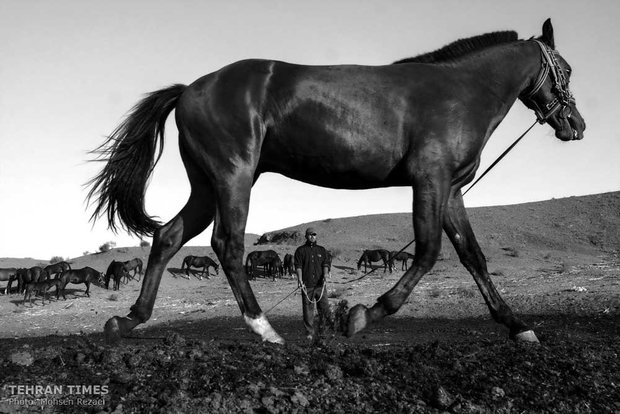 Tehrantimes.com - Article and Pictures
Sat 25, February
The art of Turkmen horse breeding
Turkmen horses are one of the most beautiful horse breed of Iran dominantly found in Turkmen Sahra, a region located in northeastern Iran bordering Turkmenistan. The Turkmen horse was originally an oriental horse breed from the steppes of Central Asia which is now extinct. Some horses bred in Iran and Turkmenistan today are still referred to as Turkmen, and have similar characteristics. The Turkmen horse is noted for its endurance, bravery and smartness. It has a slender body and the breed is actually one of the toughest in the world. They have a reputation for speed, endurance, intelligence, and a distinctive metallic sheen. Many theories have been formulated to explain why hair of the Turkmen horse and its descendants shines, but none explain why the this breed in particular benefitted from this genetic difference and why other horses would not. Although Turkmen horse breeding is a very popular among the Turkmen people the officials won’t take it very serious. Here are some photos depicting Turkmen horse breeding in Raz and Jargalan, North Khorasan province.
Tehran Times/ Mohsen Rezaee
See photos here:
http://www.tehrantimes.com/photo/411416/The-art-of-Turkmen-horse-breeding
Subscribe to:
Posts (Atom)