NationalGeographic.com - Full Article
Coronavirus has ground the city to a halt, but New York’s carriage horse industry has been rife with contention for decades.
BY NATASHA DALY
PUBLISHED MARCH 26, 2020
On February 29, before coronavirus shut down New York City, a 12-year-old carriage horse named Aisha collapsed in Central Park. A 15-minute-long video of the incident shows her struggling to stand before she crumples on the side of the road. A trailer arrives to haul her away, and carriage drivers push her inside. Aisha was euthanized later that day.
It’s not clear what killed Aisha—one of about 200 horses registered to pull carriages in New York—but her death immediately sparked a firestorm.
Animal advocates, some New York lawmakers, and Mayor Bill de Blasio, a longtime critic of his city’s carriage horse industry, blasted the incident as heartbreaking and inhumane. De Blasio tweeted that New York’s Animal Cruelty Investigation Squad is investigating. Animal advocacy group NYClass, which has long opposed the industry, immediately took to social media, circulating the video of Aisha’s death and accusing her handlers of “tormenting” her as she suffered.
The historic industry itself is on the defense. Christina Hansen, a carriage horse driver and spokesperson for Historic Horse-Drawn Carriages of Central Park, which represents the industry, says Aisha’s collapse could be related to exertion, but it could also be a genetic, muscular, or hormonal condition. Hansen says the veterinarian who examined the horse back at the stables found her heartbeat to be erratic...
Read more here:
https://www.nationalgeographic.com/animals/2020/03/new-york-city-carriage-horse-industry-controversy/?cmpid=org=ngp::mc=crm-email::src=ngp::cmp=editorial::add=Animals_20200403&rid=BB6673C4CE72E9E250D0E59D22726895
Saturday, April 04, 2020


Equestrian Company Pivoting During a Pandemic
 HorseNetwork.com - Full Article
How one equestrian company is responding to COVID-19.
by Liz Brown
April 2 2020
Boston-based manufacturer EquiFit specializes in designing stylish and technologically advanced products for horses—typically in black.
Now, they’re making one for humans. It’s also black.
Last week as COVID-19 continued its march across the globe, sickening hundreds of thousands and wreaking havoc on health care systems, EquiFit founder and president Alexandra Cherubini felt compelled to do something.
With the company’s operational ties to a medical supply company and expertise in producing high-quality equipment like tendon boots, girths, and saddle pads, she knew there had to be a way EquiFit could help meet a growing demand for protective equipment...
Read more here:
https://horsenetwork.com/2020/04/pivoting-during-a-pandemic/?utm_source=Horse+Network+Email+List&utm_campaign=4c5c708347-HN_2020_4_3_2020&utm_medium=email&utm_term=0_5694ca6b0c-4c5c708347-84641243&goal=0_5694ca6b0c-4c5c708347-84641243&mc_cid=4c5c708347&mc_eid=b3c9897994
COVID-19: Should I Lock Down My Barn?
 EquineLegalSolutions.com - Full Article
At Equine Legal Solutions, we are starting to receive questions from barn owners asking if they should close their barns to boarders and visitors. Some want to close their barns to prevent the spread of COVID-19, but are worried that if they do, they will lose business, they will have to lay off employees, their customers will be very upset and some might even sue them. Others want to keep their barns open to keep their business from going under, keep their employees working, and provide their understandably anxious boarders with access to their beloved horses as well as an outlet for healthy exercise, fresh air and a sense of normalcy. But these barn owners are also concerned that if they don’t lock down their barns, their facilities will contribute to the pandemic. Federal, state and local government guidance has been inconsistent, and so far, there is no guidance specifically for equine facilities beyond scattered designations of “livestock” as “essential,” which is not particularly useful for the horse industry.
Here’s what medical experts currently know about the novel coronavirus that causes COVID-19:...
Read more here:
https://www.equinelegalsolutions.com/should-i-lock-down-my-facility.html
Friday, March 27, 2020
The Journey of a Lifetime
 FEI.org/stories - Full Story with video
27 March 2020
Words by Richard Mulligan
Three international equestrian stars enjoyed a life-changing experience on a 100km trek with wild horses in the Pyrenees...
Juan Matute Guimon is a young Dressage star who has reached the top of his sport at just 22 years old, but nothing could prepare him for the life-changing experience of guiding 30 wild horses on a 100km trek through the Pyrenees.
The young Spaniard signed up to take part in a three-day transhumance, which is the traditional movement of livestock between the valleys and the lush high mountain pastures. He and fellow travellers Hanna Tardiveau and Laura Demaille – both international Jumping stars - were charged with the responsibility of accompanying 30 wild Merens horses on the journey through the mountains with an elevation of 8,100m...
Read more and see video here:
https://www.fei.org/stories/transhumance-pyrenees-horse-pilot
Thursday, March 26, 2020
Rosie Pope Update: Running from the UK to Nepal at 75
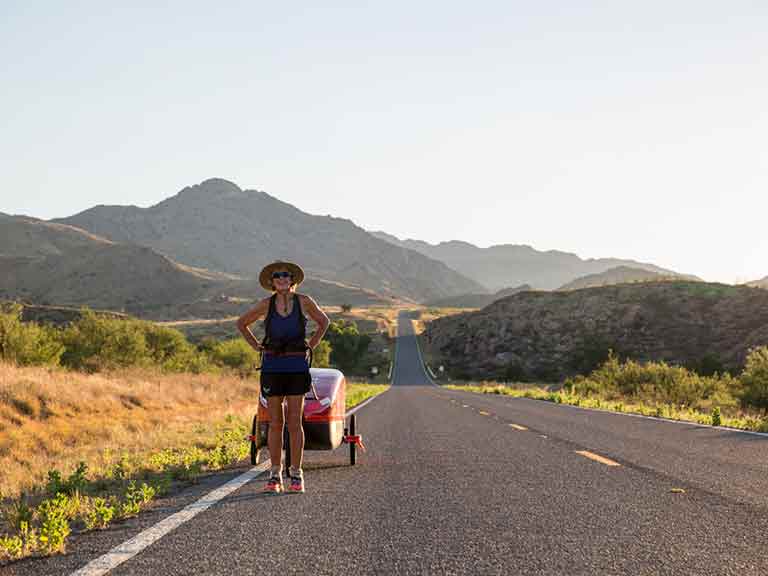 Chris Hinkle photo
 Explorersweb.com - Full Article
by Alex Myall
When I was tasked with writing about Rosie Pope’s expedition, I was told that she is quite a character. I’d say “character” sums her up beautifully. Even the bare facts — at age 75 she’s running from the UK to Nepal — makes evident her joyful lust for life and quirky style. By her own admission, Rosie isn’t athletic, and when I say “running”, I mean her mission is actually more like lugging a trike-turned-coffin across continents. Said trike-tuned-coffin holds all the necessities and doubles as a sleeping space when she needs to rest.
On March 3, Rosie reached Istanbul, Turkey. She crossed the iconic Bosphorus Bridge (with a police escort, no less, since it isn’t a pedestrian bridge) marking her official entry into Asia...
Read more here:
https://explorersweb.com/2020/03/16/rosie-pope-update-running-from-the-uk-to-nepal-at-75/
Help Gastric Ulcers with Frequent Feedings
KER.com - Full Article
June 6, 2019
By Kentucky Equine Research Staff
Many performance horses have ulcerations of the stomach that can hinder performance and well-being. Did you know that broodmares and lightly ridden horses are also at risk? According to veterinarians and researchers, one contributing factor to equine gastric ulcer syndrome, or EGUS, involves feeding management strategies, including lack of free feeding.
“Free feeding of performance horses or those maintained primarily in individual stalls is not a realistic option, compared to horses on pasture that will graze for 10-15 hours a day,” shared Kathleen Crandell, Ph.D., a nutritionist for Kentucky Equine Research.
For most performance horses, simply offering more hay will not provide sufficient energy, necessitating the addition of a concentrate to the diet. Typically, these grain meals are offered twice daily...
Read more here:
https://ker.com/equinews/help-gastric-ulcers-with-frequent-feedings/?partner=ker&utm_source=KER+Newsletter&utm_campaign=be6fee2903-KER_Equinews_062619&utm_medium=email&utm_term=0_0d95781dfc-be6fee2903-11166
June 6, 2019
By Kentucky Equine Research Staff
Many performance horses have ulcerations of the stomach that can hinder performance and well-being. Did you know that broodmares and lightly ridden horses are also at risk? According to veterinarians and researchers, one contributing factor to equine gastric ulcer syndrome, or EGUS, involves feeding management strategies, including lack of free feeding.
“Free feeding of performance horses or those maintained primarily in individual stalls is not a realistic option, compared to horses on pasture that will graze for 10-15 hours a day,” shared Kathleen Crandell, Ph.D., a nutritionist for Kentucky Equine Research.
For most performance horses, simply offering more hay will not provide sufficient energy, necessitating the addition of a concentrate to the diet. Typically, these grain meals are offered twice daily...
Read more here:
https://ker.com/equinews/help-gastric-ulcers-with-frequent-feedings/?partner=ker&utm_source=KER+Newsletter&utm_campaign=be6fee2903-KER_Equinews_062619&utm_medium=email&utm_term=0_0d95781dfc-be6fee2903-11166
Saturday, March 21, 2020
I Need a Break - Karen Sweaney
 BakersfieldDressage.com - Full Article
3/20/2020
I bet you do too. Fortunately, Facebook has been plastered with funny memes this week. No, COVID-19 isn't a joke, but people are hilarious, and thank goodness they are or else I'd be blubbering under the covers right about now. Letting some of the pressure escape with a good laugh at ourselves can only keep us healthier.
In Prose Works, Mary Baker Eddy, the founder of Christian Science, said, "If only the people would believe that good is more contagious than evil [...] how much more certain would be the doctor's success [...]." In this instance, laughter could certainly replace good without changing her meaning. In fact, it only strengthens her point...
Read more here:
https://www.bakersfielddressage.com/home/i-need-a-break
Friday, March 20, 2020
Horse Owner Help During COVID-19
TheHorse.com - Full Article
What to do if you need help feeding your horses after a COVID-19-related job loss, and how to help others if you don’t.
Posted by Stephanie L. Church, Editor-in-Chief | Mar 19, 2020
This week I’ve been curious—even a bit anxious—about how COVID-19 closures and cancellations are going to directly impact horse owners and their horses. As people are laid off from their jobs or must shutter their businesses in the face of decreased profits or inability to operate, they must find a way to cover their living expenses, as well as their horses’.
Spring hasn’t hit most pastures yet, so horse owners are still feeding a lot of hay … it’s simply a more expensive time of year to keep horses. It’s also tax season, and some owners owe the IRS.
“The timing is awful,” said emergency planning expert Rebecca Gimenez-Husted, PhD, who is based in Georgia. “There’s very little grass yet, and spring grass is so dangerous for laminitis risks...”
Read more here:
https://thehorse.com/186173/horse-owner-help-during-covid-19/?utm_medium=40digest.7days3.20200320.home&utm_source=email&utm_content=&utm_campaign=campaign
What to do if you need help feeding your horses after a COVID-19-related job loss, and how to help others if you don’t.
Posted by Stephanie L. Church, Editor-in-Chief | Mar 19, 2020
This week I’ve been curious—even a bit anxious—about how COVID-19 closures and cancellations are going to directly impact horse owners and their horses. As people are laid off from their jobs or must shutter their businesses in the face of decreased profits or inability to operate, they must find a way to cover their living expenses, as well as their horses’.
Spring hasn’t hit most pastures yet, so horse owners are still feeding a lot of hay … it’s simply a more expensive time of year to keep horses. It’s also tax season, and some owners owe the IRS.
“The timing is awful,” said emergency planning expert Rebecca Gimenez-Husted, PhD, who is based in Georgia. “There’s very little grass yet, and spring grass is so dangerous for laminitis risks...”
Read more here:
https://thehorse.com/186173/horse-owner-help-during-covid-19/?utm_medium=40digest.7days3.20200320.home&utm_source=email&utm_content=&utm_campaign=campaign
Thursday, March 19, 2020
The Lost Sea Expedition A Man. A Mule. America.
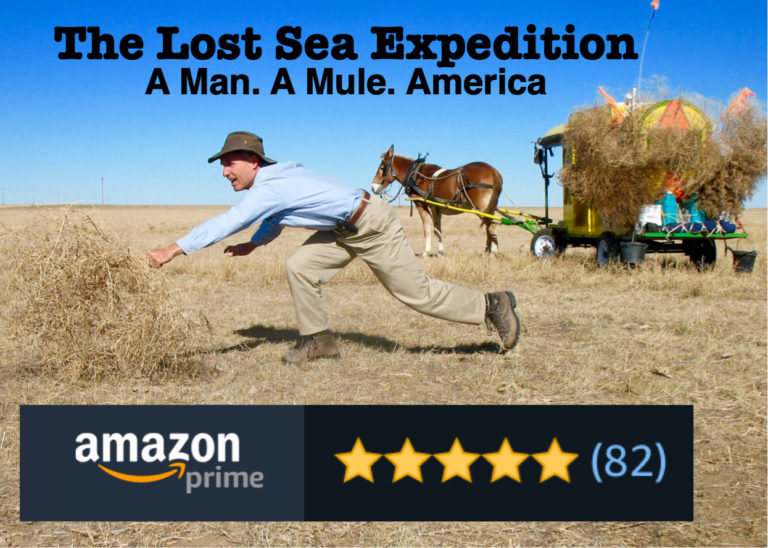 LostSeaExpedition.com - See video documentary
Welcome. I’m film maker Bernie Harberts. This site is about the Lost Sea Expedition TV series, the documentary about my 14 month wagon voyage from Canada to Mexico. I filmed the whole voyage right out of my solar powered wagon – no sponsor, chase crew or support vehicle...
Watch the preview here:
http://lostseaexpedition.com/#.XnOXN3bB6Ro.mailto
Wednesday, March 18, 2020
Girth Aversion in Horses: Gastric Ulcers Pinpointed
KER.com - Full Article
February 19, 2020
By Kentucky Equine Research Staff
Saddle enough horses and you will run into one that detests girthing. A horse that is sensitive to cinch-fitting, sometimes called a “girthy horse,” usually displays signs of protest, including tossing the head, pinning ears, wringing the tail, stomping a foreleg, kicking out with a hind leg, and worse. Is girthiness an expression of resistance, a sign of shaky work ethic, or could there be an underlying cause?
Veterinary researchers set out to determine the causes of girthiness in a retrospective study of 37 horses admitted to the University of California, Davis. Although identifying the exact cause for girth aversion remains a challenge, 12 of the horses studied were diagnosed with gastric ulceration. In addition to gastric ulcers, the horses were found to have sundry orthopedic issues (10 horses), ill-fitting saddles (3), reproductive tract neoplasia (1), and various diseases (10), including liver abscessation, vena cava aneurism, sternum pain, and urinary tract infection...
Read more here:
https://ker.com/equinews/girth-aversion-in-horses-gastric-ulcers-pinpointed/?partner=ker&utm_source=KER+Newsletter&utm_campaign=a71e782808-KER_Equinews_031820&utm_medium=email&utm_term=0_0d95781dfc-a71e782808-11166
February 19, 2020
By Kentucky Equine Research Staff
Saddle enough horses and you will run into one that detests girthing. A horse that is sensitive to cinch-fitting, sometimes called a “girthy horse,” usually displays signs of protest, including tossing the head, pinning ears, wringing the tail, stomping a foreleg, kicking out with a hind leg, and worse. Is girthiness an expression of resistance, a sign of shaky work ethic, or could there be an underlying cause?
Veterinary researchers set out to determine the causes of girthiness in a retrospective study of 37 horses admitted to the University of California, Davis. Although identifying the exact cause for girth aversion remains a challenge, 12 of the horses studied were diagnosed with gastric ulceration. In addition to gastric ulcers, the horses were found to have sundry orthopedic issues (10 horses), ill-fitting saddles (3), reproductive tract neoplasia (1), and various diseases (10), including liver abscessation, vena cava aneurism, sternum pain, and urinary tract infection...
Read more here:
https://ker.com/equinews/girth-aversion-in-horses-gastric-ulcers-pinpointed/?partner=ker&utm_source=KER+Newsletter&utm_campaign=a71e782808-KER_Equinews_031820&utm_medium=email&utm_term=0_0d95781dfc-a71e782808-11166
Sunday, March 15, 2020
Equine Coronavirus and COVID-19 are NOT the same disease
Horse-canada.com - Full Article
Palm Beach Equine Clinic addresses concerns regarding Equine Enteric Coronavirus and COVID-19 -- both distinctly different coronaviruses.
By: Palm Beach Equine Clinic | March 15, 2020
The recent spread of the novel coronavirus has raised serious concerns as the status continues to evolve. As equine veterinarians, Palm Beach Equine Clinic would like to address the questions and concern raised by horse owners regarding the potential impact of this disease on the equine industry.
Coronaviruses include a large group of RNA viruses that cause respiratory and enteric symptoms, and have been reported in domestic and wild animals. Equine Enteric Coronavirus and COVID-19 are both coronaviruses, however, they are distinctly different viruses.
The Center for Disease Control and Prevention (CDC), infectious disease experts, and multiple international and national human and animal health organizations have stated that at this time there is NO EVIDENCE to indicate that horses could contract COVID-19 or that horses would be able to spread the disease to other animals or humans. Equine enteric coronavirus and COVID-19 are NOT the same strain, and there is no indication that either are transmissible between species...
Read more here:
https://horse-canada.com/horse-news/equine-coronavirus-and-covid-19-are-not-the-same-diseases/
Palm Beach Equine Clinic addresses concerns regarding Equine Enteric Coronavirus and COVID-19 -- both distinctly different coronaviruses.
By: Palm Beach Equine Clinic | March 15, 2020
The recent spread of the novel coronavirus has raised serious concerns as the status continues to evolve. As equine veterinarians, Palm Beach Equine Clinic would like to address the questions and concern raised by horse owners regarding the potential impact of this disease on the equine industry.
Coronaviruses include a large group of RNA viruses that cause respiratory and enteric symptoms, and have been reported in domestic and wild animals. Equine Enteric Coronavirus and COVID-19 are both coronaviruses, however, they are distinctly different viruses.
The Center for Disease Control and Prevention (CDC), infectious disease experts, and multiple international and national human and animal health organizations have stated that at this time there is NO EVIDENCE to indicate that horses could contract COVID-19 or that horses would be able to spread the disease to other animals or humans. Equine enteric coronavirus and COVID-19 are NOT the same strain, and there is no indication that either are transmissible between species...
Read more here:
https://horse-canada.com/horse-news/equine-coronavirus-and-covid-19-are-not-the-same-diseases/
Thursday, March 05, 2020
Responsible Trail Use – A Guide for Horsemen
 Trailmeister.com - Full Article
A Guide to Responsible Trail Use
February 24, 2020
by Robert Eversole
Responsible Trail Use – A Guide for Horsemen
What you should know about responsible trail use through appropriate outdoors etiquette and ethics.
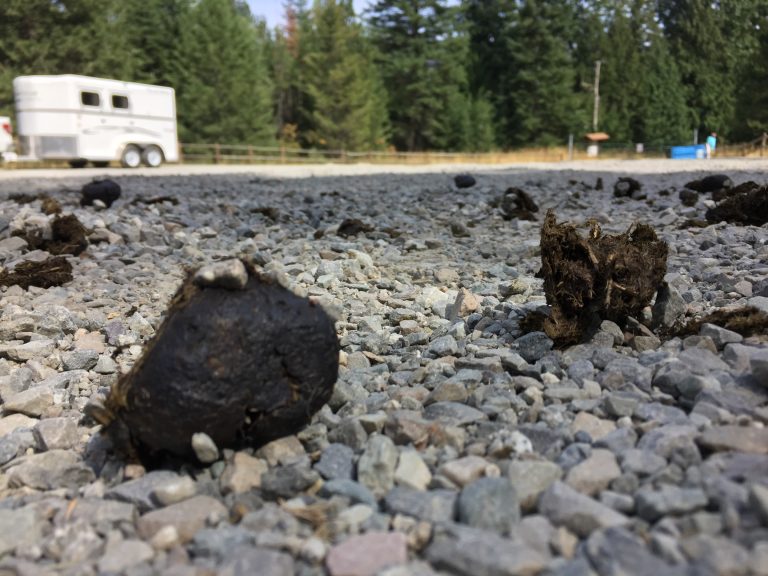
If you’re new to trail riding, it’s easy to view it as just a hillier extension of the arena. It’s just trail riding, right? Not quite. Trail riding offers an escape to beautiful, wild places — but also brings with it a responsibility to keep those places pristine and to respect the experiences of other visitors. Here are a few tips to help you become an upstanding citizen of the trails.
Accept Responsibility
One thing that has always been part of the equestrian ethic is personal responsibility, whether it’s just a day ride or an extended back country adventure.
Before heading onto the trails, learn about the area, gather appropriate equipment (Such as these Essentials for Every Trail Ride) and be prepared to take care of yourself. Whether you’re day riding or camping in backcountry areas for days on end, things can go wrong. Not only could you be in danger, but other people may have to shoulder the challenge of bailing you out of trouble. A well-executed trip is a satisfaction to you and not a burden to others...
Read more here:
https://www.trailmeister.com/responsible-trail-use/?utm_source=MailingList&utm_medium=email&utm_campaign=March+2020+general
Wednesday, March 04, 2020
Alfalfa: Are Hay or Pellets Better Before Riding?
Thehorse.com - Full Article
Research shows feeding horses alfalfa prior to riding can help buffer stomach acid and offers relief for ulcer-prone horses. But are hay or pellets better?
Posted by Clair Thunes, PhD | Feb 24, 2020
Q.I feed my ulcer-prone horse alfalfa before riding, because I’ve heard the calcium in alfalfa works like a big Tums antacid to keep my horse’s stomach from hurting during exercise. I was recently told that alfalfa pellets don’t work and that I should use alfalfa hay or chop instead, because the alfalfa needs to create a “hay mat” in the stomach to keep acid from splashing up into a horse’s esophagus (basically, causing horse heartburn). Is it true that I need to feed alfalfa hay or chop instead of pellets?
A.You are correct. Alfalfa is typically high in calcium, which researchers have shown reduces stomach acidity due to its buffering capacity. In a study at Texas A&M University, 12 horses were assigned to one of two groups: a 1:1 ratio by weight of Bermuda hay and a concentrate feed or of alfalfa hay and the same concentrate feed.
Treatment periods lasted 28 days before horses switched to the other diet with a 21-day washout period between treatments. At the start of the study each horse went through a gastroscopy to determine whether they had gastric ulcers and, if so, their severity. Horses were rescoped after the 28-day treatment periods to determine whether any existing ulcers had improved or worsened or new ulcers had appeared.
The researchers found that ulcer severity scores were significantly lower when horses ate alfalfa hay compared to Bermuda hay...
Read more here:
https://thehorse.com/185191/alfalfa-are-hay-or-pellets-better-before-riding/?utm_medium=Reader+Favorites+enews&utm_source=Newsletter
Research shows feeding horses alfalfa prior to riding can help buffer stomach acid and offers relief for ulcer-prone horses. But are hay or pellets better?
Posted by Clair Thunes, PhD | Feb 24, 2020
Q.I feed my ulcer-prone horse alfalfa before riding, because I’ve heard the calcium in alfalfa works like a big Tums antacid to keep my horse’s stomach from hurting during exercise. I was recently told that alfalfa pellets don’t work and that I should use alfalfa hay or chop instead, because the alfalfa needs to create a “hay mat” in the stomach to keep acid from splashing up into a horse’s esophagus (basically, causing horse heartburn). Is it true that I need to feed alfalfa hay or chop instead of pellets?
A.You are correct. Alfalfa is typically high in calcium, which researchers have shown reduces stomach acidity due to its buffering capacity. In a study at Texas A&M University, 12 horses were assigned to one of two groups: a 1:1 ratio by weight of Bermuda hay and a concentrate feed or of alfalfa hay and the same concentrate feed.
Treatment periods lasted 28 days before horses switched to the other diet with a 21-day washout period between treatments. At the start of the study each horse went through a gastroscopy to determine whether they had gastric ulcers and, if so, their severity. Horses were rescoped after the 28-day treatment periods to determine whether any existing ulcers had improved or worsened or new ulcers had appeared.
The researchers found that ulcer severity scores were significantly lower when horses ate alfalfa hay compared to Bermuda hay...
Read more here:
https://thehorse.com/185191/alfalfa-are-hay-or-pellets-better-before-riding/?utm_medium=Reader+Favorites+enews&utm_source=Newsletter
Tuesday, March 03, 2020
Everything You Need to Know About Equestrian College Scholarships: Part 2
FEI.org - Full Article
2 March 2020
Words by Nadia Aslam
We continue our guide to equestrian college scholarships by looking at how to choose the right school…
In part one of Everything You Need to Know About Equestrian College Scholarships we looked at what these opportunities are and how potential applicants might benefit.
With so much choice, it can be overwhelming to find the right school for you. Those considering this pathway should set aside a specific time to put together a list of potential schools, and from there narrow it down based on what feels right.
Here we look at choosing the right college and course...
Read more here:
https://www.fei.org/stories/equestrian-college-scholarships-guide-2
2 March 2020
Words by Nadia Aslam
We continue our guide to equestrian college scholarships by looking at how to choose the right school…
In part one of Everything You Need to Know About Equestrian College Scholarships we looked at what these opportunities are and how potential applicants might benefit.
With so much choice, it can be overwhelming to find the right school for you. Those considering this pathway should set aside a specific time to put together a list of potential schools, and from there narrow it down based on what feels right.
Here we look at choosing the right college and course...
Read more here:
https://www.fei.org/stories/equestrian-college-scholarships-guide-2
Saturday, February 29, 2020
What’s the Right Heel Height?
 Easycareinc Blog - Full Article
By EasyCare
February 29, 2020
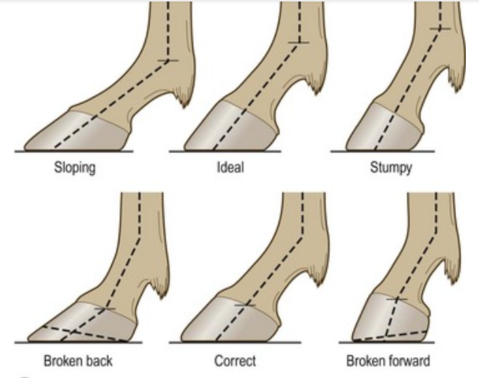
Wouldn’t it make life so much easier if we had a hard-and-fast, always-and-never guide for trimming our horses’ hooves? Unfortunately the hoof can’t be simplified like that. The hoof is an amazing feat of natural engineering that offers an infinite combination of variations within “normal” ranges. To make it even more complicated, our horses can add long-existing pathologies, traumatic injury, compensation for conformational quirks, and other anomalies that change how we care for the hoof.
Likely the one aspect of trimming with the most exceptions to any rule is heel height. Ideal palmar angle is considered to be anywhere from zero to ten degrees. How do we decide what’s right for each horse?...
Read more here:
https://blog.easycareinc.com/whats-the-right-heel-height/
Friday, February 28, 2020
Everything You Need to Know About Equestrian College Scholarships: Part 1
FEI.org - Full Article
27 February 27 2020
Nadia Aslam speaks to colleges, tutors and students about the opportunities available through equestrian-based college scholarships...
Many young riders around the world are potentially sitting on a goldmine without even knowing it, and you could be one of them. I’m not referring to your large four-legged friend who seems to enjoy racking up vet bills, and eating only the most expensive horse food!
I’m referring to YOU!
Allow me to explain. You see, there are universities dotted all over the world that offer scholarships to talented riders, but before you start thinking you need to be an Olympic-level equestrian competitor, with as much experience as Beezie Madden to be eligible - think again!
In most cases, universities are looking at your riding ability in combination with your personality, work ethic, and grades.
We’re going to take a look at the collegiate equestrian opportunities in the US, and speak with coaches and riders at some of the country’s top schools to give you the inside scoop on everything related to equestrian-based college scholarships. In this first article we'll look at what these scholarships are and who they're suitable for, and in part two (scheduled for March 6) we'll look at choosing the right college for you...
Read more here:
https://www.fei.org/stories/equestrian-college-scholarships-guide-1
27 February 27 2020
Nadia Aslam speaks to colleges, tutors and students about the opportunities available through equestrian-based college scholarships...
Many young riders around the world are potentially sitting on a goldmine without even knowing it, and you could be one of them. I’m not referring to your large four-legged friend who seems to enjoy racking up vet bills, and eating only the most expensive horse food!
I’m referring to YOU!
Allow me to explain. You see, there are universities dotted all over the world that offer scholarships to talented riders, but before you start thinking you need to be an Olympic-level equestrian competitor, with as much experience as Beezie Madden to be eligible - think again!
In most cases, universities are looking at your riding ability in combination with your personality, work ethic, and grades.
We’re going to take a look at the collegiate equestrian opportunities in the US, and speak with coaches and riders at some of the country’s top schools to give you the inside scoop on everything related to equestrian-based college scholarships. In this first article we'll look at what these scholarships are and who they're suitable for, and in part two (scheduled for March 6) we'll look at choosing the right college for you...
Read more here:
https://www.fei.org/stories/equestrian-college-scholarships-guide-1
Tuesday, February 25, 2020
Check It Out: Rough Magic: Riding the World's Loneliest Horse Race by Lara Prior-Palmer
 KWIT.org - Full Article and audio
By KELSEY PATTERSON
February 24 2020
This is Kelsey Patterson with the Sioux City Public Library and you’re listening to Check It Out. Today, I’m recommending Rough Magic: Riding the World’s Loneliest Horse Race by Lara Prior-Palmer.
At the tender age of nineteen, Lara Prior-Palmer discovered a website devoted to “the world’s longest, toughest horse race”—an annual competition of endurance and skill that involves dozens of riders racing a series of twenty-five wild ponies across 1,000 kilometers of Mongolian grassland. On a whim, she decided to enter the race. As she boarded a plane to East Asia, she was utterly unprepared for what awaited her...
Read more and listen here:
https://www.kwit.org/post/check-it-out-rough-magic-riding-worlds-loneliest-horse-race-lara-prior-palmer
Sunday, February 23, 2020
DVM Student Pursues Her Passion with Elite Equine Experience in the Middle East
 Purdue.edu - Full Article
Friday, February 21, 2020
For Caitlin Smith, a member of the DVM Class of 2020, the persistent pursuit of the next giant leap took her across the globe to Dubai, where she became the first Purdue veterinary student to participate in the highly selective Dubai Equine Hospital Externship Program. Caitlin stayed in Dubai on the hospital’s campus for the entirety of her externship, which ran from November 30 to December 29, 2019.
The Dubai Equine Hospital is one the largest private-practice equine hospitals in Dubai and is located less than two miles from the Burj Khalifa, the tallest building in the world. There are usually anywhere from 20 to 50 horses at the hospital at a time. The externship program takes one applicant every month from countries all over the globe, and does not take more than two externs from the same country in the same year. The students’ travel and food costs are covered and they are housed in an apartment on the hospital campus. When horses are not in the ICU, each student extern is responsible for conducting all treatments from six in the morning until midnight...
Read more here:
https://www.purdue.edu/vet/news/dvm-student-pursues-her-passion-with-elite-equine-experience-in-the-middle-east.php
Thursday, February 20, 2020
Woman brings mini-service horse onto plane, into first class
NYPost.com - Full Article and video
By Lee Brown
February 17, 2020
This flyer wasn’t horsing around.
A Michigan woman startled other passengers on a recent series of flights when she brought aboard a mini-service horse and traveled with him in first class to California.
Ronica Froese made the journey starting on Feb. 7 with her equine companion Fred, who was specially trained to make the high-altitude trip, according to WXMI.
“I paid an arm and a leg for tickets, but I did so because it was Fred’s first time and I wanted him to be comfortable,” Froese told the station.
“I wanted him to have the most room.”
Froese, who has trained Fred — who dressed in a sleek suit that made him look like a Lucha Libre wrestler — to be a therapy and a service horse, said everyone was “sweet as pie...”
Read and see more here:
https://nypost.com/2020/02/17/woman-brings-mini-service-horse-onto-plane-into-first-class/?utm_source=ActiveCampaign&utm_medium=email&utm_content=Ramen+Noodles+to+Grand+Prix%3A+Justin+Ridgewell+%7C+Busted%21+Stewards+on+Patrol+%7C+Qatar+Cannabis+Sabotage&utm_campaign=HS-Enewsletter2019-Wednesday-Feb+19%2C+2020
By Lee Brown
February 17, 2020
This flyer wasn’t horsing around.
A Michigan woman startled other passengers on a recent series of flights when she brought aboard a mini-service horse and traveled with him in first class to California.
Ronica Froese made the journey starting on Feb. 7 with her equine companion Fred, who was specially trained to make the high-altitude trip, according to WXMI.
“I paid an arm and a leg for tickets, but I did so because it was Fred’s first time and I wanted him to be comfortable,” Froese told the station.
“I wanted him to have the most room.”
Froese, who has trained Fred — who dressed in a sleek suit that made him look like a Lucha Libre wrestler — to be a therapy and a service horse, said everyone was “sweet as pie...”
Read and see more here:
https://nypost.com/2020/02/17/woman-brings-mini-service-horse-onto-plane-into-first-class/?utm_source=ActiveCampaign&utm_medium=email&utm_content=Ramen+Noodles+to+Grand+Prix%3A+Justin+Ridgewell+%7C+Busted%21+Stewards+on+Patrol+%7C+Qatar+Cannabis+Sabotage&utm_campaign=HS-Enewsletter2019-Wednesday-Feb+19%2C+2020
Friday, February 14, 2020
What's in Your First Aid Kit?
 Trialmeister.com - Full Article
January 31, 2020
Your First Aid Kit
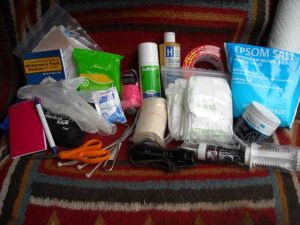
Are you prepared to be a vet long enough to manage a minor injury or stabilize a more serious wound? In such situations a well-stocked and accessible emergency first-aid kit is indispensable.
Be prepared to stabilize any injuries your horse, or mule, incurs until your veterinarian can get there by maintaining a conveniently located equine first-aid kit. I have 3 separate first aid kits: Barn kit – Trailer kit – Trail kit; Each kit is stocked with the items I’ll need until the vet arrives. Time is critical when an accident happens and you don’t want to waste time hunting around for bandages, thermometer, or other necessities...
Read more here:
https://www.trailmeister.com/your-first-aid-kit/?utm_source=MailingList&utm_medium=email&utm_campaign=February+2020+general
The truth about Rider Fit
MelNewton.com - Full Article
February 5, 2020 Posted by Melinda under Uncategorized
No Comments
Print Friendly, PDF & Email
Endurance Horse Podcast asked me to do a short piece on endurance riding and rider fitness. This blog post is meant as a companion to *my words in the podcast episode “Rider Health – Part 2.” Check it out, and if you found your way here through the podcast, welcome.
*I always always ALWAYS feel so stupid doing a recording. I try to console myself that everyone feels stupid hearing their voice coming back at them, but I can’t help feeling that I’m especially bad at it. It’s definitely not my normal chosen manner of communication, but if me stepping outside of my comfort zone can help others, I’m willing to do it. This is the third time I’ve been on the endurance horse podcast. If you are interested, I spoke about my experience doing the ride and tie championships with a mini horse about a year ago, and read an excerpt from my book, “Go Ride Far,” in the fall.
Here’s the truth about endurance riding.
You don’t have to be an athlete to complete 100 or even 50 miles on horseback.
Yes, finishing an endurance ride accomplishment, but it isn’t necessarily an athletic accomplishment for the rider.
Before you get all mad at me for saying this and throwing stuff at your computer, let’s look at the GOOD side of this.
You DON’T have to be an athlete to get on your horse, train for an endurance ride, have a TON OF FUN, and go out and do COOL SH*T ON YOUR HORSE. YAY!!!!!! So don’t put endurance off for some future time when you will “be in better shape” and instead just go out and do the thing.
But let’s say you aren’t so good at re-framing and are stuck on what I said. You don’t have to be an athlete to ride 12 or 24 hours? WHAT CAN YOU POSSIBLY MEAN?
I didn’t believe it for a long time either. “The horse does all the work!” people would tell me when I talked about doing equine endurance. I stared daggers at them, wondering if these people, who I doubted could even run around the block, could possibly imagine what it felt like to wrestle and console a 1000 pound animal forward (and sometimes STOP BEING SO FORWARD) for 12+ hours...
Read more here:
https://melnewton.com/2020/the-truth-about-rider-fit/
February 5, 2020 Posted by Melinda under Uncategorized
No Comments
Print Friendly, PDF & Email
Endurance Horse Podcast asked me to do a short piece on endurance riding and rider fitness. This blog post is meant as a companion to *my words in the podcast episode “Rider Health – Part 2.” Check it out, and if you found your way here through the podcast, welcome.
*I always always ALWAYS feel so stupid doing a recording. I try to console myself that everyone feels stupid hearing their voice coming back at them, but I can’t help feeling that I’m especially bad at it. It’s definitely not my normal chosen manner of communication, but if me stepping outside of my comfort zone can help others, I’m willing to do it. This is the third time I’ve been on the endurance horse podcast. If you are interested, I spoke about my experience doing the ride and tie championships with a mini horse about a year ago, and read an excerpt from my book, “Go Ride Far,” in the fall.
Here’s the truth about endurance riding.
You don’t have to be an athlete to complete 100 or even 50 miles on horseback.
Yes, finishing an endurance ride accomplishment, but it isn’t necessarily an athletic accomplishment for the rider.
Before you get all mad at me for saying this and throwing stuff at your computer, let’s look at the GOOD side of this.
You DON’T have to be an athlete to get on your horse, train for an endurance ride, have a TON OF FUN, and go out and do COOL SH*T ON YOUR HORSE. YAY!!!!!! So don’t put endurance off for some future time when you will “be in better shape” and instead just go out and do the thing.
But let’s say you aren’t so good at re-framing and are stuck on what I said. You don’t have to be an athlete to ride 12 or 24 hours? WHAT CAN YOU POSSIBLY MEAN?
I didn’t believe it for a long time either. “The horse does all the work!” people would tell me when I talked about doing equine endurance. I stared daggers at them, wondering if these people, who I doubted could even run around the block, could possibly imagine what it felt like to wrestle and console a 1000 pound animal forward (and sometimes STOP BEING SO FORWARD) for 12+ hours...
Read more here:
https://melnewton.com/2020/the-truth-about-rider-fit/
Wednesday, February 12, 2020
New Diet Fad Has People Buying $500 Salt Licks Designed for Horses
HorseNetwork.com - Full Story
LIZ BROWN
1 WEEK AGO | Satire
Gwyneth Paltrow is just the latest celebrity to sing the praises of a new health fad sweeping Hollywood that’s inspired by the eating habits of horses.
Dubbed the ‘neigh diet’ —its motto is to ‘just say neigh’ to meat and processed foods—the eating regime promotes plant-based dishes, frequent ‘grazing’ in lieu of three proper meals, and free choice salt and minerals from a salt lick that costs $500 at premium health food stores.
In a post on her GOOP site, Paltrow encourages her followers to embrace the health properties of oats and alfalfa and smaller, more frequent meals. She also promotes consuming salt and minerals throughout the day, in much the same way that a horse does.
Adherents swear the new diet has left them feeling energized and melted away fat, giving them a lean, lithe look, like that of a racehorse...
Read more here:
https://horsenetwork.com/2020/02/new-diet-fad-has-people-buying-500-salt-licks-designed-for-horses/?utm_source=MASTER&utm_campaign=45af73c00e-HN_2019_1_30_2020_COPY_01&utm_medium=email&utm_term=0_5694ca6b0c-45af73c00e-84641243&goal=0_5694ca6b0c-45af73c00e-84641243&mc_cid=45af73c00e&mc_eid=b3c9897994
LIZ BROWN
1 WEEK AGO | Satire
Gwyneth Paltrow is just the latest celebrity to sing the praises of a new health fad sweeping Hollywood that’s inspired by the eating habits of horses.
Dubbed the ‘neigh diet’ —its motto is to ‘just say neigh’ to meat and processed foods—the eating regime promotes plant-based dishes, frequent ‘grazing’ in lieu of three proper meals, and free choice salt and minerals from a salt lick that costs $500 at premium health food stores.
In a post on her GOOP site, Paltrow encourages her followers to embrace the health properties of oats and alfalfa and smaller, more frequent meals. She also promotes consuming salt and minerals throughout the day, in much the same way that a horse does.
Adherents swear the new diet has left them feeling energized and melted away fat, giving them a lean, lithe look, like that of a racehorse...
Read more here:
https://horsenetwork.com/2020/02/new-diet-fad-has-people-buying-500-salt-licks-designed-for-horses/?utm_source=MASTER&utm_campaign=45af73c00e-HN_2019_1_30_2020_COPY_01&utm_medium=email&utm_term=0_5694ca6b0c-45af73c00e-84641243&goal=0_5694ca6b0c-45af73c00e-84641243&mc_cid=45af73c00e&mc_eid=b3c9897994
Monday, February 10, 2020
Oscars 2020: The Greatest Horse Films of All Time
 FEI.org - Full Article
10 February 2020
Text by Katie Roebuck
A look at the equine heroes of the movie screen
There were no horses on the red carpet at the Oscars over theweekend, with just the humans of Hollywood in line for the movie industry's top awards.
But that's not to say that our equine friends can't produce box office magic. Films which feature a horse as the star are always memorable. These films are emotive tales of triumph over adversity. No horse has ever won an Oscar, but in our opinion, these movie suggestions are some of the best...
Read more here:
https://www.fei.org/stories/greatest-horse-films
Wednesday, February 05, 2020
Give Colic the Cold Shoulder This Winter
KER.com - Full Article
January 8, 2020
By Kentucky Equine Research Staff
Colic can strike at any time of the day, month, or year, but impaction colic occurs more frequently in winter. Decreased water intake usually carries the blame for these impactions, defined as a blockage in the large colon caused by any feedstuff undergoing digestion, though other management factors also contribute to the problem.
“Horses require approximately 5 to 15 gallons (20-55 liters) of water per day. Signs of inadequate water intake include production of dry, sparse feces and weight loss,” described Catherine Whitehouse, M.S., a nutrition advisor for Kentucky Equine Research.
Forage fermentation requires voluminous water, which is why the large colon and cecum are referred to as fermentation vats...
Read more here:
https://ker.com/equinews/give-colic-the-cold-shoulder-this-winter/?partner=ker&utm_source=KER+Newsletter&utm_campaign=424a4a11e1-KER_Equinews_020520&utm_medium=email&utm_term=0_0d95781dfc-424a4a11e1-11166
January 8, 2020
By Kentucky Equine Research Staff
Colic can strike at any time of the day, month, or year, but impaction colic occurs more frequently in winter. Decreased water intake usually carries the blame for these impactions, defined as a blockage in the large colon caused by any feedstuff undergoing digestion, though other management factors also contribute to the problem.
“Horses require approximately 5 to 15 gallons (20-55 liters) of water per day. Signs of inadequate water intake include production of dry, sparse feces and weight loss,” described Catherine Whitehouse, M.S., a nutrition advisor for Kentucky Equine Research.
Forage fermentation requires voluminous water, which is why the large colon and cecum are referred to as fermentation vats...
Read more here:
https://ker.com/equinews/give-colic-the-cold-shoulder-this-winter/?partner=ker&utm_source=KER+Newsletter&utm_campaign=424a4a11e1-KER_Equinews_020520&utm_medium=email&utm_term=0_0d95781dfc-424a4a11e1-11166
Sunday, February 02, 2020
Pros and Cons of Feeding Horses Beet Pulp
Thehorse.com - Full Article
An equine nutritionist answers common questions about beet pulp.
Posted by Clair Thunes, PhD | Feb 19, 2018
Q. I have some questions about feeding beet pulp.
• Is it a forage or concentrate? Should it have added molasses or should it be plain?
• Should it be in flake- or pellet-form?
• What’s the correct water to beet pulp ratio?
• How much should a horse eat per pound of body weight, and do you measure it with the beet pulp soaked or un-soaked?
• What supplements should be included if any to ensure balanced nutrition?
I’d appreciate any input you have on the pros and cons of feeding beet pulp.
Read the answer at:
https://thehorse.com/18818/pros-and-cons-of-feeding-horses-beet-pulp/?utm_medium=Reader+Favorites+enews&utm_source=Newsletter
An equine nutritionist answers common questions about beet pulp.
Posted by Clair Thunes, PhD | Feb 19, 2018
Q. I have some questions about feeding beet pulp.
• Is it a forage or concentrate? Should it have added molasses or should it be plain?
• Should it be in flake- or pellet-form?
• What’s the correct water to beet pulp ratio?
• How much should a horse eat per pound of body weight, and do you measure it with the beet pulp soaked or un-soaked?
• What supplements should be included if any to ensure balanced nutrition?
I’d appreciate any input you have on the pros and cons of feeding beet pulp.
Read the answer at:
https://thehorse.com/18818/pros-and-cons-of-feeding-horses-beet-pulp/?utm_medium=Reader+Favorites+enews&utm_source=Newsletter
Subscribe to:
Posts (Atom)