
Thehorse.com - Listen
Horses with Cushing’s have a harder time regulating their body temperature and often sport longer coats. Dr. Jeanette Mero has recommendations for keeping those horses comfortable.
Posted by Jeanette "Jay" Mero, DVM | Jul 24, 2020
Listen:
https://thehorse.com/190818/keeping-a-ppid-horse-cool-during-the-summer/
Saturday, July 25, 2020


Friday, July 24, 2020
Third Generation Suffragist Rides for Women's Equality
 HorseNetwork.com - Full Article
Lisa DeMasi
July 23, 2020
A long rider, according to the Long Rider’s Guild, is someone who has ridden more than 1,000 continuous miles on a single equestrian journey.
Bernice Ende has ridden over 30,000 miles on horseback since 2005, by herself, across the U.S. and Canada. Her longest ride—traveling coast-to-coast and back, dating from 2014–2016—covered an epic 8,000 miles.
I first encountered the “Lady Long Rider” on the page.
As a book lover with a proclivity to read about women who have endeavored and achieved the impossible, I was drawn to her book, Lady Long Rider: Alone Across America on Horseback. I quickly learned at the root of her long rides pursuit is the sentiment that her freedom to ride was won by the courageous suffragists, who over a hundred years ago, never gave up their fight for equality...
Read more here:
https://horsenetwork.com/2020/07/third-generation-suffragist-rides-for-womens-equality/
Monday, July 20, 2020
Trail First-Aid for Horses
HorseIllustrated.com - Full Article
Know what to do if your horse gets injured on the trail.
By Nancy S. Loving, DVM
March 1 2012
Some of the most memorable rides are those enjoyed on a quiet, remote trail. Nothing could be finer. Without a worry in sight, your mind roams free as you absorb the beauty of the day and connect with your horse. And then, disaster strikes.
Emergency Plan
When you are faced with a crisis out on the trail, your prime objective is to execute a quick fix until you can get in touch with a vet. Before you head off on any ride, make sure someone knows what trail you’ll be on, and don’t deviate from this plan. Have a charged cell phone in hand, a GPS unit if possible, clothing for all kinds of weather and a well-stocked first-aid kit. Here are some common scenarios you might encounter on the trail.
Bleeding Laceration
Trails are full of obstacles that threaten to inflict cuts and scrapes as your horse fails to clear sharp branches or rocks while negotiating tough terrain or crossing creeks. If this happens, dismount and assess the damages when it is safe to do so...
Read more here:
https://www.horseillustrated.com/horse-health-trail-riding-first-aid?utm_source=newsletter&utm_medium=email&utm_campaign=hi_rnl_18July2020
Know what to do if your horse gets injured on the trail.
By Nancy S. Loving, DVM
March 1 2012
Some of the most memorable rides are those enjoyed on a quiet, remote trail. Nothing could be finer. Without a worry in sight, your mind roams free as you absorb the beauty of the day and connect with your horse. And then, disaster strikes.
Emergency Plan
When you are faced with a crisis out on the trail, your prime objective is to execute a quick fix until you can get in touch with a vet. Before you head off on any ride, make sure someone knows what trail you’ll be on, and don’t deviate from this plan. Have a charged cell phone in hand, a GPS unit if possible, clothing for all kinds of weather and a well-stocked first-aid kit. Here are some common scenarios you might encounter on the trail.
Bleeding Laceration
Trails are full of obstacles that threaten to inflict cuts and scrapes as your horse fails to clear sharp branches or rocks while negotiating tough terrain or crossing creeks. If this happens, dismount and assess the damages when it is safe to do so...
Read more here:
https://www.horseillustrated.com/horse-health-trail-riding-first-aid?utm_source=newsletter&utm_medium=email&utm_campaign=hi_rnl_18July2020
Sunday, July 19, 2020
A Honey of a Wound Treatment
 HorseNetwork.com - Full Article
Dr. David Ramey
July 13, 2020
There’s something really sweet that you might want to consider putting on your horse’s wound. Literally: sweet. You may have some in your kitchen—honey.
Honey is being investigated for its medicinal uses. It’s been used for a long time. There are reports of honey being used as medicine in ancient China. The Egyptians used it. Africans folk healers from Mali to Ghana used it (and still do). In fact, honey has drawn so much curiosity for its medicinal properties that there’s an entire honey research unit at the University of Waikato in New Zealand.
I’m usually not very impressed by the, “This has been around for thousands of years,” line of reasoning when it comes to therapies. (I’m particularly unimpressed when it’s stated when it’s not true, such as with modern acupuncture, but that’s another story).
But here’s something really cool. When archaeologists were digging up ancient tombs in Egypt, you’ll never guess what they found (besides dust and statues and such). Honey. In sealed pots.Honey that was thousands of years old. Incredibly, the honey was completely preserved and unspoiled, even after all that time...
Read more here:
https://horsenetwork.com/2020/07/a-honey-of-a-wound-treatment/?utm_source=Horse+Network+Email+List&utm_campaign=a662d20035-HN_2020_7_13_2020&utm_medium=email&utm_term=0_5694ca6b0c-a662d20035-84641243&goal=0_5694ca6b0c-a662d20035-84641243&mc_cid=a662d20035&mc_eid=b3c9897994
Friday, July 17, 2020
Chief Joseph 100 Mile Challenge
 RunSignup.com
Mon July 20 - Thu December 31, 2020
Anywhere, US
PLACE
virtual
Anywhere
Anywhere, ID US 83660
DESCRIPTION
The 2020 Chief Joseph Trail Ride was canceled thanks to COVID. We would have returned to Musselshell Meadow in August, where we ended in 2019, and ridden on to Lolo Pass, Lolo Trail and Motorway, Clearwater National Forest, Packers Meadows to Wendover Camp. Since we can't ride it physically, we CAN ride it virtually. And we have the Appaloosa Horse Club's blessing as we keep this ride alive in 2020. We can ride with friends in 2020 any place on any trails that we want, have some fun and raise some funds for the Chief Joseph Foundation. So saddle your horse or mule and ride, hook up your cart and drive, or put on your walking shoes and lead 100 miles. Since the idea is to get out and have fun you can walk, run or ride a bike too! Ride as many miles in a day as you like, anywhere, anytime. For this virtual event you can ride any horse or mule. Submit your mileage online. At the end of 100 miles you'll receive a cool printed bandana created especially for this event to celebrate your journey with your horse. We are trusting you to track your miles and all miles are on your honor. If you say you went 5 miles we believe you. It's easy to add miles online and track your progress, and you'll receive email links for this. You can register anytime, just allow yourself enough time to complete the challenge. 100 miles is so doable, ride a mile day, ride 3 days a week and add your miles, ride 20 times 5 miles each = FINISHED! Or however you would like to do it at your own pace of course! We'll begin collecting miles on July 20, this would have been our 2020 start date. It was going to be a 100 day challenge but that has been changed to allow more time as school will begin in August for many, cutting into riding time for a lot of people. The challenge will end Dec 31, 2020.
In addition, $5 of every entry will be donated to the Chief Joseph Foundation. Normally at the ride they have a raffle and other fundraisers. Last year Kirk Knowlton and Kristen Reiter raffled a saddle for the Foundation as a fundraiser. Let's help the kids of the Chief Joe Foundation and hope we all return to Musselshell next year to really ride!!
This event is a test run for a VIRTUAL 1300 Mile Challenge on Chief Joseph trail in the future. We have a LOT of details to work out so it can benefit future Chief Joseph Rides.
For more info, see
https://runsignup.com/Race/ID/Anywhere/ChiefJoseph100MileChallenge
Tuesday, July 14, 2020
Tying Up and Hydration: How to Get a Horse to Drink
Thehorse.com - Full Article
A reader’s horse who doesn’t like to drink when traveling recently tied up while running cross-country at an event. Our nutritionist offers advice to get the horse to hydrate in the future.
Posted by Clair Thunes, PhD | Jul 13, 2020
Q.Recently my horse tied-up while running cross-country. This has happened before but not for well over a year. He’s not a good drinker while traveling and barely drank 15 gallons over three days, which actually is more than normal when away from home. My vet thinks the tying-up is most likely related to hydration. What can I do to get him drinking more?
A.Having a horse that won’t drink while traveling and staying away from home is both frustrating and concerning. It can be near impossible to make a horse drink, but the good news is there are some things you can try...
Read more here:
https://thehorse.com/181199/tying-up-and-hydration-how-to-get-a-horse-to-drink/?utm_medium=Nutrition+enews&utm_source=Newsletter
A reader’s horse who doesn’t like to drink when traveling recently tied up while running cross-country at an event. Our nutritionist offers advice to get the horse to hydrate in the future.
Posted by Clair Thunes, PhD | Jul 13, 2020
Q.Recently my horse tied-up while running cross-country. This has happened before but not for well over a year. He’s not a good drinker while traveling and barely drank 15 gallons over three days, which actually is more than normal when away from home. My vet thinks the tying-up is most likely related to hydration. What can I do to get him drinking more?
A.Having a horse that won’t drink while traveling and staying away from home is both frustrating and concerning. It can be near impossible to make a horse drink, but the good news is there are some things you can try...
Read more here:
https://thehorse.com/181199/tying-up-and-hydration-how-to-get-a-horse-to-drink/?utm_medium=Nutrition+enews&utm_source=Newsletter
Monday, July 13, 2020
What We Learn When Humans Race Against Horses
OutsideOnline.com - Full Article
The hotter it is, the closer we come to the ever elusive goal of besting the horse—which supports the evolutionary "born to run" hypothesis
Alex Hutchinson
Jul 12, 2020
Back in the summer of 1980, the barkeep of the Neuadd Arms Hotel in the Welsh town of Llanwrtyd Wells overheard two men arguing about one of those hypothetical questions that inevitably come up after a few pints of cwrw. Who would cover a long distance over mountainous terrain more quickly, they wondered: a human or a horse? The bartender, a man named Gordon Green, was intrigued—and the event he set up, a 22-mile challenge known as the Man Versus Horse Marathon, has been running annually ever since.
The answer, it turns out, is that horses are pretty clearly faster, at least under the conditions that Green created. Only twice in the race’s history has a human triumphed. The first time was in 2004, when Huw Lobb—a former college teammate of mine, as it happens—finished in 2:05:19 to edge out a horse named Kay Bee Jay by just over two minutes. Lobb was no slouch: he was a cross-country ace who ran a 2:14 marathon the following year. He collected a cool 25,000 British pounds (about $45,000 at the time), because the pot had been growing by 1,000 pounds a year since the race’s inception, waiting for the first human winner.
(Aside: that year’s edition of the race also featured the unveiling of a memorial to Screaming Lord Sutch, the founder of Britain’s Monster Raving Loony Party, who was the event’s official starter until his death in 1999. Now you know.)
Lobb’s victory came on a hot day, as did Florian Holzinger’s subsequent victory in 2007—a significant detail, according to a new study in the journal Experimental Physiology from Lewis Halsey of the University of Roehampton in Britain and Caleb Bryce of the Botswana Predator Conservation Trust. Halsey and Bryce gathered historical data from three endurance races that pit humans against horses, including the Man Versus Horse Marathon, to test the idea that humans are uniquely adapted to run for long distances in hot weather...
Read more here:
https://www.outsideonline.com/2415390/humans-vs-horses-racing-heat-study
The hotter it is, the closer we come to the ever elusive goal of besting the horse—which supports the evolutionary "born to run" hypothesis
Alex Hutchinson
Jul 12, 2020
Back in the summer of 1980, the barkeep of the Neuadd Arms Hotel in the Welsh town of Llanwrtyd Wells overheard two men arguing about one of those hypothetical questions that inevitably come up after a few pints of cwrw. Who would cover a long distance over mountainous terrain more quickly, they wondered: a human or a horse? The bartender, a man named Gordon Green, was intrigued—and the event he set up, a 22-mile challenge known as the Man Versus Horse Marathon, has been running annually ever since.
The answer, it turns out, is that horses are pretty clearly faster, at least under the conditions that Green created. Only twice in the race’s history has a human triumphed. The first time was in 2004, when Huw Lobb—a former college teammate of mine, as it happens—finished in 2:05:19 to edge out a horse named Kay Bee Jay by just over two minutes. Lobb was no slouch: he was a cross-country ace who ran a 2:14 marathon the following year. He collected a cool 25,000 British pounds (about $45,000 at the time), because the pot had been growing by 1,000 pounds a year since the race’s inception, waiting for the first human winner.
(Aside: that year’s edition of the race also featured the unveiling of a memorial to Screaming Lord Sutch, the founder of Britain’s Monster Raving Loony Party, who was the event’s official starter until his death in 1999. Now you know.)
Lobb’s victory came on a hot day, as did Florian Holzinger’s subsequent victory in 2007—a significant detail, according to a new study in the journal Experimental Physiology from Lewis Halsey of the University of Roehampton in Britain and Caleb Bryce of the Botswana Predator Conservation Trust. Halsey and Bryce gathered historical data from three endurance races that pit humans against horses, including the Man Versus Horse Marathon, to test the idea that humans are uniquely adapted to run for long distances in hot weather...
Read more here:
https://www.outsideonline.com/2415390/humans-vs-horses-racing-heat-study
THE STYLE EDIT Interviews International Endurance Horse Rider Amy McAuley
 TheStyleEdit.com - Full Article
THE STYLE EDIT Editor Jenny Taggart talks childhood, training, travel and winning medals with International Endurance horse rider Amy McAuley from County Meath, Ireland
May 2020
JENNY TAGGART
THE STYLE EDIT: Would you say that a career in Equestrianism was always written in the stars for you?
I always hoped horses would be a major aspect of my life, as they are of strong significance on both sides of my family, but truthfully a career in Equestrianism was something I didn’t expect. For as long as I can remember, I have attended the RDS Dublin Horse Show every summer with my family and from a young age the sight of the top, world class horse-rider combinations competing on such technical courses was a major catalyst of inspiration for me. However, my parents were firm believers in prioritising academics and often reminded me it would be best to maintain horse riding as a hobby, which is what I did for many years, until Endurance provided me with the opportunity to balance both with ease.
TSE: Would you be so kind as to explain exactly what Endurance Racing is and how it differs from other forms of horse-racing?
Endurance Racing is a long-distance horse race, ranging from distances of 80km to 160km in any given day, across differing terrains depending on the country of context. For example, we race across the desert in the United Arab Emirates.
The races are comprised of a number of loops depending on its length. For example, a typical 120km race would be split into four loops, descending in distance, usually 40km, 36km, 28km and 16km. Between each loop there are compulsory vet checks for the horses, where they are analysed on attributes such as heart rate, soundness in gait and hydration before they are permitted to proceed to the next loop. The most technical aspect of the sport, is the overall time taken between finishing the loop to presenting the horse at the vet check, this is deemed the recovery time and determines the position you will depart on the next loop, usually influencing your overall fate in a race...
Read more here:
https://www.thestyleedit.com/the-style-edit-interviews-international-endurance-horse-rider-amy-mcauley/
Electrolyte Problems in Endurance Horses
July 12 2020
Electrolyte problems in the heat are directly proportional to sweat loss, so it makes perfect sense that horses working long periods are at greatest risk. This puts the spotlight on endurance horses.
Equine sweat is a concentrated electrolyte solution. Chloride is the most abundant electrolyte in sweat, followed by sodium, then potassium, with much smaller amounts of calcium and magnesium. The daily requirement for sodium can double with just one hour of low level sweating.
Even at low rates of sweating the horse will lose over a gallon of fluid per hour - and up to 4 gallons per hour with heavy sweating. That's a lot of fluid! The first consequence of this is dehydration. Since sodium lost in the sweat is needed to hold water in the body tissues, drinking water alone is not enough to correct the dehydration. Even mild dehydration has a major impact on the ability to perform.
Electrolyte losses triggered by exercise and sweating can produce a variety of temporary signs which respond to hydration and electrolyte replacement. Normal levels are required for regular heart rhythm, intestinal motility, coordinated movements of involuntary muscles like the diaphragm, skeletal muscle contraction and relaxation and the regulation of nerve firing.
Endurance horses show some typical changes in their blood electrolyte profiles. Low chloride is common. As above, chloride is very high in sweat. They do not have good stores of chloride in the tissues to replace what is lost in sweat. Low potassium is more common than low sodium. This is because horses can pull sodium from the tissues surrounding the body's cells to keep blood levels up. The kidney also conserves sodium by reducing sodium in the urine and replacing it with potassium.
Low potassium interferes with normal contraction of intestinal muscles, skeletal muscles and the heart. The loss of chloride also worsens these changes. In the body, negatively charged chloride and bicarbonate normally balance out positive charges. When chloride becomes too low, more bicarbonate is produced. The bicarbonate then binds up "free"/charged calcium and magnesium ions which in turn disrupts muscle and nerve activity.
The bottom line of course is that successful endurance activity requires careful attention to electrolyte intake. Hay/grass is an excellent source of potassium but chloride levels vary and sodium is extremely low. Plain salt (sodium chloride) is the first consideration, feeding 2 oz/day along with generous forage.
If the horse is on a ride or working more than 1 to 2 hours/day, add a balanced electrolyte replacement with roughly a 4:2:1 ratio of chloride:sodium:potassium. In other words, twice as much sodium as potassium and four times as much chloride as potassium. Once you find a balanced product, calculate a dose that provides 10 to 12 grams of sodium. You need one such dose for every hour worked over the 1 to 2 hour mark.
The above program is designed to prevent significant electrolyte losses. If the horse has already been working heavily without electrolyte support, a different formula could be beneficial in targeting the existing situation first. Look for salt (sodium chloride) to be about double the level of potassium with magnesium about 1.5% and calcium 3%.
Correctly supplementing to provide optimal electrolyte support takes a little effort, but is well worth it.
Uckele Health & Nutrition, maker of CocoSoya®, offers formulas that provide Electrolyte support.
Pro Lyte pellets provide highly concentrated, low sugar electrolyte for everyday use. Add to feed or water for fast results to maintain the balance and flow of vital body fluids and the healthy function of the muscles and circulatory system. Palatable apple-flavored source of Sodium, Chloride, Potassium, and Magnesium for use pre- and post-event.
Lyte Now is a convenient, full spectrum electrolyte paste designed to help replenish major electrolytes and trace minerals lost in sweat for horses under stress from summer heat, hard work, training, and physical activity. Supports proper mineral balance to maintain the circulation of vital body fluids and the transmission of nerve impulses pre- or post-event to promote an optimal competitive edge.
About Dr. Kellon
Dr. Eleanor Kellon, staff veterinary specialist for Uckele Health & Nutrition, is an established authority in the field of equine nutrition for over 30 years, and a founding member and leader of the Equine Cushings and Insulin Resistance (ECIR) group, whose mission is to improve the welfare of horses with metabolic disorders via integration of research and real-life clinical experience. Prevention of laminitis is the ultimate goal. www.ecirhorse.org
Uckele Health & Nutrition, maker of CocoSoya, is an innovation-driven health company committed to making people and their animals healthier. On the leading edge of nutritional science and technology for over 50 years, Uckele formulates and manufactures a full spectrum of quality nutritional supplements incorporating the latest nutritional advances. www.uckele.com.
Wednesday, July 08, 2020
Endurance riding is not for the fainthearted
ABC.net.au - Listen
On Breakfast with Sally Bryant
Forty five years ago, Allan Caslick saw a young woman working a horse and asked her what she was in training for; she replied she was an endurance rider and he was intrigued.
This weekend, his committee will host riders of all ages at The Rock, near Wagga in the Riverina.
Allan says there is something for everyone in the sport. The challenge of training a horse, the ability to pace yourself according to your fitness and ability, and the satisfaction of developing a true understanding and bond with your horse.
"It's all about finishing the event," he says.
"It's about finishing in your own time, with your horse fit and sound. That's where the satisfaction lies."
Duration: 11min 28sec
Broadcast: Wed 8 Jul 2020, 6:35am
Listen:
On Breakfast with Sally Bryant
Forty five years ago, Allan Caslick saw a young woman working a horse and asked her what she was in training for; she replied she was an endurance rider and he was intrigued.
This weekend, his committee will host riders of all ages at The Rock, near Wagga in the Riverina.
Allan says there is something for everyone in the sport. The challenge of training a horse, the ability to pace yourself according to your fitness and ability, and the satisfaction of developing a true understanding and bond with your horse.
"It's all about finishing the event," he says.
"It's about finishing in your own time, with your horse fit and sound. That's where the satisfaction lies."
Duration: 11min 28sec
Broadcast: Wed 8 Jul 2020, 6:35am
Listen:
Wednesday, July 01, 2020
In Case of Crash & Burn: Emergency First Aid For Riders
Horse-canada.com - Full Article
We all assume risk when we ride and work around our horses. But would you know what to do if the worst happens and someone, including yourself, falls off?
By: Kim Izzo | June 16, 2020
According to statistics, fractures account for 25-28% of all horse-related injuries in the US (we don’t have any recent Canadian stats, unfortunately), and concussions account for 9.5% of all show jumping injuries. Perhaps more surprising was that less experience meant a greater chance for falls and injuries, but the most experienced riders – and professionals – had the highest incidences of severe injury. Sadly, there was also a correlation between experience and lack of wearing a helmet; those who were professional horse trainers were least likely to wear a helmet when mounted.
Even if you’re a pleasure rider who just loves to go out on the trail for an hour or more, you should know what to do in an emergency. To help, we’ve created a list of rider survival tips that hopefully you’ll never need...
Read more here:
https://horse-canada.com/magazine/rider-health/crash-burn-emergency-first-aid-riders/?utm_source=ActiveCampaign&utm_medium=email&utm_content=Carrot+Stretches+%7C+Riding+Camps+in+Limbo+%7C+First+Aid+for+Riders+%7C+No+Chicken+For+You&utm_campaign=HC_Enewsletter2019-Wednesday+June+17%2C+2020
We all assume risk when we ride and work around our horses. But would you know what to do if the worst happens and someone, including yourself, falls off?
By: Kim Izzo | June 16, 2020
According to statistics, fractures account for 25-28% of all horse-related injuries in the US (we don’t have any recent Canadian stats, unfortunately), and concussions account for 9.5% of all show jumping injuries. Perhaps more surprising was that less experience meant a greater chance for falls and injuries, but the most experienced riders – and professionals – had the highest incidences of severe injury. Sadly, there was also a correlation between experience and lack of wearing a helmet; those who were professional horse trainers were least likely to wear a helmet when mounted.
Even if you’re a pleasure rider who just loves to go out on the trail for an hour or more, you should know what to do in an emergency. To help, we’ve created a list of rider survival tips that hopefully you’ll never need...
Read more here:
https://horse-canada.com/magazine/rider-health/crash-burn-emergency-first-aid-riders/?utm_source=ActiveCampaign&utm_medium=email&utm_content=Carrot+Stretches+%7C+Riding+Camps+in+Limbo+%7C+First+Aid+for+Riders+%7C+No+Chicken+For+You&utm_campaign=HC_Enewsletter2019-Wednesday+June+17%2C+2020
Tuesday, June 30, 2020
Not Your Average Equine Ulcer
TheHorse.com - Full Artice
Gastric disease develops most commonly in the squamous region, when stomach acid splashes onto that vulnerable area of tissue. Why it develops in the glandular region—and how to prevent and treat it—is less clear. Five researchers discuss what we do know about equine glandular gastric disease.
Posted by Alexandra Beckstett, The Horse Managing Editor | Jun 28, 2020
What scientists are learning about the recently defined equine glandular gastric disease
Gastric ulcers are nearly ubiquitous in our domestic equine population. We know they plague anywhere from 50% to 90% of horses, particularly performance horses. But not all ulcers are created equal. In the past few years researchers officially split gastric disease into two categories: squamous, affecting the upper portion of the horse’s stomach, and glandular, a nonulcerative condition affecting the lower. Gastric disease develops most commonly in the squamous region, when stomach acid splashes onto that vulnerable area of tissue. Why it develops in the glandular region—and how to prevent and treat it—is less clear...
Read more here:
https://thehorse.com/173644/not-your-average-equine-ulcer/?utm_medium=Nutrition+enews&utm_source=Newsletter
Gastric disease develops most commonly in the squamous region, when stomach acid splashes onto that vulnerable area of tissue. Why it develops in the glandular region—and how to prevent and treat it—is less clear. Five researchers discuss what we do know about equine glandular gastric disease.
Posted by Alexandra Beckstett, The Horse Managing Editor | Jun 28, 2020
What scientists are learning about the recently defined equine glandular gastric disease
Gastric ulcers are nearly ubiquitous in our domestic equine population. We know they plague anywhere from 50% to 90% of horses, particularly performance horses. But not all ulcers are created equal. In the past few years researchers officially split gastric disease into two categories: squamous, affecting the upper portion of the horse’s stomach, and glandular, a nonulcerative condition affecting the lower. Gastric disease develops most commonly in the squamous region, when stomach acid splashes onto that vulnerable area of tissue. Why it develops in the glandular region—and how to prevent and treat it—is less clear...
Read more here:
https://thehorse.com/173644/not-your-average-equine-ulcer/?utm_medium=Nutrition+enews&utm_source=Newsletter
Saturday, June 27, 2020
Minimize Transport-Related Disease, Gastric Ulceration in Horses
KER.com - Full Article
March 13, 2020
By Kentucky Equine Research Staff
If you think that safely transporting horses, particularly over long distances, causes you strife, just imagine for a moment the stress your horse must feel. While many management strategies minimize stress and illness during and after transport, injuries, dehydration, and respiratory issues persist.
“Gastric ulceration occurs when horses experience stress, contributing to weight loss and changes in behavior and performance, and transport can certainly stir stress in many horses,” explained Catherine Whitehouse, M.S., a nutrition advisor for Kentucky Equine Research.
Considering the nature of the industry, transport over long distances can rarely be avoided, especially for competition horses and many breeding horses. In an attempt to minimize transport stress and the associated health problems, veterinary researchers recently attempted to identify healthier ways to travel...
Read more here:
https://ker.com/equinews/minimize-transport-related-disease-gastric-ulceration-in-horses/?partner=ker&utm_source=KER+Newsletter&utm_campaign=12f537483c-KER_Equinews_062420&utm_medium=email&utm_term=0_0d95781dfc-12f537483c-11166
March 13, 2020
By Kentucky Equine Research Staff
If you think that safely transporting horses, particularly over long distances, causes you strife, just imagine for a moment the stress your horse must feel. While many management strategies minimize stress and illness during and after transport, injuries, dehydration, and respiratory issues persist.
“Gastric ulceration occurs when horses experience stress, contributing to weight loss and changes in behavior and performance, and transport can certainly stir stress in many horses,” explained Catherine Whitehouse, M.S., a nutrition advisor for Kentucky Equine Research.
Considering the nature of the industry, transport over long distances can rarely be avoided, especially for competition horses and many breeding horses. In an attempt to minimize transport stress and the associated health problems, veterinary researchers recently attempted to identify healthier ways to travel...
Read more here:
https://ker.com/equinews/minimize-transport-related-disease-gastric-ulceration-in-horses/?partner=ker&utm_source=KER+Newsletter&utm_campaign=12f537483c-KER_Equinews_062420&utm_medium=email&utm_term=0_0d95781dfc-12f537483c-11166
Friday, June 26, 2020
Officer Barney: Always on Duty
 HorseNetwork.com - Full Article
Emily Daily
June 25, 2020
It’s not often that a horse has had a million hands pet him throughout his lifetime, but for Officer Barney, a retired mounted police horse, that number is no exaggeration.
For 12 years, the 17-hand Belgian gelding was the lead horse for the Baltimore Mounted Police Unit (the oldest mounted police force* in the United States), but now at age 24, he’s enjoying a quieter life performing a different type of public service.
From Amish Country to the Big City
Barney’s tale begins on the outskirts of Lancaster, Pennsylvania, where he worked as the lead horse for a six-horse hitch on an Amish farm. Janine Gilley, a now-retired Baltimore City Police Officer, was hunting for a strong, steady horse to join the ranks of the city’s mounted unit and visited the farm to try out their horses. The horse she’d traveled to see didn’t pan out for the intended job, but something about Barney caught her eye—he seemed like just the type who’d fit in with her unit. She made the farmer an offer on his prized lead horse, and soon enough Barney was en-route to his new home in the city.
Barney had little riding experience, but it didn’t take long for him to master his new duties in Baltimore. At six years old, Barney was a quick learner and epitomized all the special qualities needed for the force: bravery, patience, and most importantly, a kind disposition...
Read more here:
https://horsenetwork.com/2020/06/officer-barney-always-on-duty/?utm_source=Horse+Network+Email+List&utm_campaign=f4bc492318-HN_2020_6_25_2020&utm_medium=email&utm_term=0_5694ca6b0c-f4bc492318-84641243&goal=0_5694ca6b0c-f4bc492318-84641243&mc_cid=f4bc492318&mc_eid=b3c9897994
Thursday, June 25, 2020
Volunteers Weigh In on New COVID-19 Protocols
USEventing.com - Full Article
June 24 2020
By Claire Kelley - USEA Staff
Since the USEA lifted the COVID-19 suspension on June 1, 2020, there have been 11 recognized events that have taken place across the country. Events such as Plantation Field, Waredaca, and Full Gallop Farm have been the pioneers for adapting to the new normal of eventing. Setting the standard high, these events have diligently followed the USEF COVID-19 Action Plan and have shown everyone how an event can run safely and smoothly. The success of these events is due largely in part to having strong volunteers.
Many dedicated volunteers have come back to work including John Bandrofchak, a cross-country timer at Full Gallop, Skip Simmons, a show jumping steward at Waredaca, and Susan Hart, a dressage scribe at Waredaca. Last week, the USEA featured Plantation Field and this week, volunteers from Waredaca in Laytonsville, Maryland and Full Gallop in Aiken, South Carolina share their experience...
Read more here:
https://useventing.com/news-media/news/volunteers-weigh-in-on-new-covid-19-protocols?utm_medium=40digest.7days3.20200625.home&utm_source=email&utm_content=&utm_campaign=campaign
June 24 2020
By Claire Kelley - USEA Staff
Since the USEA lifted the COVID-19 suspension on June 1, 2020, there have been 11 recognized events that have taken place across the country. Events such as Plantation Field, Waredaca, and Full Gallop Farm have been the pioneers for adapting to the new normal of eventing. Setting the standard high, these events have diligently followed the USEF COVID-19 Action Plan and have shown everyone how an event can run safely and smoothly. The success of these events is due largely in part to having strong volunteers.
Many dedicated volunteers have come back to work including John Bandrofchak, a cross-country timer at Full Gallop, Skip Simmons, a show jumping steward at Waredaca, and Susan Hart, a dressage scribe at Waredaca. Last week, the USEA featured Plantation Field and this week, volunteers from Waredaca in Laytonsville, Maryland and Full Gallop in Aiken, South Carolina share their experience...
Read more here:
https://useventing.com/news-media/news/volunteers-weigh-in-on-new-covid-19-protocols?utm_medium=40digest.7days3.20200625.home&utm_source=email&utm_content=&utm_campaign=campaign
Wednesday, June 24, 2020
Genetic study of Arabian horses challenges some common beliefs about the ancient breed
Phys.org - Full Article
June 23 2020
by Cornell University
A study involving Arabian horses from 12 countries found that some populations maintained a larger degree of genetic diversity and that the breed did not contribute genetically to the modern-day Thoroughbred, contrary to popular thought.
An international team of scientists was led by the University of Florida's Samantha Brooks, a UF/IFAS assistant professor of animal sciences; Cornell University's Doug Antczak, the Dorothy Havemeyer McConville Professor of Equine Medicine at the Baker Institute for Animal Health; and Andy Clark, the Jacob Gould Schurman Professor in Cornell's department of molecular biology and genetics.
The group collected and examined DNA samples from 378 Arabian horses from Qatar, Iran, UAE, Poland, USA, Egypt, Jordan, Kuwait, United Kingdom, Australia, Denmark and Canada...
Read more here:
https://phys.org/news/2020-06-genetic-arabian-horses-common-beliefs.html
June 23 2020
by Cornell University
A study involving Arabian horses from 12 countries found that some populations maintained a larger degree of genetic diversity and that the breed did not contribute genetically to the modern-day Thoroughbred, contrary to popular thought.
An international team of scientists was led by the University of Florida's Samantha Brooks, a UF/IFAS assistant professor of animal sciences; Cornell University's Doug Antczak, the Dorothy Havemeyer McConville Professor of Equine Medicine at the Baker Institute for Animal Health; and Andy Clark, the Jacob Gould Schurman Professor in Cornell's department of molecular biology and genetics.
The group collected and examined DNA samples from 378 Arabian horses from Qatar, Iran, UAE, Poland, USA, Egypt, Jordan, Kuwait, United Kingdom, Australia, Denmark and Canada...
Read more here:
https://phys.org/news/2020-06-genetic-arabian-horses-common-beliefs.html
Sunday, June 21, 2020
Hemp for horses? Studies show it might work
DallasNews.com - Full Article
Researchers at Tarleton are studying the use of CBD to calm horses and other livestock.
By Kimberly Guay
11:30 PM on Jun 20, 2020
Can CBD minimize pain and manage obsessive compulsive behaviors in horses? Researchers at Tarleton State University hope to have an answer soon. Observers around the world need to know.
While federal officials have yet to finalize rules allowing the nonintoxicating cannabinoid in animal feed — or even in food products for human consumption — CBD supplements are a hot commodity among horse lovers seeking to ease pain, reduce muscle and joint inflammation, and calm stress in their animals.
The 2018 Farm Bill legalized industrial hemp, leading to a lot of hype about the potential benefits of CBD for horses, but reliable data is scarce...
Read more here:
https://www.dallasnews.com/opinion/commentary/2020/06/21/hemp-for-horses-studies-show-it-might-work/
Researchers at Tarleton are studying the use of CBD to calm horses and other livestock.
By Kimberly Guay
11:30 PM on Jun 20, 2020
Can CBD minimize pain and manage obsessive compulsive behaviors in horses? Researchers at Tarleton State University hope to have an answer soon. Observers around the world need to know.
While federal officials have yet to finalize rules allowing the nonintoxicating cannabinoid in animal feed — or even in food products for human consumption — CBD supplements are a hot commodity among horse lovers seeking to ease pain, reduce muscle and joint inflammation, and calm stress in their animals.
The 2018 Farm Bill legalized industrial hemp, leading to a lot of hype about the potential benefits of CBD for horses, but reliable data is scarce...
Read more here:
https://www.dallasnews.com/opinion/commentary/2020/06/21/hemp-for-horses-studies-show-it-might-work/
Sunday, June 07, 2020
What gives the mighty mule its endurance? Researchers investigate
HorseTalk.co.nz - Full Article
June 7 2020
Horsetalk.co.nz
Mules are renowned worldwide for their outstanding muscular endurance, but what gives them this ability to outshine their horse and donkey parents?
Hybrid vigor has long been recognised and widely exploited in animal and plant breeding programs to enhance the productive traits of hybrid progeny from two breeds or species.
However, its underlying genetic mechanisms remain enigmatic.
Researchers from Northwest A&F University in Yangling, China, set out to understand more about the molecular mechanisms at work in mules that provide this superior muscular endurance...
Read more here:
https://www.horsetalk.co.nz/2020/06/07/mighty-mule-endurance-researchers/
June 7 2020
Horsetalk.co.nz
Mules are renowned worldwide for their outstanding muscular endurance, but what gives them this ability to outshine their horse and donkey parents?
Hybrid vigor has long been recognised and widely exploited in animal and plant breeding programs to enhance the productive traits of hybrid progeny from two breeds or species.
However, its underlying genetic mechanisms remain enigmatic.
Researchers from Northwest A&F University in Yangling, China, set out to understand more about the molecular mechanisms at work in mules that provide this superior muscular endurance...
Read more here:
https://www.horsetalk.co.nz/2020/06/07/mighty-mule-endurance-researchers/
Friday, May 29, 2020
Canada: Freedom on Horseback: Heading Out on the Open Trail
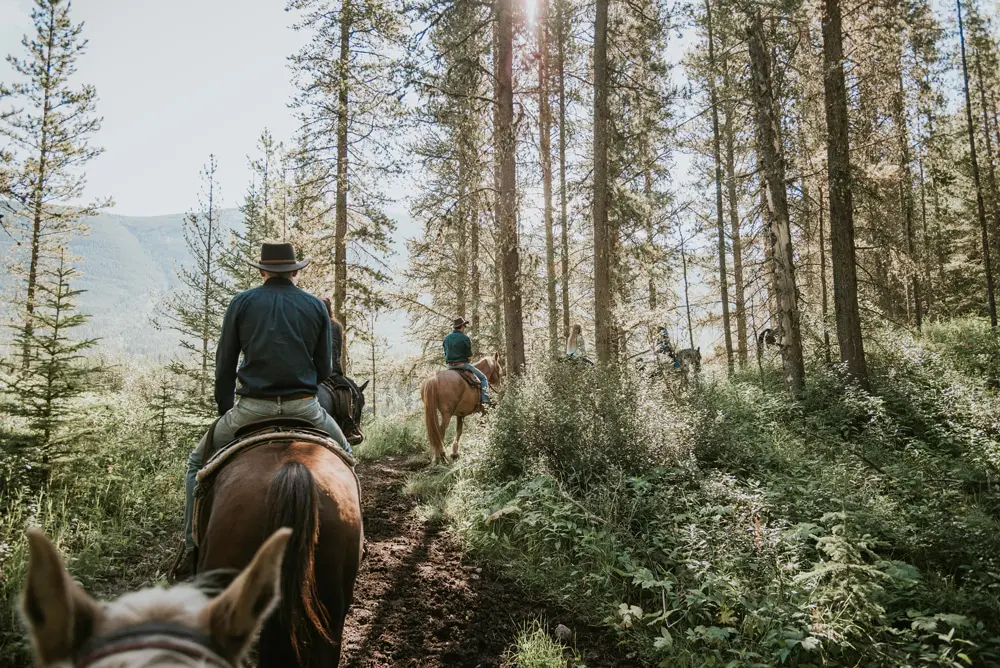 Horse-canada.com - Full Article
With the loosened pandemic restrictions and warmer weather, trail riding businesses are looking forward to a busy season.
By: Kim Izzo | May 27, 2020
As the Canadian economy starts to slowly roll out again following its shut down in March, many equestrian businesses that struggled to stay afloat during the closure are hopeful that things will turn around, especially with the summer weather. Riding schools are one such business; trail riding establishments are another. And as we all know, riding a horse is an easy way to maintain physical distance while getting the mental health benefits that horses and nature offer.
Niagara Escarpment Views
In Oakville, Ontario, The Ranch has been offering scenic trail rides through the Niagara Escarpment since 1980. While Covid-19 certainly dampens the 40th anniversary, owners Cary and Vanessa Warren have taken the lengthy closure and slow reopening in stride. The Ranch and their other property, Capstone Farms, offer boarding to individual horse owners and that side of the business, like most in Ontario, remained open during the stay-at-home order with restricted access. “I think it’s unethical to keep people away from their horses,” says Vanessa Warren. “I have one hundred horses between the two farms, it would have been impossible any other way to manage that number of animals responsibly, and we have always been set up to have the owners participating in their horse’s care...”
Read more here
https://horse-canada.com/magazine/business/freedom-horseback-heading-out-open-trail/
Wednesday, May 27, 2020
Study: Omeprazole Reduces Calcium Digestibility in Horses
TheHorse.com - Full Article
While omeprazole use is unlikely to cause bone issues in horses consuming correct rations, researchers said it’s important to respect professional recommendations for both omeprazole treatment duration and commercial feeding instructions.
Posted by Christa Lesté-Lasserre, MA | May 24, 2020
Feeding horses treated with omeprazole a well-balanced concentrate ration can ensure they receive enough calcium to make up for any deficiencies the ulcer medication could potentially cause.
Researchers have found that horses treated for gastric ulcers could be getting less calcium into the bloodstream than they would normally. Depending on the calcium source, horses treated with omeprazole (such as GastroGard, the FDA-approved medications for the treatment and prevention of equine gastric ulcers) could be digesting 15-20% less calcium than when they’re not on omeprazole...
Read more here:
https://thehorse.com/188903/study-omeprazole-reduces-calcium-digestibility-in-horses/?utm_medium=Health+enews&utm_source=Newsletter
While omeprazole use is unlikely to cause bone issues in horses consuming correct rations, researchers said it’s important to respect professional recommendations for both omeprazole treatment duration and commercial feeding instructions.
Posted by Christa Lesté-Lasserre, MA | May 24, 2020
Feeding horses treated with omeprazole a well-balanced concentrate ration can ensure they receive enough calcium to make up for any deficiencies the ulcer medication could potentially cause.
Researchers have found that horses treated for gastric ulcers could be getting less calcium into the bloodstream than they would normally. Depending on the calcium source, horses treated with omeprazole (such as GastroGard, the FDA-approved medications for the treatment and prevention of equine gastric ulcers) could be digesting 15-20% less calcium than when they’re not on omeprazole...
Read more here:
https://thehorse.com/188903/study-omeprazole-reduces-calcium-digestibility-in-horses/?utm_medium=Health+enews&utm_source=Newsletter
Tuesday, May 26, 2020
Horses and War
 PracticalHorsemanMag.com - Full Story
Jim Wofford reflects on the horse's role in human conflict.
JIM WOFFORD
UPDATED:MAY 21, 2020
ORIGINAL:JUL 20, 2012
I am lucky: I live surrounded by history. From my office window, I can see the John S. Mosby Highway, named for the legendary Confederate commander of Mosby's Raiders during the Civil War. Washington commuters drive that road to and from work in downtown D.C. This is the same road that, as a young man, George Washington used to ride over the Blue Ridge on his way to survey the Western Territories for Lord Fairfax.
The gravel lane next to my farm is the same road Confederate troopers galloped down on their way to confront the Union cavalry just east of Upperville, Virginia. The Battle of Upperville was partly fought over the grounds of today's Upperville Horse Show, which lie along Mosby Highway, modern-day U.S. Route 50. The remains of many of the men who fell that day, June 21, 1863, lie in local cemeteries, and there are gravestones and monuments to mark their passing. But the bodies of the horses and mules that died alongside their masters were dragged into a field on my neighbor's farm and left behind. The only monument they received was the rock and rubble used to cover them...
Read more here:
https://practicalhorsemanmag.com/lifestyle/jim-wofford-horses-and-war?utm_campaign=Newsletter&utm_medium=email&_hsmi=88454431&_hsenc=p2ANqtz-80NW8HzWuVpYFNq4Iy9IBfOYz93DfBuv3oZif3JueI2m-pNRiDtoVlR8ed2ydt2kcOW-HezIZIU0G3zLmTlN0uDjELKg&utm_source=PracticalHorsemanNL
Saturday, May 23, 2020
Protect your horse from choke
EquusMagazine.com - Full Article
The risk for developing a blockage of the esophagus is higher in winter, but it's wise to take precautions all year round.
LAURIE BONNER
UPDATED:APR 29, 2020
ORIGINAL:MAY 15, 2018
Unlike choking in people, which can lead to suffocation within minutes, choke in horses is more of a slow-motion disaster. A blockage of the esophagus rather than the airway, choke occurs when a horse tries to ingest inadequately chewed feed, a large chunk of carrot or something else he cannot swallow properly.
Choke does not inhibit a horse’s breathing but it can be so unpleasant that he becomes anxious or panicky, and if the blockage persists the resulting esophageal damage may seriously compromise his health in the long run.
Fortunately, most episodes of choke clear on their own. Even as he strains to relieve the blockage by stretching out his neck and coughing, a horse continues to produce saliva, which lubricates the esophagus and may eventually enable the mass to pass to the stomach. It’s a good idea to call a veterinarian anyway...
Read more here:
https://equusmagazine.com/diseases/choke-risk?utm_source=EQUUSNL&%3Butm_medium=email&%3Butm_campaign=Newsletter&_hsenc=p2ANqtz-937wXEJEGpBK5aeTcrE7mTRRomKE0G8F6_i_znDYMamM43y5pXb4U2cyeDS3SgnDV088Qn9A40xpNuhv352NL03aUGzw&_hsmi=82104955
The risk for developing a blockage of the esophagus is higher in winter, but it's wise to take precautions all year round.
LAURIE BONNER
UPDATED:APR 29, 2020
ORIGINAL:MAY 15, 2018
Unlike choking in people, which can lead to suffocation within minutes, choke in horses is more of a slow-motion disaster. A blockage of the esophagus rather than the airway, choke occurs when a horse tries to ingest inadequately chewed feed, a large chunk of carrot or something else he cannot swallow properly.
Choke does not inhibit a horse’s breathing but it can be so unpleasant that he becomes anxious or panicky, and if the blockage persists the resulting esophageal damage may seriously compromise his health in the long run.
Fortunately, most episodes of choke clear on their own. Even as he strains to relieve the blockage by stretching out his neck and coughing, a horse continues to produce saliva, which lubricates the esophagus and may eventually enable the mass to pass to the stomach. It’s a good idea to call a veterinarian anyway...
Read more here:
https://equusmagazine.com/diseases/choke-risk?utm_source=EQUUSNL&%3Butm_medium=email&%3Butm_campaign=Newsletter&_hsenc=p2ANqtz-937wXEJEGpBK5aeTcrE7mTRRomKE0G8F6_i_znDYMamM43y5pXb4U2cyeDS3SgnDV088Qn9A40xpNuhv352NL03aUGzw&_hsmi=82104955
Thursday, May 21, 2020
3 things you (probably) didn't know about beet pulp
Equusmagazine.com - Full Article
Although the popularity of this fibrous feedstuff continues to grow, misconceptions about it remain.
EQUUSUPDATED:APR 15, 2020
ORIGINAL:NOV 2, 2017
Chances are you’re pretty familiar with beet pulp. Most of us have scooped and soaked our fair share of this sugar-industry-byproduct-turned-equine-feed. The remains of sugar beets used in the manufacture of sugar, beet pulp is high in digestible fiber and a good source of “safe” structural carbohydrate-based calories, making it a popular horse feed throughout the country and around the world.
Straight from the bag, beet pulp is dried and shredded—almost resembling tobacco—or pressed into solid pellets. Soak either form in water for about a half-hour, and you’ll have a soft, soggy mash.
Yet as simple and easy as beet pulp is to feed, it has long been the subject of myths and misunderstandings in the horse world. Some of these misconceptions are harmless, but others could lead owners to needlessly rule out beet pulp as part of a horse’s diet or, conversely, rely on it too heavily and for the wrong reasons...
Read more here:
https://equusmagazine.com/horse-care/feeding-beet-pulp-26851?utm_source=EQUUSNL&utm_medium=email&utm_campaign=Newsletter&_hsenc=p2ANqtz-9xoDS_dETnfK9vcNSavhEnuv35HeKr5UZ_is64v0ZEV6z6PCdzfOXIqJRGFaw5QgmJS5jCcDihEBjG6lgAHi_vH7f8VQ&_hsmi=83553286
Although the popularity of this fibrous feedstuff continues to grow, misconceptions about it remain.
EQUUSUPDATED:APR 15, 2020
ORIGINAL:NOV 2, 2017
Chances are you’re pretty familiar with beet pulp. Most of us have scooped and soaked our fair share of this sugar-industry-byproduct-turned-equine-feed. The remains of sugar beets used in the manufacture of sugar, beet pulp is high in digestible fiber and a good source of “safe” structural carbohydrate-based calories, making it a popular horse feed throughout the country and around the world.
Straight from the bag, beet pulp is dried and shredded—almost resembling tobacco—or pressed into solid pellets. Soak either form in water for about a half-hour, and you’ll have a soft, soggy mash.
Yet as simple and easy as beet pulp is to feed, it has long been the subject of myths and misunderstandings in the horse world. Some of these misconceptions are harmless, but others could lead owners to needlessly rule out beet pulp as part of a horse’s diet or, conversely, rely on it too heavily and for the wrong reasons...
Read more here:
https://equusmagazine.com/horse-care/feeding-beet-pulp-26851?utm_source=EQUUSNL&utm_medium=email&utm_campaign=Newsletter&_hsenc=p2ANqtz-9xoDS_dETnfK9vcNSavhEnuv35HeKr5UZ_is64v0ZEV6z6PCdzfOXIqJRGFaw5QgmJS5jCcDihEBjG6lgAHi_vH7f8VQ&_hsmi=83553286
Sunday, May 17, 2020
Feeding Horses for Performance
TheHorse.com - Full Article
Equine athletes have nutritional needs specific to their discipline, workload, and lifestyle. Take a closer look at the subtleties of performance horse diets in this article excerpt from the May 2020 issue of The Horse.
Posted by Lucile Vigouroux | May 16, 2020
Guidelines for fueling the equine athlete
What does it take to win with your horse? A reputable coach, world-class training facilities, and high-tech equipment will all give you an advantage, no doubt. But for your horse to feel and perform at his best, you’ll need to start at a more fundamental level and consider what kind of fuel you’re pumping into him.
Equine athletes have nutritional needs specific to their discipline, workload, and lifestyle; for optimal performance, you must address them.
“Fundamentally, the difference between the diet of an equine athlete and that of a horse at maintenance lies in the amount of energy, the quality of protein, and the balance of electrolytes required,” says Lynn Taylor, PhD, professor of equine science at Centenary University, in Hackettstown, New Jersey, and owner of a private equine nutrition consulting business...
Read more here:
https://thehorse.com/188683/feeding-horses-for-performance/
Equine athletes have nutritional needs specific to their discipline, workload, and lifestyle. Take a closer look at the subtleties of performance horse diets in this article excerpt from the May 2020 issue of The Horse.
Posted by Lucile Vigouroux | May 16, 2020
Guidelines for fueling the equine athlete
What does it take to win with your horse? A reputable coach, world-class training facilities, and high-tech equipment will all give you an advantage, no doubt. But for your horse to feel and perform at his best, you’ll need to start at a more fundamental level and consider what kind of fuel you’re pumping into him.
Equine athletes have nutritional needs specific to their discipline, workload, and lifestyle; for optimal performance, you must address them.
“Fundamentally, the difference between the diet of an equine athlete and that of a horse at maintenance lies in the amount of energy, the quality of protein, and the balance of electrolytes required,” says Lynn Taylor, PhD, professor of equine science at Centenary University, in Hackettstown, New Jersey, and owner of a private equine nutrition consulting business...
Read more here:
https://thehorse.com/188683/feeding-horses-for-performance/
Managing Your Equine Facility During the COVID-19 Pandemic ~ Updated 5/13/20
 EquineLegalSolutions.com - Full Article
At ELS, we have received a steady stream of questions from barn owners related to the COVID-19 pandemic. The original version of this article, published on March 30, 2020, received more views than any other article ELS has ever published. Based upon the feedback and questions ELS receives, we are continuing to update this article as the COVID-19 pandemic evolves.
Many equine facility owners who closed their barns to prevent the spread of COVID-19 are under intense pressure from their customers to reopen. These customers point to the many equine facilities that stayed open (often in violation of state stay-at-home orders), as well as those that have reopened and are now conducting activities at pre-pandemic levels. This pressure from customers, coupled with the grim financial reality of remaining closed, is causing many equine facility owners to reopen and resume their businesses.
Here’s the current state of the COVID-19 pandemic:...
Read more here:
https://www.equinelegalsolutions.com/should-i-lock-down-my-facility.html
Subscribe to:
Posts (Atom)