TheHorse.com - Full Artice
Gastric disease develops most commonly in the squamous region, when stomach acid splashes onto that vulnerable area of tissue. Why it develops in the glandular region—and how to prevent and treat it—is less clear. Five researchers discuss what we do know about equine glandular gastric disease.
Posted by Alexandra Beckstett, The Horse Managing Editor | Jun 28, 2020
What scientists are learning about the recently defined equine glandular gastric disease
Gastric ulcers are nearly ubiquitous in our domestic equine population. We know they plague anywhere from 50% to 90% of horses, particularly performance horses. But not all ulcers are created equal. In the past few years researchers officially split gastric disease into two categories: squamous, affecting the upper portion of the horse’s stomach, and glandular, a nonulcerative condition affecting the lower. Gastric disease develops most commonly in the squamous region, when stomach acid splashes onto that vulnerable area of tissue. Why it develops in the glandular region—and how to prevent and treat it—is less clear...
Read more here:
https://thehorse.com/173644/not-your-average-equine-ulcer/?utm_medium=Nutrition+enews&utm_source=Newsletter
Tuesday, June 30, 2020


Saturday, June 27, 2020
Minimize Transport-Related Disease, Gastric Ulceration in Horses
KER.com - Full Article
March 13, 2020
By Kentucky Equine Research Staff
If you think that safely transporting horses, particularly over long distances, causes you strife, just imagine for a moment the stress your horse must feel. While many management strategies minimize stress and illness during and after transport, injuries, dehydration, and respiratory issues persist.
“Gastric ulceration occurs when horses experience stress, contributing to weight loss and changes in behavior and performance, and transport can certainly stir stress in many horses,” explained Catherine Whitehouse, M.S., a nutrition advisor for Kentucky Equine Research.
Considering the nature of the industry, transport over long distances can rarely be avoided, especially for competition horses and many breeding horses. In an attempt to minimize transport stress and the associated health problems, veterinary researchers recently attempted to identify healthier ways to travel...
Read more here:
https://ker.com/equinews/minimize-transport-related-disease-gastric-ulceration-in-horses/?partner=ker&utm_source=KER+Newsletter&utm_campaign=12f537483c-KER_Equinews_062420&utm_medium=email&utm_term=0_0d95781dfc-12f537483c-11166
March 13, 2020
By Kentucky Equine Research Staff
If you think that safely transporting horses, particularly over long distances, causes you strife, just imagine for a moment the stress your horse must feel. While many management strategies minimize stress and illness during and after transport, injuries, dehydration, and respiratory issues persist.
“Gastric ulceration occurs when horses experience stress, contributing to weight loss and changes in behavior and performance, and transport can certainly stir stress in many horses,” explained Catherine Whitehouse, M.S., a nutrition advisor for Kentucky Equine Research.
Considering the nature of the industry, transport over long distances can rarely be avoided, especially for competition horses and many breeding horses. In an attempt to minimize transport stress and the associated health problems, veterinary researchers recently attempted to identify healthier ways to travel...
Read more here:
https://ker.com/equinews/minimize-transport-related-disease-gastric-ulceration-in-horses/?partner=ker&utm_source=KER+Newsletter&utm_campaign=12f537483c-KER_Equinews_062420&utm_medium=email&utm_term=0_0d95781dfc-12f537483c-11166
Friday, June 26, 2020
Officer Barney: Always on Duty
 HorseNetwork.com - Full Article
Emily Daily
June 25, 2020
It’s not often that a horse has had a million hands pet him throughout his lifetime, but for Officer Barney, a retired mounted police horse, that number is no exaggeration.
For 12 years, the 17-hand Belgian gelding was the lead horse for the Baltimore Mounted Police Unit (the oldest mounted police force* in the United States), but now at age 24, he’s enjoying a quieter life performing a different type of public service.
From Amish Country to the Big City
Barney’s tale begins on the outskirts of Lancaster, Pennsylvania, where he worked as the lead horse for a six-horse hitch on an Amish farm. Janine Gilley, a now-retired Baltimore City Police Officer, was hunting for a strong, steady horse to join the ranks of the city’s mounted unit and visited the farm to try out their horses. The horse she’d traveled to see didn’t pan out for the intended job, but something about Barney caught her eye—he seemed like just the type who’d fit in with her unit. She made the farmer an offer on his prized lead horse, and soon enough Barney was en-route to his new home in the city.
Barney had little riding experience, but it didn’t take long for him to master his new duties in Baltimore. At six years old, Barney was a quick learner and epitomized all the special qualities needed for the force: bravery, patience, and most importantly, a kind disposition...
Read more here:
https://horsenetwork.com/2020/06/officer-barney-always-on-duty/?utm_source=Horse+Network+Email+List&utm_campaign=f4bc492318-HN_2020_6_25_2020&utm_medium=email&utm_term=0_5694ca6b0c-f4bc492318-84641243&goal=0_5694ca6b0c-f4bc492318-84641243&mc_cid=f4bc492318&mc_eid=b3c9897994
Thursday, June 25, 2020
Volunteers Weigh In on New COVID-19 Protocols
USEventing.com - Full Article
June 24 2020
By Claire Kelley - USEA Staff
Since the USEA lifted the COVID-19 suspension on June 1, 2020, there have been 11 recognized events that have taken place across the country. Events such as Plantation Field, Waredaca, and Full Gallop Farm have been the pioneers for adapting to the new normal of eventing. Setting the standard high, these events have diligently followed the USEF COVID-19 Action Plan and have shown everyone how an event can run safely and smoothly. The success of these events is due largely in part to having strong volunteers.
Many dedicated volunteers have come back to work including John Bandrofchak, a cross-country timer at Full Gallop, Skip Simmons, a show jumping steward at Waredaca, and Susan Hart, a dressage scribe at Waredaca. Last week, the USEA featured Plantation Field and this week, volunteers from Waredaca in Laytonsville, Maryland and Full Gallop in Aiken, South Carolina share their experience...
Read more here:
https://useventing.com/news-media/news/volunteers-weigh-in-on-new-covid-19-protocols?utm_medium=40digest.7days3.20200625.home&utm_source=email&utm_content=&utm_campaign=campaign
June 24 2020
By Claire Kelley - USEA Staff
Since the USEA lifted the COVID-19 suspension on June 1, 2020, there have been 11 recognized events that have taken place across the country. Events such as Plantation Field, Waredaca, and Full Gallop Farm have been the pioneers for adapting to the new normal of eventing. Setting the standard high, these events have diligently followed the USEF COVID-19 Action Plan and have shown everyone how an event can run safely and smoothly. The success of these events is due largely in part to having strong volunteers.
Many dedicated volunteers have come back to work including John Bandrofchak, a cross-country timer at Full Gallop, Skip Simmons, a show jumping steward at Waredaca, and Susan Hart, a dressage scribe at Waredaca. Last week, the USEA featured Plantation Field and this week, volunteers from Waredaca in Laytonsville, Maryland and Full Gallop in Aiken, South Carolina share their experience...
Read more here:
https://useventing.com/news-media/news/volunteers-weigh-in-on-new-covid-19-protocols?utm_medium=40digest.7days3.20200625.home&utm_source=email&utm_content=&utm_campaign=campaign
Wednesday, June 24, 2020
Genetic study of Arabian horses challenges some common beliefs about the ancient breed
Phys.org - Full Article
June 23 2020
by Cornell University
A study involving Arabian horses from 12 countries found that some populations maintained a larger degree of genetic diversity and that the breed did not contribute genetically to the modern-day Thoroughbred, contrary to popular thought.
An international team of scientists was led by the University of Florida's Samantha Brooks, a UF/IFAS assistant professor of animal sciences; Cornell University's Doug Antczak, the Dorothy Havemeyer McConville Professor of Equine Medicine at the Baker Institute for Animal Health; and Andy Clark, the Jacob Gould Schurman Professor in Cornell's department of molecular biology and genetics.
The group collected and examined DNA samples from 378 Arabian horses from Qatar, Iran, UAE, Poland, USA, Egypt, Jordan, Kuwait, United Kingdom, Australia, Denmark and Canada...
Read more here:
https://phys.org/news/2020-06-genetic-arabian-horses-common-beliefs.html
June 23 2020
by Cornell University
A study involving Arabian horses from 12 countries found that some populations maintained a larger degree of genetic diversity and that the breed did not contribute genetically to the modern-day Thoroughbred, contrary to popular thought.
An international team of scientists was led by the University of Florida's Samantha Brooks, a UF/IFAS assistant professor of animal sciences; Cornell University's Doug Antczak, the Dorothy Havemeyer McConville Professor of Equine Medicine at the Baker Institute for Animal Health; and Andy Clark, the Jacob Gould Schurman Professor in Cornell's department of molecular biology and genetics.
The group collected and examined DNA samples from 378 Arabian horses from Qatar, Iran, UAE, Poland, USA, Egypt, Jordan, Kuwait, United Kingdom, Australia, Denmark and Canada...
Read more here:
https://phys.org/news/2020-06-genetic-arabian-horses-common-beliefs.html
Sunday, June 21, 2020
Hemp for horses? Studies show it might work
DallasNews.com - Full Article
Researchers at Tarleton are studying the use of CBD to calm horses and other livestock.
By Kimberly Guay
11:30 PM on Jun 20, 2020
Can CBD minimize pain and manage obsessive compulsive behaviors in horses? Researchers at Tarleton State University hope to have an answer soon. Observers around the world need to know.
While federal officials have yet to finalize rules allowing the nonintoxicating cannabinoid in animal feed — or even in food products for human consumption — CBD supplements are a hot commodity among horse lovers seeking to ease pain, reduce muscle and joint inflammation, and calm stress in their animals.
The 2018 Farm Bill legalized industrial hemp, leading to a lot of hype about the potential benefits of CBD for horses, but reliable data is scarce...
Read more here:
https://www.dallasnews.com/opinion/commentary/2020/06/21/hemp-for-horses-studies-show-it-might-work/
Researchers at Tarleton are studying the use of CBD to calm horses and other livestock.
By Kimberly Guay
11:30 PM on Jun 20, 2020
Can CBD minimize pain and manage obsessive compulsive behaviors in horses? Researchers at Tarleton State University hope to have an answer soon. Observers around the world need to know.
While federal officials have yet to finalize rules allowing the nonintoxicating cannabinoid in animal feed — or even in food products for human consumption — CBD supplements are a hot commodity among horse lovers seeking to ease pain, reduce muscle and joint inflammation, and calm stress in their animals.
The 2018 Farm Bill legalized industrial hemp, leading to a lot of hype about the potential benefits of CBD for horses, but reliable data is scarce...
Read more here:
https://www.dallasnews.com/opinion/commentary/2020/06/21/hemp-for-horses-studies-show-it-might-work/
Sunday, June 07, 2020
What gives the mighty mule its endurance? Researchers investigate
HorseTalk.co.nz - Full Article
June 7 2020
Horsetalk.co.nz
Mules are renowned worldwide for their outstanding muscular endurance, but what gives them this ability to outshine their horse and donkey parents?
Hybrid vigor has long been recognised and widely exploited in animal and plant breeding programs to enhance the productive traits of hybrid progeny from two breeds or species.
However, its underlying genetic mechanisms remain enigmatic.
Researchers from Northwest A&F University in Yangling, China, set out to understand more about the molecular mechanisms at work in mules that provide this superior muscular endurance...
Read more here:
https://www.horsetalk.co.nz/2020/06/07/mighty-mule-endurance-researchers/
June 7 2020
Horsetalk.co.nz
Mules are renowned worldwide for their outstanding muscular endurance, but what gives them this ability to outshine their horse and donkey parents?
Hybrid vigor has long been recognised and widely exploited in animal and plant breeding programs to enhance the productive traits of hybrid progeny from two breeds or species.
However, its underlying genetic mechanisms remain enigmatic.
Researchers from Northwest A&F University in Yangling, China, set out to understand more about the molecular mechanisms at work in mules that provide this superior muscular endurance...
Read more here:
https://www.horsetalk.co.nz/2020/06/07/mighty-mule-endurance-researchers/
Friday, May 29, 2020
Canada: Freedom on Horseback: Heading Out on the Open Trail
 Horse-canada.com - Full Article
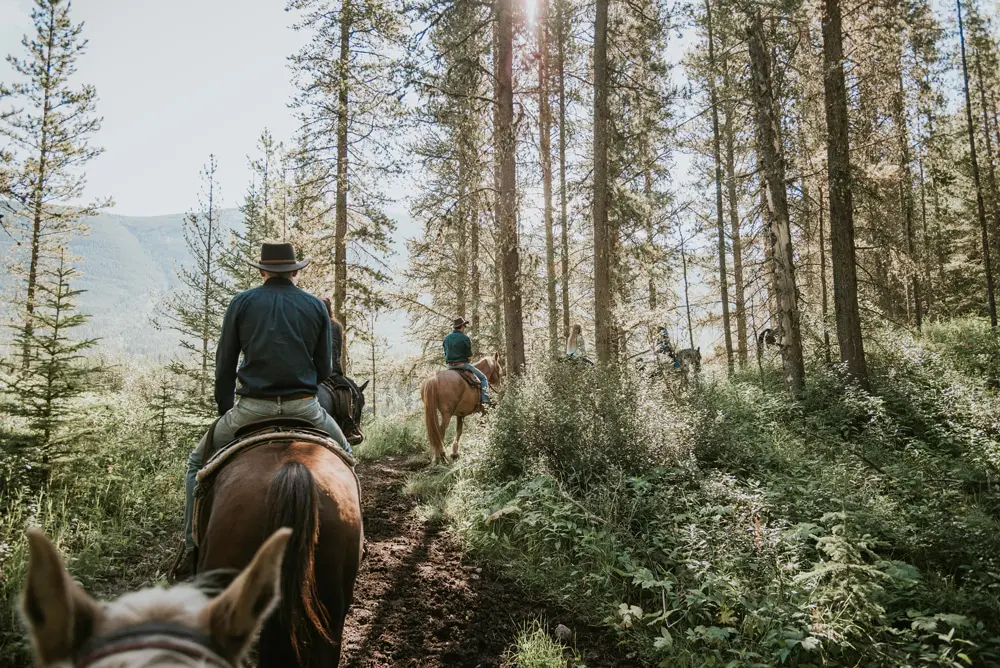
With the loosened pandemic restrictions and warmer weather, trail riding businesses are looking forward to a busy season.
By: Kim Izzo | May 27, 2020
As the Canadian economy starts to slowly roll out again following its shut down in March, many equestrian businesses that struggled to stay afloat during the closure are hopeful that things will turn around, especially with the summer weather. Riding schools are one such business; trail riding establishments are another. And as we all know, riding a horse is an easy way to maintain physical distance while getting the mental health benefits that horses and nature offer.
Niagara Escarpment Views
In Oakville, Ontario, The Ranch has been offering scenic trail rides through the Niagara Escarpment since 1980. While Covid-19 certainly dampens the 40th anniversary, owners Cary and Vanessa Warren have taken the lengthy closure and slow reopening in stride. The Ranch and their other property, Capstone Farms, offer boarding to individual horse owners and that side of the business, like most in Ontario, remained open during the stay-at-home order with restricted access. “I think it’s unethical to keep people away from their horses,” says Vanessa Warren. “I have one hundred horses between the two farms, it would have been impossible any other way to manage that number of animals responsibly, and we have always been set up to have the owners participating in their horse’s care...”
Read more here
https://horse-canada.com/magazine/business/freedom-horseback-heading-out-open-trail/
Wednesday, May 27, 2020
Study: Omeprazole Reduces Calcium Digestibility in Horses
TheHorse.com - Full Article
While omeprazole use is unlikely to cause bone issues in horses consuming correct rations, researchers said it’s important to respect professional recommendations for both omeprazole treatment duration and commercial feeding instructions.
Posted by Christa Lesté-Lasserre, MA | May 24, 2020
Feeding horses treated with omeprazole a well-balanced concentrate ration can ensure they receive enough calcium to make up for any deficiencies the ulcer medication could potentially cause.
Researchers have found that horses treated for gastric ulcers could be getting less calcium into the bloodstream than they would normally. Depending on the calcium source, horses treated with omeprazole (such as GastroGard, the FDA-approved medications for the treatment and prevention of equine gastric ulcers) could be digesting 15-20% less calcium than when they’re not on omeprazole...
Read more here:
https://thehorse.com/188903/study-omeprazole-reduces-calcium-digestibility-in-horses/?utm_medium=Health+enews&utm_source=Newsletter
While omeprazole use is unlikely to cause bone issues in horses consuming correct rations, researchers said it’s important to respect professional recommendations for both omeprazole treatment duration and commercial feeding instructions.
Posted by Christa Lesté-Lasserre, MA | May 24, 2020
Feeding horses treated with omeprazole a well-balanced concentrate ration can ensure they receive enough calcium to make up for any deficiencies the ulcer medication could potentially cause.
Researchers have found that horses treated for gastric ulcers could be getting less calcium into the bloodstream than they would normally. Depending on the calcium source, horses treated with omeprazole (such as GastroGard, the FDA-approved medications for the treatment and prevention of equine gastric ulcers) could be digesting 15-20% less calcium than when they’re not on omeprazole...
Read more here:
https://thehorse.com/188903/study-omeprazole-reduces-calcium-digestibility-in-horses/?utm_medium=Health+enews&utm_source=Newsletter
Tuesday, May 26, 2020
Horses and War
 PracticalHorsemanMag.com - Full Story
Jim Wofford reflects on the horse's role in human conflict.
JIM WOFFORD
UPDATED:MAY 21, 2020
ORIGINAL:JUL 20, 2012
I am lucky: I live surrounded by history. From my office window, I can see the John S. Mosby Highway, named for the legendary Confederate commander of Mosby's Raiders during the Civil War. Washington commuters drive that road to and from work in downtown D.C. This is the same road that, as a young man, George Washington used to ride over the Blue Ridge on his way to survey the Western Territories for Lord Fairfax.
The gravel lane next to my farm is the same road Confederate troopers galloped down on their way to confront the Union cavalry just east of Upperville, Virginia. The Battle of Upperville was partly fought over the grounds of today's Upperville Horse Show, which lie along Mosby Highway, modern-day U.S. Route 50. The remains of many of the men who fell that day, June 21, 1863, lie in local cemeteries, and there are gravestones and monuments to mark their passing. But the bodies of the horses and mules that died alongside their masters were dragged into a field on my neighbor's farm and left behind. The only monument they received was the rock and rubble used to cover them...
Read more here:
https://practicalhorsemanmag.com/lifestyle/jim-wofford-horses-and-war?utm_campaign=Newsletter&utm_medium=email&_hsmi=88454431&_hsenc=p2ANqtz-80NW8HzWuVpYFNq4Iy9IBfOYz93DfBuv3oZif3JueI2m-pNRiDtoVlR8ed2ydt2kcOW-HezIZIU0G3zLmTlN0uDjELKg&utm_source=PracticalHorsemanNL
Saturday, May 23, 2020
Protect your horse from choke
EquusMagazine.com - Full Article
The risk for developing a blockage of the esophagus is higher in winter, but it's wise to take precautions all year round.
LAURIE BONNER
UPDATED:APR 29, 2020
ORIGINAL:MAY 15, 2018
Unlike choking in people, which can lead to suffocation within minutes, choke in horses is more of a slow-motion disaster. A blockage of the esophagus rather than the airway, choke occurs when a horse tries to ingest inadequately chewed feed, a large chunk of carrot or something else he cannot swallow properly.
Choke does not inhibit a horse’s breathing but it can be so unpleasant that he becomes anxious or panicky, and if the blockage persists the resulting esophageal damage may seriously compromise his health in the long run.
Fortunately, most episodes of choke clear on their own. Even as he strains to relieve the blockage by stretching out his neck and coughing, a horse continues to produce saliva, which lubricates the esophagus and may eventually enable the mass to pass to the stomach. It’s a good idea to call a veterinarian anyway...
Read more here:
https://equusmagazine.com/diseases/choke-risk?utm_source=EQUUSNL&%3Butm_medium=email&%3Butm_campaign=Newsletter&_hsenc=p2ANqtz-937wXEJEGpBK5aeTcrE7mTRRomKE0G8F6_i_znDYMamM43y5pXb4U2cyeDS3SgnDV088Qn9A40xpNuhv352NL03aUGzw&_hsmi=82104955
The risk for developing a blockage of the esophagus is higher in winter, but it's wise to take precautions all year round.
LAURIE BONNER
UPDATED:APR 29, 2020
ORIGINAL:MAY 15, 2018
Unlike choking in people, which can lead to suffocation within minutes, choke in horses is more of a slow-motion disaster. A blockage of the esophagus rather than the airway, choke occurs when a horse tries to ingest inadequately chewed feed, a large chunk of carrot or something else he cannot swallow properly.
Choke does not inhibit a horse’s breathing but it can be so unpleasant that he becomes anxious or panicky, and if the blockage persists the resulting esophageal damage may seriously compromise his health in the long run.
Fortunately, most episodes of choke clear on their own. Even as he strains to relieve the blockage by stretching out his neck and coughing, a horse continues to produce saliva, which lubricates the esophagus and may eventually enable the mass to pass to the stomach. It’s a good idea to call a veterinarian anyway...
Read more here:
https://equusmagazine.com/diseases/choke-risk?utm_source=EQUUSNL&%3Butm_medium=email&%3Butm_campaign=Newsletter&_hsenc=p2ANqtz-937wXEJEGpBK5aeTcrE7mTRRomKE0G8F6_i_znDYMamM43y5pXb4U2cyeDS3SgnDV088Qn9A40xpNuhv352NL03aUGzw&_hsmi=82104955
Thursday, May 21, 2020
3 things you (probably) didn't know about beet pulp
Equusmagazine.com - Full Article
Although the popularity of this fibrous feedstuff continues to grow, misconceptions about it remain.
EQUUSUPDATED:APR 15, 2020
ORIGINAL:NOV 2, 2017
Chances are you’re pretty familiar with beet pulp. Most of us have scooped and soaked our fair share of this sugar-industry-byproduct-turned-equine-feed. The remains of sugar beets used in the manufacture of sugar, beet pulp is high in digestible fiber and a good source of “safe” structural carbohydrate-based calories, making it a popular horse feed throughout the country and around the world.
Straight from the bag, beet pulp is dried and shredded—almost resembling tobacco—or pressed into solid pellets. Soak either form in water for about a half-hour, and you’ll have a soft, soggy mash.
Yet as simple and easy as beet pulp is to feed, it has long been the subject of myths and misunderstandings in the horse world. Some of these misconceptions are harmless, but others could lead owners to needlessly rule out beet pulp as part of a horse’s diet or, conversely, rely on it too heavily and for the wrong reasons...
Read more here:
https://equusmagazine.com/horse-care/feeding-beet-pulp-26851?utm_source=EQUUSNL&utm_medium=email&utm_campaign=Newsletter&_hsenc=p2ANqtz-9xoDS_dETnfK9vcNSavhEnuv35HeKr5UZ_is64v0ZEV6z6PCdzfOXIqJRGFaw5QgmJS5jCcDihEBjG6lgAHi_vH7f8VQ&_hsmi=83553286
Although the popularity of this fibrous feedstuff continues to grow, misconceptions about it remain.
EQUUSUPDATED:APR 15, 2020
ORIGINAL:NOV 2, 2017
Chances are you’re pretty familiar with beet pulp. Most of us have scooped and soaked our fair share of this sugar-industry-byproduct-turned-equine-feed. The remains of sugar beets used in the manufacture of sugar, beet pulp is high in digestible fiber and a good source of “safe” structural carbohydrate-based calories, making it a popular horse feed throughout the country and around the world.
Straight from the bag, beet pulp is dried and shredded—almost resembling tobacco—or pressed into solid pellets. Soak either form in water for about a half-hour, and you’ll have a soft, soggy mash.
Yet as simple and easy as beet pulp is to feed, it has long been the subject of myths and misunderstandings in the horse world. Some of these misconceptions are harmless, but others could lead owners to needlessly rule out beet pulp as part of a horse’s diet or, conversely, rely on it too heavily and for the wrong reasons...
Read more here:
https://equusmagazine.com/horse-care/feeding-beet-pulp-26851?utm_source=EQUUSNL&utm_medium=email&utm_campaign=Newsletter&_hsenc=p2ANqtz-9xoDS_dETnfK9vcNSavhEnuv35HeKr5UZ_is64v0ZEV6z6PCdzfOXIqJRGFaw5QgmJS5jCcDihEBjG6lgAHi_vH7f8VQ&_hsmi=83553286
Sunday, May 17, 2020
Feeding Horses for Performance
TheHorse.com - Full Article
Equine athletes have nutritional needs specific to their discipline, workload, and lifestyle. Take a closer look at the subtleties of performance horse diets in this article excerpt from the May 2020 issue of The Horse.
Posted by Lucile Vigouroux | May 16, 2020
Guidelines for fueling the equine athlete
What does it take to win with your horse? A reputable coach, world-class training facilities, and high-tech equipment will all give you an advantage, no doubt. But for your horse to feel and perform at his best, you’ll need to start at a more fundamental level and consider what kind of fuel you’re pumping into him.
Equine athletes have nutritional needs specific to their discipline, workload, and lifestyle; for optimal performance, you must address them.
“Fundamentally, the difference between the diet of an equine athlete and that of a horse at maintenance lies in the amount of energy, the quality of protein, and the balance of electrolytes required,” says Lynn Taylor, PhD, professor of equine science at Centenary University, in Hackettstown, New Jersey, and owner of a private equine nutrition consulting business...
Read more here:
https://thehorse.com/188683/feeding-horses-for-performance/
Equine athletes have nutritional needs specific to their discipline, workload, and lifestyle. Take a closer look at the subtleties of performance horse diets in this article excerpt from the May 2020 issue of The Horse.
Posted by Lucile Vigouroux | May 16, 2020
Guidelines for fueling the equine athlete
What does it take to win with your horse? A reputable coach, world-class training facilities, and high-tech equipment will all give you an advantage, no doubt. But for your horse to feel and perform at his best, you’ll need to start at a more fundamental level and consider what kind of fuel you’re pumping into him.
Equine athletes have nutritional needs specific to their discipline, workload, and lifestyle; for optimal performance, you must address them.
“Fundamentally, the difference between the diet of an equine athlete and that of a horse at maintenance lies in the amount of energy, the quality of protein, and the balance of electrolytes required,” says Lynn Taylor, PhD, professor of equine science at Centenary University, in Hackettstown, New Jersey, and owner of a private equine nutrition consulting business...
Read more here:
https://thehorse.com/188683/feeding-horses-for-performance/
Managing Your Equine Facility During the COVID-19 Pandemic ~ Updated 5/13/20
 EquineLegalSolutions.com - Full Article
At ELS, we have received a steady stream of questions from barn owners related to the COVID-19 pandemic. The original version of this article, published on March 30, 2020, received more views than any other article ELS has ever published. Based upon the feedback and questions ELS receives, we are continuing to update this article as the COVID-19 pandemic evolves.
Many equine facility owners who closed their barns to prevent the spread of COVID-19 are under intense pressure from their customers to reopen. These customers point to the many equine facilities that stayed open (often in violation of state stay-at-home orders), as well as those that have reopened and are now conducting activities at pre-pandemic levels. This pressure from customers, coupled with the grim financial reality of remaining closed, is causing many equine facility owners to reopen and resume their businesses.
Here’s the current state of the COVID-19 pandemic:...
Read more here:
https://www.equinelegalsolutions.com/should-i-lock-down-my-facility.html
Wednesday, May 13, 2020
Equestrian Air Vests: What You Need to Know
USEF.org - Full Article
by Leslie Potter | May 12, 2020, 12:31 PM EST
While most equestrians are well aware of the potential for head injuries that comes with riding, riders run the risk of other types of injuries when involved in a fall. Eventers have been wearing body protectors on the cross-country course for decades to mitigate some of that risk, and in recent years, self-inflating air vests have become a common item of supplemental safety gear.
Riders in other disciplines have taken note, and air vests are starting to show up in the show ring as well as on the cross-country course. Like all safety gear, air vests are only effective when used correctly and cared for properly. We spoke with Danielle Santos, Director of Sales and Partnerships for Charles Owen, and Dr. Mark Hart, USEF’s Team Physician and Chair of the Fédération Équestre Internationale Medical Committee, to find out what equestrians need to know about air vests...
Read more here:
https://www.usef.org/media/equestrian-weekly/equestrian-air-vests-what-you-need-to-know
by Leslie Potter | May 12, 2020, 12:31 PM EST
While most equestrians are well aware of the potential for head injuries that comes with riding, riders run the risk of other types of injuries when involved in a fall. Eventers have been wearing body protectors on the cross-country course for decades to mitigate some of that risk, and in recent years, self-inflating air vests have become a common item of supplemental safety gear.
Riders in other disciplines have taken note, and air vests are starting to show up in the show ring as well as on the cross-country course. Like all safety gear, air vests are only effective when used correctly and cared for properly. We spoke with Danielle Santos, Director of Sales and Partnerships for Charles Owen, and Dr. Mark Hart, USEF’s Team Physician and Chair of the Fédération Équestre Internationale Medical Committee, to find out what equestrians need to know about air vests...
Read more here:
https://www.usef.org/media/equestrian-weekly/equestrian-air-vests-what-you-need-to-know
Monday, May 11, 2020
AAEP Updates Vaccination Guidelines
May 8 2020
Routine vaccinations considered essential during COVID-19 pandemic
The Infectious Disease Committee of the American Association of Equine Practitioners (AAEP) has issued revised guidelines for the administration of selected core and risk-based vaccines to horses.
The recommendations are based on the age of the horse and its previous vaccination history and are meant to serve as a reference for veterinarians. Reviewed guidelines include the core vaccinations Eastern Equine Encephalomyelitis (EEE), Western Equine Encephalomyelitis (WEE), and Rabies; and the risk-based vaccinations Anthrax, Botulism, Equine Herpesvirus (EHV), Equine Viral Arteritis (EVA), Equine Influenza, Leptospirosis, Potomac Horse Fever Rotaviral Diarrhea, and Venezuelan Equine Encephalomyelitis (VEE).
Among important modifications to the Vaccination Guidelines for Horses:
The Adult Horse Vaccination and Foal Vaccination charts have been updated to match changes made in various vaccination guidelines and vaccine manufacturer label recommendations. Changes to the foal chart also include updates to the Rabies vaccination recommendations for vaccinated vs. unvaccinated mares. Changes to the adult horse chart include updates to the broodmare section to recommend vaccinating those mares pre-partum with a “respiratory EHV” product in addition to the abortion product.
The Anthrax guidelines indicate that the disease can be contracted in an endemic area via vector-borne transmission. Further recommendations have been added for horses during an outbreak (e.g., vaccinate afebrile horses not showing clinical signs).
The EEE and WEE guidelines encourage veterinarians to consult with vaccine manufacturers for their geographic region and to consider the region's case frequency for the current year and in recent years.
The Equine Influenza guidelines include recommendations for horses that have recovered from natural infection. It also notes that some facilities and competitions may require vaccination within the previous 6 months to enter.
The EVA guidelines indicate that the occasional stallion may shed very low concentrations of vaccine virus in its semen for several days following first-time EVA vaccination and the recommendation to confirm negative status prior to vaccination.
The Leptospirosis guidelines incorporate recommendations for foals as young as 3 months of age and emphasize that the licensed vaccine is safe for pregnant mares at all stages of parturition.
The Rabies guidelines provide guidance for how to approach a horse that has been exposed to a confirmed rabid animal.
The Infectious Disease Committee stresses that veterinarians, through an appropriate veterinarian-client-patient relationship, should use the recommendations, coupled with available products, to determine the best professional care for their patients. Horse owners should consult with a licensed veterinarian before initiating a vaccination program.
"The goal of the guidelines is to provide current information that will enable veterinarians and clients to make thoughtful and educated decisions on vaccinating horses in their care," explained Infectious Disease Committee Chair Dr. Katie Flynn. "The impact of infectious disease has been felt across the equine industry in recent years, and the committee hopes that these guidelines will be a useful tool in preventing or mitigating the effects of equine infectious disease."
The committee also emphasizes that routine vaccinations are considered essential during this COVID-19 pandemic, and overdue vaccinations should be completed to help prevent disease in horses. Duration of immunity for some vaccines might be limited to 6 months; therefore, maintaining a routine vaccination schedule is critical for horses at high risk of developing these diseases, and vaccinations should be scheduled as soon as reasonably possible to ensure the health and welfare of the horse. In all cases, veterinarians should consider local conditions and current state-imposed regulations to determine when vaccinations can be completed safely during this unprecedented time.
The committee, comprised of researchers, vaccine manufacturers, regulatory veterinarians and private practitioners, regularly reviews these guidelines and provides updates online, with in-depth reviews occurring every three years. The complete guidelines, along with easy reference charts, are available at https://aaep.org/guidelines/vaccination-guidelines
About AAEP
The American Association of Equine Practitioners (AAEP), headquartered in Lexington, Ky., was founded in 1954 as a non-profit organization dedicated to the health and welfare of the horse. Currently, AAEP reaches more than 5 million horse owners through its over 9,000 members worldwide and is actively involved in ethics issues, practice management, research and continuing education in the equine veterinary profession and horse industry. Visit www.aaep.org.
Routine vaccinations considered essential during COVID-19 pandemic
The Infectious Disease Committee of the American Association of Equine Practitioners (AAEP) has issued revised guidelines for the administration of selected core and risk-based vaccines to horses.
The recommendations are based on the age of the horse and its previous vaccination history and are meant to serve as a reference for veterinarians. Reviewed guidelines include the core vaccinations Eastern Equine Encephalomyelitis (EEE), Western Equine Encephalomyelitis (WEE), and Rabies; and the risk-based vaccinations Anthrax, Botulism, Equine Herpesvirus (EHV), Equine Viral Arteritis (EVA), Equine Influenza, Leptospirosis, Potomac Horse Fever Rotaviral Diarrhea, and Venezuelan Equine Encephalomyelitis (VEE).
Among important modifications to the Vaccination Guidelines for Horses:
The Adult Horse Vaccination and Foal Vaccination charts have been updated to match changes made in various vaccination guidelines and vaccine manufacturer label recommendations. Changes to the foal chart also include updates to the Rabies vaccination recommendations for vaccinated vs. unvaccinated mares. Changes to the adult horse chart include updates to the broodmare section to recommend vaccinating those mares pre-partum with a “respiratory EHV” product in addition to the abortion product.
The Anthrax guidelines indicate that the disease can be contracted in an endemic area via vector-borne transmission. Further recommendations have been added for horses during an outbreak (e.g., vaccinate afebrile horses not showing clinical signs).
The EEE and WEE guidelines encourage veterinarians to consult with vaccine manufacturers for their geographic region and to consider the region's case frequency for the current year and in recent years.
The Equine Influenza guidelines include recommendations for horses that have recovered from natural infection. It also notes that some facilities and competitions may require vaccination within the previous 6 months to enter.
The EVA guidelines indicate that the occasional stallion may shed very low concentrations of vaccine virus in its semen for several days following first-time EVA vaccination and the recommendation to confirm negative status prior to vaccination.
The Leptospirosis guidelines incorporate recommendations for foals as young as 3 months of age and emphasize that the licensed vaccine is safe for pregnant mares at all stages of parturition.
The Rabies guidelines provide guidance for how to approach a horse that has been exposed to a confirmed rabid animal.
The Infectious Disease Committee stresses that veterinarians, through an appropriate veterinarian-client-patient relationship, should use the recommendations, coupled with available products, to determine the best professional care for their patients. Horse owners should consult with a licensed veterinarian before initiating a vaccination program.
"The goal of the guidelines is to provide current information that will enable veterinarians and clients to make thoughtful and educated decisions on vaccinating horses in their care," explained Infectious Disease Committee Chair Dr. Katie Flynn. "The impact of infectious disease has been felt across the equine industry in recent years, and the committee hopes that these guidelines will be a useful tool in preventing or mitigating the effects of equine infectious disease."
The committee also emphasizes that routine vaccinations are considered essential during this COVID-19 pandemic, and overdue vaccinations should be completed to help prevent disease in horses. Duration of immunity for some vaccines might be limited to 6 months; therefore, maintaining a routine vaccination schedule is critical for horses at high risk of developing these diseases, and vaccinations should be scheduled as soon as reasonably possible to ensure the health and welfare of the horse. In all cases, veterinarians should consider local conditions and current state-imposed regulations to determine when vaccinations can be completed safely during this unprecedented time.
The committee, comprised of researchers, vaccine manufacturers, regulatory veterinarians and private practitioners, regularly reviews these guidelines and provides updates online, with in-depth reviews occurring every three years. The complete guidelines, along with easy reference charts, are available at https://aaep.org/guidelines/vaccination-guidelines
About AAEP
The American Association of Equine Practitioners (AAEP), headquartered in Lexington, Ky., was founded in 1954 as a non-profit organization dedicated to the health and welfare of the horse. Currently, AAEP reaches more than 5 million horse owners through its over 9,000 members worldwide and is actively involved in ethics issues, practice management, research and continuing education in the equine veterinary profession and horse industry. Visit www.aaep.org.
Horses Recognize Pics of Their Keepers
ScientificAmerican.com - Full Article
By Susanne Bard on May 5, 2020
Horses picked out photographs of their current keepers, and even of former keepers whom they had not seen in months, at a rate much better than chance.
We recognize our friends’ faces. And we’re not alone. Many social animals can identify individuals of their own species by their facial features. That’s important, because they need to be able to adjust their behavior depending on who they encounter. And research has shown that some species of monkeys, birds and domesticated animals can even distinguish among different faces by looking at photographs alone.
Scientists have also wondered whether domesticated animals that have coexisted with people for thousands of years can recognize different human faces. For example, we’ve shared more than 5,000 years of our history with horses. Plus, they can live up to 30 years and may need to retain a great deal of information about us throughout their lifetimes.
Ethologist Léa Lansade of the French National Research Institute for Agriculture, Food and Environment did an experiment to find out how well horses can recognize individual people in photographs...
Read more here:
By Susanne Bard on May 5, 2020
Horses picked out photographs of their current keepers, and even of former keepers whom they had not seen in months, at a rate much better than chance.
We recognize our friends’ faces. And we’re not alone. Many social animals can identify individuals of their own species by their facial features. That’s important, because they need to be able to adjust their behavior depending on who they encounter. And research has shown that some species of monkeys, birds and domesticated animals can even distinguish among different faces by looking at photographs alone.
Scientists have also wondered whether domesticated animals that have coexisted with people for thousands of years can recognize different human faces. For example, we’ve shared more than 5,000 years of our history with horses. Plus, they can live up to 30 years and may need to retain a great deal of information about us throughout their lifetimes.
Ethologist Léa Lansade of the French National Research Institute for Agriculture, Food and Environment did an experiment to find out how well horses can recognize individual people in photographs...
Read more here:
Saturday, May 02, 2020
Discover... the Criollo
 FEI.org - Full article
02 May 2020
Words by Patricia Salem
Visitors to Argentina, Brazil, Paraguay, or Uruguay may have seen the beautiful Criollo horse in action.
This breed has a long history in the South American pampas, the grassy eastern plains where both native dwellers and European settlers have long had ranches and livestock.
Here’s a look at this venerable breed, known for its hardiness and stamina...
History of the Criollo
The Criollo comes from early Andalusian horses brought to the Americas by conquistadors. These horses were closely related to the Spanish Barb, which had Moorish origins. During the early years in South America, there was likely some mixing with other horses of the region, including the Peruvian Paso and the Venezuelan Lllanero.
Originally bred for war in North Africa and Europe, the Criollo’s bloodlines gave it a compact, sturdy body and tremendous endurance. Able to thrive on little food and water and to survive in both heat and cold, the Criollo was a natural at handling the vast reaches of the pampas to help plantation owners cover ground in tending the fields and herding farm animals...
Read more here:
https://www.fei.org/stories/horse-human/criollo-horse-breed-profile
Friday, May 01, 2020
How to build a trustworthy trail horse
EquusMagazine.com - Full Article
Three seasoned trail riders offer strategies for overcoming the most common spoilers of the great-outdoor horseback experience.
EQUUS
UPDATED:MAR 10, 2017
ORIGINAL:MAY 20, 2008
Ah! A nice, relaxing trail ride on a pleasant summer day: What could be better to break the tedium of ring work and soothe the stresses of show training? Just head for the hills, the woods, the rolling meadows on horseback, alone or in congenial company, and all your troubles will melt away. Yeah, right... until your horse refuses to cross the creek or runs in terror from an innocent boulder or takes up a bone-jarring jig that puts you both in a lather for the duration of the ride.
When horses and their riders are unprepared for the out-of-arena experience, a simple walk through the woods turns into a series of frustrating or frightening confrontations. The disconnect between expectations and reality often begins with the choice of mount.
"Most people don't select horses for trail riding," says Montana horseman Dan Aadland, an avid backcountry rider and author of several books on the topic. "I get tired of hearing, 'Well, she's not good enough for the show ring, but she'll make a good trail horse.' Why should trail riding be relegated to a secondary job for a horse? If you want to trail ride exclusively, buy a horse who excels at it, not one who can't do anything else."
Compounding the problem, says Aadland, is a tendency to overlook the importance of a trail-riding education: "We train horses for very specific arena jobs but expect them to just automatically know how to handle the trail. Then we get frustrated when they don't. Horses need to be taught to trail ride just like they are taught reining, roping or any other skill..."
Read more here:
https://equusmagazine.com/riding/build-trustworthy-trail-horse-10655?utm_campaign=Newsletter&utm_medium=email&_hsmi=87193416&_hsenc=p2ANqtz--pG25YhpAAEtEgUAPaozFlL-gr1FrCrQjAZbSHM03b3QvoBAiMyaysKrazyf0fcdxwgQXm&utm_source=EQUUSNL
Three seasoned trail riders offer strategies for overcoming the most common spoilers of the great-outdoor horseback experience.
EQUUS
UPDATED:MAR 10, 2017
ORIGINAL:MAY 20, 2008
Ah! A nice, relaxing trail ride on a pleasant summer day: What could be better to break the tedium of ring work and soothe the stresses of show training? Just head for the hills, the woods, the rolling meadows on horseback, alone or in congenial company, and all your troubles will melt away. Yeah, right... until your horse refuses to cross the creek or runs in terror from an innocent boulder or takes up a bone-jarring jig that puts you both in a lather for the duration of the ride.
When horses and their riders are unprepared for the out-of-arena experience, a simple walk through the woods turns into a series of frustrating or frightening confrontations. The disconnect between expectations and reality often begins with the choice of mount.
"Most people don't select horses for trail riding," says Montana horseman Dan Aadland, an avid backcountry rider and author of several books on the topic. "I get tired of hearing, 'Well, she's not good enough for the show ring, but she'll make a good trail horse.' Why should trail riding be relegated to a secondary job for a horse? If you want to trail ride exclusively, buy a horse who excels at it, not one who can't do anything else."
Compounding the problem, says Aadland, is a tendency to overlook the importance of a trail-riding education: "We train horses for very specific arena jobs but expect them to just automatically know how to handle the trail. Then we get frustrated when they don't. Horses need to be taught to trail ride just like they are taught reining, roping or any other skill..."
Read more here:
https://equusmagazine.com/riding/build-trustworthy-trail-horse-10655?utm_campaign=Newsletter&utm_medium=email&_hsmi=87193416&_hsenc=p2ANqtz--pG25YhpAAEtEgUAPaozFlL-gr1FrCrQjAZbSHM03b3QvoBAiMyaysKrazyf0fcdxwgQXm&utm_source=EQUUSNL
Wednesday, April 29, 2020
Relationship between Resting and Recovery Heart Rate in Horses
EquineScienceUpdate blog - Full Article
Thursday, April 23, 2020
It would be better to base heart rate recovery tests in endurance competitions on each individual horse’s resting heart rate, according to the authors of a recent study.
Veterinary check points (vet gates) are set up at various points along the route of an endurance race, to ensure that each horse is fit to continue the competition.
Horses are held at the vet gate and checked for heart rate recovery, metabolic status, gait and general condition. The heart rate must have fallen below a specified value before the horse can continue. The required heart rate is the same for all competitors.
It has been assumed that horses with low resting heart rates would reach the required limit for continuing more quickly. Now research by Arno Lindner and colleagues has shown that is, indeed, the case...
Read more here:
https://equinescienceupdate.blogspot.com/2020/04/relationship-between-resting-and.html
Thursday, April 23, 2020
It would be better to base heart rate recovery tests in endurance competitions on each individual horse’s resting heart rate, according to the authors of a recent study.
Veterinary check points (vet gates) are set up at various points along the route of an endurance race, to ensure that each horse is fit to continue the competition.
Horses are held at the vet gate and checked for heart rate recovery, metabolic status, gait and general condition. The heart rate must have fallen below a specified value before the horse can continue. The required heart rate is the same for all competitors.
It has been assumed that horses with low resting heart rates would reach the required limit for continuing more quickly. Now research by Arno Lindner and colleagues has shown that is, indeed, the case...
Read more here:
https://equinescienceupdate.blogspot.com/2020/04/relationship-between-resting-and.html
Tuesday, April 28, 2020
14 Tips to Keep Yourself Safe From COVID-19 When Trail Riding
Thehorse.com - Full Article
A veteran trail rider shares practical tips to keep yourself healthy and maintain social distancing while still enjoying time on your horse.
Posted by Alayne Blickle | Apr 24, 2020
Here are some tips and ideas for keeping yourself safe while hitting the trails and getting fresh air and exercise for you and your horses—sourced from a cadre of thoughtful, experienced equestrians:
1. Consider not riding if you live in a highly affected area with a maxed-out health care system.
2. The “trail less traveled” is a good adage to keep in mind for today’s social distancing world. As much as possible, research and choose trail riding locales with fewer crowds. Consider less-popular locations as well as days or times when fewer people are likely to be riding. Be prepared to change your plans if when you arrive at your destination you find your presence will crowd others...
Read more here:
https://thehorse.com/187948/14-tips-to-keep-yourself-safe-from-covid-19-when-trail-riding/?utm_medium=40digest.7days3.20200425.home&utm_source=email&utm_content=&utm_campaign=campaign
A veteran trail rider shares practical tips to keep yourself healthy and maintain social distancing while still enjoying time on your horse.
Posted by Alayne Blickle | Apr 24, 2020
Here are some tips and ideas for keeping yourself safe while hitting the trails and getting fresh air and exercise for you and your horses—sourced from a cadre of thoughtful, experienced equestrians:
1. Consider not riding if you live in a highly affected area with a maxed-out health care system.
2. The “trail less traveled” is a good adage to keep in mind for today’s social distancing world. As much as possible, research and choose trail riding locales with fewer crowds. Consider less-popular locations as well as days or times when fewer people are likely to be riding. Be prepared to change your plans if when you arrive at your destination you find your presence will crowd others...
Read more here:
https://thehorse.com/187948/14-tips-to-keep-yourself-safe-from-covid-19-when-trail-riding/?utm_medium=40digest.7days3.20200425.home&utm_source=email&utm_content=&utm_campaign=campaign
Post-Coronavirus Travel: The Ultimate Equestrian Escape In Patagonia (Not For The Faint-Hearted)
 Stefan Morel photo
 Forbes.com - Full Article
Elizabeth BroomhallContributor
Travel
I cover travel and wellness, writing about everything from adventure trips to yoga
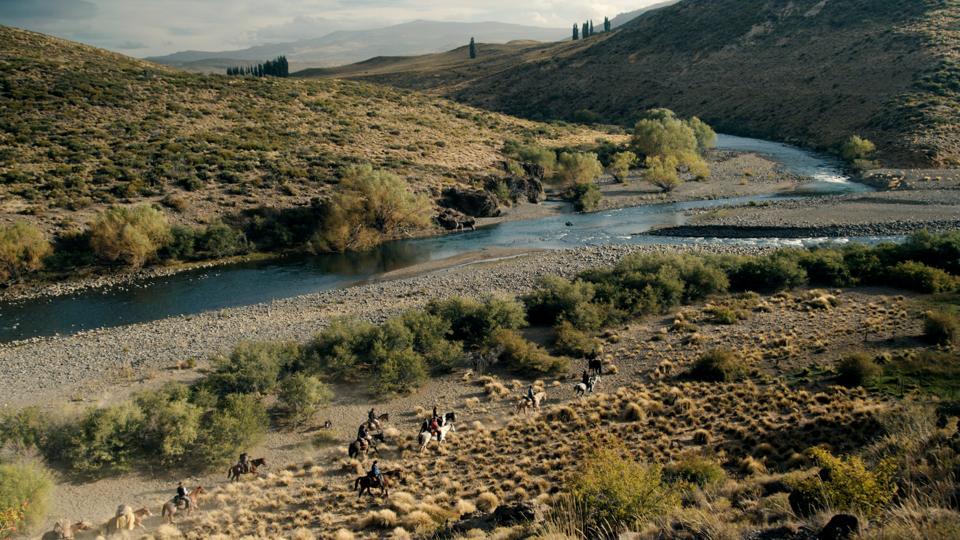
I stood alone in a strange desert, surrounded by luggage and dust, as I waited for a lady called Sylvanna to arrive with horses.
I’d come to volunteer at my second estancia in Argentina — a remote place I knew only as “Ranquilco”, located somewhere in northern Patagonia.
After a long drive from Neuquén airport, I was dropped off as close as we could get to the lodge by car and asked to help bring over the luggage.
We’d driven down one of the steepest and rockiest roads imaginable, so I was grateful to be out of the vehicle. I only wished I didn’t have this enormous suitcase.
When Sylvanna arrived with two horses and a mule, I was surprised.
How would we get all this stuff to the ranch with just one mule? As we loaded him/her up, I kept asking Sylvanna if the mule would be ok, to which she smiled and told me not to worry, it would be fine.
But the real shock was yet to come...
Read more here:
https://www.forbes.com/sites/elizabethbroomhall/2020/04/24/post-coronavirus-travel-the-ultimate-equestrian-escape-in-patagonia-not-for-the-faint-hearted/?utm_medium=40digest.7days3.20200425.home&utm_source=email&utm_content=&utm_campaign=campaign#e22633e1348f
Monday, April 27, 2020
Heart-rate recovery system in Endurance may not be fair, researchers suggest
Horsetalk.co.nz - Full Article
April 27, 2020
Horsetalk.co.nz
The pre-determined arbitrary heart-rate recovery values seen in Endurance may not allow for fair competition, according to researchers.
Arno Lindner and his colleagues set out in their study to explore the relationship between resting and recovered heart rates in horses.
Their work has particular relevance for the discipline of Endurance, given its major focus on heart rates in competing horses.
As the authors point out, veterinary checkpoints are established at certain distances within Endurance races to ensure the health of the competing horses. Heart rate is one of the parameters investigated.
Horses can continue racing only after reaching a pre-defined and arbitrary heart rate, providing all other parameters are also in good order
The researchers, reporting in the open-access journal Animals, found that the time until the pre-defined heart rate is reached is shorter when the resting heart rate of a horse is lower to begin with...
Read more here:
https://www.horsetalk.co.nz/2020/04/27/heart-rate-endurance-researchers/
April 27, 2020
Horsetalk.co.nz
The pre-determined arbitrary heart-rate recovery values seen in Endurance may not allow for fair competition, according to researchers.
Arno Lindner and his colleagues set out in their study to explore the relationship between resting and recovered heart rates in horses.
Their work has particular relevance for the discipline of Endurance, given its major focus on heart rates in competing horses.
As the authors point out, veterinary checkpoints are established at certain distances within Endurance races to ensure the health of the competing horses. Heart rate is one of the parameters investigated.
Horses can continue racing only after reaching a pre-defined and arbitrary heart rate, providing all other parameters are also in good order
The researchers, reporting in the open-access journal Animals, found that the time until the pre-defined heart rate is reached is shorter when the resting heart rate of a horse is lower to begin with...
Read more here:
https://www.horsetalk.co.nz/2020/04/27/heart-rate-endurance-researchers/
COVID-19 Limits Public Land Access for Horseback Riding
Thehorse.com - Full Article
Public lands are managed by several local, state, and federal agencies, meaning rules and closures might vary, even within the same area. Find out if and where you can ride.
Posted by Alayne Blickle | Apr 24, 2020
Due to the current COVID-19 pandemic, governments everywhere are urging citizens to stay home, except for exercising and essential activities. “Essential activities”—and exercise—for many horse owners include trail riding. However, in many parts of the country equestrians who trail ride on public lands have been impacted by trail and public land closures.
Public lands are managed by several local, state, and federal agencies, meaning rules and closures might vary, even within the same area.
“In Washington state, Governor Inslee issued the ‘Stay Home – Stay Healthy’ proclamation (in response to COVID-19), which ordered all citizens to stay home,” explained Joan Burlingame, of Ravensdale, Washington, an avid equestrian and backcountry rider...
Read more here:
https://thehorse.com/187945/covid-19-limits-public-land-access-for-horseback-riding/
Public lands are managed by several local, state, and federal agencies, meaning rules and closures might vary, even within the same area. Find out if and where you can ride.
Posted by Alayne Blickle | Apr 24, 2020
Due to the current COVID-19 pandemic, governments everywhere are urging citizens to stay home, except for exercising and essential activities. “Essential activities”—and exercise—for many horse owners include trail riding. However, in many parts of the country equestrians who trail ride on public lands have been impacted by trail and public land closures.
Public lands are managed by several local, state, and federal agencies, meaning rules and closures might vary, even within the same area.
“In Washington state, Governor Inslee issued the ‘Stay Home – Stay Healthy’ proclamation (in response to COVID-19), which ordered all citizens to stay home,” explained Joan Burlingame, of Ravensdale, Washington, an avid equestrian and backcountry rider...
Read more here:
https://thehorse.com/187945/covid-19-limits-public-land-access-for-horseback-riding/
Saturday, April 25, 2020
Horses with Odd Jobs: This Little Black Mare is a Movie Pro
Horse-canada.com - Full Article
While Storm isn’t the most majestic stunt horse in owner MarieBeth Young’s herd of equine actors, her confidence makes her safe on hectic film sets.
By: Nicole Kitchener | April 22, 2020
Storm might not be the flashiest gal on camera, but she’s a hard worker. At 27, she’s been around the block a few times and thanks to her know-how, she’s a favourite of her costars.
A solid black, 15-hand Saddlebred/Haflinger, Storm has appeared in countless film projects including movies, TV series, commercials and music videos. She is perfect for actors, wranglers and stunt people alike, no matter what their equine experience level. And she’s versatile. She can jump, pull a carriage, work around other animals, travels any terrain, doesn’t mind people hanging off her side and being (fake) shot off her back. She can also do tricks such as say yes, no, smile, shake hands, neigh and rear on request...
Read more here:
https://horse-canada.com/magazine/business/horses-odd-jobs-little-black-mare-movie-pro/?utm_source=ActiveCampaign&utm_medium=email&utm_content=Odd-Job+Movie+Horse+%7C+Dog+++Horseplay+%7C+English+Dressage+Rider+Goes+Western+%7C+Helping+The+Horses&utm_campaign=HC_Enewsletter2019-Wednesday+April+22%2C+2020
While Storm isn’t the most majestic stunt horse in owner MarieBeth Young’s herd of equine actors, her confidence makes her safe on hectic film sets.
By: Nicole Kitchener | April 22, 2020
Storm might not be the flashiest gal on camera, but she’s a hard worker. At 27, she’s been around the block a few times and thanks to her know-how, she’s a favourite of her costars.
A solid black, 15-hand Saddlebred/Haflinger, Storm has appeared in countless film projects including movies, TV series, commercials and music videos. She is perfect for actors, wranglers and stunt people alike, no matter what their equine experience level. And she’s versatile. She can jump, pull a carriage, work around other animals, travels any terrain, doesn’t mind people hanging off her side and being (fake) shot off her back. She can also do tricks such as say yes, no, smile, shake hands, neigh and rear on request...
Read more here:
https://horse-canada.com/magazine/business/horses-odd-jobs-little-black-mare-movie-pro/?utm_source=ActiveCampaign&utm_medium=email&utm_content=Odd-Job+Movie+Horse+%7C+Dog+++Horseplay+%7C+English+Dressage+Rider+Goes+Western+%7C+Helping+The+Horses&utm_campaign=HC_Enewsletter2019-Wednesday+April+22%2C+2020
Subscribe to:
Posts (Atom)